
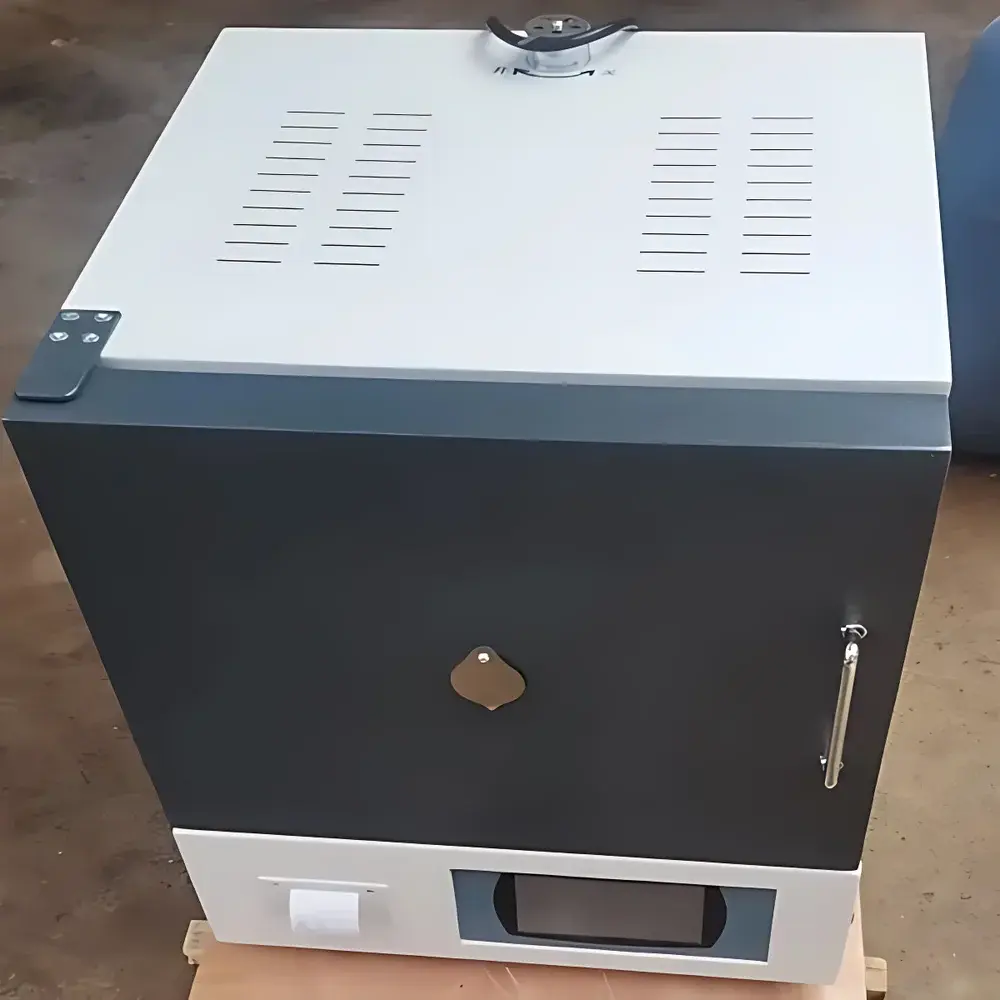
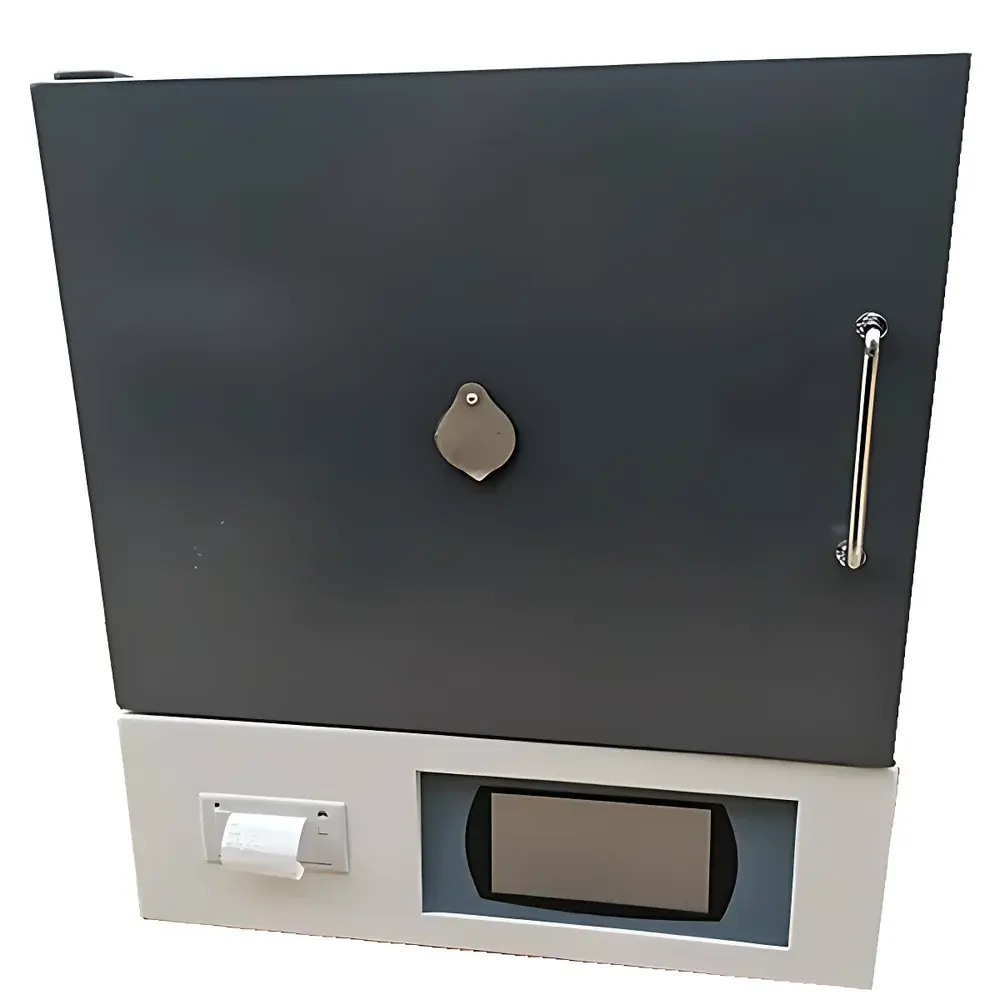
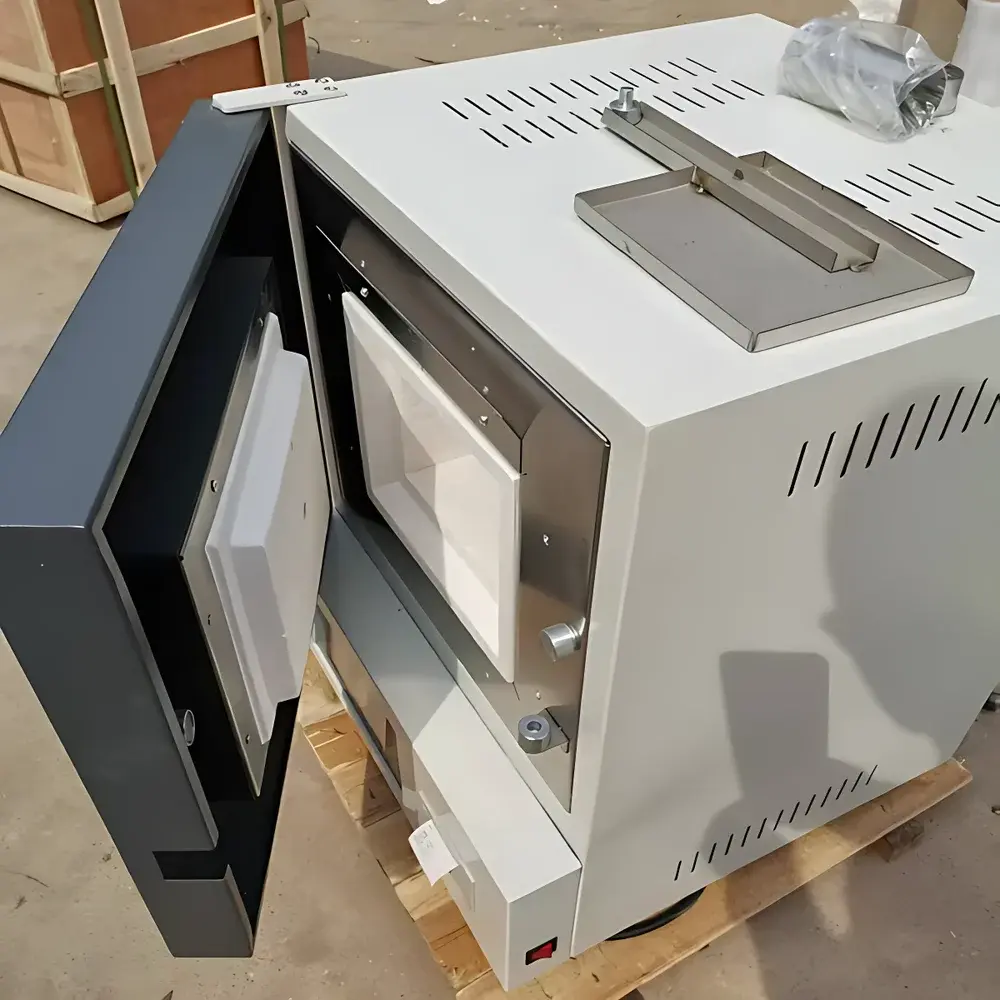
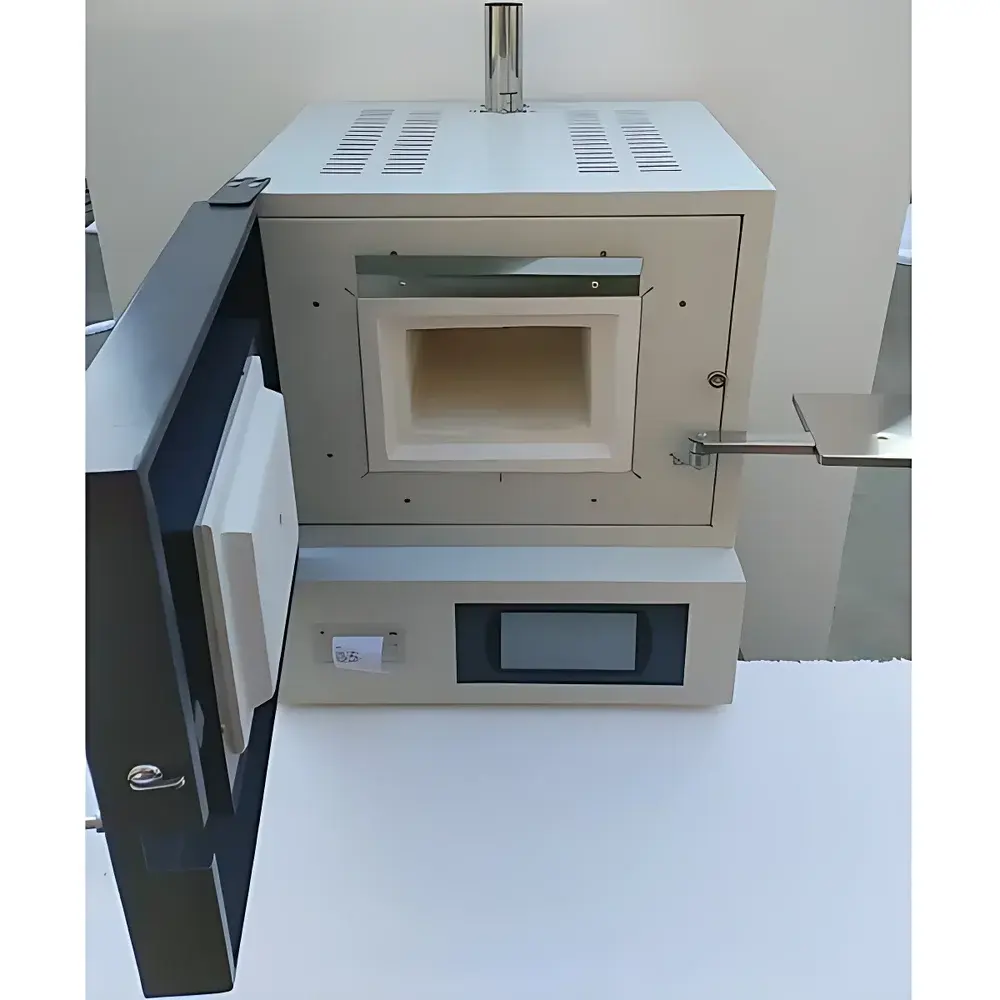
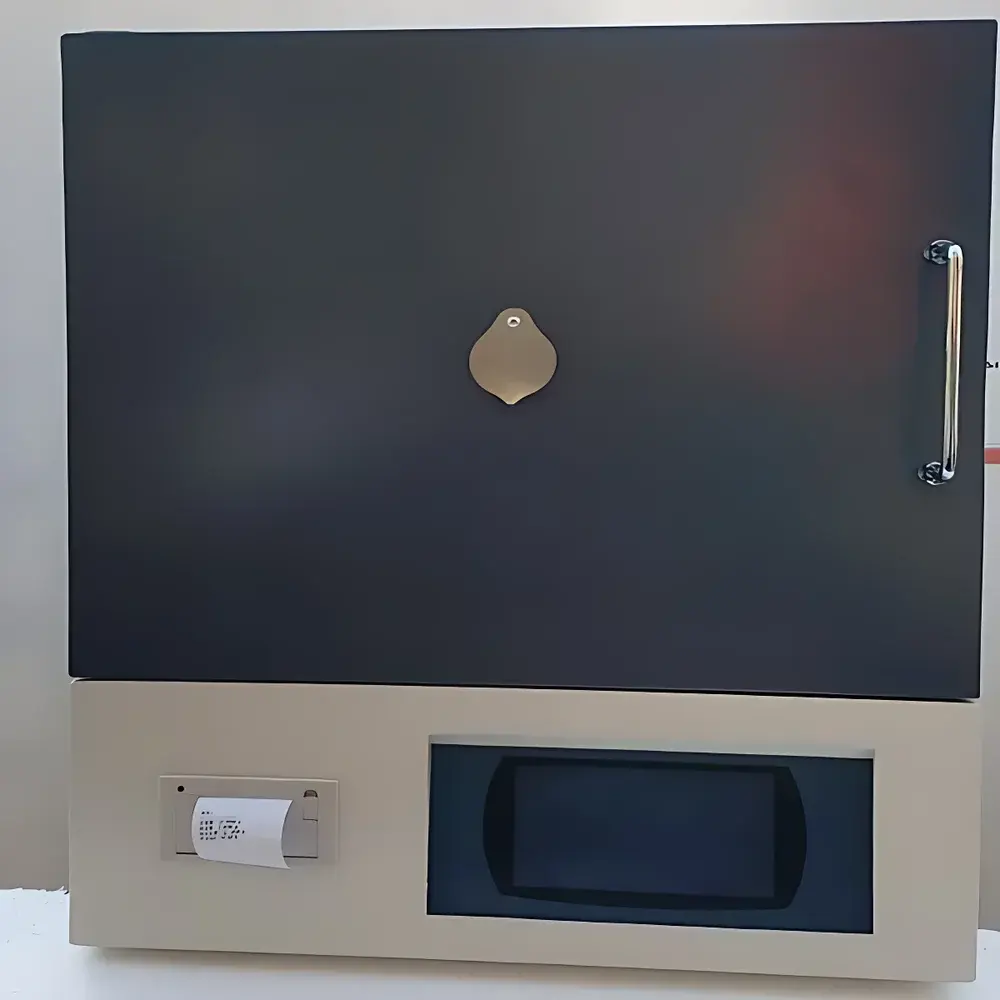
MingShen Science DMF300 Rapid Ashing Muffle Furnace for Ash Content Analysis
| Brand | MingShen Science |
|---|---|
| Origin | Henan, China |
| Model | DMF300 |
| Temperature Range | Ambient to 1000 °C |
| Temperature Accuracy | ±1 °C |
| Temperature Resolution | 1 °C |
| Max. Power | 3.5 kW |
| Supply Voltage | 220 V ±10%, 50/60 Hz |
| Dimensions (W×D×H) | 550×550×550 mm |
| Net Weight | 30 kg |
| Safety Protections | Thermocouple fault detection (open/short/reversed), over-temperature cutoff, automatic heating circuit disconnection |
| Compliance | GB/T 212–2008 |
Overview
The MingShen Science DMF300 Rapid Ashing Muffle Furnace is a programmable high-temperature thermal analysis instrument engineered for precise ash content determination and proximate analysis of solid fuels—including coal, coke, and solid biomass—according to internationally aligned national standards. It operates on the principle of controlled oxidative combustion in a refractory-lined, electrically heated muffle chamber, where samples are subjected to defined temperature profiles under ambient air or regulated atmospheric conditions to drive off volatile matter and combustible carbon, leaving behind inorganic oxide residue (ash). The furnace’s design emphasizes thermal stability, spatial uniformity, and reproducible heating kinetics—critical parameters for compliance with GB/T 212–2008, which specifies rapid ashing procedures requiring consistent temperature ramping, dwell time accuracy, and zone homogeneity across the furnace cavity. Its architecture supports both standardized test protocols (e.g., slow ashing, fast ashing, volatile matter determination) and user-defined multi-stage thermal programs, making it suitable for routine quality control laboratories, energy research centers, and regulatory testing facilities.
Key Features
- Multi-mode thermal programming: Preconfigured routines for slow ashing, rapid ashing, volatile matter analysis, and adhesion index (Roga/Adhesion Number) testing per GB/T 212–2008; additionally supports up to five customizable heating segments with independent ramp rates, target temperatures, and hold durations.
- Volatile matter crucible positioning mechanism: Precision-guided sample carrier ensures accurate placement of crucibles into the certified isothermal zone during volatile matter tests, minimizing thermal lag and positional variability.
- Thermally optimized enclosure: Full-perimeter insulation combined with an integrated airflow isolation channel maintains external surface temperature near ambient (<45 °C at 1000 °C internal), significantly reducing operator exposure risk and improving lab environmental stability.
- Comprehensive thermal safety system: Real-time thermocouple diagnostics detect open-circuit, short-circuit, and polarity reversal faults; dual-stage over-temperature protection triggers audible/visual alerts and automatically de-energizes the heating circuit upon threshold breach.
- Integrated data processing: Onboard calculation engine computes and reports moisture, ash, volatile matter, and fixed carbon percentages directly from raw mass inputs—eliminating manual transcription errors and supporting traceable result generation.
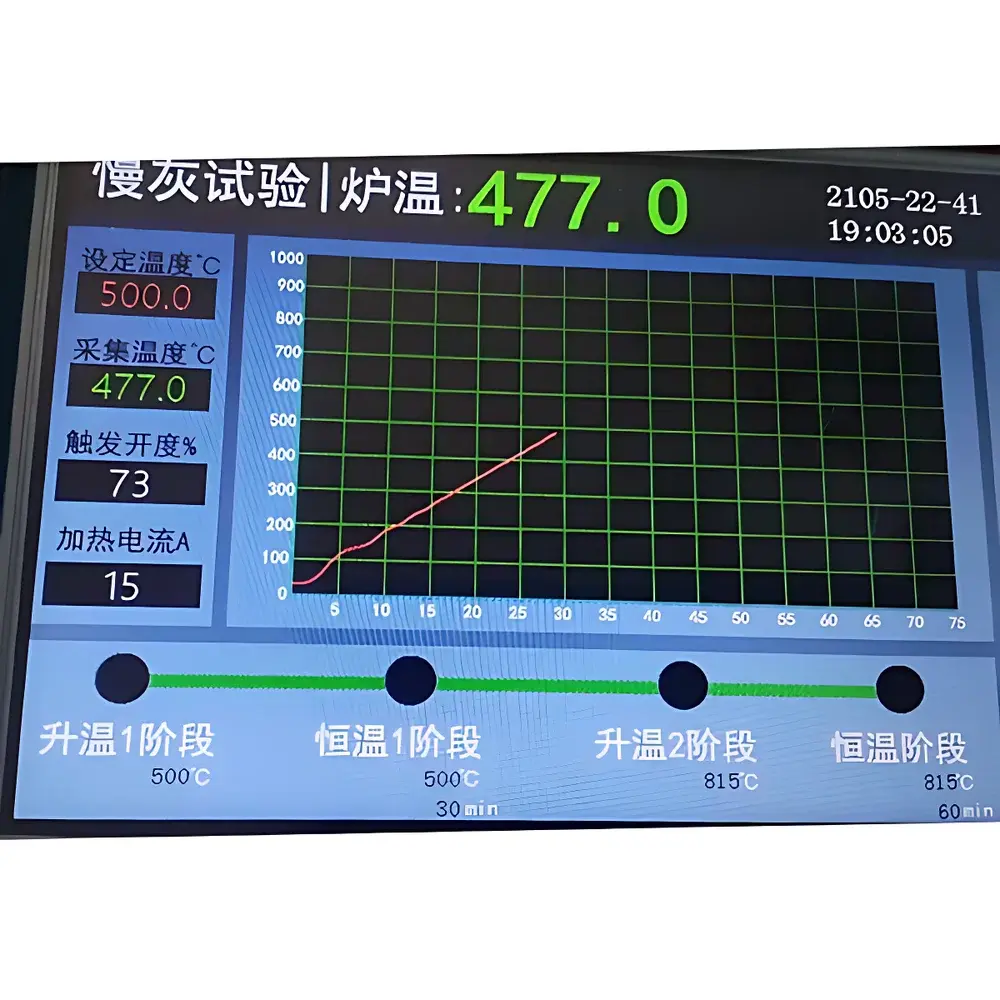
- Human-centered interface: 7-inch capacitive touchscreen with full Chinese character UI, hierarchical menu navigation, one-touch experiment initiation, real-time temperature curve visualization, and adjustable post-test recovery timing (e.g., 3-min volatile matter cooldown verification, 6-min Roga index thermal recovery calibration).
Sample Compatibility & Compliance
The DMF300 accommodates standard ceramic or platinum crucibles (typically 15–30 mL capacity) used in coal and biomass proximate analysis. It is validated for use with ASTM D3174 (ash in coal), ASTM D5142 (rapid ashing procedure), and ISO 1171 (solid mineral fuels—determination of ash). While primarily designed for GB/T 212–2008 conformance, its programmable thermal profiles enable adaptation to other standardized methods requiring precise temperature staging, including USP <281> (ash residue in pharmaceutical excipients) and EPA Method 1311 (TCLP extraction residue ignition). The instrument meets basic electrical safety requirements per IEC 61010-1 and incorporates fail-safe logic compatible with GLP-compliant workflow documentation when paired with external audit-trail-capable LIMS or electronic lab notebooks.
Software & Data Management
The DMF300 features embedded firmware with non-volatile memory for storing ≥100 user-defined method templates and ≥500 test records, each timestamped with start/end times, setpoints, actual profile logs, and final calculated results. Data export is supported via USB flash drive in CSV format for downstream statistical analysis or regulatory submission. Though not natively compliant with FDA 21 CFR Part 11, the device supports integration into Part 11–enabled environments through external validation of method execution logs and output files—provided operators maintain documented change control, access restriction, and electronic signature protocols. Audit trail functionality (user login, parameter modification history, result export logs) is available in firmware version 2.3 and later.
Applications
- Routine proximate analysis of bituminous, anthracite, and lignite coals in power generation and coking plants.
- Quality assurance of solid biofuels (wood pellets, agricultural residues) per EN 14918 and ISO 18122.
- Ash content verification in cement raw meal, fly ash, and slag for clinker production process control.
- Residue quantification in geological core samples and soil matrices during geochemical surveying.
- Thermal pre-treatment of catalysts, ceramics, and metal oxides prior to XRF or ICP-OES elemental analysis.
- Volatiles-to-ash ratio profiling in waste-derived fuels (RDF, SRF) for energy recovery facility feedstock qualification.
FAQ
Does the DMF300 support automated reporting with laboratory information management systems (LIMS)?
Yes—via USB-hosted CSV exports; direct RS-232 or Ethernet connectivity requires optional hardware modules and third-party middleware configuration.
Can the furnace be calibrated and verified according to ISO/IEC 17025 requirements?
Yes—the unit accepts NIST-traceable reference thermocouples and supports calibration certificate generation for temperature uniformity mapping (per ASTM E220) and accuracy verification at multiple setpoints.
Is the DMF300 suitable for sulfur or chlorine determination by combustion?
No—it lacks gas scrubbing, sulfur capture, or halogen-specific trap configurations; it is intended solely for gravimetric ash and volatile matter assessment.
What maintenance intervals are recommended for long-term reliability?
Inspect insulation integrity and door gasket compression every 6 months; verify thermocouple drift annually using a reference thermometer; clean interior refractory surfaces after every 200 high-temperature cycles.
How does the furnace ensure temperature uniformity across the working zone?
Through symmetrical heating element layout, double-layer ceramic fiber insulation, and forced-air thermal barrier design—validated to ≤±5 °C deviation across a 100 mm × 100 mm central zone at 815 °C per GB/T 212–2008 Annex B.
Related Products



