
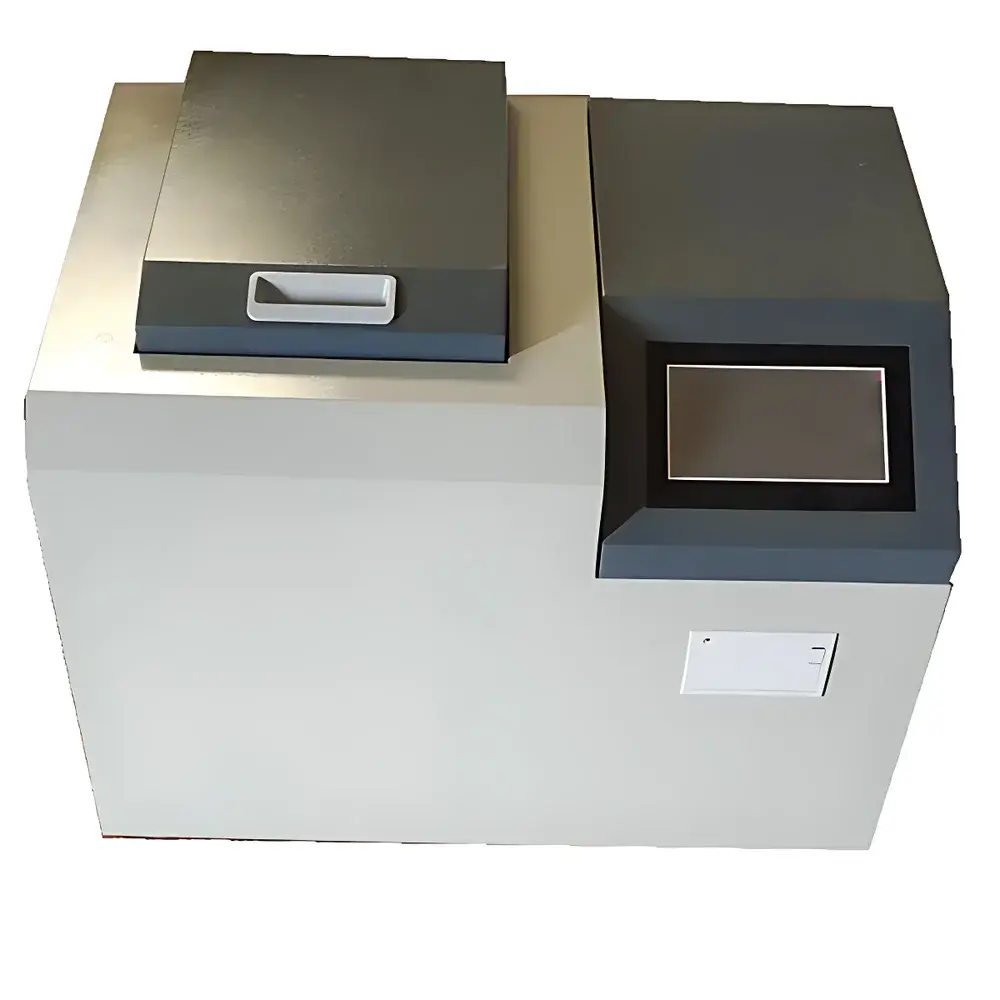
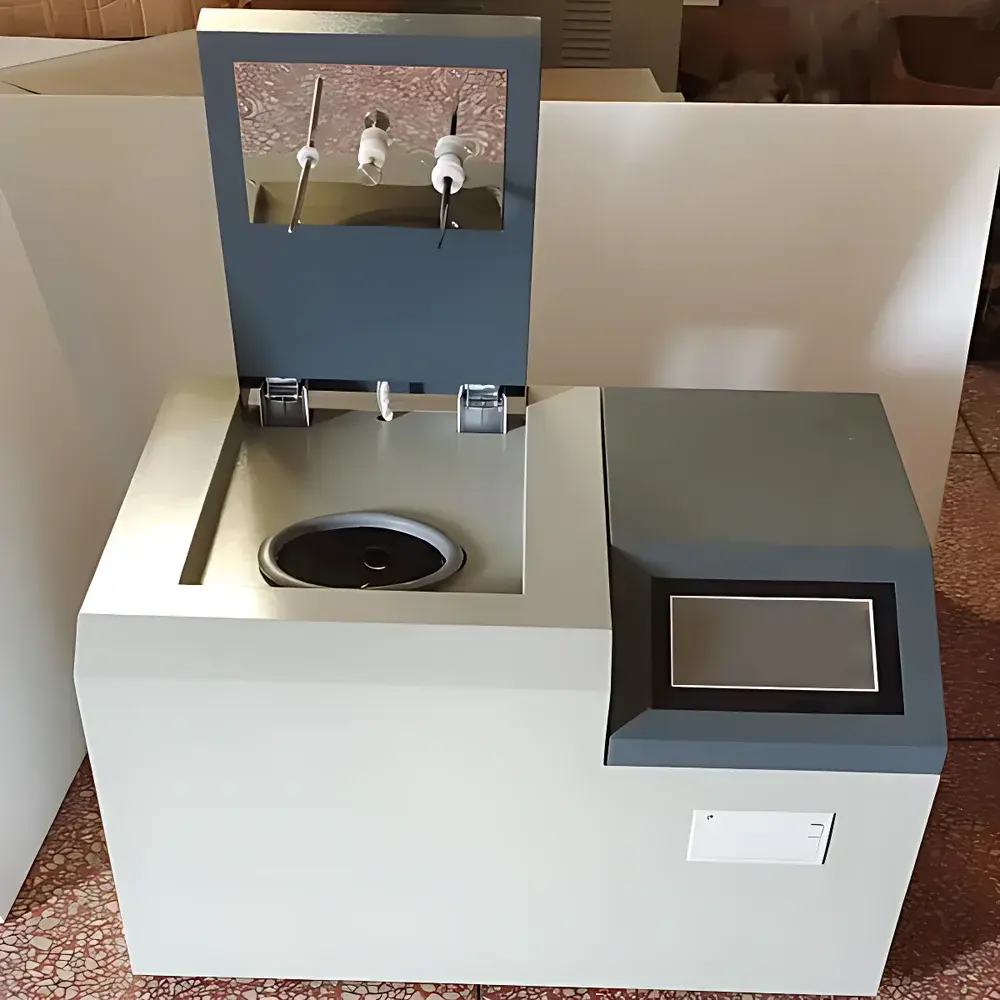
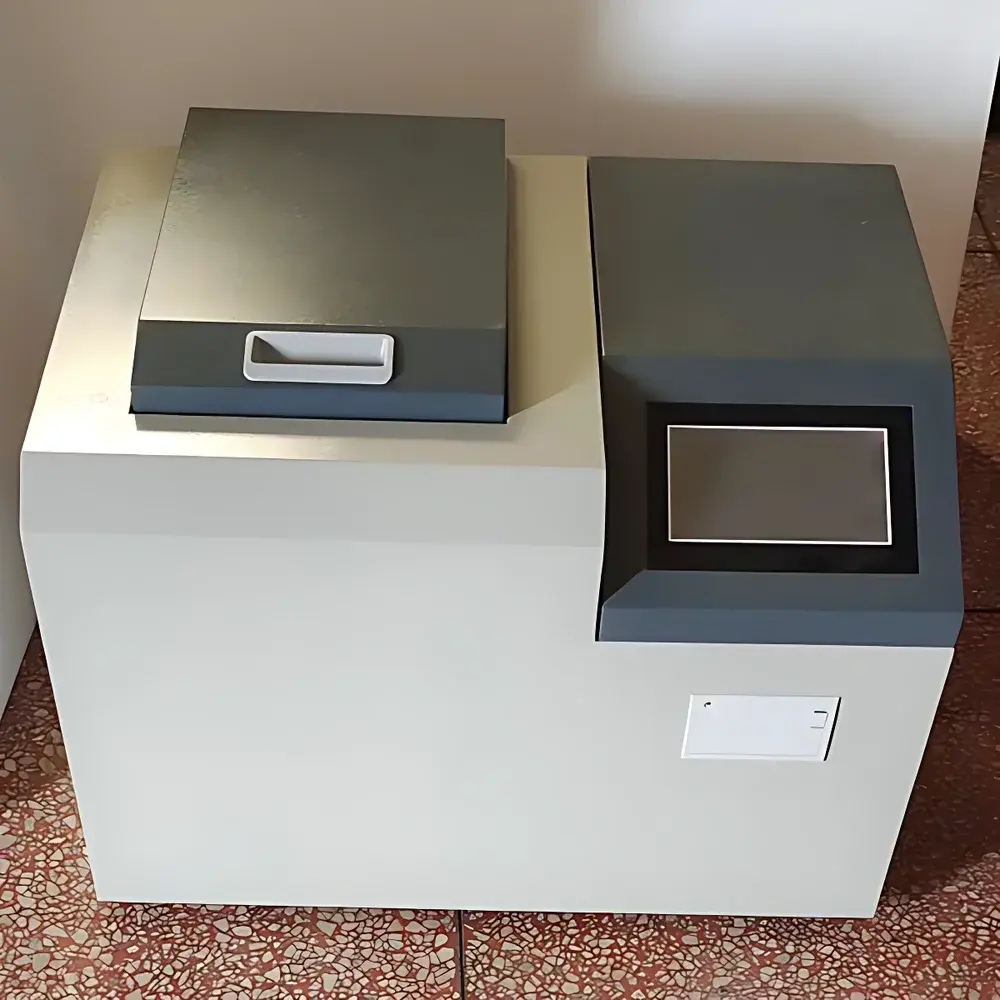
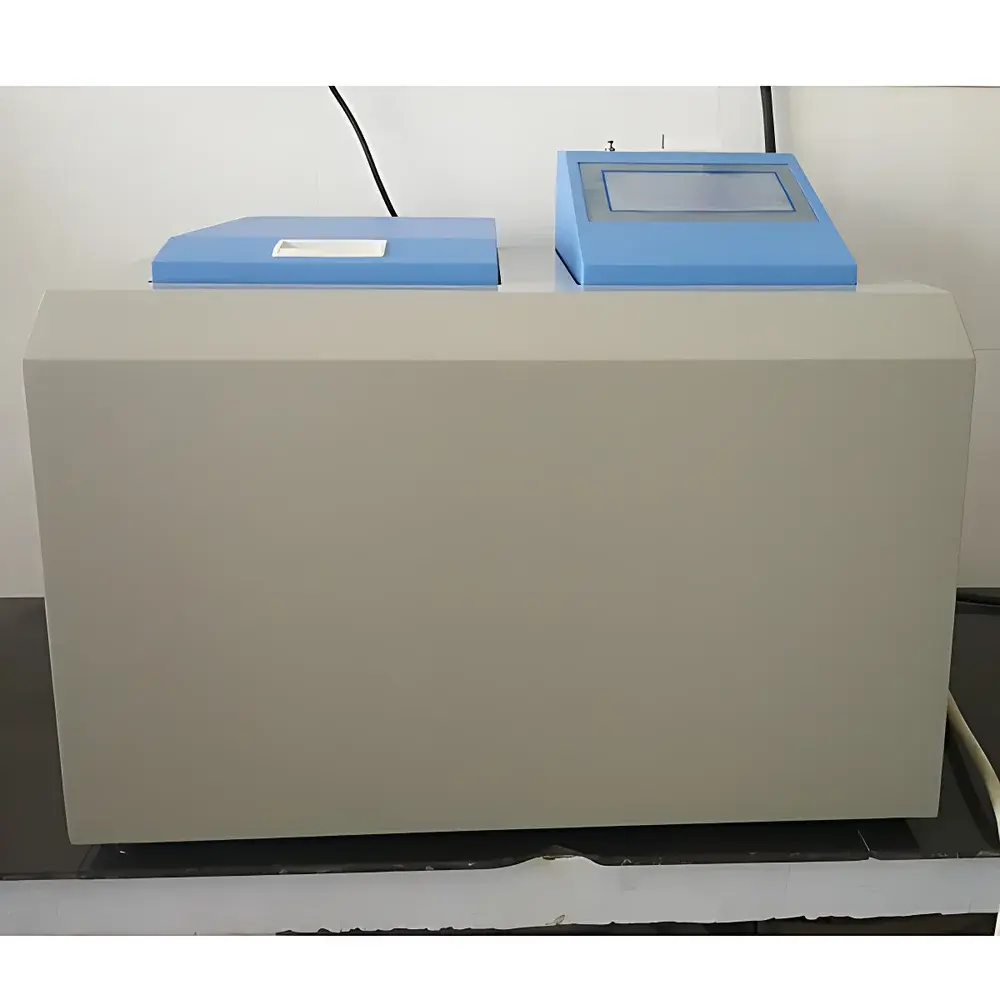
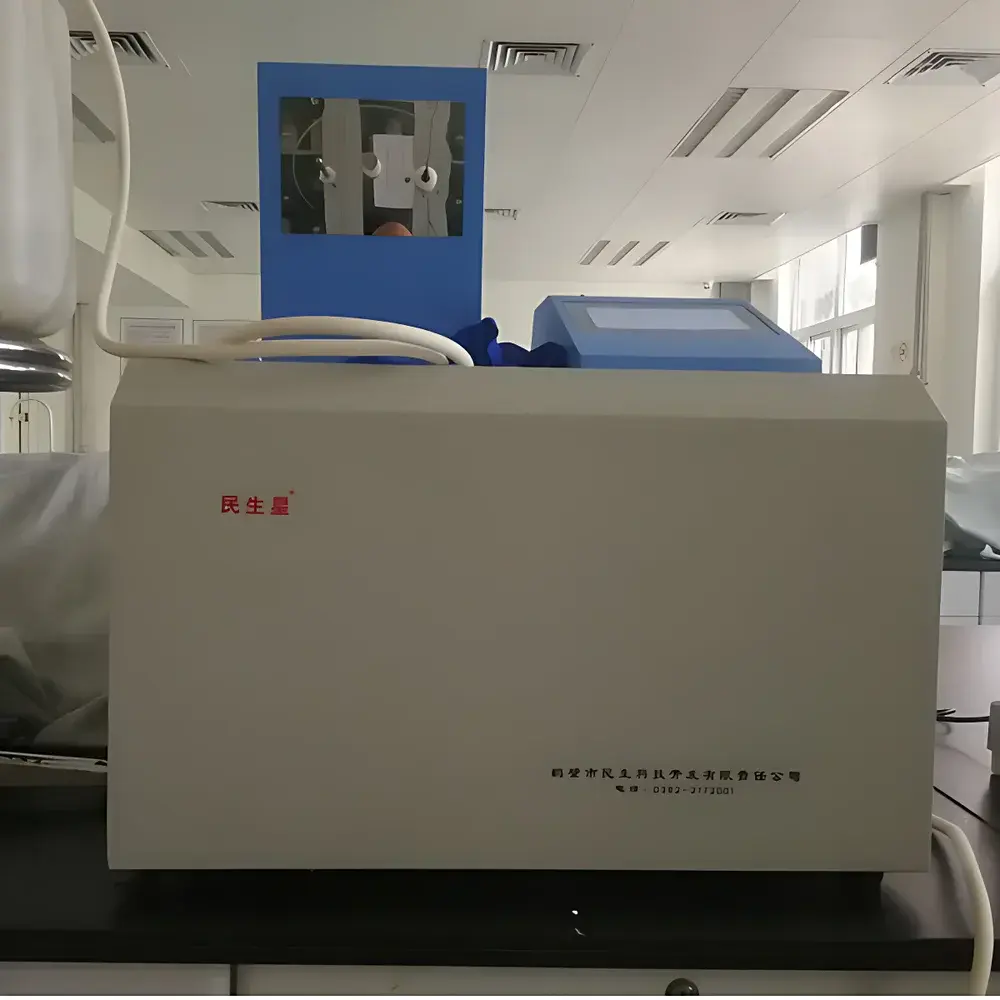
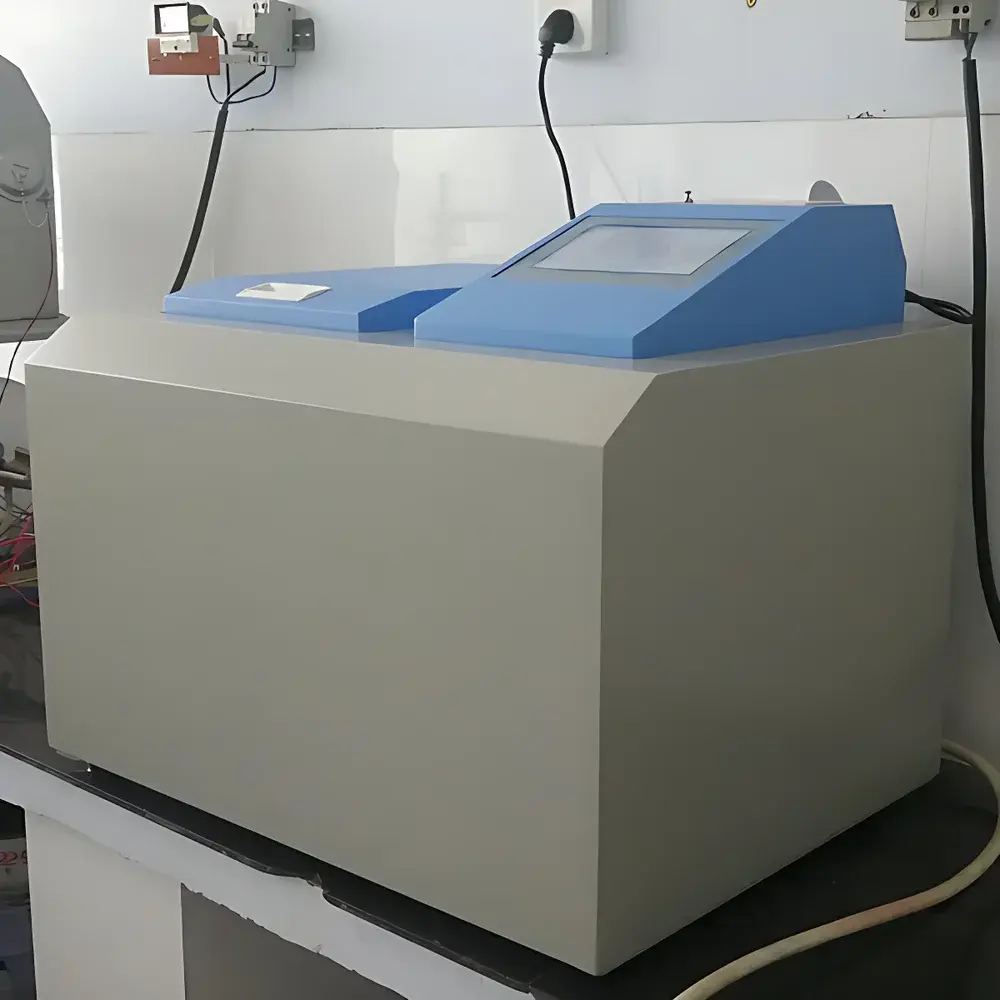
MingShen Science MLR-8C Touchscreen Fully Automated Oxygen Bomb Calorimeter
| Brand | MingShen Science |
|---|---|
| Origin | Henan, China |
| Instrument Type | Oxygen Bomb Calorimeter |
| Measurement Mode | Adiabatic Calorimetry |
| Temperature Range | 0–65 °C |
| Temperature Resolution | 0.0001 K |
| Precision | ±0.1% RSD |
| Single-Sample Test Duration | ~15 min |
| Heat Capacity | ~10,500 J/K |
| Outer Water Jacket Volume | 51 L |
| Inner Water Bucket Volume | 2.3 L |
| Ignition Voltage | AC 24 V (5 s duration) |
| Oxygen Bomb Material | Ni-Cr-Mo Alloy |
| Bomb Pressure Rating | 20 MPa |
| Charging Pressure | 2.8–3.0 MPa |
| Power Supply | 220 V ±10%, 30 W |
| Dimensions (L×W×H) | 660 × 500 × 540 mm |
| Weight | ~30 kg |
Overview
The MingShen Science MLR-8C Touchscreen Fully Automated Oxygen Bomb Calorimeter is a high-precision adiabatic calorimetric system engineered for the accurate determination of gross calorific value (GCV) of solid, liquid, and biomass fuels—including coal, coke, petroleum products, municipal solid waste, and agricultural residues. Based on the principle of oxygen bomb combustion calorimetry, the instrument fully complies with ISO 1928:2020 (Solid mineral fuels — Determination of gross calorific value by the bomb calorimeter method) and ASTM D5865–22 (Standard Test Method for Gross Calorific Value of Coal and Coke), while also satisfying the metrological requirements of GB/T 213–2008 (Chinese national standard for coal calorific value determination). The system employs a dual-jacketed adiabatic design: an outer water reservoir (~51 L) thermally isolates the inner measurement bucket (~2.3 L), which houses the oxygen-resistant Ni-Cr-Mo alloy bomb. Combustion occurs under controlled 2.8–3.0 MPa O₂ pressure, ensuring complete oxidation of organic matter. Temperature is monitored via high-stability platinum resistance thermometers (PRTs) with 0.0001 K resolution, enabling detection of minute thermal increments across the 0–65 °C operational range.
Key Features
- Fully integrated 7-inch color touchscreen interface with native Chinese language support—no external PC required for operation or result review
- Embedded thermal compensation algorithm that dynamically adjusts for heat exchange drift, maintaining adiabatic conditions with <0.2% heat capacity stability over repeated cycles
- Automated sequence control covering oxygen charging, ignition (AC 24 V, precisely timed 5 s pulse), temperature acquisition, data reduction, and final report generation
- Onboard thermal printer producing standardized reports: bomb calorific value, dry basis GCV, air-dried basis GCV, as-received basis net calorific value (NCV), and moisture-corrected outputs
- Rugged Ni-Cr-Mo alloy oxygen bomb rated to 20 MPa burst pressure—certified for long-term use in high-sulfur and high-ash fuel testing environments
- Low-power architecture (30 W nominal) optimized for continuous laboratory deployment without thermal load interference
Sample Compatibility & Compliance
The MLR-8C accommodates heterogeneous fuel matrices including pulverized coal (≤0.2 mm), liquid hydrocarbons (in sealed crucibles), and pelletized biomass (e.g., wood chips, straw briquettes). Sample mass ranges from 0.5–1.2 g depending on expected energy density, with automatic correction for nitric acid and sulfuric acid formation enthalpies per ISO 1928 Annex B. All calibration and verification procedures adhere to GLP principles: certified benzoic acid (NIST SRM 39j or equivalent) is used for heat capacity calibration, with traceable uncertainty reporting. Data integrity meets audit requirements for ISO/IEC 17025-accredited laboratories; electronic records include timestamped operator ID, ambient lab temperature/humidity metadata, and raw thermogram export capability (CSV format).
Software & Data Management
Although standalone operation is standard, the MLR-8C supports optional USB data export for integration into LIMS or enterprise QA/QC platforms. Raw temperature-time datasets (sampled at 0.5 Hz) are stored with full audit trail: each test file contains instrument serial number, calibration date, operator code, and digital signature of the final GCV calculation. Firmware implements checksum validation for all critical parameters (heat capacity, fuse correction factor, acid correction coefficients) to prevent unauthorized modification. While not FDA 21 CFR Part 11-compliant out-of-the-box, the system’s deterministic workflow and immutable log structure facilitate validation for regulated environments upon site-specific qualification.
Applications
- Quality control of commercial coal shipments per ASTM D3176 and GB/T 211–2017 (moisture, ash, volatile matter correlation)
- Energy content certification of alternative fuels under EN 14918 (solid biofuels) and ASTM E2458 (waste-derived fuels)
- R&D evaluation of fuel blends, co-firing ratios, and torrefaction efficiency in thermal power and cement kiln applications
- Academic research in combustion kinetics, where reproducible adiabatic ΔT measurements enable precise enthalpy-of-combustion derivation
- Environmental compliance testing for CO₂ emission factor assignment under IPCC 2006 Guidelines (Volume II, Chapter 2)
FAQ
What standards does the MLR-8C comply with for coal analysis?
It meets GB/T 213–2008, ISO 1928:2020, and ASTM D5865–22 for gross calorific value determination.
Is the oxygen bomb compatible with high-sulfur coal samples?
Yes—the Ni-Cr-Mo alloy construction resists corrosion from SO₃ and H₂SO₄ condensates formed during high-sulfur combustion.
Can the instrument correct for latent heat of vaporization in wet fuels?
Yes—automated NCV calculation applies standard thermodynamic corrections for hydrogen content and total moisture per ISO 1928 Annex C.
How is heat capacity stability verified between calibrations?
The system logs daily reference benzoic acid burn results; deviations >0.2% trigger operator alert and recommend recalibration.
Does the touchscreen interface support multi-user access control?
No—access is unrestricted, but all test records include embedded operator identification for accountability in shared-lab settings.



