
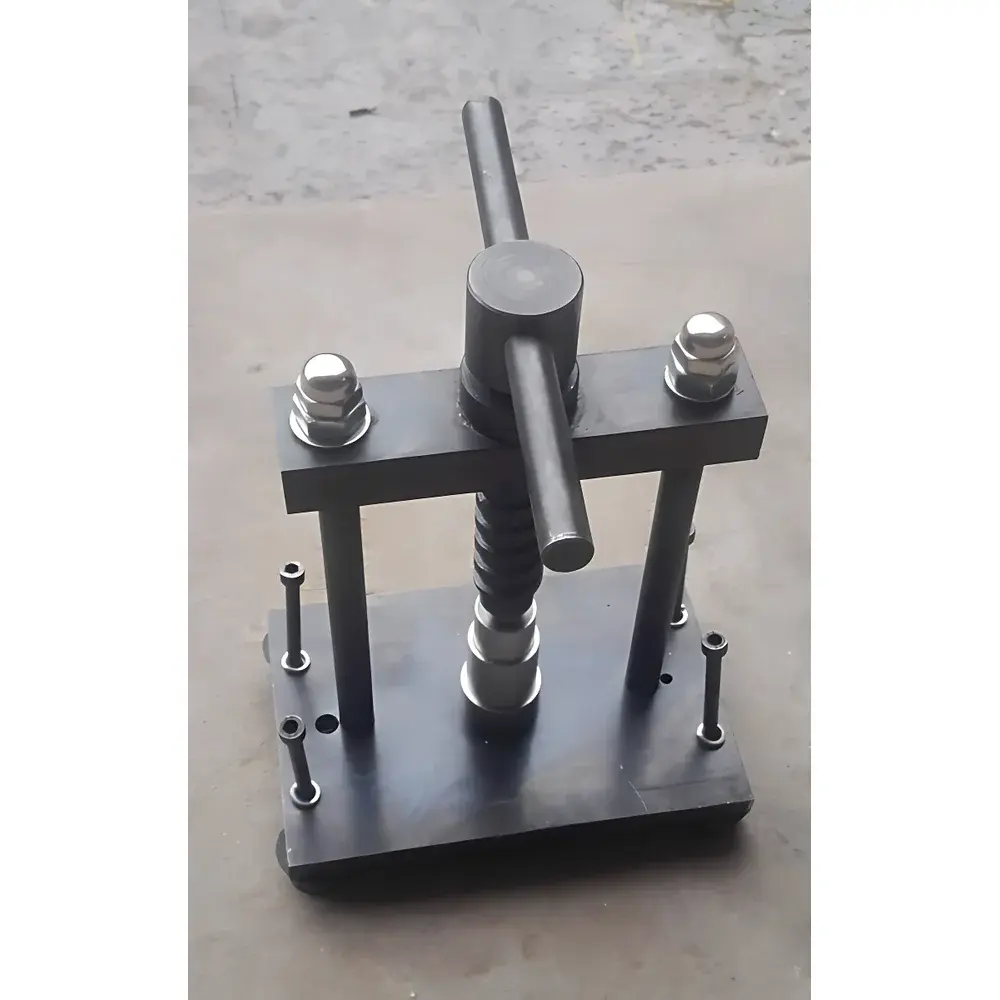
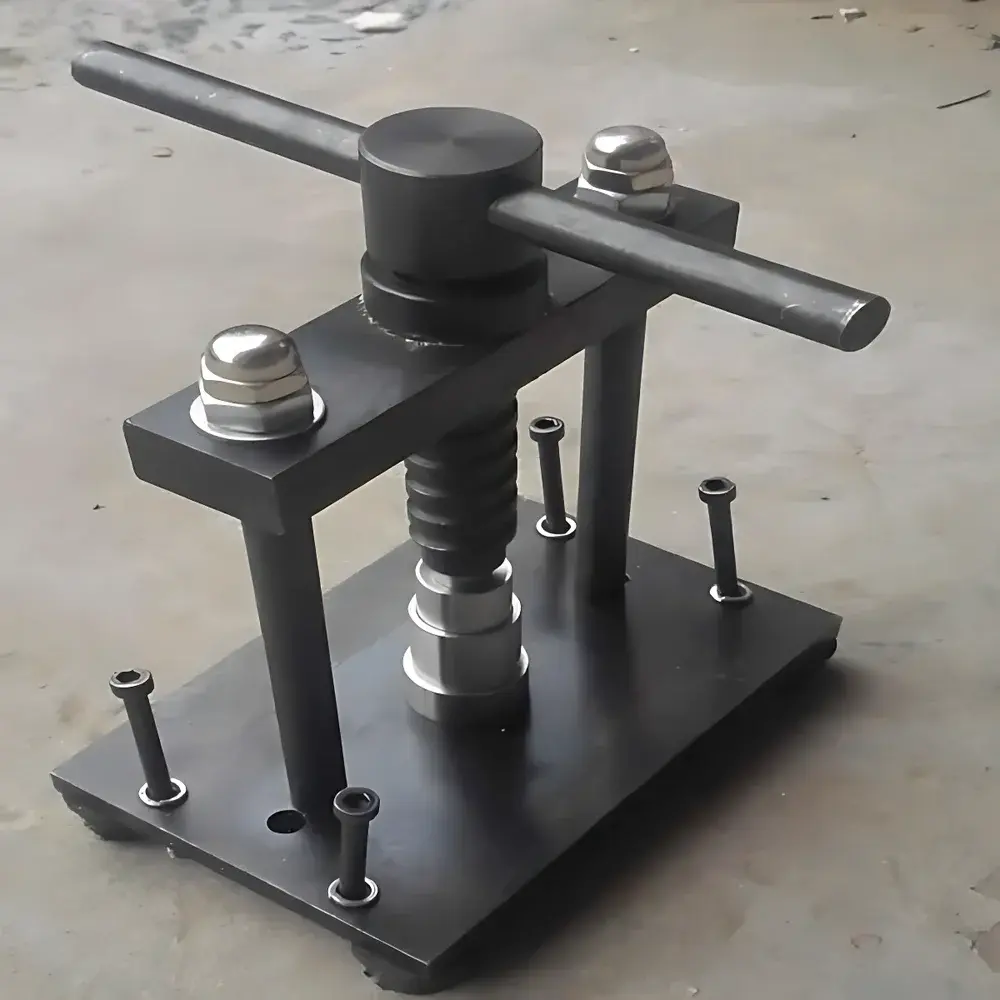
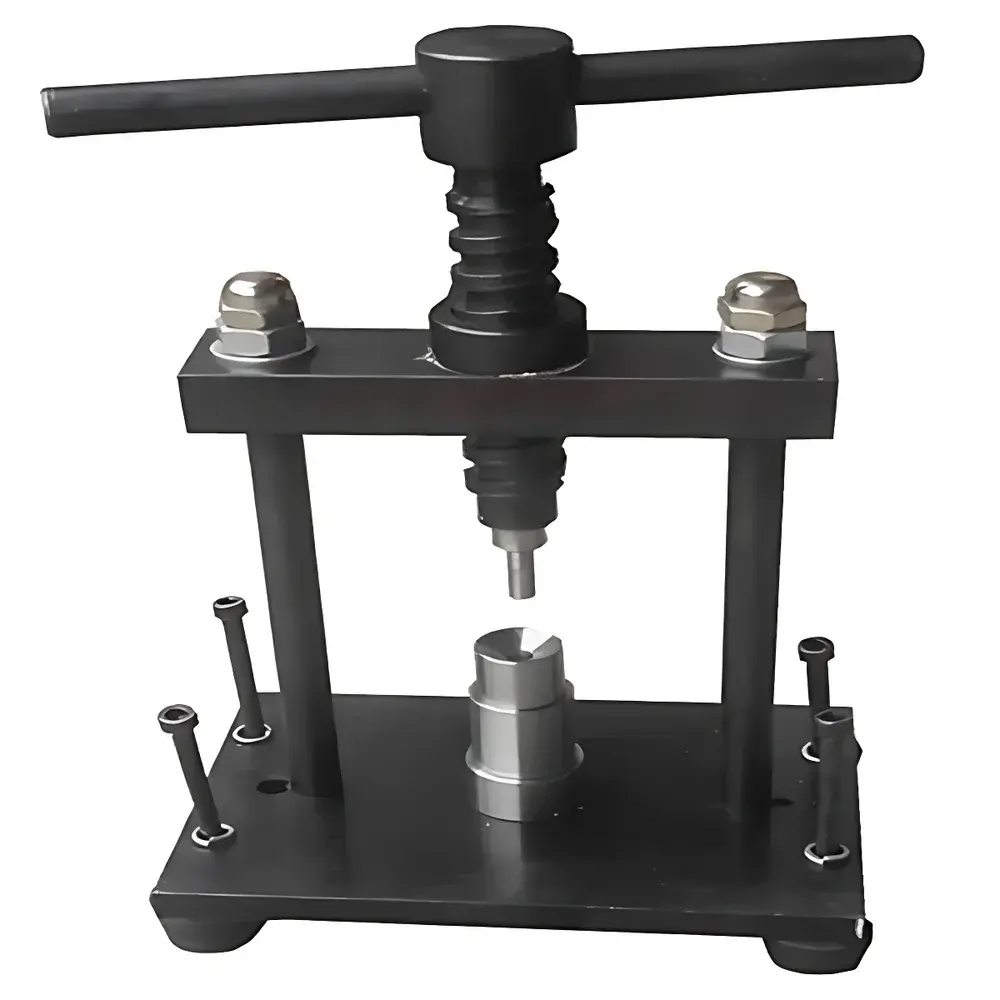
MingShen Science Spiral Powder Press
| Brand | MingShen Science |
|---|---|
| Origin | Henan, China |
| Manufacturer Type | Authorized Distributor |
| Country of Origin | China |
| Model | Spiral-Type |
| Price | USD 135 (FOB) |
| Maximum Sample Mass | ~1 g per press |
| Standard Pellet Diameter | 12 mm |
| Customizable Pellet Diameters | 3 mm, 5 mm, 6 mm, 10 mm, 11 mm (upon request) |
| Target Applications | Calorimetric Standard Preparation (e.g., Benzoic Acid), Solid Fuel Pelletization |
Overview
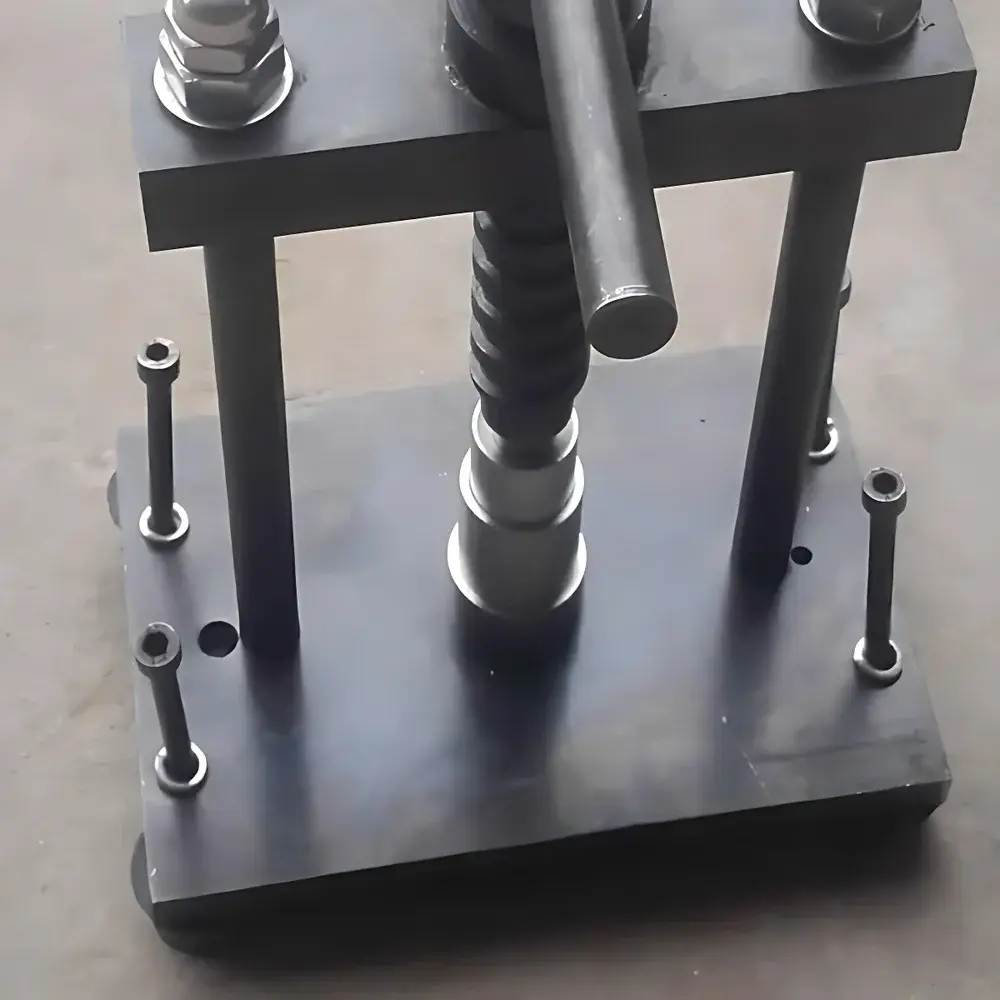
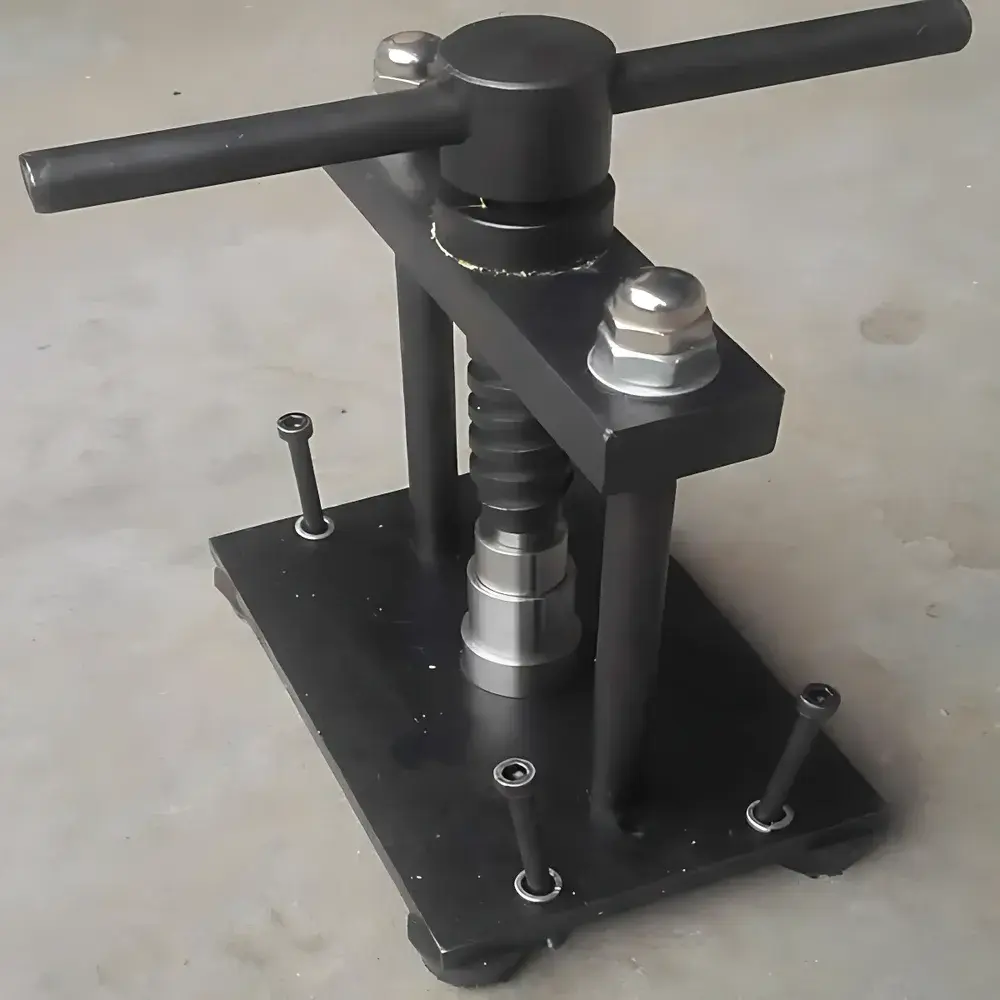
The MingShen Science Spiral Powder Press is a manually operated, mechanical compression device engineered for the reproducible preparation of high-density, dimensionally stable solid pellets from fine powders—primarily for use in bomb calorimetry and thermal analysis. It operates on a proven screw-jack principle: rotational force applied to a precision-machined threaded spindle translates into axial pressure via a fixed lead screw and adjustable anvil assembly. This design eliminates hydraulic complexity while delivering consistent compressive loads across repeated cycles—critical for achieving uniform pellet density, minimal friability, and low inter-sample variability. Unlike pneumatic or motorized presses, the spiral mechanism provides direct tactile feedback and full operator control over compaction duration and final load application, making it especially suitable for standardized reference material preparation where process transparency and traceability are essential.
Key Features
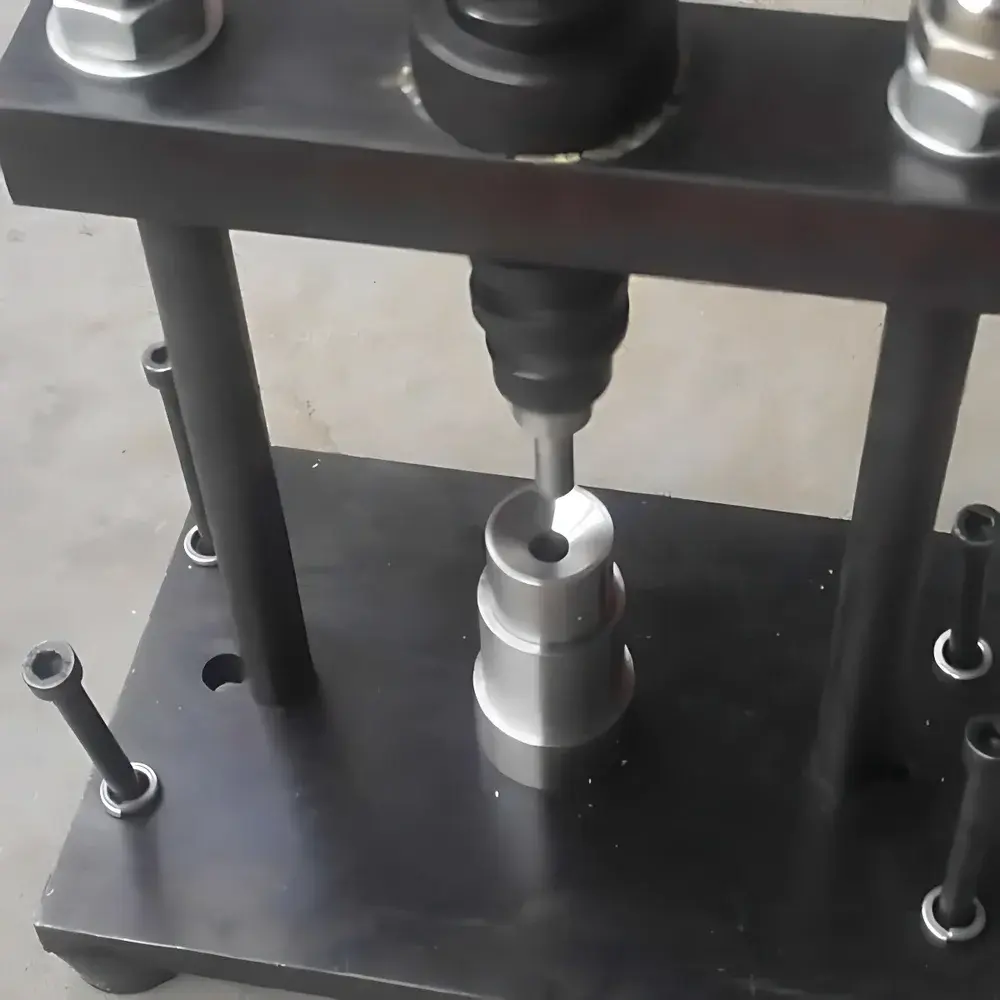
- Robust cast-iron frame with hardened steel die cavity and punch components, ensuring long-term dimensional stability and resistance to abrasive wear during repeated pressing of coal, benzoic acid, and other calibration-grade powders.
- Adjustable stop ring and calibrated torque-limiting knob enable repeatable compression depth control—critical for maintaining consistent pellet thickness (typically 1–2 mm) and mass loading (~1.000 ± 0.005 g).
- Standard 12 mm diameter die set compliant with ASTM D2015, ISO 1928, and GB/T 213–2008 specifications for calorimetric pellet geometry; optional die inserts available for 3–11 mm diameters to accommodate specialized crucibles or micro-calorimeters.
- No external power supply or compressed air required—fully manual operation supports GLP-compliant documentation of pressing parameters (e.g., turns of handle, observed resistance, dwell time) without electronic dependency.
- Tool-free die change system allows rapid interchange between standard and custom configurations; all components conform to RoHS and REACH material restrictions.
Sample Compatibility & Compliance
The press is validated for use with certified reference materials including benzoic acid (NIST SRM 39j, purity ≥ 99.995%), bituminous coal standards (ASTM PS117), and lignite reference samples. Its mechanical consistency supports compliance with ISO/IEC 17025 requirements for method validation when integrated into calorimeter calibration workflows. For laboratories operating under CNAS, FDA 21 CFR Part 11 (via complementary lab notebook documentation), or national metrology guidelines (e.g., JJF 1059.1), the device serves as a documented, non-automated step in uncertainty budgeting—particularly where electronic press logs may introduce unverifiable variables. All pressed pellets exhibit surface integrity sufficient for handling with ceramic tweezers and insertion into standard oxygen bomb crucibles without chipping or delamination.
Software & Data Management
As a purely mechanical instrument, the Spiral Powder Press does not incorporate embedded electronics, firmware, or data logging capabilities. This design aligns with laboratories requiring audit-trail simplicity and avoidance of software validation burdens. Process parameters—including operator ID, date/time, sample batch number, die size used, number of handle rotations, and visual assessment of pellet cohesion—are recorded manually in bound laboratory notebooks or LIMS-integrated electronic records. When paired with digital analytical balances (e.g., METTLER TOLEDO XSR series) and calibrated thermometers, full traceability to national standards (e.g., NIM, NIST) is maintained per ISO/IEC 17025 Clause 7.7.
Applications
- Preparation of benzoic acid reference pellets for bomb calorimeter calibration and periodic re-validation (‘reverse calibration’) per ASTM D5865 and GB/T 213.
- Compaction of coal, coke, and biomass samples into geometrically defined pellets for gross calorific value determination.
- Manufacture of homogeneous tablets for FTIR spectroscopy sample holders or XRF fusion bead pre-forms.
- Research-scale densification studies requiring controlled, low-temperature, binder-free consolidation of pharmaceutical excipients or ceramic precursors.
- Teaching laboratories demonstrating fundamental powder rheology, Heckel analysis, and compressibility index relationships.
FAQ
Is this press compatible with ASTM D5865 and ISO 1928 requirements for calorimetric pellet geometry?
Yes—the standard 12 mm die set produces pellets meeting the nominal diameter (12.0 ± 0.2 mm), flatness (< 0.1 mm deviation), and mass tolerance (1.000 ± 0.005 g) specified in both standards.
Can I validate the press’s performance without electronic sensors?
Absolutely. Calibration is performed using certified reference masses, micrometers (±0.001 mm resolution), and visual inspection protocols documented in your SOPs—fully acceptable under ISO/IEC 17025 for mechanical equipment.
Do custom die sizes affect measurement uncertainty in calorimetry?
Only if the resulting pellet geometry deviates from the calorimeter’s published correction algorithms; users must verify energy correction factors (e.g., fuse wire contribution, nitric acid correction) remain valid for non-standard diameters.
What maintenance is required?
Biannual cleaning of die cavity with ethanol and light mineral oil lubrication of the spindle thread; no recalibration is needed unless physical damage occurs.
Is operator training required?
Yes—consistent technique (e.g., uniform rotation speed, dwell time at maximum compression) directly impacts pellet density reproducibility; a 30-minute competency assessment is recommended before routine use.



