
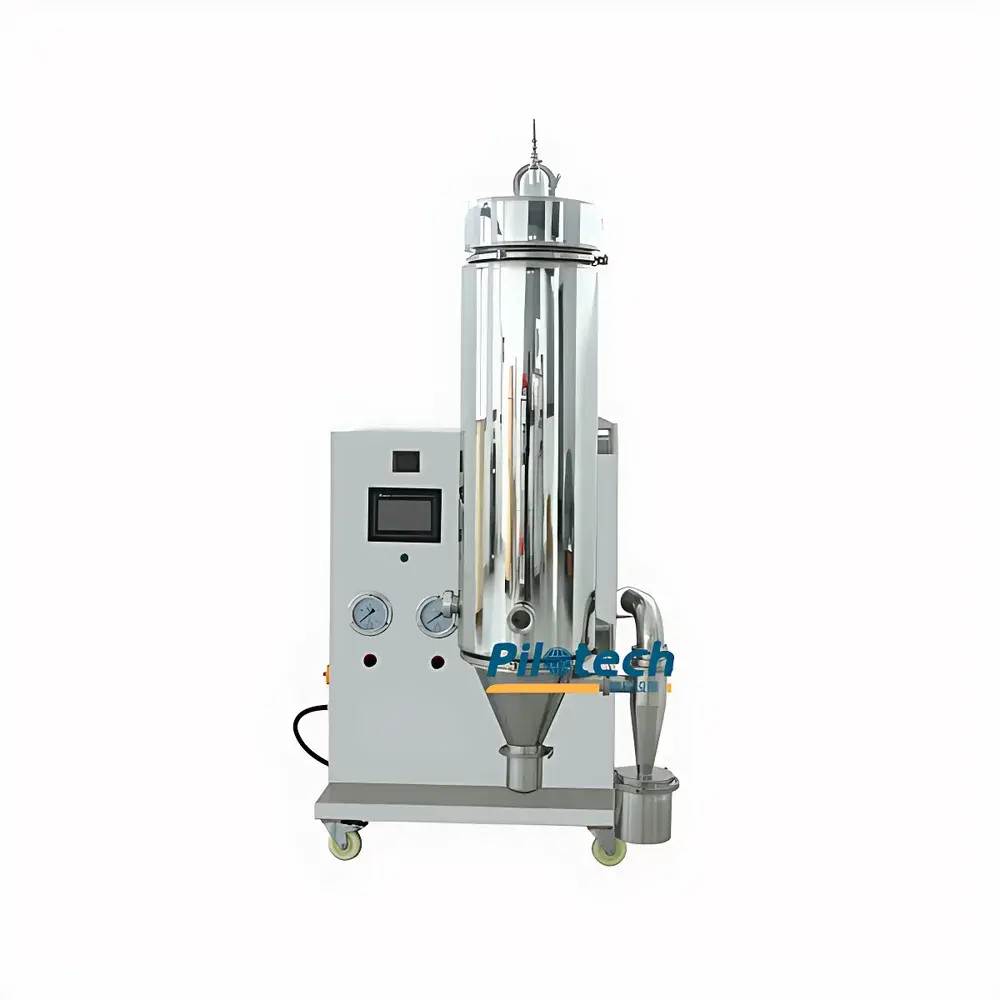
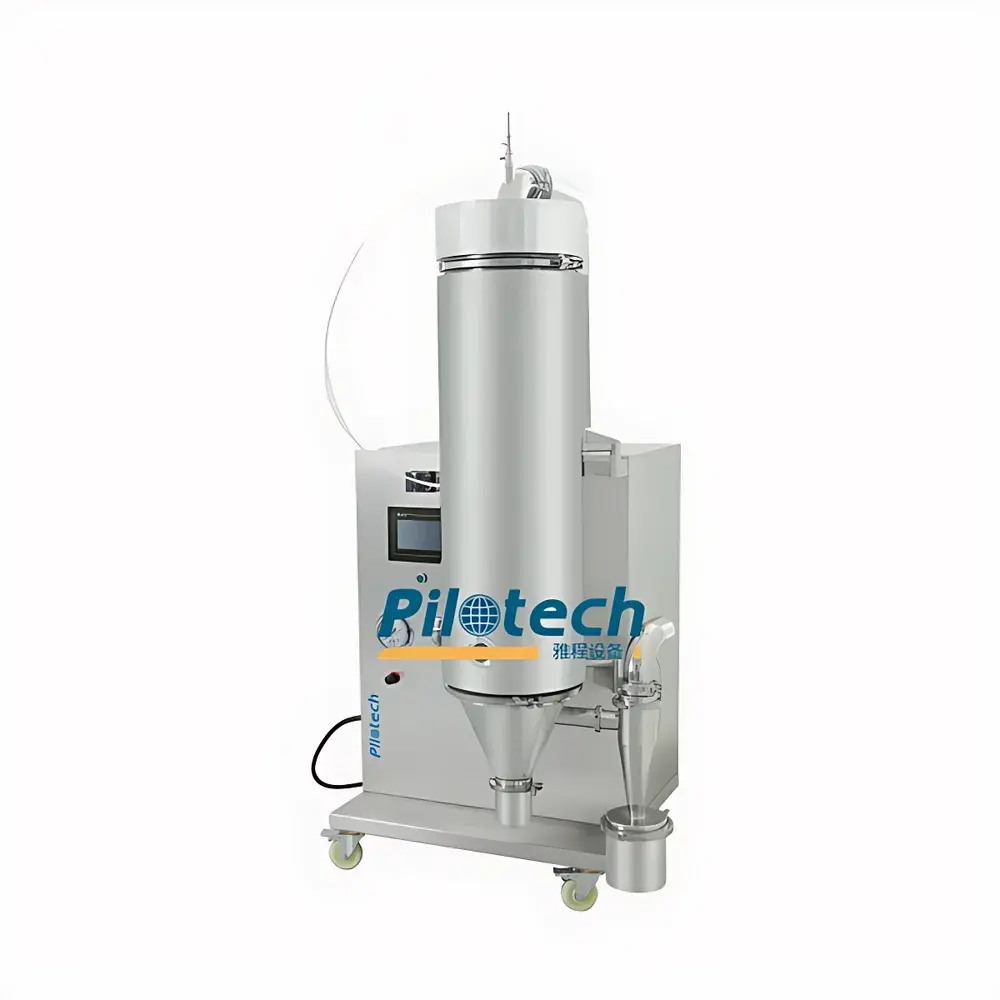
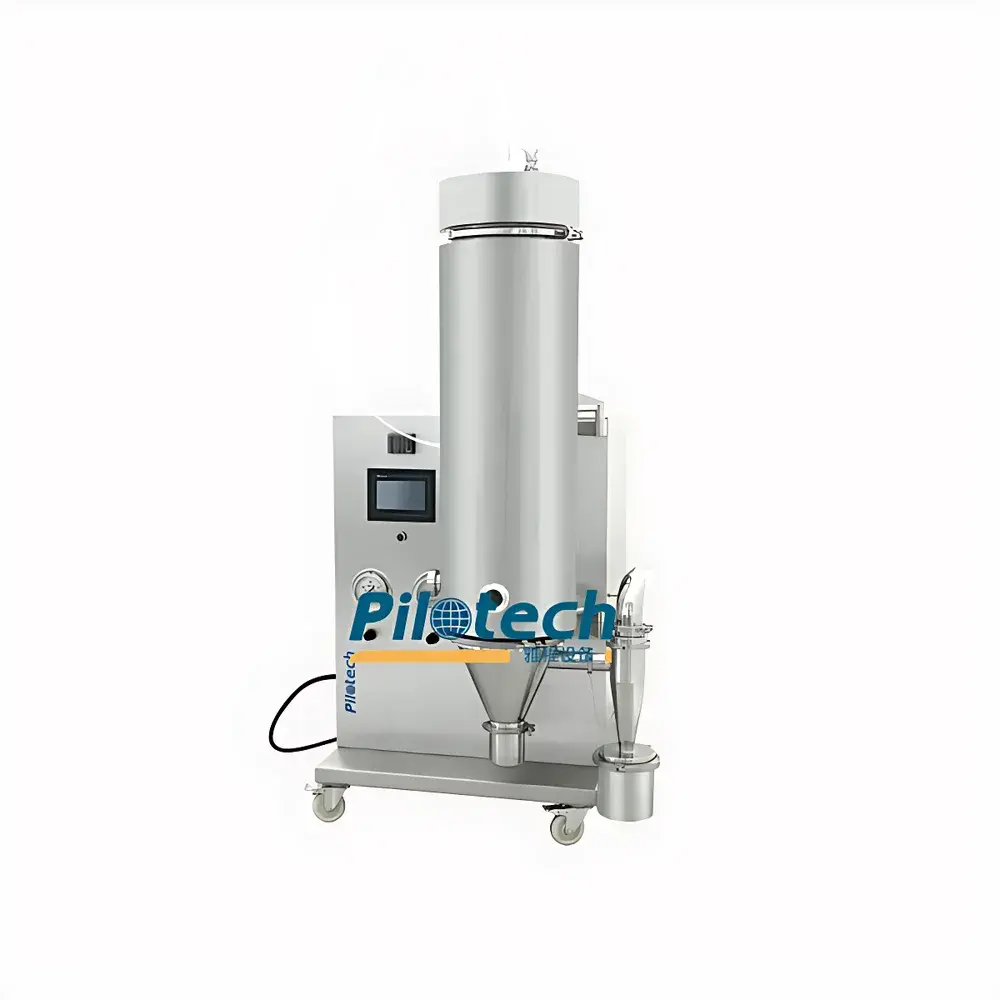
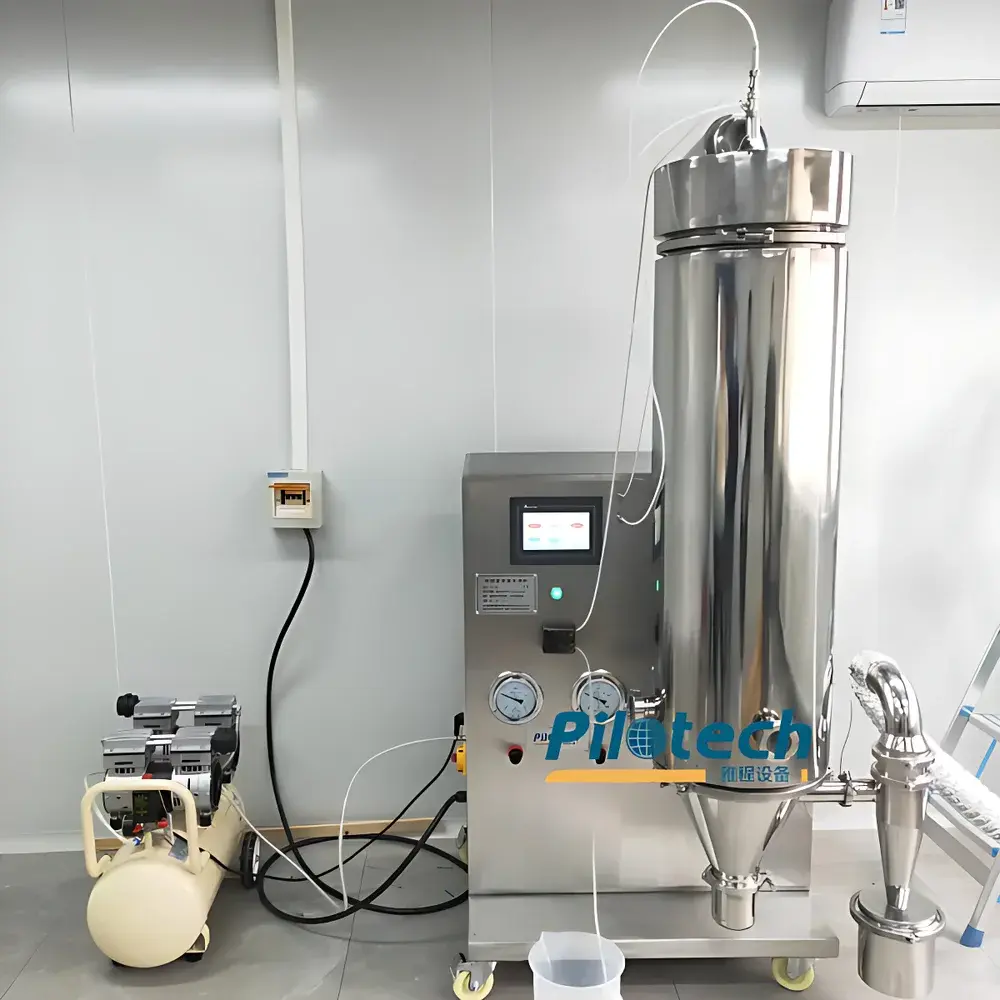
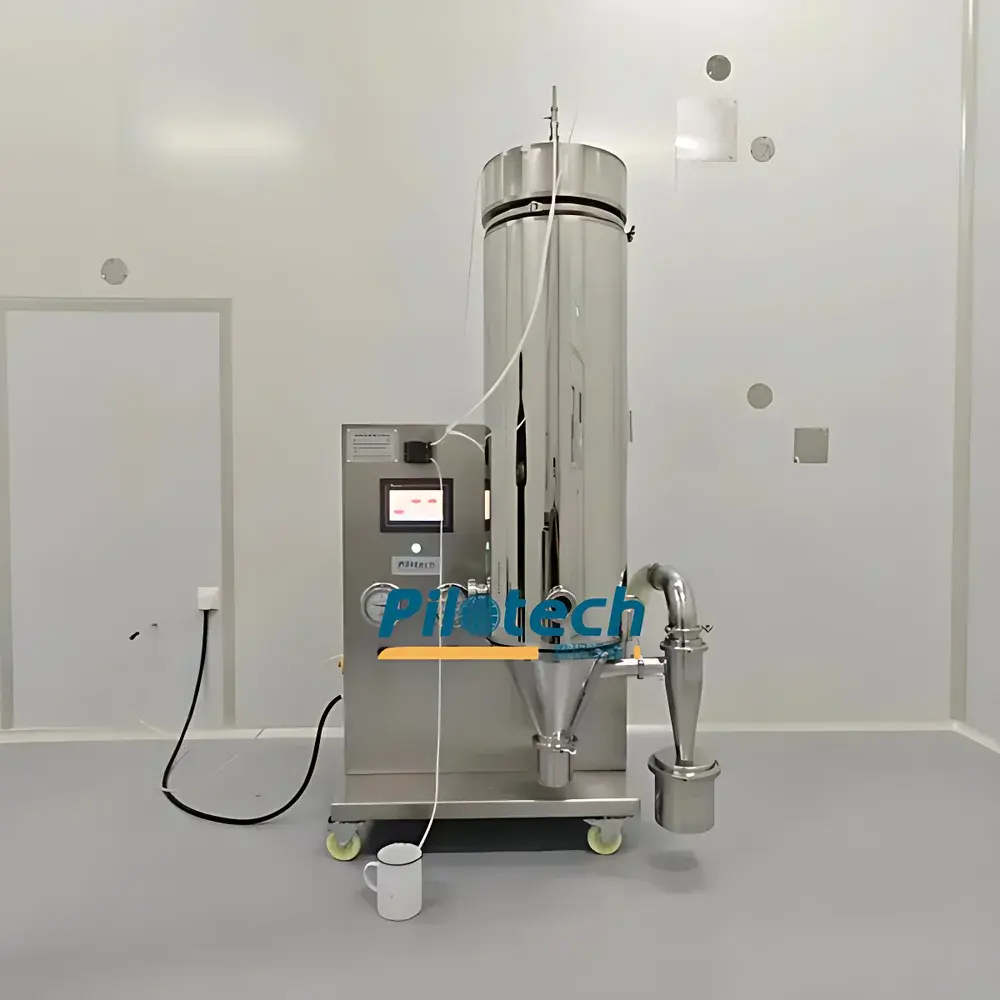
PILOTECH YC-019 Pilot-Scale Spray Dryer
| Brand | PILOTECH |
|---|---|
| Origin | Shanghai, China |
| Manufacturer Type | Original Equipment Manufacturer (OEM) |
| Model | YC-019 |
| Sample Compatibility | Aqueous solutions, suspensions, emulsions |
| Max Feed Rate | 5000 mL/h |
| Inlet Air Temperature Range | 105–350 °C |
| Particle Size Output | 1–100 µm |
| Recovery Efficiency | Up to 92% |
| Control Interface | Full-color LCD touchscreen with real-time PID temperature control (±2 °C), adjustable peristaltic pump (100–5000 mL/h), programmable nozzle cleaning (needle frequency adjustable), standard 2.0 mm nozzle (0.5/0.8/1.0/1.5 mm optional) |
| Construction | 304 stainless steel drying chamber, cyclone separator, and collection tubing |
| Air Supply | Oil-free air compressor |
| Drying Residence Time | 1.0–1.5 s |
Overview
The PILOTECH YC-019 Pilot-Scale Spray Dryer is an engineered solution for translational research bridging laboratory discovery and small-batch production. It operates on the principle of single-stage concurrent spray drying: liquid feed is atomized via a pneumatic or pressure nozzle into fine droplets, which are rapidly dried upon contact with heated inlet air in a vertical cylindrical drying chamber. The resulting solid particles are separated from the exhaust air stream using a high-efficiency cyclonic collector system, minimizing fines carryover and maximizing yield. Designed specifically for process development in pharmaceuticals, functional foods, catalyst synthesis, and natural product stabilization, the YC-019 supports scalable parameter mapping—enabling direct correlation between lab-scale drying conditions and subsequent GMP-compliant manufacturing protocols. Its ability to maintain thermal integrity of thermolabile compounds—such as enzymes, peptides, probiotics, and botanical extracts—is achieved through precise control over inlet temperature, residence time (1.0–1.5 s), and rapid moisture removal without prolonged thermal exposure.
Key Features
- Wide operational temperature range (105–350 °C): enables processing of both heat-sensitive biologics at low inlet temperatures and refractory materials (e.g., ceramic precursors, metal oxides) at elevated setpoints.
- Adjustable feed rate from 100 mL to 5000 mL/h: supports method development across micro-dose screening, formulation optimization, and pilot batch generation—all within a single platform.
- Optimized particle size distribution: delivers consistent median diameters from 1 to 100 µm, with narrow span (D90/D10 < 2.5), meeting stringent requirements for catalyst supports, inhalable powders, and free-flowing nutraceuticals.
- Enhanced recovery architecture: re-engineered airflow dynamics and dual-stage collection geometry achieve ≥92% mass recovery—significantly exceeding conventional benchtop systems limited by single-cyclone inefficiency.
- Intelligent nozzle maintenance: programmable needle-clearing mechanism prevents clogging during continuous operation with viscous or particulate-laden feeds; frequency and dwell time are user-configurable.
- Real-time process monitoring: full-color touchscreen interface displays and logs inlet temperature, outlet temperature, blower frequency, peristaltic pump speed, and needle actuation status—supporting ALCOA+ data integrity principles.
- Robust mechanical construction: all wetted parts—including drying chamber, cyclone, and collection vessels—are fabricated from electropolished 304 stainless steel, compliant with USP and ISO 10993-1 for extractables profiling.
Sample Compatibility & Compliance
The YC-019 demonstrates broad compatibility with aqueous-based formulations, including protein solutions, polysaccharide suspensions, nanoemulsions, colloidal silica dispersions, and herbal extracts. It is routinely employed in studies aligned with ICH Q5C (stability of biotechnological products), USP (dosage forms), and ASTM E2917-21 (thermal analysis of pharmaceutical solids). For regulated environments, the system supports 21 CFR Part 11-compliant audit trails when integrated with validated third-party data acquisition software. Its oil-free compressed air supply ensures absence of hydrocarbon contamination—critical for inhalation product development under EMA Guideline on Quality of Inhalation Products (EMA/CHMP/QWP/487434/2017). All electrical components meet CE and UL 61010-1 safety standards; noise emission is ≤58 dB(A) at 1 m—fully compliant with ISO 4871 and EU Directive 2000/14/EC.
Software & Data Management
While the YC-019 operates via embedded firmware with local touchscreen control, its analog and digital I/O ports (RS485, 0–10 V, 4–20 mA) allow seamless integration into centralized SCADA or LIMS environments. Process parameters—including temperature ramps, pump profiles, and event timestamps—are exportable in CSV format for post-run statistical analysis (e.g., JMP, Minitab). Optional Ethernet-enabled data logging modules provide secure, time-stamped records with user authentication and electronic signatures—facilitating GLP/GMP audits per FDA Guidance for Industry: Computerized Systems Used in Clinical Trials (2023) and Annex 11 of the EU GMP Guidelines. Calibration certificates for temperature sensors (traceable to NIST SRM 1968) and flow meters (ISO/IEC 17025-accredited) are available upon request.
Applications
- Pharmaceutical development: preparation of amorphous solid dispersions, dry powder inhalers (DPIs), and lyoprotected vaccine candidates.
- Catalyst engineering: synthesis of spherical alumina, silica-supported transition metals, and zeolitic microparticles with controlled porosity and surface area.
- Food & nutrition: microencapsulation of omega-3 oils, probiotics, anthocyanins, and vitamin complexes for enhanced shelf-life and gastric stability.
- Materials science: production of battery cathode precursors (e.g., LiCoO₂, NMC), magnetic nanoparticles, and aerogel precursors.
- Traditional medicine research: gentle drying of glycoside-rich herbal decoctions without Maillard degradation or caramelization.
FAQ
What is the minimum sample volume required for meaningful process validation?
A minimum of 100 mL is recommended for reproducible thermal and mass-transfer characterization—though method development may begin with smaller volumes (≥30 mL) using calibrated syringe pumps.
Can the YC-019 be used for organic solvent-based feeds?
No—the standard configuration is certified only for aqueous systems. Explosion-proof variants with nitrogen inerting and solvent recovery modules are available under custom engineering (PILOTECH Model YC-019-EX).
Is the system compatible with Good Manufacturing Practice (GMP) documentation requirements?
Yes—when paired with validated data capture software and maintained per IQ/OQ/PQ protocols, the YC-019 meets foundational GMP expectations for Stage 1–2 process development per ICH Q5D and Q8(R2).
How frequently should the nozzle and cyclone be cleaned during extended runs?
Cleaning intervals depend on feed solids content and viscosity; typical maintenance occurs every 2–4 hours for 10–20% w/w suspensions. The automated needle function reduces manual intervention by >70% compared to non-actuated systems.
Does PILOTECH provide installation qualification (IQ) and operational qualification (OQ) support?
Yes—factory-verified IQ/OQ documentation packages, including calibration logs, alarm response tests, and temperature uniformity mapping reports, are offered as optional add-ons.



