
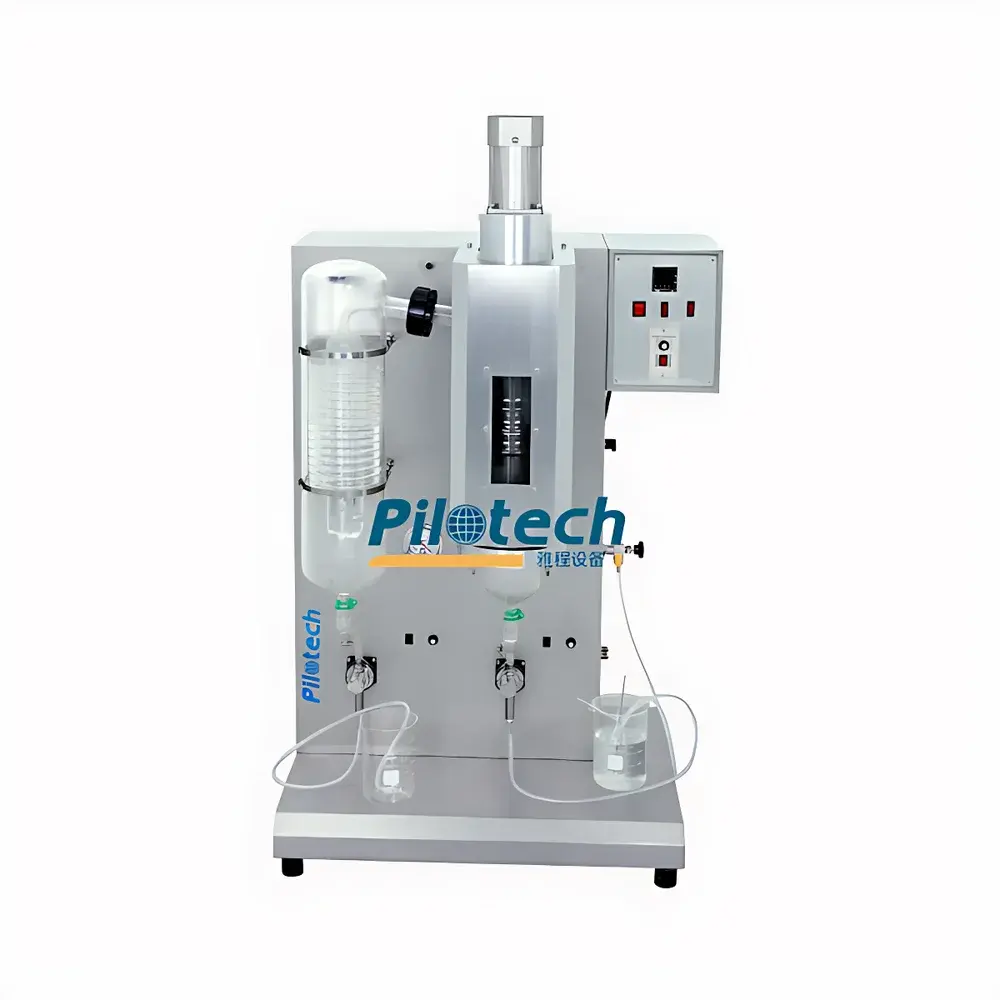
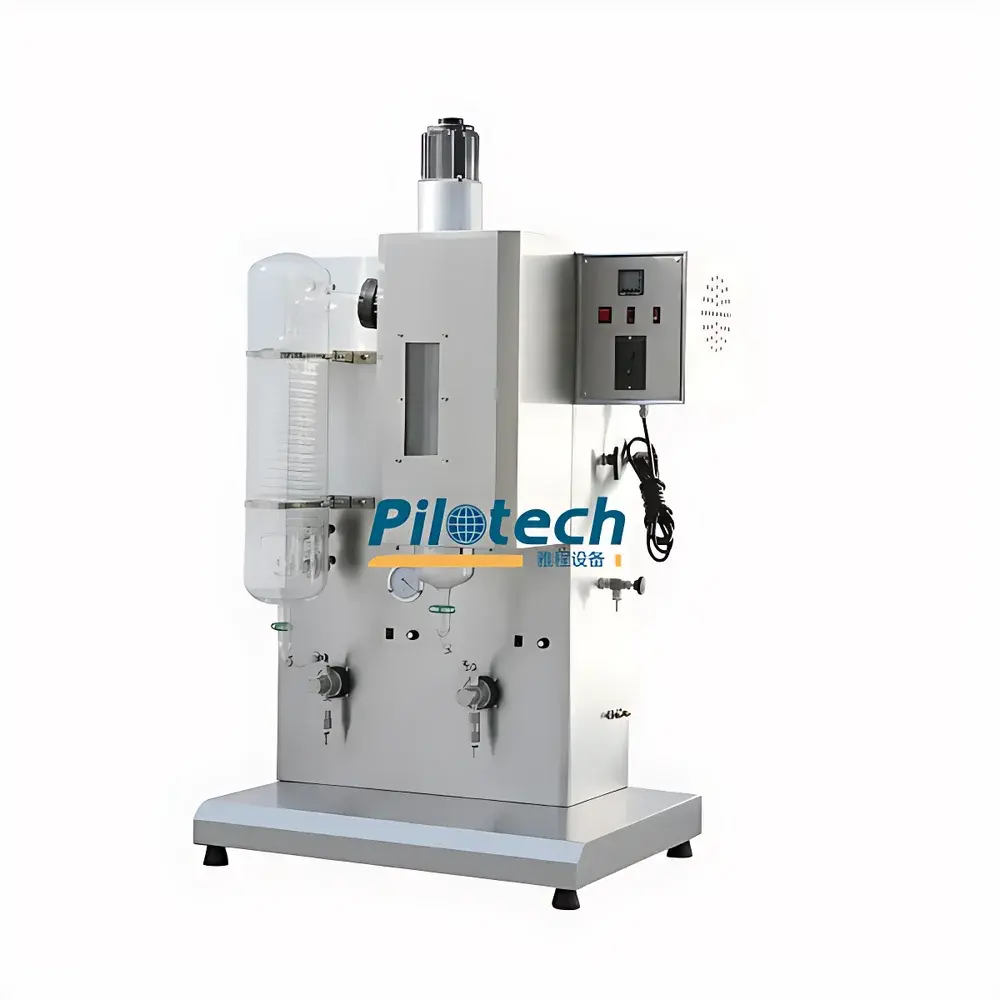
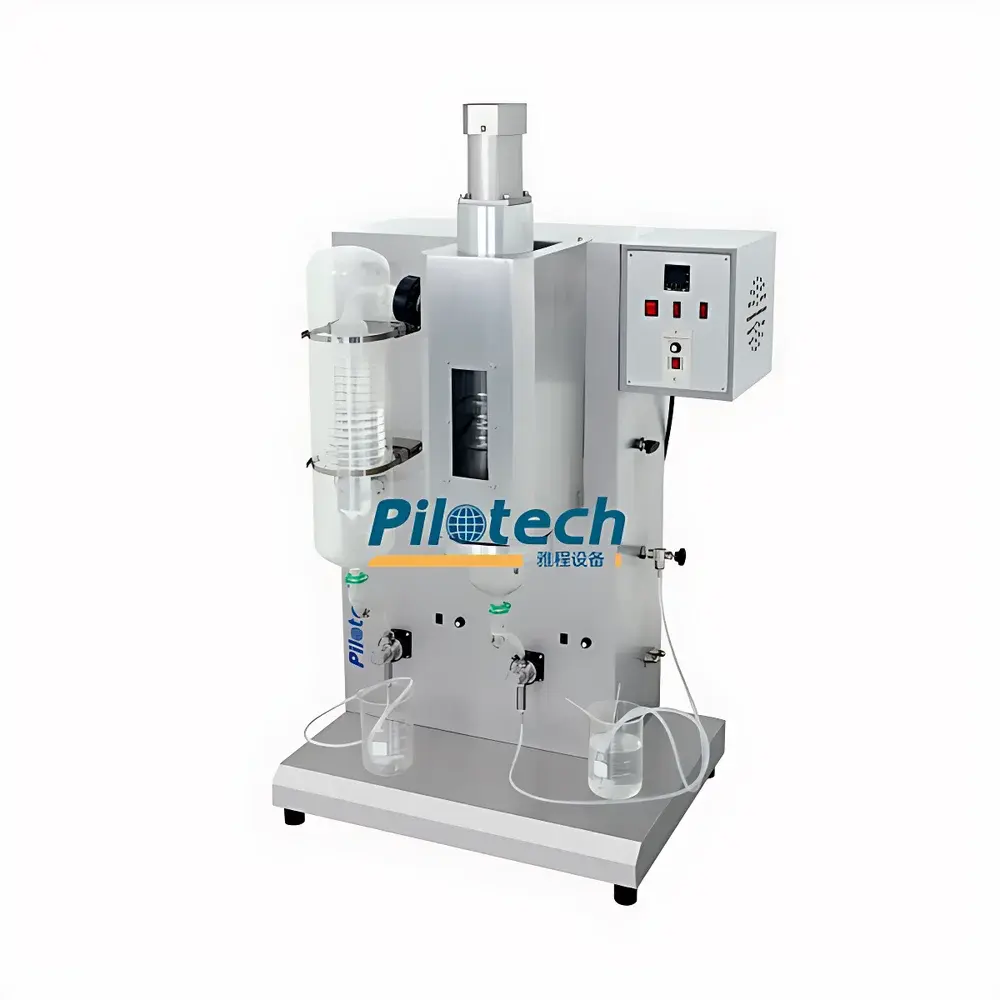
Shanghai Yacheng YC-210 Wiped-Film Flash Evaporator
| Brand | Yacheng / PILOTECH |
|---|---|
| Origin | Shanghai, China |
| Manufacturer Type | Direct Manufacturer |
| Country of Origin | China |
| Model | YC-210 |
| Instrument Type | Automated Quantitative Concentrator |
Overview
The Shanghai Yacheng YC-210 Wiped-Film Flash Evaporator is a precision-engineered, continuous-feed thin-film evaporation system designed for the gentle, rapid concentration of thermolabile, viscous, or foaming liquid samples under controlled vacuum conditions. Unlike conventional rotary evaporators—which rely on batch processing and prolonged residence time in heated flasks—the YC-210 employs a vertical wiped-film principle: feed solution is introduced at the top of a heated cylindrical evaporator body, distributed evenly onto the inner wall, and mechanically spread into a uniform, sub-millimeter-thick film by rotating PTFE-coated wiper blades. This film flows downward under gravity while undergoing instantaneous vaporization at the liquid–vapor interface, enabling heat transfer coefficients up to 3–5× higher than those achievable in static or stirred batch systems. The entire process—from sample entry to concentrated product discharge—takes ≤30 seconds, minimizing thermal exposure and preserving labile compounds such as peptides, enzymes, natural extracts, and unstable APIs. The system operates under deep vacuum (typically 0.1–10 mbar), allowing solvent removal at significantly reduced boiling points—critical for applications involving ethanol, acetone, dichloromethane, or aqueous buffers without degradation.
Key Features
- Continuous feed-and-discharge architecture eliminates batch bottlenecks and enables scalable throughput for R&D and pilot-scale purification workflows.
- PTFE-coated wiper blades ensure consistent film formation across viscosity ranges from 1 cP to >10,000 cP—suitable for syrups, fermentation broths, and polymer solutions.
- Optimized thermal management via jacketed stainless-steel evaporator body with precise PID-controlled heating (ambient to 200 °C, ±0.5 °C stability).
- Integrated vacuum regulation with digital pressure control and real-time monitoring, compatible with external vacuum pumps and cold traps.
- Chemically resistant borosilicate glass construction (DIN/ISO-compliant) for full visual process observation, easy cleaning, and compatibility with aggressive solvents.
- Modular design supports optional integration of condensate collection vessels, inline density sensors, and automated feed rate control via peristaltic or diaphragm metering pumps.
Sample Compatibility & Compliance
The YC-210 accommodates a broad spectrum of challenging matrices: heat-sensitive botanical extracts, protein-rich bioprocess streams, high-sugar food concentrates, and solvent-laden reaction mixtures prone to foaming or crust formation. Its short residence time and absence of stagnant zones mitigate Maillard reactions, oxidation, and hydrolysis—making it suitable for GLP-compliant extract standardization and early-phase API purification. While not certified to ISO 9001 or FDA 21 CFR Part 11 out-of-the-box, the system’s mechanical architecture and material traceability (316L SS components, USP Class VI elastomers) support qualification under GMP Annex 15 and ASTM E2500 frameworks. Documentation packages—including DQ/IQ/OQ protocols, 72-hour factory run-test logs, and material certifications—are provided upon request to facilitate laboratory validation.
Software & Data Management
The YC-210 operates via an intuitive touchscreen HMI with embedded logic for parameter logging (temperature, pressure, feed rate, runtime). All operational data are timestamped and exportable in CSV format for audit trail reconstruction. Optional Ethernet/RS485 connectivity enables remote supervision and integration into LIMS or SCADA environments. Though no proprietary cloud platform is bundled, the device adheres to Modbus TCP conventions, permitting interoperability with third-party data historians compliant with ISA-88 and ISA-95 standards. Audit trails meet ALCOA+ principles when paired with validated electronic notebooks or ELN systems.
Applications
- Rapid desolvation of natural product extracts (e.g., curcuminoids, flavonoids, terpenes) prior to HPLC analysis or crystallization.
- Concentration of monoclonal antibody harvests and viral vector supernatants without aggregation or loss of activity.
- Solvent recovery from Grignard or lithiation reaction quenches—reducing hazardous waste volume by >90%.
- Dehydration of probiotic suspensions and enzyme formulations for lyophilization feedstock preparation.
- Continuous decolorization and deodorization of edible oils and fish oil concentrates using activated carbon or silica gel co-feeding modules (add-on).
FAQ
What is the typical residence time inside the evaporator?
Residence time is consistently maintained at ≤30 seconds under standard operating conditions (feed rate: 50–300 mL/min, vacuum: 1–5 mbar, temperature: 40–120 °C).
Can the YC-210 handle foaming samples?
Yes—its wiped-film geometry disrupts foam structure dynamically, and the short contact time prevents foam stabilization, eliminating the need for antifoam agents in most cases.
Is glassware replacement supported with standard lab glass suppliers?
All major glass components conform to DIN 12250 and ISO 3585 specifications; replacements are available from certified scientific glass fabricators globally.
Does the system include validation documentation?
Each unit ships with a Factory Acceptance Test (FAT) report, 72-hour continuous operation log, and material compliance certificates; IQ/OQ templates are supplied for customer-led qualification.
What maintenance intervals are recommended?
Wiper blade inspection every 200 hours of operation; vacuum seal lubrication quarterly; full thermal calibration annually using NIST-traceable references.
Related Products



