
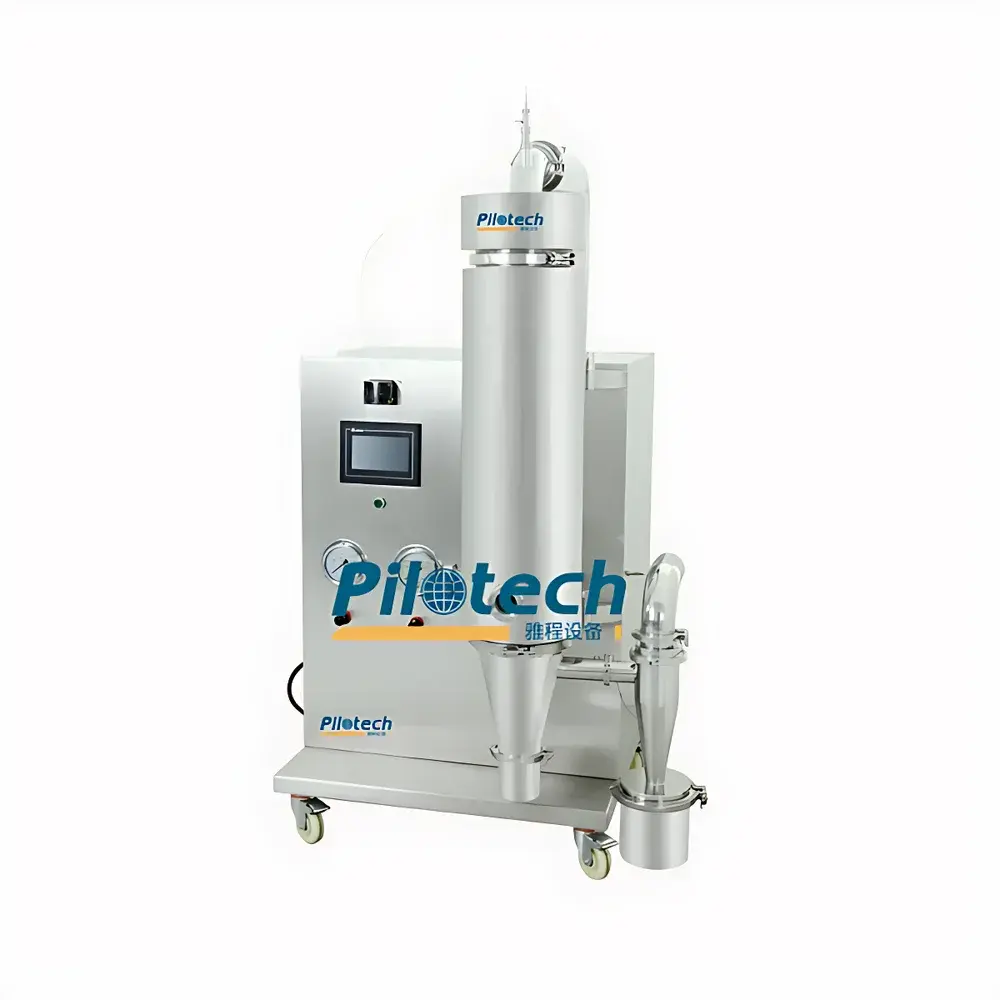
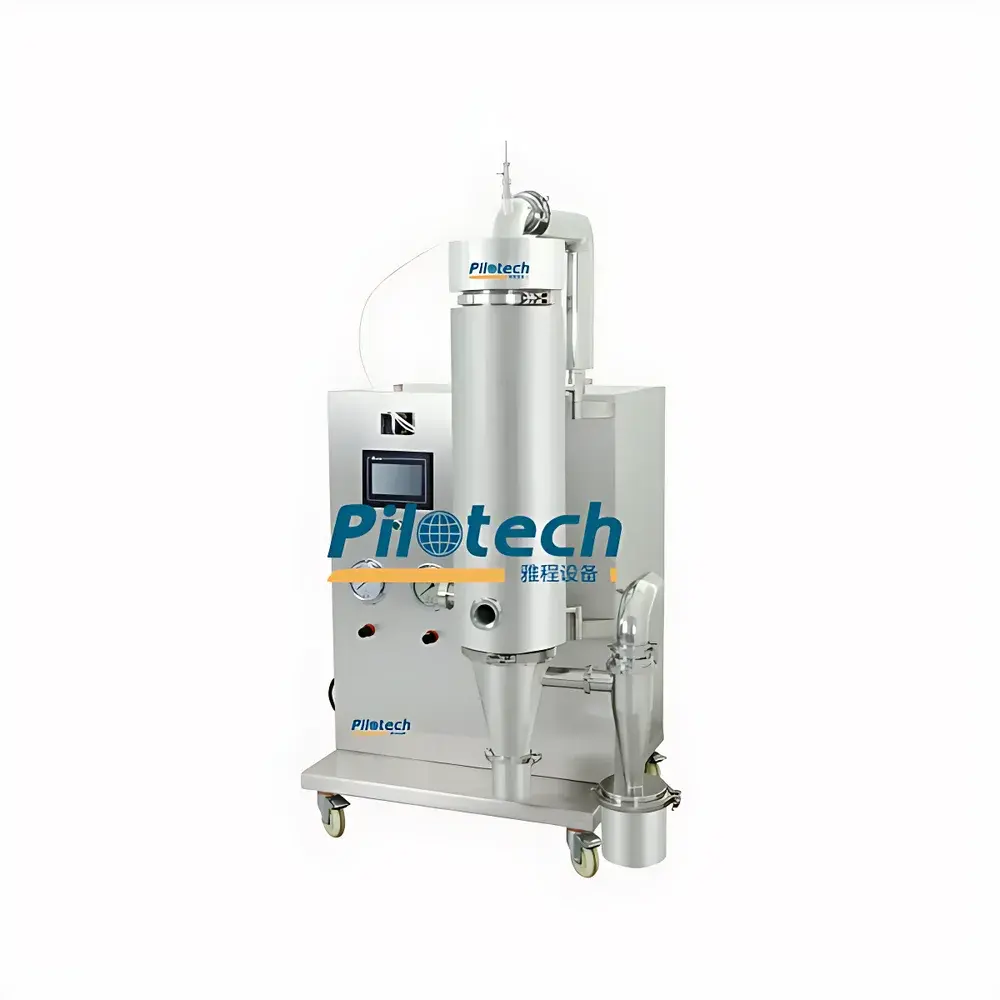
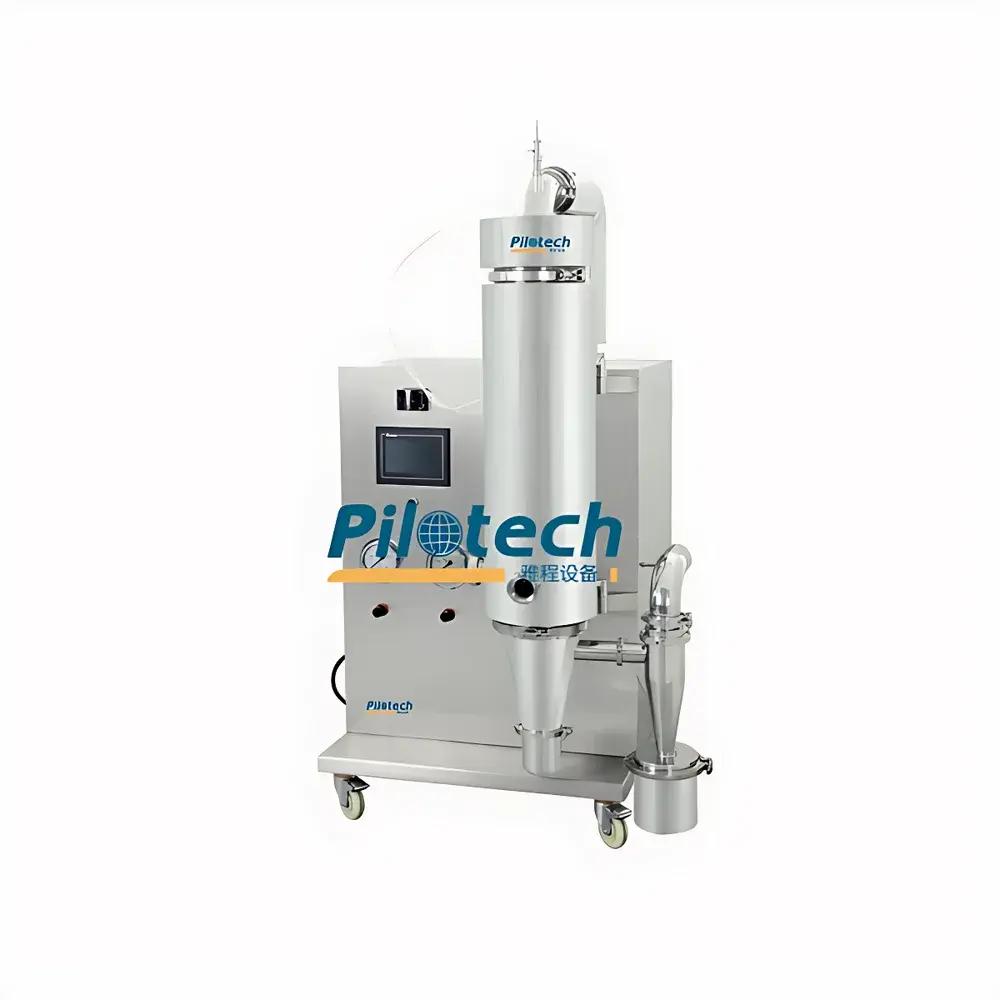
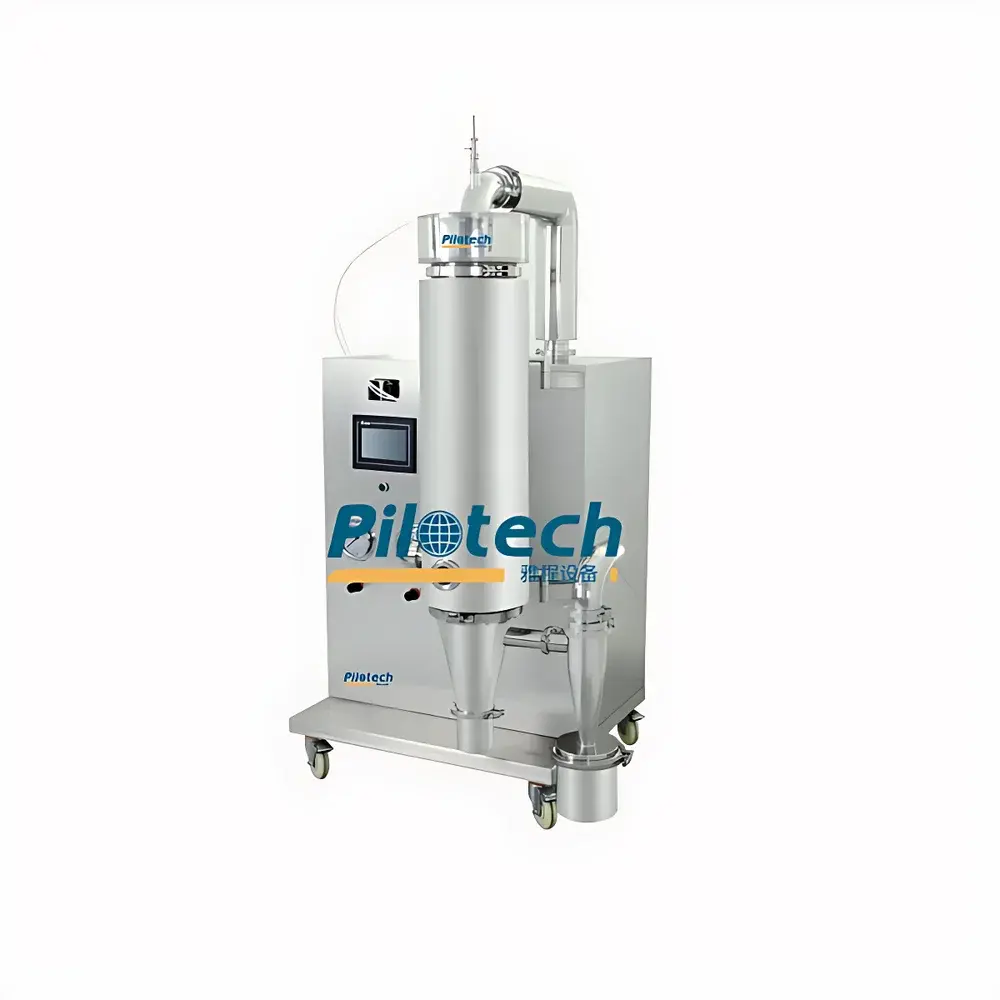
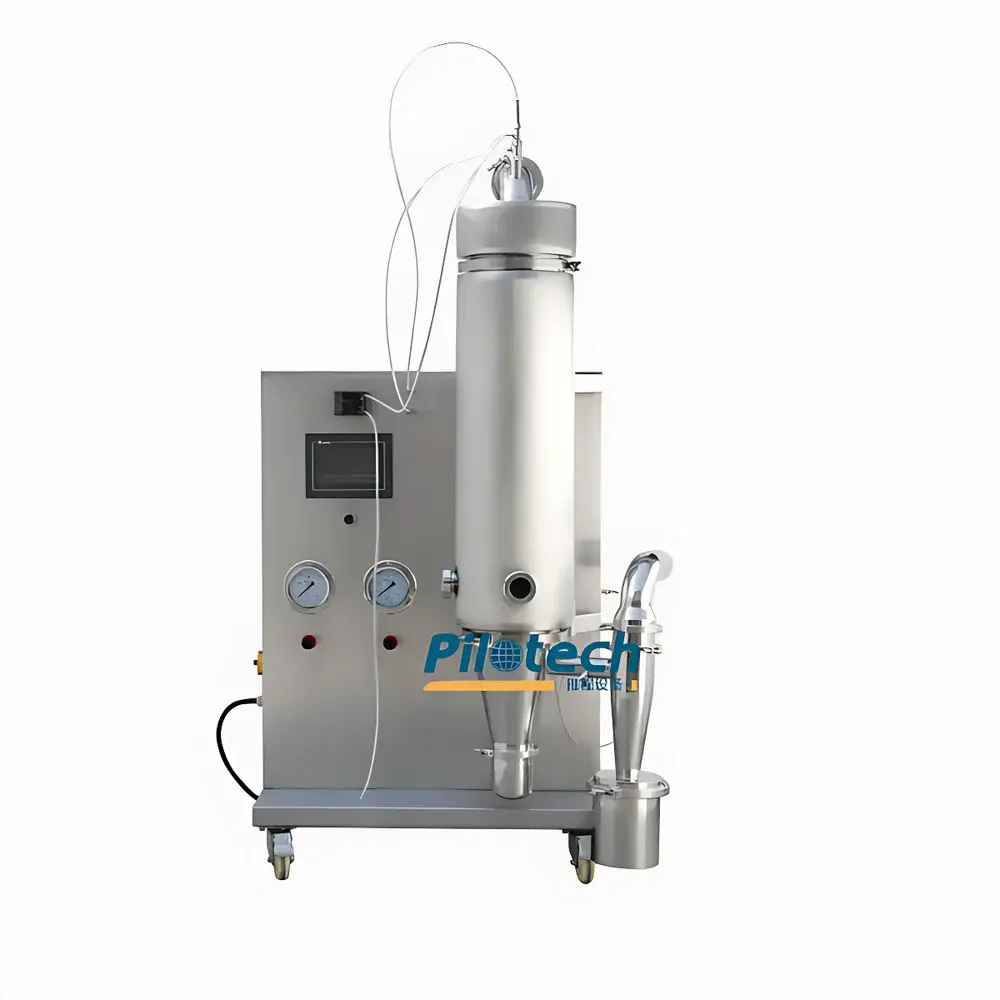
YaCheng YC-018 Pilot-Scale Spray Dryer for Large-Particle Production
| Brand | YaCheng / PILOTECH |
|---|---|
| Origin | Shanghai, China |
| Manufacturer Type | Direct Manufacturer |
| Country of Origin | China |
| Model | YC-018 |
| Sample Type Compatibility | Aqueous solutions only |
| Max Feed Rate | 3000 mL/h |
| Inlet Air Temperature Range | 105–280 °C |
| Particle Size Output | 1–80 µm |
Overview
The YaCheng YC-018 Pilot-Scale Spray Dryer is an engineered solution for laboratory-scale and early-stage process development requiring controlled production of microparticles in the 1–80 µm range. It operates on the principle of single-stage, concurrent-flow spray drying: liquid feed is atomized via a precision nozzle into fine droplets, which are rapidly dried by contact with heated inlet air (105–280 °C) within a stainless-steel drying chamber. Residence time is tightly constrained to 1.0–1.5 seconds—sufficient for complete solvent evaporation yet short enough to preserve thermolabile compounds such as enzymes, probiotics, natural extracts, and bioactive peptides. Unlike conventional benchtop units limited to sub-25 µm output, the YC-018’s optimized airflow dynamics, nozzle geometry, and cyclonic separation architecture enable reproducible generation of coarse, free-flowing powders—critical for catalyst supports, ceramic precursors, sustained-release excipients, and functional food ingredients.
Key Features
- Thermally adaptive inlet air control: Programmable range from 105 °C (for heat-sensitive botanicals and glycoside-rich extracts) to 280 °C (for high-decomposition-point inorganic precursors such as metal nitrates or alumina sols)
- High-efficiency particle recovery: Redesigned dual-stage collection system—including 304 stainless-steel cyclone separator and integrated collection vessel—achieves ≥92% mass recovery, minimizing sample loss during low-volume (<100 mL) or high-viscosity runs
- Modular nozzle configuration: Standard 1.5 mm stainless-steel two-fluid nozzle; optional interchangeable nozzles (0.5/0.8/1.0/2.0 mm) for tuning droplet size distribution and final particle morphology
- Automated anti-clogging mechanism: Motor-driven “needle cleaner” (adjustable frequency) clears nozzle orifices in real time without interrupting operation—essential for suspensions containing insoluble solids or viscous polysaccharides
- PID-controlled thermal stability: Inlet air temperature maintained within ±1 °C tolerance via closed-loop feedback; outlet air temperature independently regulated between 30–140 °C for precise moisture content control
- Compact footprint & acoustic optimization: Fully enclosed cabinet occupies <1 m² floor space; integrated oil-free air compressor and vibration-damped mounting reduce operational noise to ≤55 dB(A), compliant with ISO 15710 and national laboratory ambient noise standards
Sample Compatibility & Compliance
The YC-018 accepts aqueous-based feeds only—including solutions, colloidal suspensions, emulsions, and nanosuspensions—with total dissolved solids (TDS) ranging from 2% to 45% w/w. It is routinely deployed in GLP-compliant R&D workflows for pharmaceutical dry powder inhalers (DPIs), nutraceutical microencapsulation, and ceramic precursor synthesis. While not certified to FDA 21 CFR Part 11 out-of-the-box, its touchscreen interface logs timestamped parameter sets (inlet/outlet temperature, pump speed, fan frequency, needle actuation count), supporting audit-ready documentation when paired with validated SOPs. All wetted parts—including drying chamber, cyclone, and collection tubing—are constructed from electropolished 304 stainless steel (ASTM A240), ensuring corrosion resistance and ease of cleaning per USP analytical instrument qualification guidelines.
Software & Data Management
The unit features a 7-inch color LCD touchscreen running embedded Linux firmware. Real-time visualization includes animated airflow schematics, dynamic trend graphs for all critical parameters, and configurable alarm thresholds (e.g., overtemperature, low airflow, feed interruption). Data is exportable via USB to CSV format for post-processing in MATLAB, JMP, or Python-based statistical analysis pipelines. Optional Ethernet connectivity enables remote monitoring and integration into centralized lab informatics systems (e.g., LabVantage, STARLIMS) using Modbus TCP protocol. Audit trail functionality records operator ID (via login), parameter changes, and system events—aligning with ALCOA+ principles for data integrity in preclinical development environments.
Applications
- Catalyst development: Synthesis of 60–80 µm spherical Ni/Al₂O₃ or Co/MoO₃ particles with narrow size distribution for fixed-bed reactor testing
- Traditional medicine processing: Low-temperature (105–130 °C) drying of polysaccharide-rich herbal extracts (e.g., Astragalus membranaceus, Panax ginseng) without Maillard browning or caramelization
- Functional food ingredient engineering: Encapsulation of omega-3 oils in maltodextrin matrices with controlled release profiles via tailored particle porosity
- Inorganic materials research: Rapid conversion of aqueous metal salt solutions into precursor powders for solid-state sintering or sol-gel processing
- Biotherapeutic formulation: Stabilization of monoclonal antibody fragments or viral vectors in amorphous trehalose matrices under gentle thermal conditions
FAQ
What is the minimum feed volume required for stable operation?
The system achieves stable atomization and thermal equilibrium with as little as 100 mL of feed solution—subject to viscosity and solids content. For optimal reproducibility, ≥250 mL is recommended per run.
Can organic solvents be processed?
No. The YC-018 is designed exclusively for aqueous-phase feeds. Flammable or volatile organic solvents require explosion-proof configurations not supported by this model.
Is GMP-compliant documentation available?
Factory-supplied IQ/OQ protocols are provided. Full GMP validation support—including risk assessment (ICH Q9), traceability matrices, and 21 CFR Part 11 add-ons—is available upon request through YaCheng’s Technical Services division.
How is particle size distribution influenced by operating parameters?
Primary determinants are nozzle orifice diameter, inlet temperature, feed rate, and atomizing air pressure. Empirical DoE studies show that reducing feed rate while increasing inlet temperature shifts the Dv50 toward the upper end of the 1–80 µm range, with minimal impact on span (Dv90/Dv10).
What maintenance intervals are recommended?
Daily: Visual inspection of nozzle tip and cyclone seals; weekly: lubrication of蠕动泵 rollers and verification of PID calibration; annually: full thermal sensor recalibration and compressor filter replacement—per ISO 17025-mandated equipment maintenance schedules.
Related Products



