
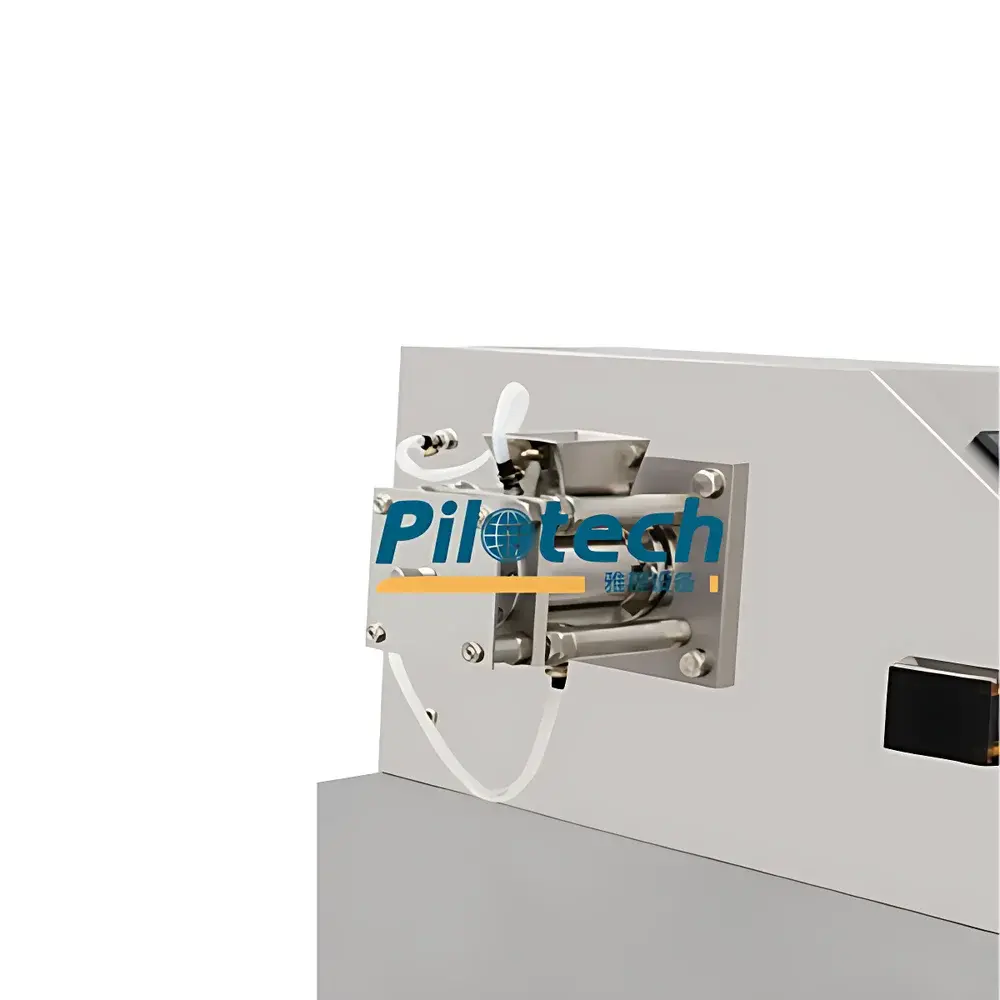
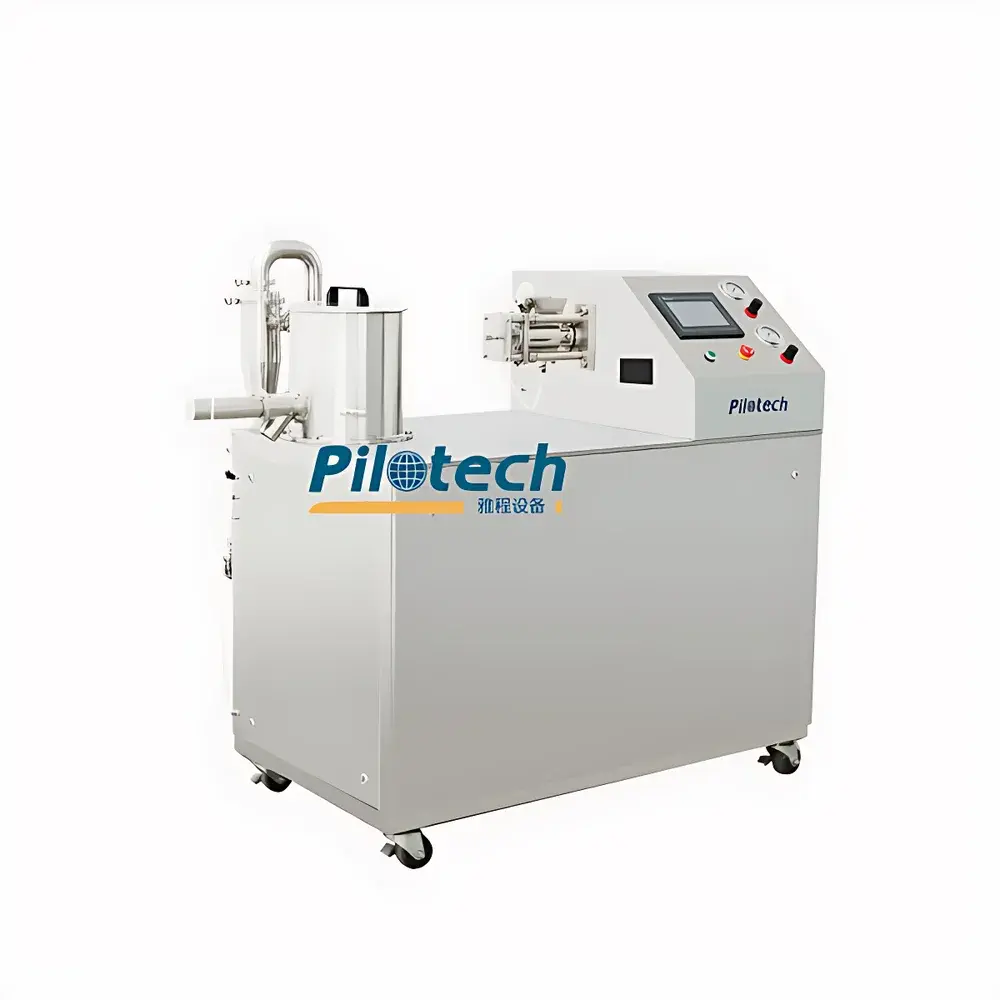
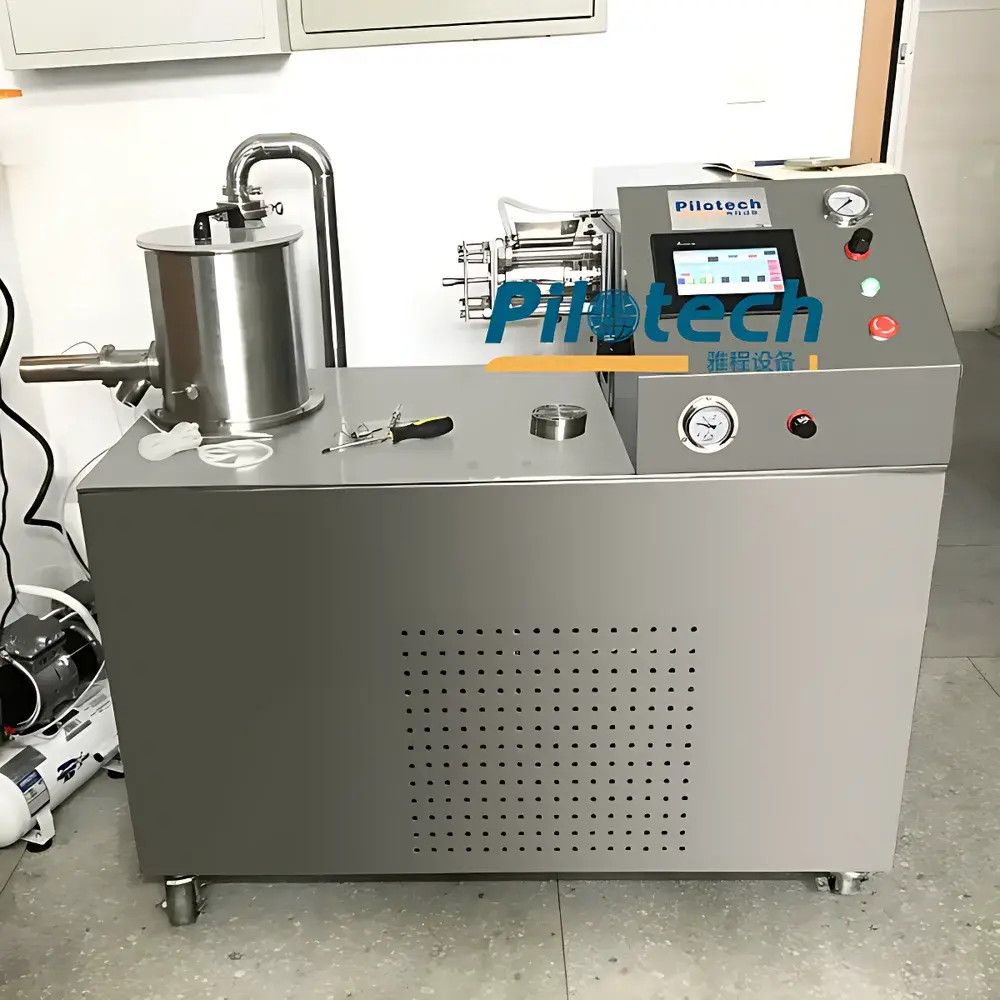
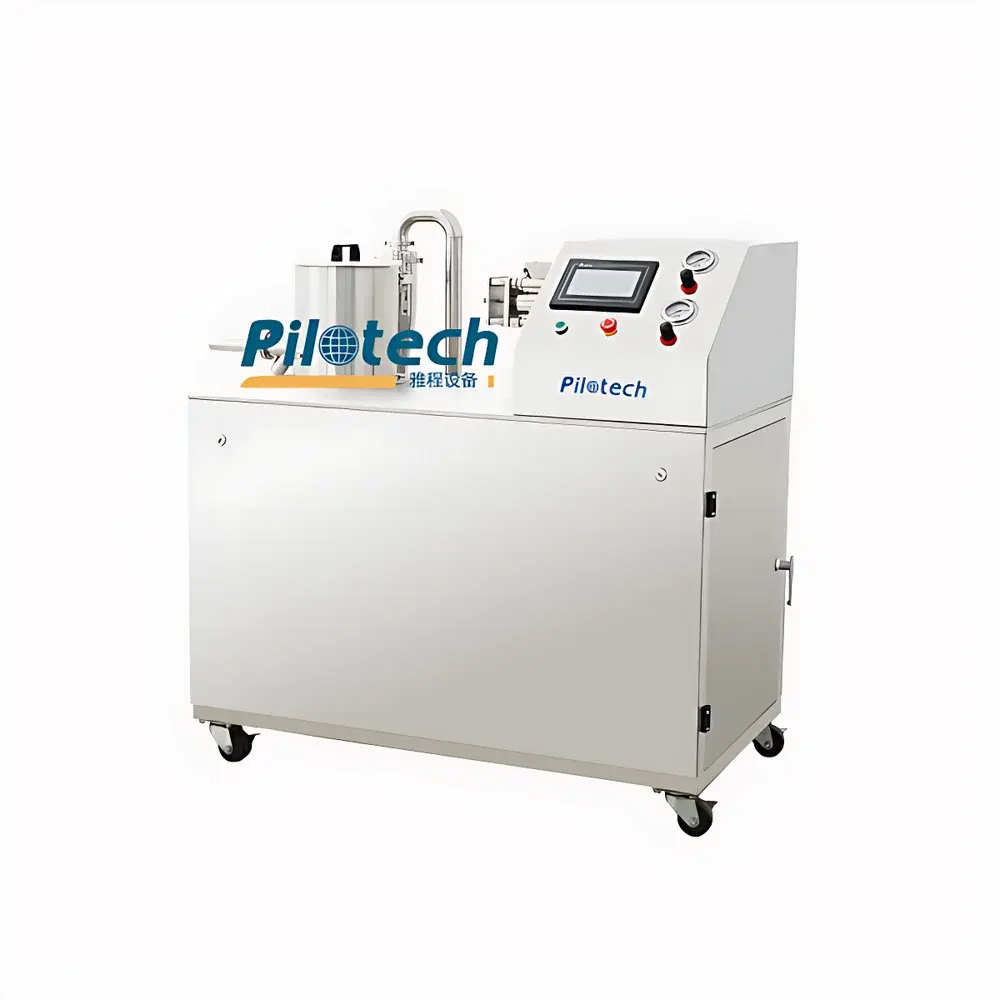
YaCheng / PILOTECH YC-910 Desktop Extrusion-Spheronization & Film Coating System
| Key | Brand: YaCheng / PILOTECH |
|---|---|
| Origin | Shanghai, China |
| Manufacturer Type | Direct Manufacturer |
| Model | YC-910 |
| Throughput | 1–3 kg/hr |
| Extruder Speed | 50 rpm |
| Spheronizer Disc Speed | 1400 rpm |
| Pellet Diameter Range | 0.3–3 mm |
| Disc Diameter | 250 mm |
| Power Rating | 3 kW |
| Compressed Air Requirement | 0.3 m³/h |
| Integrated Cooling System | Built-in Chilled Water Circulation Unit |
| Compliance | Designed for GLP-compliant lab-scale development and GMP-aligned process validation |
Overview
The YaCheng / PILOTECH YC-910 Desktop Extrusion-Spheronization & Film Coating System is an integrated, benchtop-scale unit engineered for pharmaceutical and nutraceutical R&D laboratories requiring precise, reproducible production of spherical multiparticulate dosage forms. It combines three core unit operations—extrusion, spheronization (rotational granulation), and optional film coating—within a single compact architecture. The system operates on the principle of wet extrusion followed by centrifugal spheronization: powder blends (active pharmaceutical ingredients + excipients + binder solution) are conveyed via a rotating screw into a die plate, forming cylindrical extrudates; these are then fed directly into a high-speed rotating disc chamber where mechanical attrition, controlled hydrodynamic forces, and surface moisture redistribution drive shape transformation into near-perfect spheres. A built-in chilled water circulation system actively cools both the extruder barrel and feed hopper, maintaining bulk material temperature below 30 °C during processing—critical for thermolabile APIs, peptides, or probiotic formulations. This thermal management ensures structural integrity and bioactivity retention without compromising throughput or particle uniformity.
Key Features
- Integrated dual-function design: simultaneous extrusion-spheronization with optional in-line film coating capability, minimizing cross-contamination risk and reducing transfer losses.
- Chilled water cooling loop (integrated refrigerated circulator) maintains extruder and feed zone temperatures within ±2 °C of setpoint, validated for continuous operation under load.
- Adjustable extrusion screw speed (0–50 rpm) and spheronizer disc rotation (0–1400 rpm) enable fine-tuned control over extrudate morphology and sphericity.
- Interchangeable stainless-steel die plates with aperture diameters from 0.3 mm to 1.2 mm support flexible pellet size targeting across developmental stages—from early-stage feasibility screening to formulation optimization.
- Gas-assisted spheronization: laminar clean-air flow introduced through precision slots in the disc periphery promotes mild fluidization, reducing inter-particle adhesion and enhancing roundness (sphericity ≥0.92 per ISO 4762).
- GMP-aligned construction: 316L stainless-steel contact surfaces, fully drainable geometry, and smooth internal welds meet ASME BPE Surface Finish standards (Ra ≤ 0.8 µm).
- Batch processing time ≤3 minutes per 500 g charge; typical yield >95% without post-spheronization sieving due to narrow particle size distribution (span <1.2).
Sample Compatibility & Compliance
The YC-910 accommodates a broad spectrum of formulation types—including direct-compression excipients (microcrystalline cellulose, lactose monohydrate), polymeric binders (HPMC, PVP K30), and low-moisture-sensitive actives. Its closed-wet-process architecture eliminates airborne dust generation, satisfying OSHA PEL and EU Directive 2004/37/EC requirements for occupational exposure control. All electrical components comply with IEC 61000-6-3 (EMC) and IEC 61000-6-2 (immunity). For regulated environments, the system supports 21 CFR Part 11–compliant data logging when paired with optional validated software modules; audit trails, electronic signatures, and user-access hierarchies can be implemented per client SOPs. Equipment qualification documentation (DQ/IQ/OQ templates) is provided upon request to facilitate GMP lab integration.
Software & Data Management
While the base YC-910 operates via intuitive tactile HMI with preset parameter libraries (e.g., “MCC-based placebo”, “API-loaded HPMC matrix”), optional PC-based control software enables full recipe management, real-time torque/temperature trending, and automated batch reporting. Data export formats include CSV and PDF; raw sensor logs (extruder motor current, disc RPM, coolant inlet/outlet temp) are timestamped and stored locally with SHA-256 hash verification. When deployed in quality-critical settings, the system integrates with LIMS platforms via OPC UA protocol, supporting traceability from raw material lot ID to final pellet batch record.
Applications
- Early-phase formulation screening of extended-release multiparticulates (e.g., ethylcellulose-coated pellets for colonic delivery).
- Development of taste-masked pediatric suspensions using sugar-coated microspheres.
- Preparation of inert placebo beads for dissolution method validation (USP , Ph. Eur. 2.9.3).
- Process mapping studies to establish design space per ICH Q5E and Q8(R2) guidelines.
- Feasibility testing of high-potency API incorporation (up to 40% w/w loading) with minimal segregation.
- Academic research on particle mechanics, binder migration kinetics, and moisture-mediated sphericity evolution.
FAQ
Can the YC-910 be used for sterile microsphere preparation?
No—the system is designed for non-sterile R&D use only. Sterile processing requires ISO Class 5 isolator integration, which is outside its standard configuration.
Is the chilled water system self-contained or does it require external chiller connection?
It includes an integrated recirculating chiller unit with 1.2 L reservoir and PID-controlled temperature setpoint (5–25 °C); no external coolant source is needed.
What is the minimum batch size for statistically representative spheronization results?
Validated minimum charge is 200 g; below this, disc loading imbalance may affect sphericity consistency.
Does the system support regulatory submission-ready documentation?
Yes—DQ/IQ/OQ protocols, FAT/SAT reports, and material certificates of conformance (CoC) are available as optional deliverables under formal QA agreement.
Can the same unit perform enteric coating after spheronization?
Yes—when equipped with the optional spray nozzle assembly, fluidized-bed-style coating is achievable at lab scale; coating uniformity (RSD <5% weight gain) has been verified per USP for pH-dependent polymers.




