
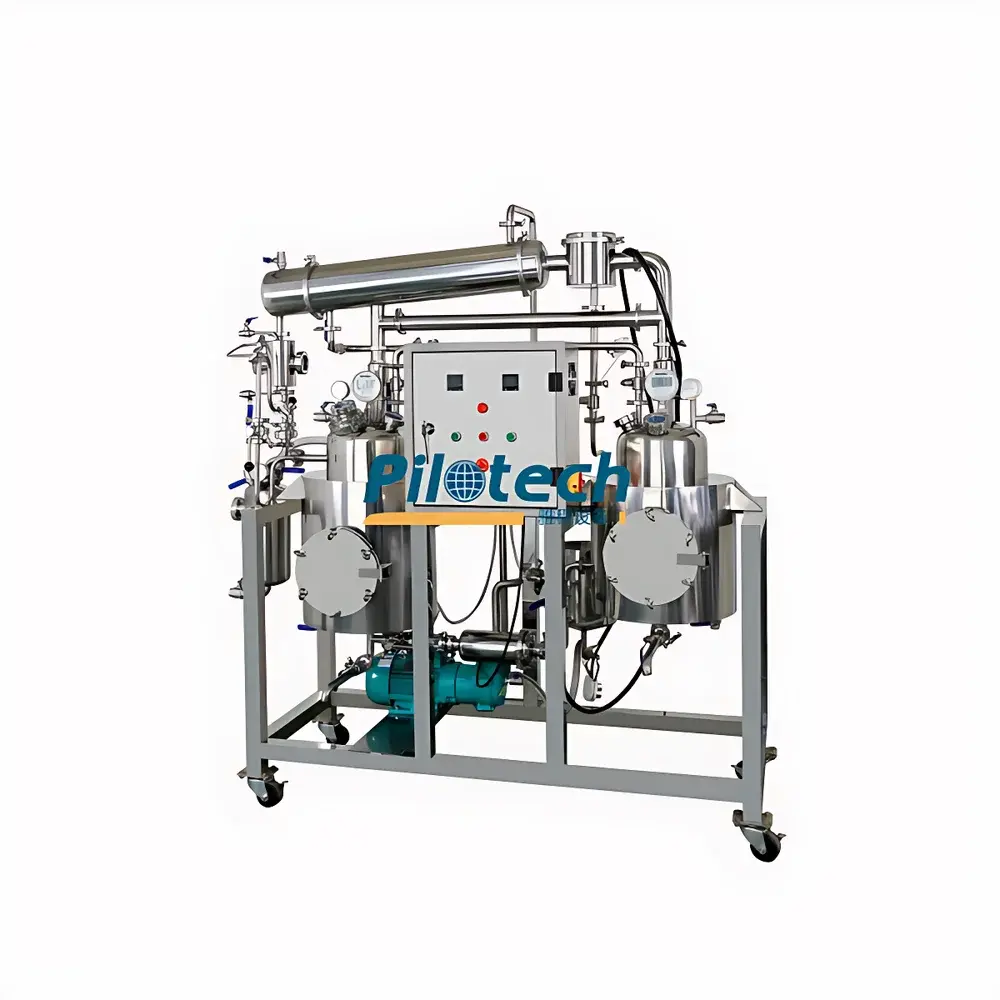
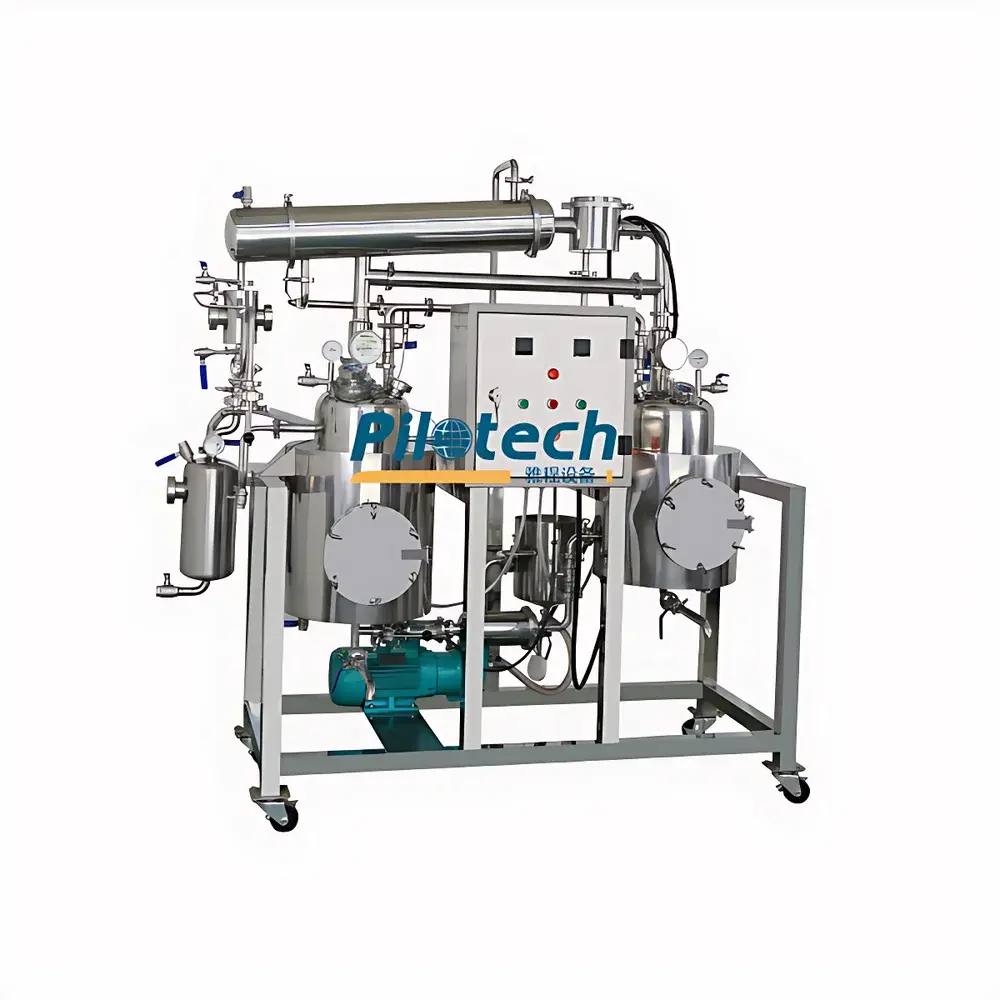
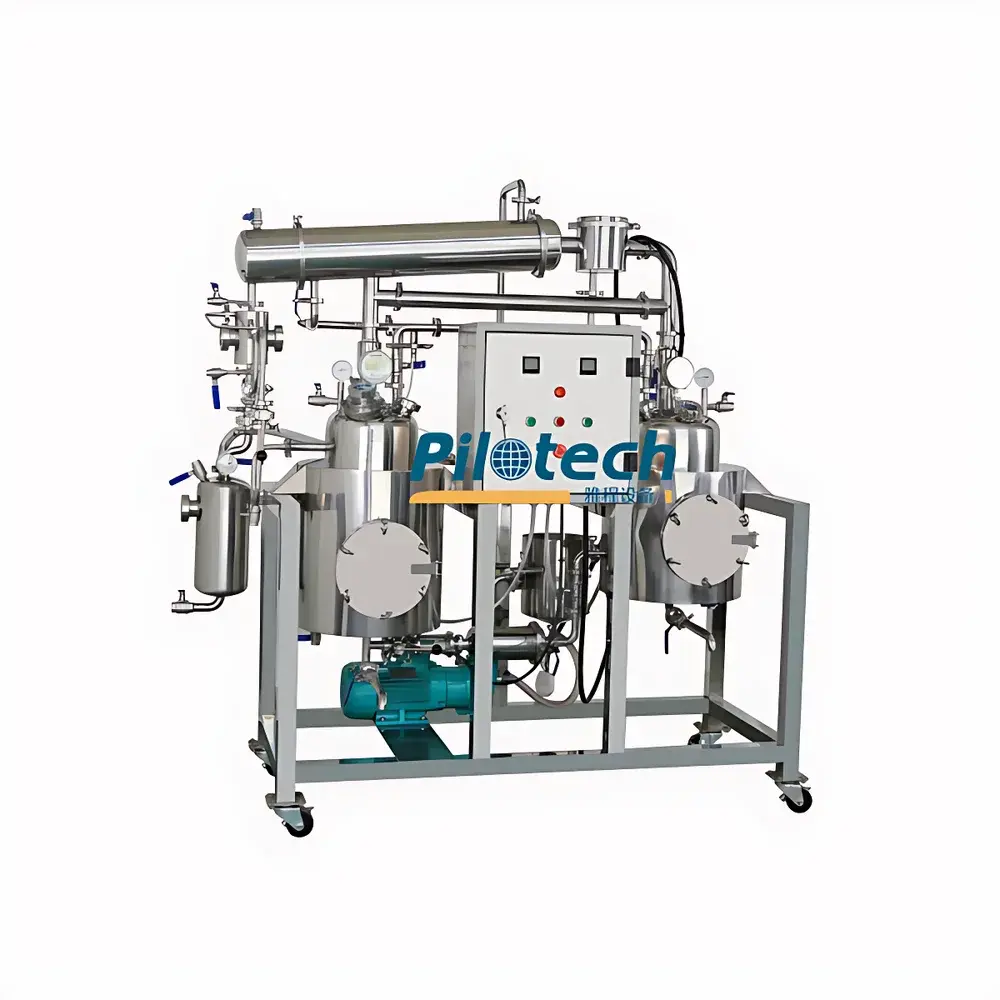
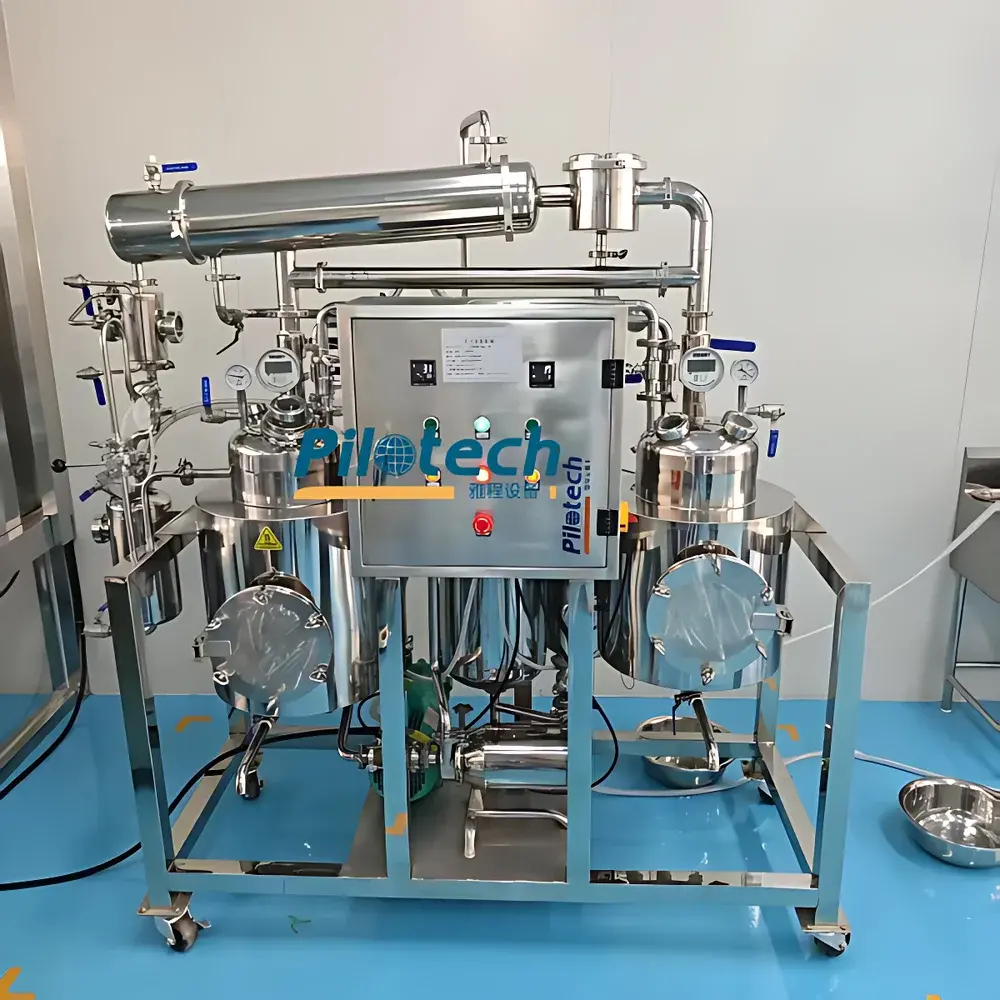
YaCheng YC-020 Pilot-Scale Multifunctional Extraction and Concentration System
| Brand | YaCheng / PILOTECH |
|---|---|
| Origin | Shanghai, China |
| Manufacturer Type | Direct Manufacturer |
| Origin Category | Domestic (China) |
| Model | YC-020 |
| Quotation | Available Upon Request |
| Vessel Capacity | 20 L |
| Batch Feed Range | 0.3–5 kg |
| Temperature Control Accuracy | ±2 °C |
| Heating Power | 9 kW (380 V AC) |
| Vacuum Range | 0 to −0.08 MPa (gauge) |
| Condenser Surface Area | 0.5 m² |
| Cooling Water Consumption | 1 t/h @ < 0.3 MPa |
| Construction Material | SUS304 Stainless Steel |
| Operating Pressure Range | −0.08 MPa to +0.3 MPa (gauge) |
| Concentrate Density Range | 1.10–1.38 g/mL |
| Footprint | ~2.5 m² |
Overview
The YaCheng YC-020 Pilot-Scale Multifunctional Extraction and Concentration System is an integrated, closed-loop laboratory and pilot-scale processing unit engineered for thermal reflux extraction, solvent-based (e.g., ethanol) extraction, vacuum concentration, and volatile oil recovery from botanical matrices. Designed in accordance with pharmaceutical and food-grade hygienic principles, the system operates on a combination of jacketed conductive heating, vacuum-assisted evaporation, and dynamic thermal reflux circulation. Its core architecture follows the Couette-type forced-convection principle within the external circulation evaporator, enabling consistent heat transfer even at elevated viscosities and solute concentrations. The system supports both atmospheric and sub-atmospheric operation across its full pressure range (−0.08 to +0.3 MPa), making it suitable for GMP-aligned process development, formulation screening, and scale-up studies in herbal medicine, nutraceutical, tea, and functional beverage R&D environments.
Key Features
- Integrated 20 L SUS304 stainless steel extraction vessel with sanitary tri-clamp connections, polished interior surface finish (Ra ≤ 0.8 µm), and dual-pressure-rated design (vacuum/positive pressure)
- Thermal reflux loop incorporating a 0.5 m² tubular condenser and phase-separating oil-water separator for quantitative recovery of volatile aromatic compounds (e.g., essential oils)
- Externally mounted forced-circulation vacuum evaporator enabling continuous concentrate density adjustment up to 1.38 g/mL while maintaining low-temperature operation (typically 45–75 °C under −0.08 MPa)
- Independent PID-controlled electric heating system (9 kW, 380 V AC) with Omron temperature controller; jacket heating medium is thermally insulated mineral oil—no pressurized steam or direct flame required
- Water-ring vacuum pump with integrated vacuum gauge and overpressure protection via sanitary safety valve (ASME BPE-compliant design)
- Full electrical control cabinet with interlocked start-stop logic, real-time temperature/vacuum monitoring, and emergency shutdown circuitry
- Compact footprint (~2.5 m²); requires only standard industrial water supply (<0.3 MPa), three-phase power, and floor drainage
Sample Compatibility & Compliance
The YC-020 accommodates heterogeneous solid–liquid extraction of dried or fresh plant materials—including roots, leaves, flowers, seeds, and fruit pulps—with particle size ranges from coarse cut (2–5 mm) to moderately ground (≤1 mm). It supports aqueous, hydroalcoholic (10–95% v/v ethanol), and other GRAS-class organic solvents (e.g., ethyl acetate, acetone) under controlled vacuum conditions. All wetted surfaces comply with ISO 8502-3 surface cleanliness standards and meet FDA-recommended criteria for extractables/leachables in early-phase process validation. While not certified to ASME BPVC Section VIII, the vessel conforms to Chinese GB/T 150.1–2011 for pressure equipment design and incorporates third-party verified pressure testing documentation. The system is routinely deployed in GLP-regulated academic labs and preclinical manufacturing units aligned with ICH Q5C stability protocols.
Software & Data Management
The system operates via hardwired analog control with digital display interfaces—no embedded software or network connectivity. Temperature setpoints, vacuum levels, and heating status are logged manually or via optional external data acquisition systems (e.g., National Instruments CompactDAQ with thermocouple and pressure transducer inputs). For regulated environments, users may integrate the YC-020 into existing SCADA or MES platforms using 4–20 mA analog outputs (available upon request) for time-stamped batch records. Audit trails, electronic signatures, and 21 CFR Part 11 compliance are achievable only when interfaced with validated external software—no native electronic record capability is provided.
Applications
- Process development of traditional Chinese medicine (TCM) decoctions and standardized herbal extracts
- Optimization of polyphenol, flavonoid, and terpenoid recovery yields from Camellia sinensis, Glycyrrhiza uralensis, or Salvia miltiorrhiza
- Concentration of cold-pressed citrus juice or fermented tea infusions without Maillard degradation
- Solvent recycling workflows for ethanol or isopropanol in small-batch botanical extractions
- Feasibility studies for continuous counter-current extraction prior to full-scale centrifugal partition chromatography
- Teaching platform for unit operations courses in chemical engineering, pharmacognosy, and food science curricula
FAQ
What is the minimum viable batch size for method development studies?
The system achieves reproducible extraction kinetics down to 0.3 kg dry herb per 20 L batch, validated via HPLC quantification of marker compounds across triplicate runs.
Can the unit be operated under nitrogen blanket for oxygen-sensitive extractions?
Yes—the vessel features dual-port gas inlet/outlet fittings compatible with inert gas purging; positive pressure mode supports up to 0.3 MPa gauge N₂ backpressure.
Is cleaning validation support included?
No dedicated CIP manifold is integrated, but the fully drainable geometry, absence of dead legs, and smooth-welded joints enable manual WFI rinse validation per PDA TR29 guidelines.
Does the system comply with EU Machinery Directive 2006/42/EC?
As supplied, the unit meets essential health and safety requirements for fixed industrial machinery; CE marking requires end-user risk assessment and local notified body sign-off.
What maintenance intervals are recommended for the water-ring vacuum pump?
Oil change every 500 operating hours; seal inspection and rotor clearance check every 2,000 hours—per manufacturer’s technical bulletin #VRP-2023-04.
Related Products



