
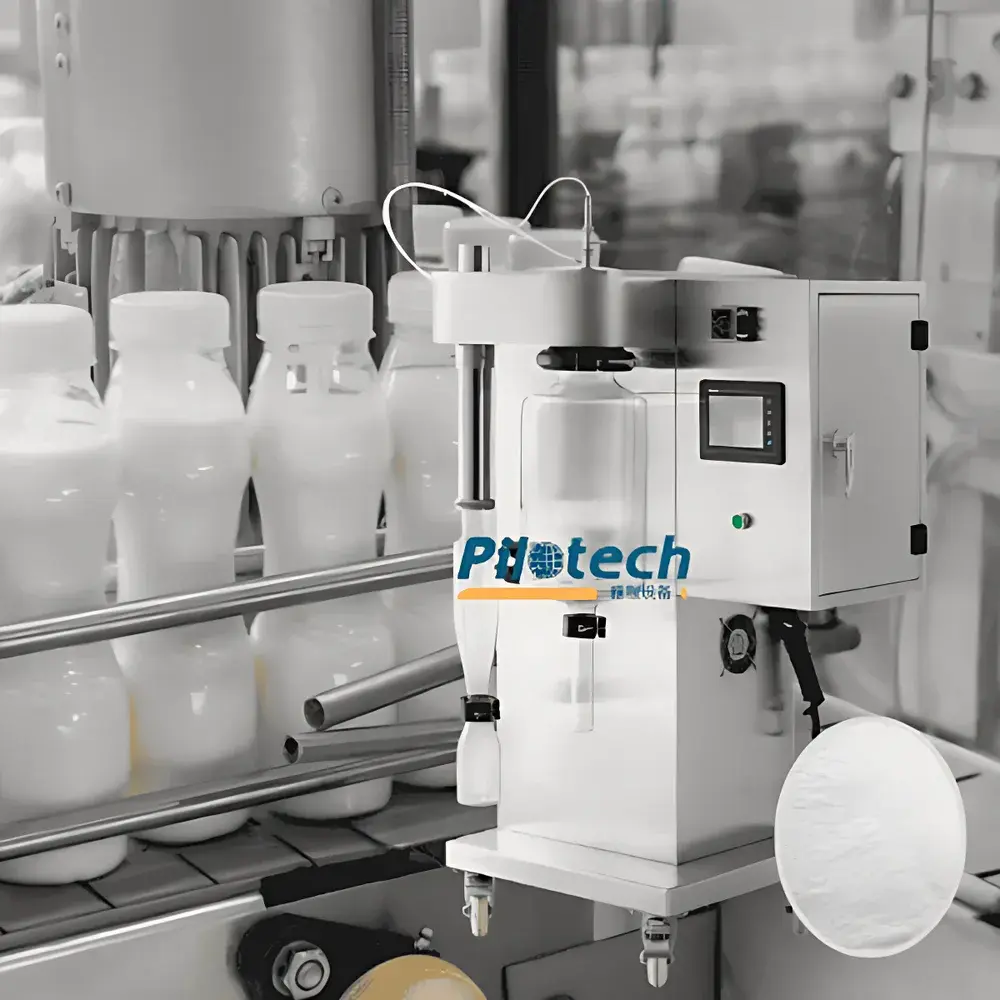
Yacheng YC-015 Benchtop Spray Dryer
| Brand | Yacheng / PILOTECH |
|---|---|
| Origin | Shanghai, China |
| Manufacturer | Yes |
| Type | Lab-Scale Spray Dryer |
| Model | YC-015 |
| Max Feed Rate | 1500 mL/h |
| Particle Size Range | 1–25 µm |
| Inlet Air Temperature Range | Up to 250 °C |
| Drying Time | 1.0–1.5 s |
| Temperature Control Accuracy | ±1 °C (PID) |
| Noise Level | <60 dB(A) |
| Power Supply | 3.5 kW / 220 V / Single Phase |
Overview
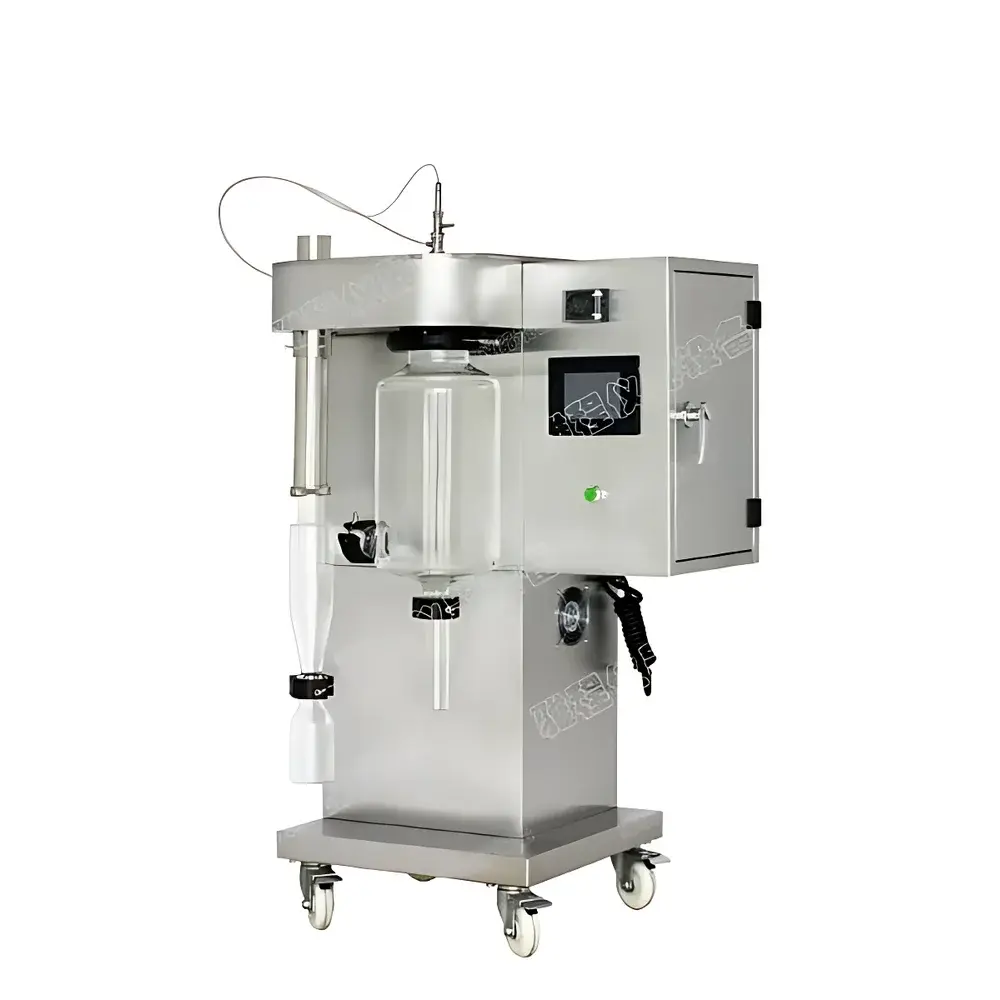
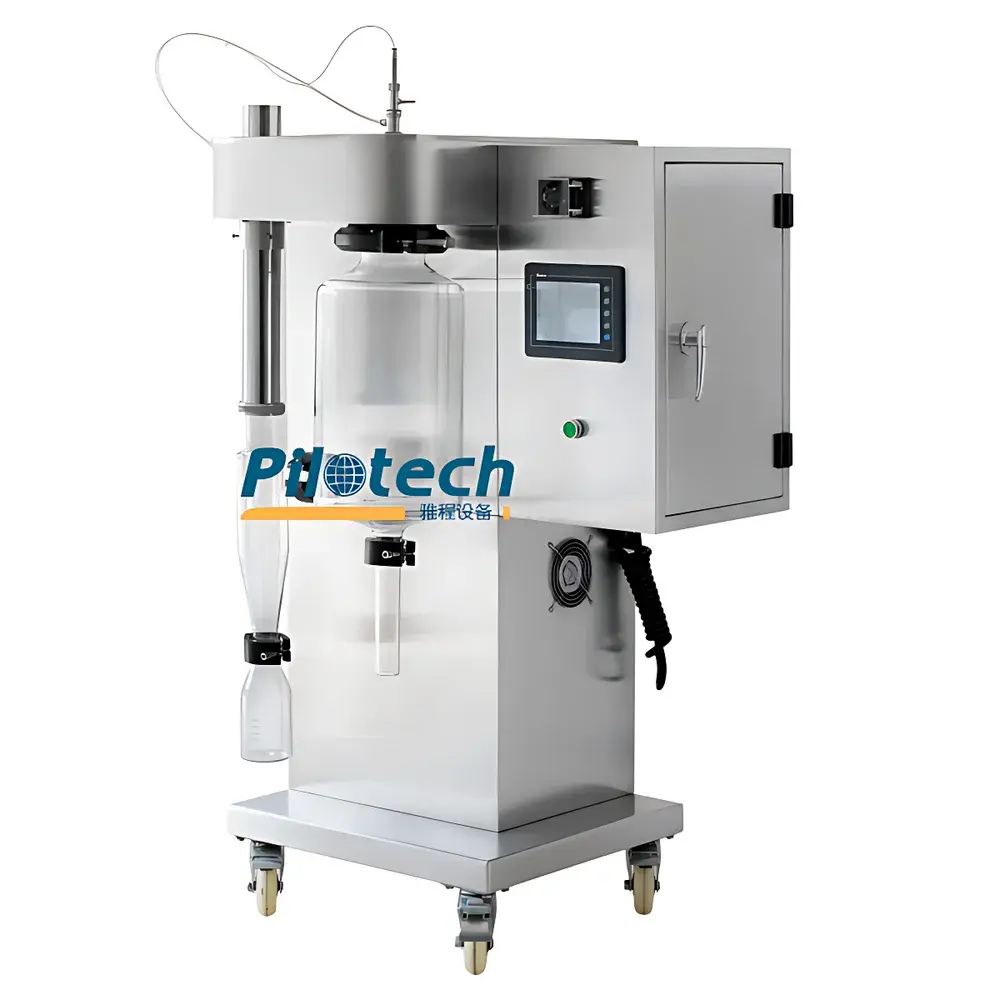
The Yacheng YC-015 Benchtop Spray Dryer is a compact, fully integrated laboratory-scale spray drying system engineered for precision, reproducibility, and operational safety in academic, pharmaceutical, and industrial R&D environments. It operates on the principle of two-fluid (air-liquid) atomization: liquid feed is pneumatically dispersed into fine droplets via a concentric nozzle, then rapidly dried by concurrent hot air flow within a stainless steel drying chamber. The resulting micro-particles—typically 1–25 µm in diameter—are separated from the exhaust stream using a high-efficiency cyclonic collector and collected in a borosilicate glass receiving vessel. With a maximum continuous feed capacity of 1500 mL/h and sub-second residence time (1.0–1.5 s), the YC-015 enables gentle thermal processing ideal for thermolabile compounds including proteins, enzymes, probiotics, nanocarriers, and amorphous solid dispersions. Its design complies with fundamental engineering requirements for lab-scale unit operations under GLP-aligned workflows.
Key Features
- Full-color 7-inch LCD touchscreen interface with real-time animated process visualization—including inlet temperature, airflow (fan frequency), peristaltic pump speed, and automatic needle-cleaning (‘needle purge’) cycle frequency
- PID-controlled inlet air temperature regulation across 30–250 °C, achieving ±1 °C stability over full operating range
- Integrated oil-free compressed air generator (no external air supply required), ensuring consistent atomization pressure and low-noise operation (<60 dB(A))
- Modular borosilicate glass drying tower, cyclone, and collection flask—optically transparent for direct observation of droplet formation, drying trajectory, and wall deposition behavior
- Automatic needle purge system with adjustable frequency; prevents nozzle clogging during processing of viscous or particulate-laden feeds
- Tower wall air-sweep system to minimize product adhesion and improve recovery yield (>95% typical for standard aqueous solutions)
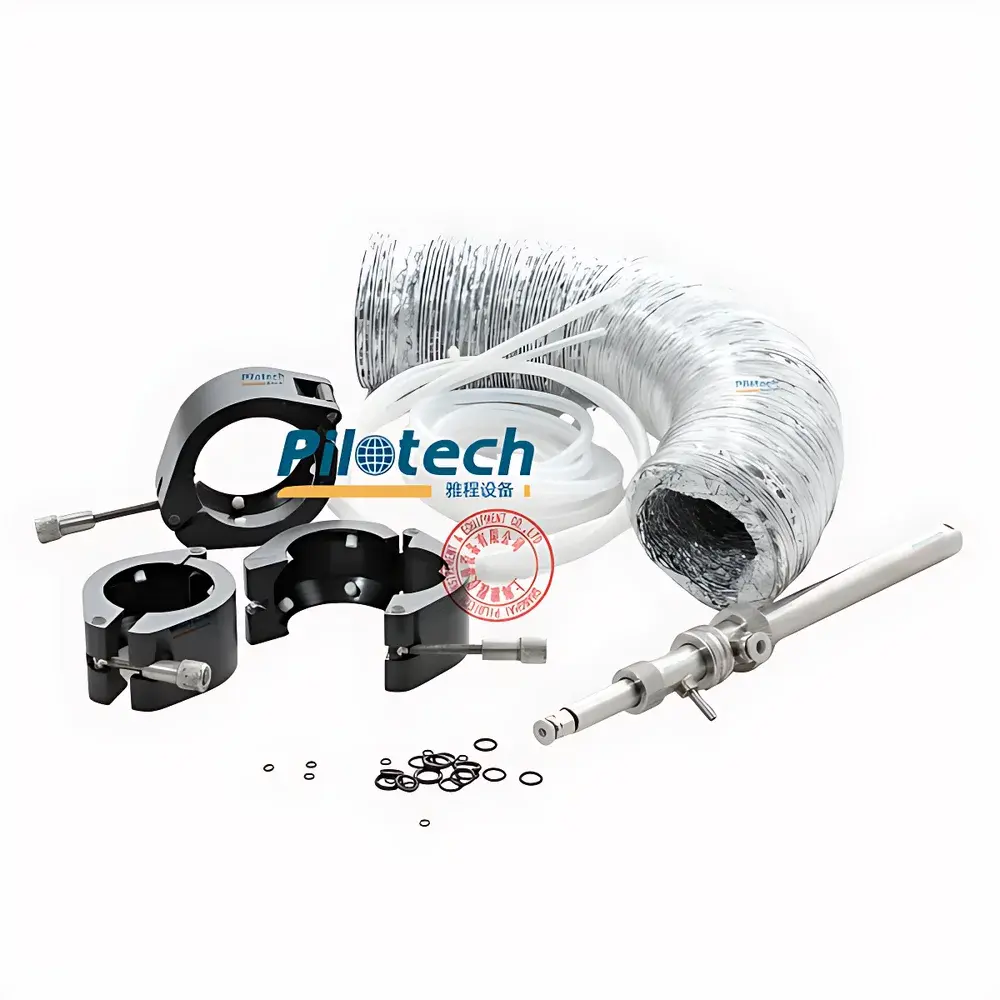
- Stainless steel (316L) nozzle assembly with standardized 1.0 mm orifice; optional nozzles (0.5, 0.8, 1.5, 2.0 mm) available for particle size tuning
- One-touch startup and programmable shutdown sequence: heating elements deactivate immediately upon stop command while fan continues briefly for thermal dissipation—preventing thermal damage from abrupt power cutoff
Sample Compatibility & Compliance
The YC-015 is validated for aqueous-based feeds including solutions, colloidal suspensions, emulsions, and nano-dispersions. Its short thermal exposure window preserves structural integrity of heat-sensitive biomolecules—consistent with USP , ICH Q5C, and ISO 22000 principles for functional ingredient stabilization. While standard configuration supports water-miscible systems only, the platform is field-upgradable to closed-loop nitrogen inerting (optional N₂ recirculation kit), enabling safe processing of organic solvents (e.g., ethanol, acetone, dichloromethane) per OSHA 1910.106 and ATEX Zone 2 guidelines. All wetted parts comply with FDA 21 CFR Part 11 material compatibility standards; surface finish Ra ≤ 0.8 µm on stainless components ensures cleanability and residue control. Optional inlet air filtration (HEPA-grade) meets ISO 14644-1 Class 5 requirements for low-bioburden environments.
Software & Data Management
The embedded controller logs all critical process parameters (inlet/outlet temperature, pump RPM, fan Hz, purge cycles) at 1-second intervals to internal non-volatile memory. Exportable CSV files support traceability and post-run analysis in Excel or MATLAB. Audit trail functionality records user login, parameter changes, and system events—aligned with ALCOA+ data integrity principles. Optional Ethernet connectivity enables remote monitoring via secure HTTP interface; integration with LIMS or ELN platforms is supported through Modbus TCP protocol. No proprietary software installation is required—data retrieval occurs via USB flash drive or web browser.
Applications
- Formulation development of inhalable dry powders (DPIs) and nasal vaccine carriers
- Rapid screening of excipient compatibility in amorphous solid dispersion (ASD) preparation
- Encapsulation of probiotics, peptides, and monoclonal antibody fragments
- Production of ceramic precursors, metal oxide nanoparticles, and battery cathode materials
- Stabilization of enzyme-loaded microparticles for controlled-release diagnostics
- Process mapping studies for scale-up to pilot-scale rotary or fluidized-bed dryers
FAQ
What is the minimum sample volume required for a valid run?
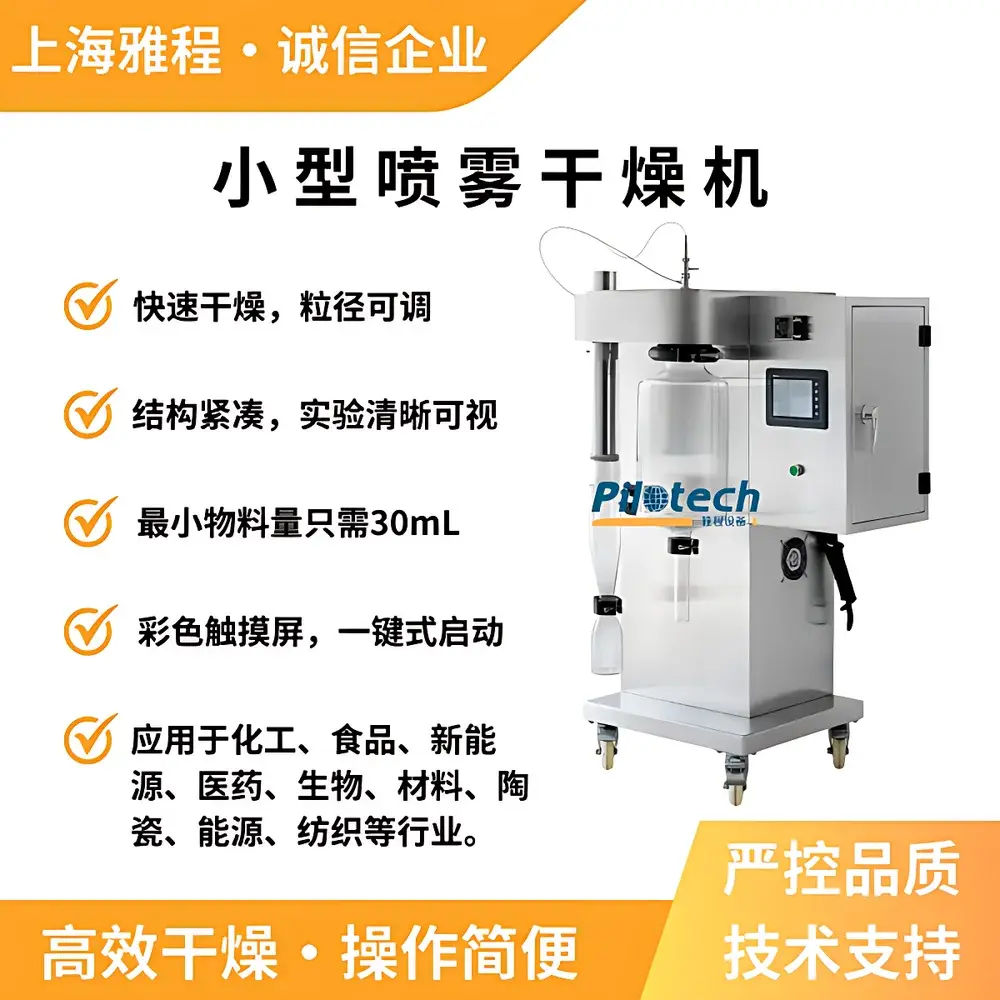
Typical minimum feed volume is 30 mL, though final yield depends on total solids content, viscosity, and desired powder mass.
Can the YC-015 handle high-viscosity feeds such as alginate or chitosan solutions?
Yes—via adjustable peristaltic pump speed and optional nozzle sizing; however, feed pre-filtration (≤5 µm) and use of the automatic needle purge function are recommended.
Is GMP-compliant documentation available?
Factory calibration certificates, IQ/OQ protocols, and material traceability reports are provided upon request for regulated environments.
How is particle size distribution influenced by operational parameters?
Inlet temperature, feed rate, atomization air pressure, and nozzle orifice diameter collectively govern median particle diameter (D50) and span; empirical DoE studies are supported by the system’s parametric flexibility.
What maintenance is required for long-term reliability?
Daily cleaning of glassware and nozzle; quarterly inspection of pump tubing and air filter; annual verification of temperature sensor calibration and PID response curve.



