
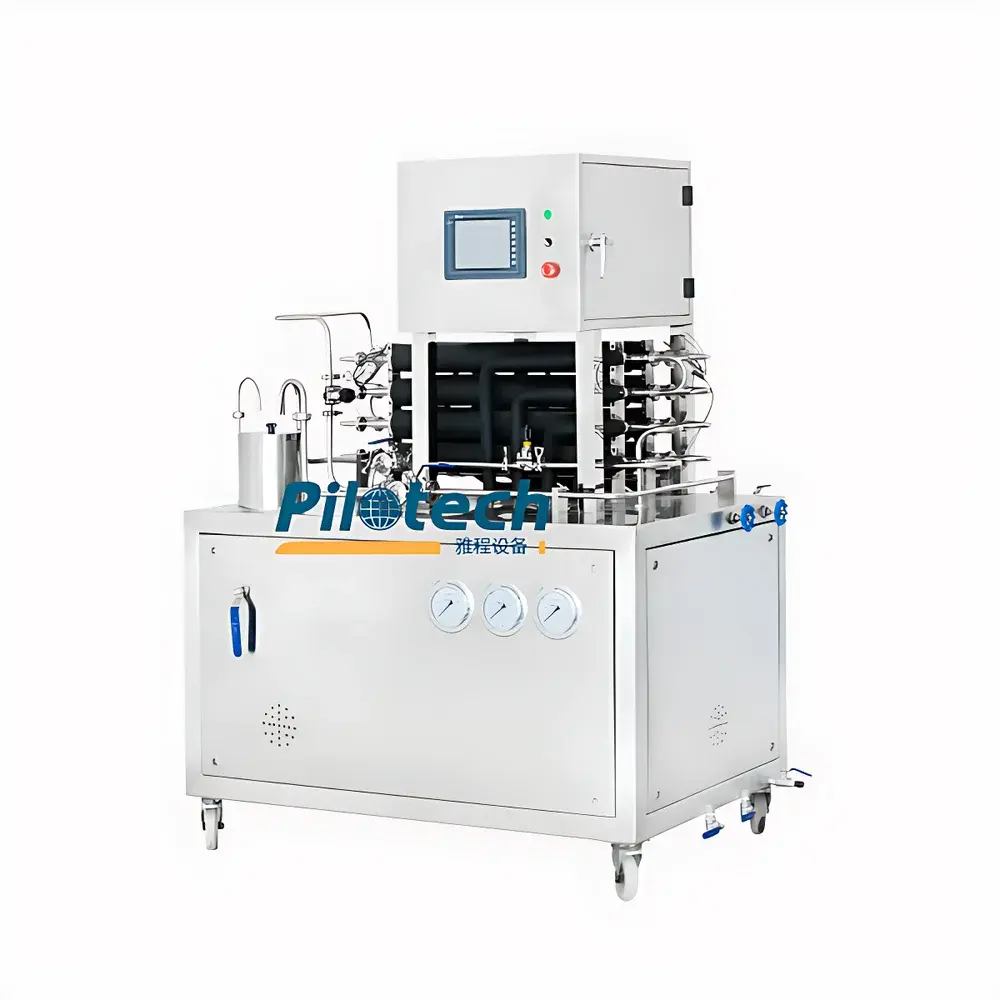
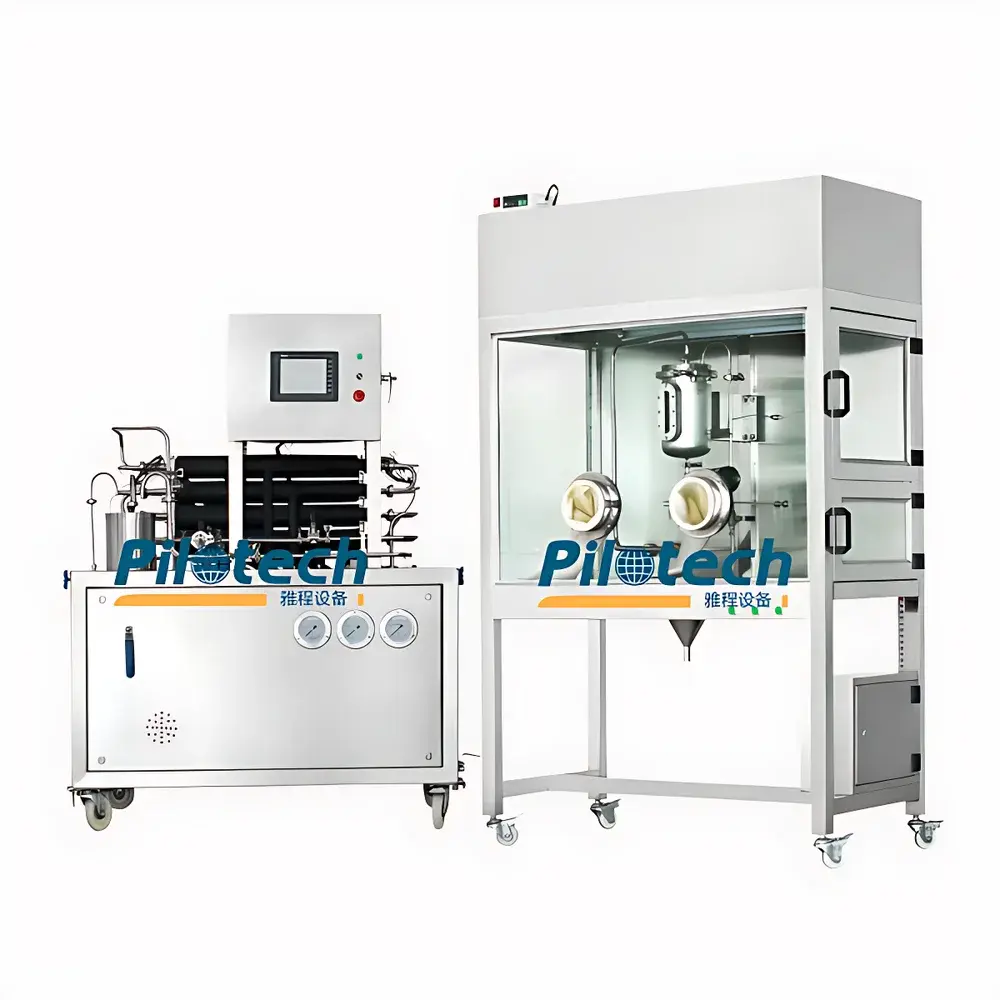
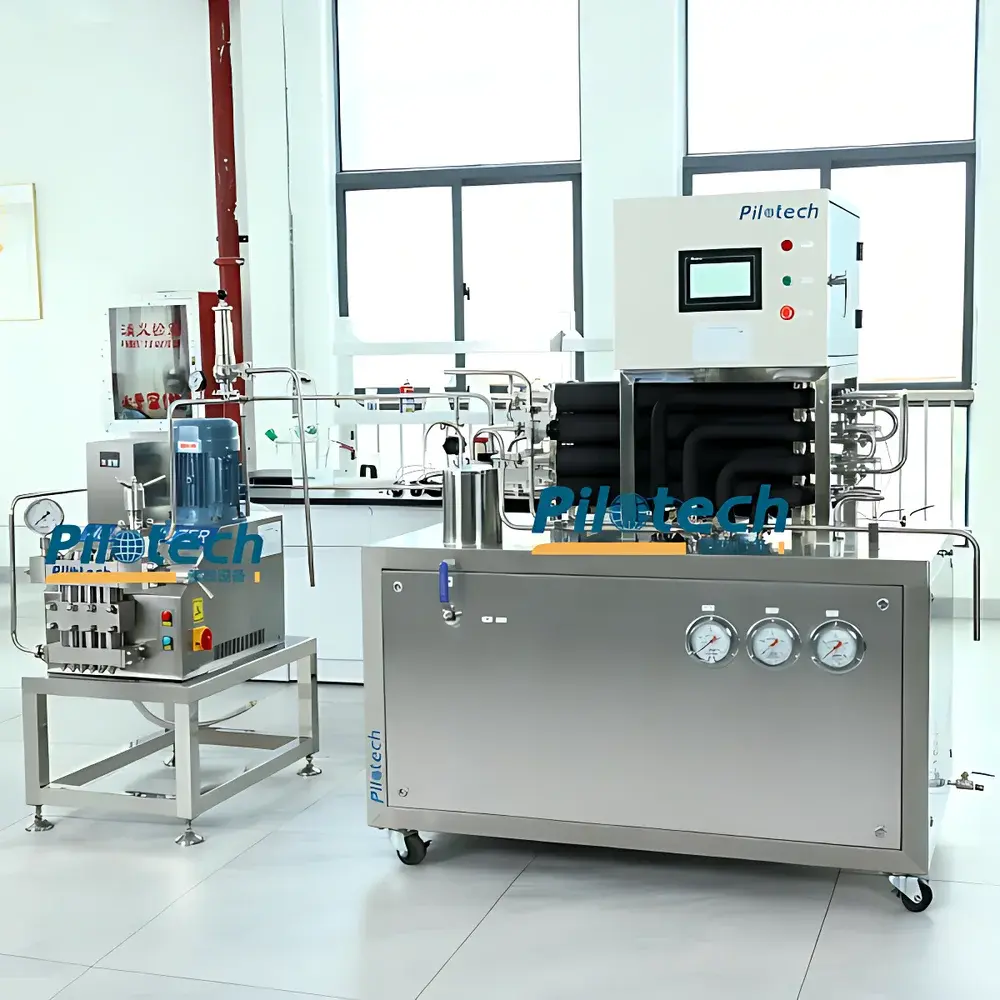
Yacheng YC-02 Miniature Ultra-High Temperature (UHT) Sterilization System
| Brand | Yacheng / PILOTECH |
|---|---|
| Origin | Shanghai, China |
| Manufacturer Type | Direct Manufacturer |
| Region of Origin | Domestic (China) |
| Model | YC-02 |
| Quotation | Upon Request |
| Rated Capacity | 20–25 L/h (adjustable flow: 5–50 L/h) |
| Minimum Sample Volume | 3–5 L |
| Sterilization Temperature Range | Up to 150 °C |
| Temperature Control Accuracy | ±1 °C (PID-controlled) |
| Sterilization Holding Time | Standard 5 s or 10 s (optional: 30 s, 300 s) |
| System Pressure | 5 bar |
| CIP Flow Rate | 400 L/h |
| Product Transfer Flow Rate | 5–25 L/h |
| Cooling Outlet Temperature | Adjustable down to 5 °C |
| Power Rating | 13 kW |
| Construction Material | Full 316L Stainless Steel |
| Pump Type | German-made NETZSCH (formerly SEEPEX) Sanitary Screw Pump |
| Preheating Sections | 2 tubular |
| Cooling Section | 1 tubular |
| Hot Water Generator | Integrated |
| Circulating Hot Water Pumps | 2 units |
Overview
The Yacheng YC-02 Miniature Ultra-High Temperature (UHT) Sterilization System is a fully self-contained, bench-scale pilot plant engineered for precise thermal process validation in life science and food R&D laboratories. It implements continuous-flow UHT processing based on the principle of transient heat transfer through stainless steel tubular heat exchangers, enabling accurate simulation of industrial-scale aseptic processing conditions. Unlike batch autoclaves or steam-jacketed vessels, the YC-02 delivers true residence-time-controlled thermal treatment—critical for kinetic modeling of microbial inactivation (e.g., Geobacillus stearothermophilus spores), enzyme denaturation, and Maillard reaction profiling. Its design conforms to core principles outlined in ISO 11133 (microbiological culture media preparation), ASTM F1980 (accelerated aging of sterile barrier systems), and FDA Guidance for Industry on Thermal Processing of Low-Acid Foods. The system supports both sterile and non-sterile thermal processing protocols, making it suitable for pre-formulation studies, shelf-life prediction, and regulatory submission dossier development under GLP-compliant workflows.
Key Features
- Full-system integration: Includes integrated hot water generator, dual high-temperature circulating pumps, two-stage tubular preheating, single-stage cooling, and sanitary screw pump—all housed within a compact footprint (W × D × H ≈ 1.8 × 0.8 × 1.9 m).
- Precision thermal control: Real-time PID-regulated temperature management across all zones (preheat, sterilize, hold, cool), with ±1 °C accuracy at the sterilization zone outlet—validated per ASTM E74 for thermocouple calibration traceability.
- Flexible process configuration: Dual operating modes—“Rapid Mode” (optimized for quick method screening) and “Standard Mode” (for full parameter logging and audit-ready data capture)—both accessible via intuitive color touchscreen HMI.
- Sanitary fluid handling: German-manufactured NETZSCH (formerly SEEPEX) food-grade screw pump with integrated self-CIP capability; eliminates disassembly between runs and ensures compliance with 3-A Sanitary Standards 03-05.
- Comprehensive pressure monitoring: Embedded pressure transducers on product lines display real-time values on the HMI screen; paired with certified overpressure relief valves and diaphragm-type back-pressure regulators meeting PED 2014/68/EU requirements.
- Aseptic filling readiness: Integrated 10-L jacketed buffer tank with single-head sterile filling valve and full SIP (Steam-in-Place) subsystem—including steam trap, condensate drain, and temperature-mapped validation ports.
Sample Compatibility & Compliance
The YC-02 accommodates viscous, particulate-laden, and fibrous liquid matrices—including dairy emulsions, plant-based beverages, cell culture media, probiotic suspensions, and botanical extracts—without clogging or shear-induced degradation. Its wide viscosity tolerance (up to 10,000 mPa·s at 20 °C) stems from low-shear screw pumping and optimized tube diameter selection (ID ≥ 12 mm). All wetted surfaces are electropolished to Ra ≤ 0.4 µm and passivated per ASTM A967. The system meets EU Machinery Directive 2006/42/EC, CE marking requirements, and supports IQ/OQ documentation packages aligned with GMP Annex 15 and FDA 21 CFR Part 11 for electronic records and signatures. Optional validation kits include thermocouple mapping probes (IEC 60584-2 Class 1), flow calibration standards (ISO 5167), and microbial challenge test ports.
Software & Data Management
The embedded PLC-based control system logs time-stamped process variables—including inlet/outlet temperatures, pressure differentials, flow rates, holding time, and valve positions—at user-defined intervals (100 ms to 5 s resolution). Data exports directly to CSV or Excel-compatible formats via USB flash drive; no proprietary software installation required. All method templates—including sterilization profiles, CIP/SIP sequences, and cleaning validation cycles—are stored internally with version control and operator ID tagging. Audit trails record user logins, parameter changes, and alarm events—fully compliant with ALCOA+ (Attributable, Legible, Contemporaneous, Original, Accurate, Complete, Consistent, Enduring, Available) data integrity principles. Optional Ethernet connectivity enables remote monitoring and integration into LabVantage or STARLIMS LIMS environments.
Applications
- Thermal resistance determination (D-value, z-value) of pathogens and spoilage microorganisms in novel beverage formulations.
- Accelerated stability testing of protein-fortified drinks under varying UHT severity (F0 or B* values).
- Process scale-up support: Generating kinetic models that translate directly to commercial-scale plate-and-frame or direct steam injection systems.
- Development of clean-label preservation strategies—reducing reliance on chemical preservatives via optimized thermal lethality targeting.
- Validation of aseptic packaging compatibility, including fill-seal integrity under thermal stress and headspace gas composition shifts.
- Teaching platform for food engineering curricula covering heat transfer coefficients, residence time distribution (RTD) analysis, and thermal death time curve construction.
FAQ
Can the YC-02 be used for non-dairy applications such as cell culture media or biopharmaceutical buffers?
Yes—the system’s sanitary design, low-shear pumping, and precise temperature ramping make it suitable for heat-sensitive biological liquids requiring validated thermal treatment without aggregation or denaturation.
Is third-party calibration certification available for the temperature and pressure sensors?
Yes—factory-calibrated transducers include NIST-traceable certificates; optional on-site verification by ISO/IEC 17025-accredited service providers is supported.
Does the system meet requirements for FDA 21 CFR Part 11 compliance?
Yes—electronic records include digital signatures, audit trail logging, and role-based access control; full Part 11 readiness package (including SOP templates and risk assessment) is provided upon request.
What is the typical lead time for custom configurations, such as adding homogenization or nitrogen blanketing?
Standard delivery is 12–14 weeks; custom modules (e.g., integrated high-pressure homogenizer up to 1500 bar or inert gas purge interface) extend lead time by 4–6 weeks depending on component availability.
How is cleaning validation performed on the YC-02?
The built-in CIP cycle includes conductivity-based rinse endpoint detection, ATP swab sampling ports, and temperature-mapped hold phases; validation protocols follow ASTM E2500-13 and ISPE Baseline Guide Vol. 4.




