
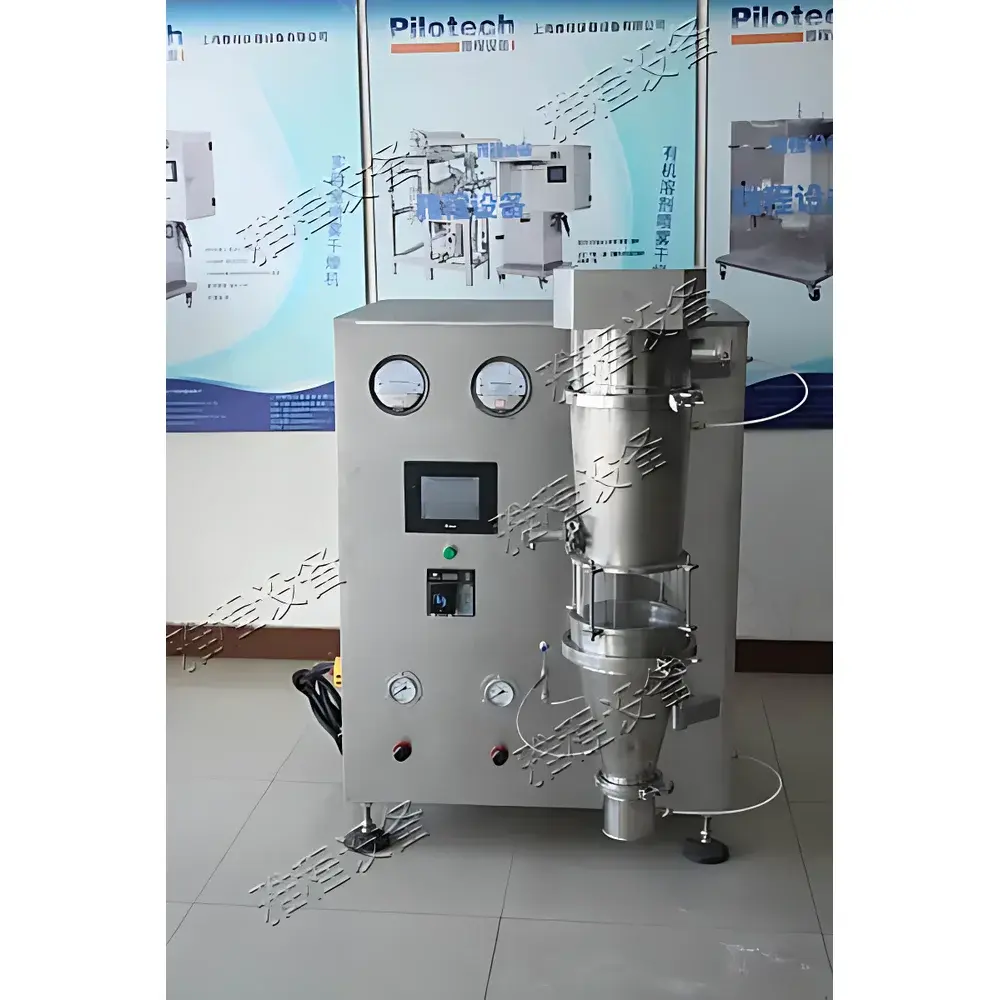
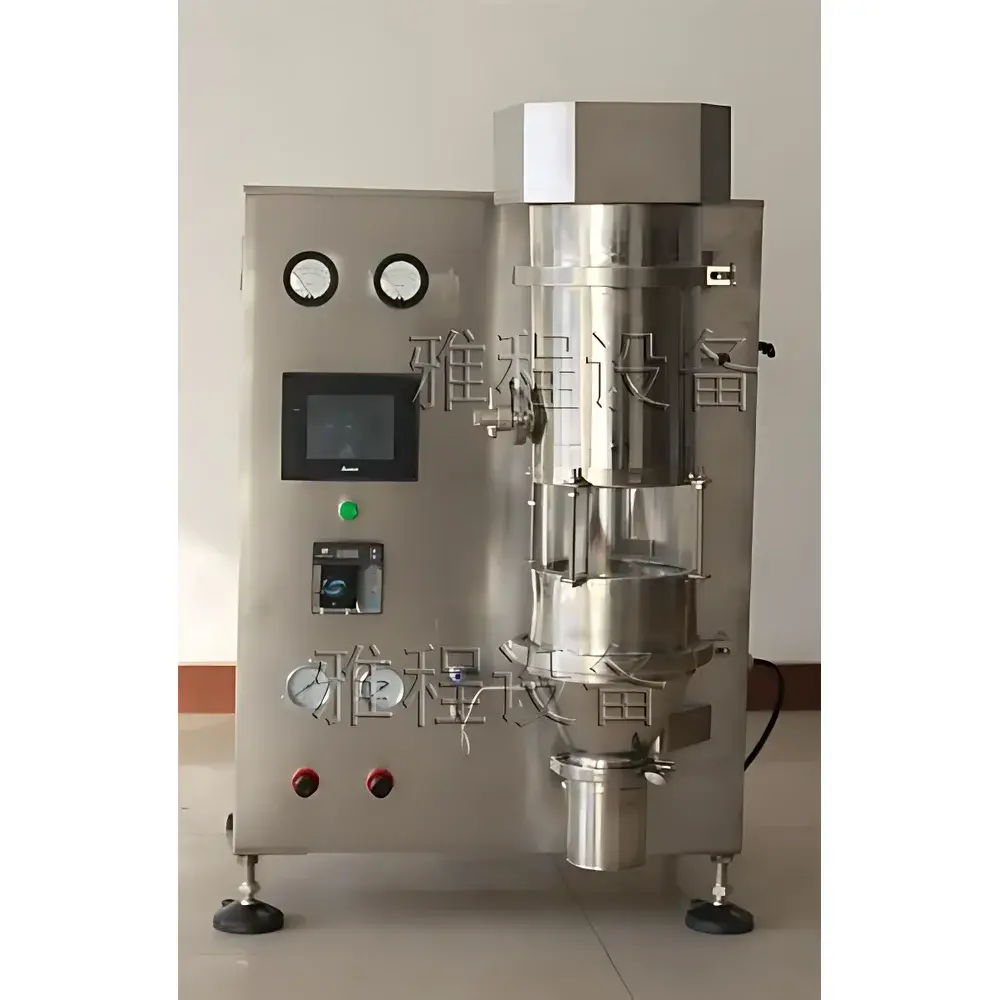
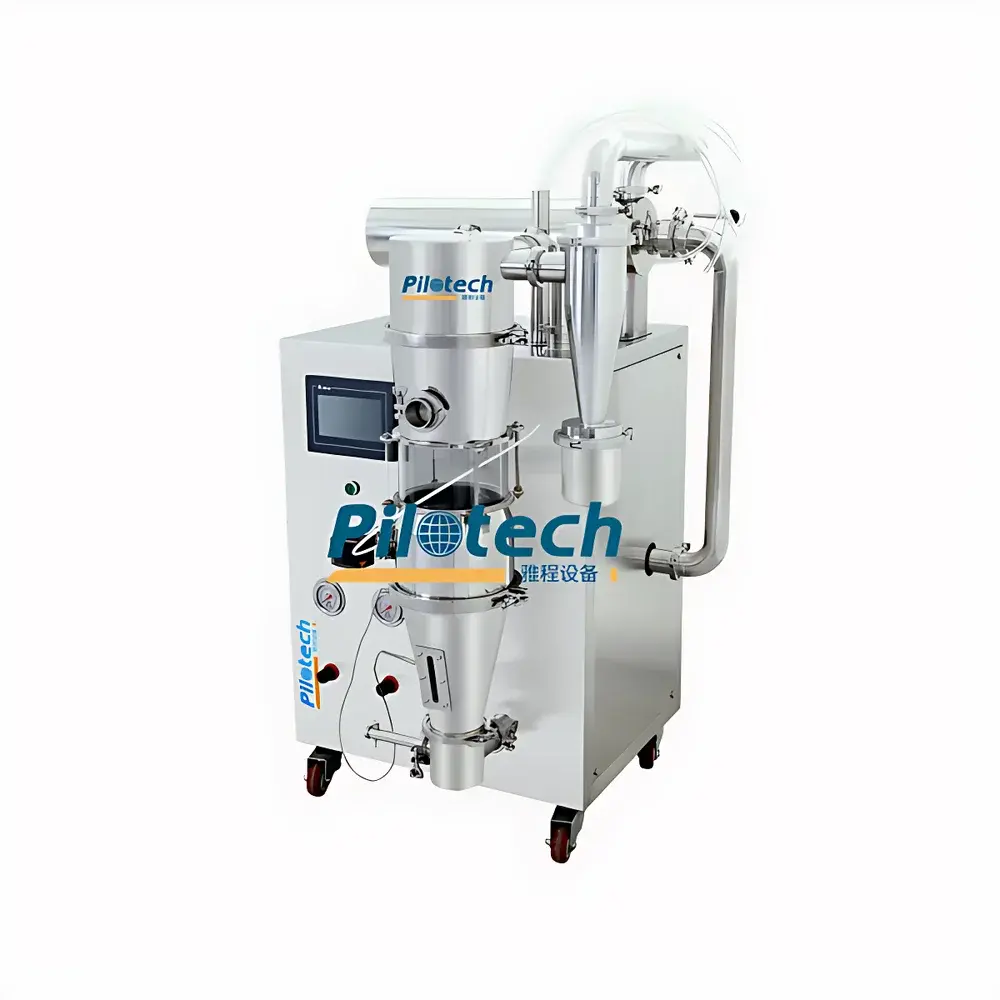
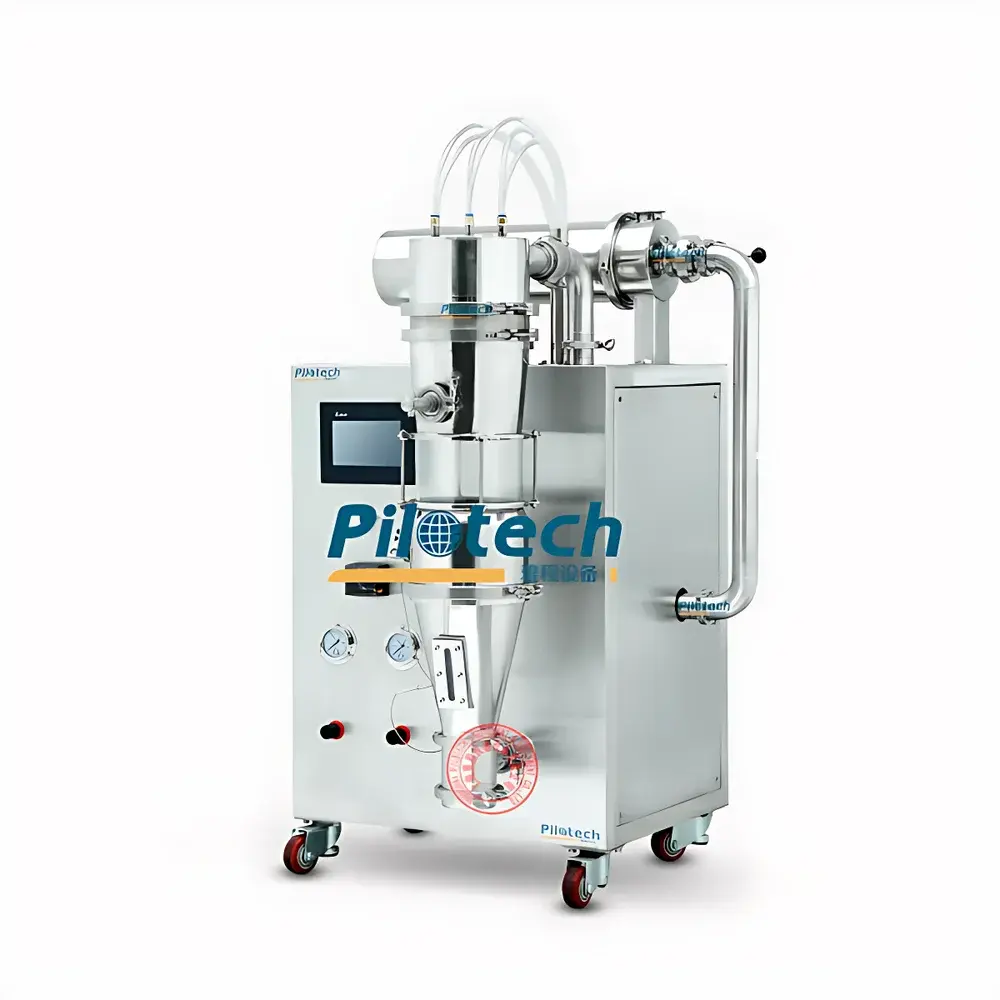
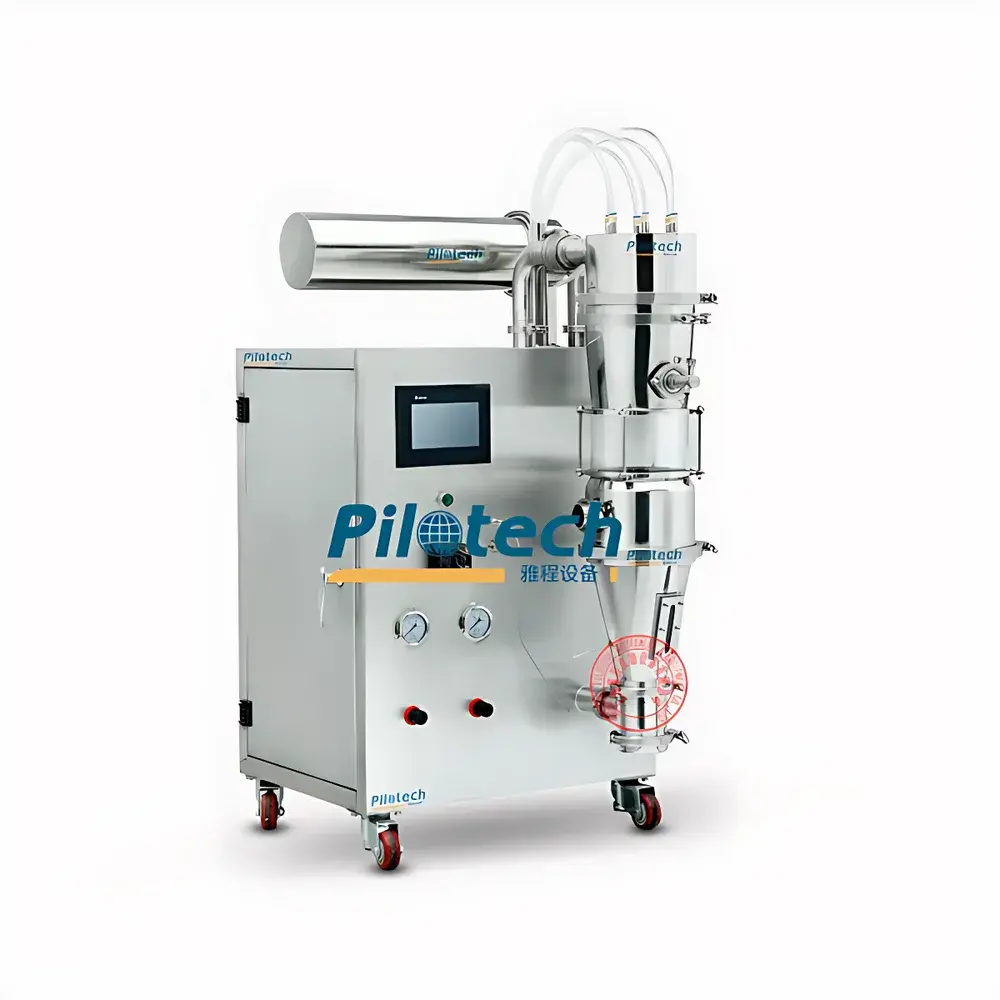
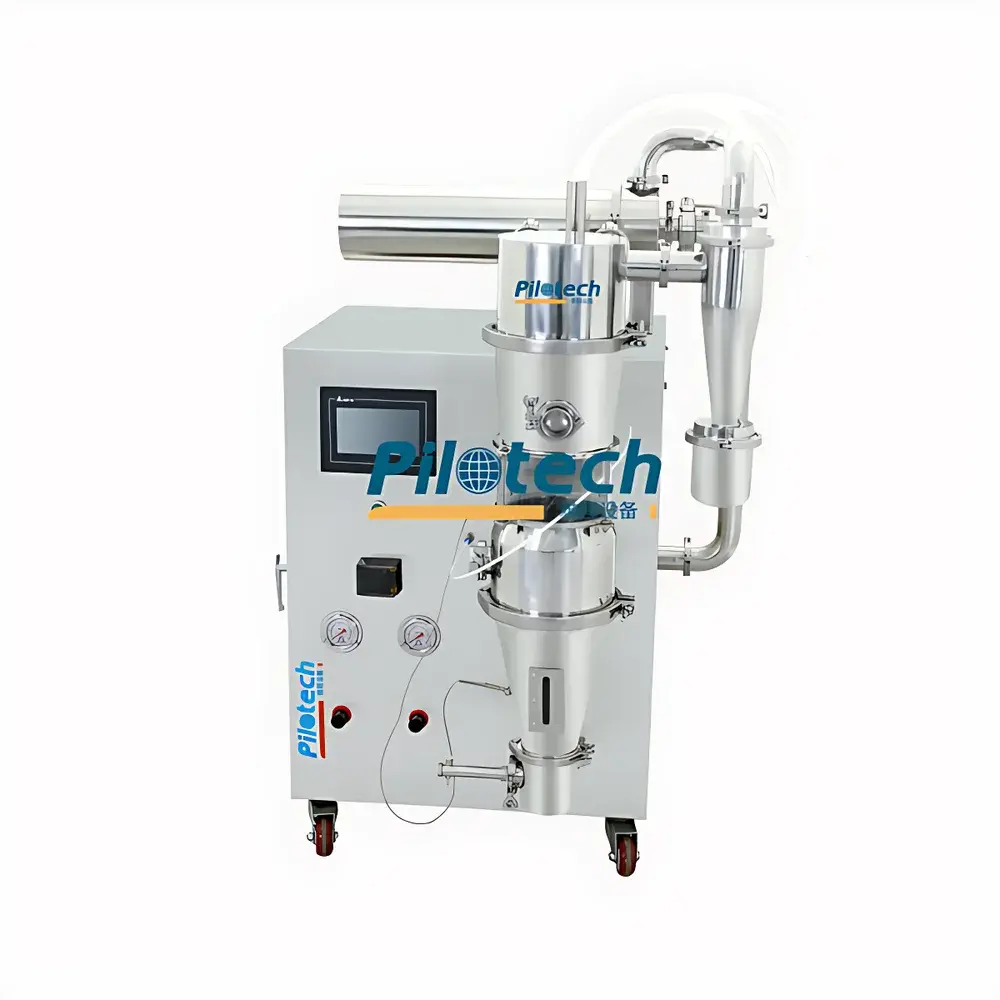
YaCheng YC-1000 Integrated Lab-Scale Spray Dryer, Fluidized Bed Granulator & Coater
| Brand | YaCheng / PILOTECH |
|---|---|
| Origin | Shanghai, China |
| Manufacturer Type | Direct Manufacturer |
| Product Origin | Domestic (China) |
| Model | YC-1000 |
| Quotation | Upon Request |
| Sample Compatibility | Aqueous solutions only |
| Max Feed Rate | 1500 mL/h |
| Inlet Air Temperature Range (Spray Drying) | 105–200 °C |
| Fluidized Bed Inlet Air Temperature Range | 40–150 °C |
| Heating Power | 3 kW |
| Total Electrical Load | 5 kW (220 V / 50 Hz) |
| Drying Chamber Volume | 10 L |
| 雾化 Air Pressure | 1–3 bar |
| Peristaltic Pump Flow Range | 0–1500 mL/h |
| Construction Material | Full 316L stainless steel + borosilicate glass expansion chamber |
| Control System | PLC with color LCD touchscreen interface |
| PID Temperature Control | Real-time, closed-loop |
| Minimum Sample Requirement | 50 g per granulation batch |
| Footprint | 0.5 m² |
Overview
The YaCheng YC-1000 Integrated Lab-Scale Spray Dryer, Fluidized Bed Granulator & Coater is an engineered platform for concurrent or sequential execution of spray drying, fluidized bed granulation, drying, and film coating — all within a single, compact benchtop unit. It operates on the principle of rapid solvent evaporation via atomization of liquid feed into a controlled hot air stream (spray drying), followed by particle growth through binder-mediated agglomeration in a fluidized bed environment (wet granulation), and optional surface modification via polymer solution spraying under precisely regulated thermal and airflow conditions (film coating). Designed for process development and formulation screening in early-stage R&D, the system enables reproducible transition from lab-scale solution or suspension to free-flowing, spherical, low-moisture particles (≤1% w/w residual moisture achievable at 105 °C inlet temperature). Its modular architecture supports thermolabile materials by permitting independent optimization of inlet air temperature, atomization pressure, and fluidization velocity — critical for preserving bioactivity in pharmaceutical actives, probiotics, enzymes, and botanical extracts.
Key Features
- Triple-function integration: Spray drying, fluidized bed granulation, and coating in one system — eliminating inter-unit transfer, reducing cross-contamination risk, and minimizing footprint (0.5 m² total).
- Low sample consumption: Validated operation with as little as 50 g of solid content per granulation cycle — essential for high-value APIs, novel excipients, or limited natural extracts.
- Robust thermal control: Dual-zone PID-regulated heating — independent inlet air temperature control for spray zone (105–200 °C) and fluidized bed zone (40–150 °C), with real-time monitoring of chamber wall temperature and bed temperature.
- High-fidelity process instrumentation: Color LCD touchscreen displays inlet air temperature, blower frequency, fluidized bed temperature, peristaltic pump speed (0–1500 mL/h), and reverse-pulse cleaning frequency — all logged with timestamped data export capability.
- Fail-safe shutdown protocol: Pressing “Stop” initiates immediate cessation of heater, atomizer, and peristaltic pump; blower continues for cool-down — preventing thermal damage to heating elements during abrupt shutdown.
- Corrosion-resistant construction: Entire wetted path fabricated from electropolished 316L stainless steel; expansion chamber composed of ASTM E438 Type I, Class A borosilicate glass (≥93% SiO₂) for optical clarity and thermal shock resistance.
- Two-fluid nozzle design: Compressed air-assisted liquid atomization ensures consistent droplet size distribution (Sauter mean diameter ~20–50 µm, dependent on feed viscosity and air pressure) without mechanical moving parts.
Sample Compatibility & Compliance
The YC-1000 is validated for aqueous-based formulations only (e.g., drug suspensions, protein solutions, polysaccharide dispersions, ceramic slurries, food hydrocolloid emulsions). It is not rated for organic solvents, flammable liquids, or corrosive media beyond pH 2–12. The system complies with CE safety directives (2014/35/EU Low Voltage Directive, 2014/30/EU EMC Directive) and meets IP54 enclosure rating for dust and splash resistance. While not pre-certified to FDA 21 CFR Part 11, its PLC-based control architecture supports audit trail configuration, electronic signature implementation, and user-access-level permissions — enabling alignment with GLP and GMP documentation requirements when deployed in regulated environments. All material contact surfaces conform to USP and ISO 8573-1:2010 Class 3 for compressed air purity (oil-free, particulate ≤5 µm, dew point ≤−40 °C).
Software & Data Management
The integrated HMI runs embedded Linux OS with deterministic real-time task scheduling. Process parameters are stored locally in non-volatile memory with automatic timestamping and CSV export via USB port. Optional Ethernet connectivity enables remote monitoring via Modbus TCP or OPC UA protocols — compatible with LabArchives, Empower, or custom LIMS integration. Data logging interval is configurable from 1 s to 60 s; raw sensor inputs (RTD, pressure transducer, tachometer) are recorded alongside setpoints and alarm states. Audit trail functionality records operator ID, parameter changes, start/stop events, and system errors — supporting ALCOA+ data integrity principles (Attributable, Legible, Contemporaneous, Original, Accurate, Complete, Consistent, Enduring, Available).
Applications
- Pharmaceutical development: Formulation of immediate-release granules, sustained-release coated beads, and inhalable dry powders (with downstream micronization).
- Food & nutraceuticals: Encapsulation of probiotics, omega-3 oils, vitamins, and plant polyphenols using maltodextrin or gum arabic matrices.
- Materials science: Synthesis of spherical ceramic precursors (e.g., LiFePO₄, ZnO), polymer microspheres, and catalyst supports.
- Agrochemicals: Granular pesticide carriers with controlled release profiles and reduced dust generation.
- Natural product processing: Stabilization of heat-sensitive phytochemicals (e.g., curcumin, anthocyanins) via co-spray drying with protective carbohydrates.
FAQ
Can the YC-1000 handle organic solvents such as ethanol or acetone?
No. The system is designed exclusively for aqueous feeds. Organic solvents pose explosion hazards and may degrade seals, gaskets, and electrical components not rated for Class I, Division 1 environments.
What is the minimum particle size achievable in fluidized bed granulation mode?
Granule size distribution depends on feed concentration, binder type, and fluidization velocity; typical median diameters range from 100 to 800 µm under standard operating conditions.
Is the borosilicate glass expansion chamber autoclavable?
No. While chemically resistant and thermally stable up to 500 °C, the glass chamber is not designed for steam sterilization cycles; cleaning is performed manually with validated detergent protocols.
Does the system support 21 CFR Part 11-compliant electronic records out-of-the-box?
Not natively. However, its programmable logic controller architecture allows integration with third-party validation packages for electronic signature, audit trail, and role-based access control — required for regulated submissions.
What maintenance intervals are recommended for the two-fluid nozzle and peristaltic pump tubing?
Nozzle inspection and ultrasonic cleaning are advised after every 10 operational hours; peristaltic pump tubing should be replaced every 200 hours or upon visible deformation or cracking.



