
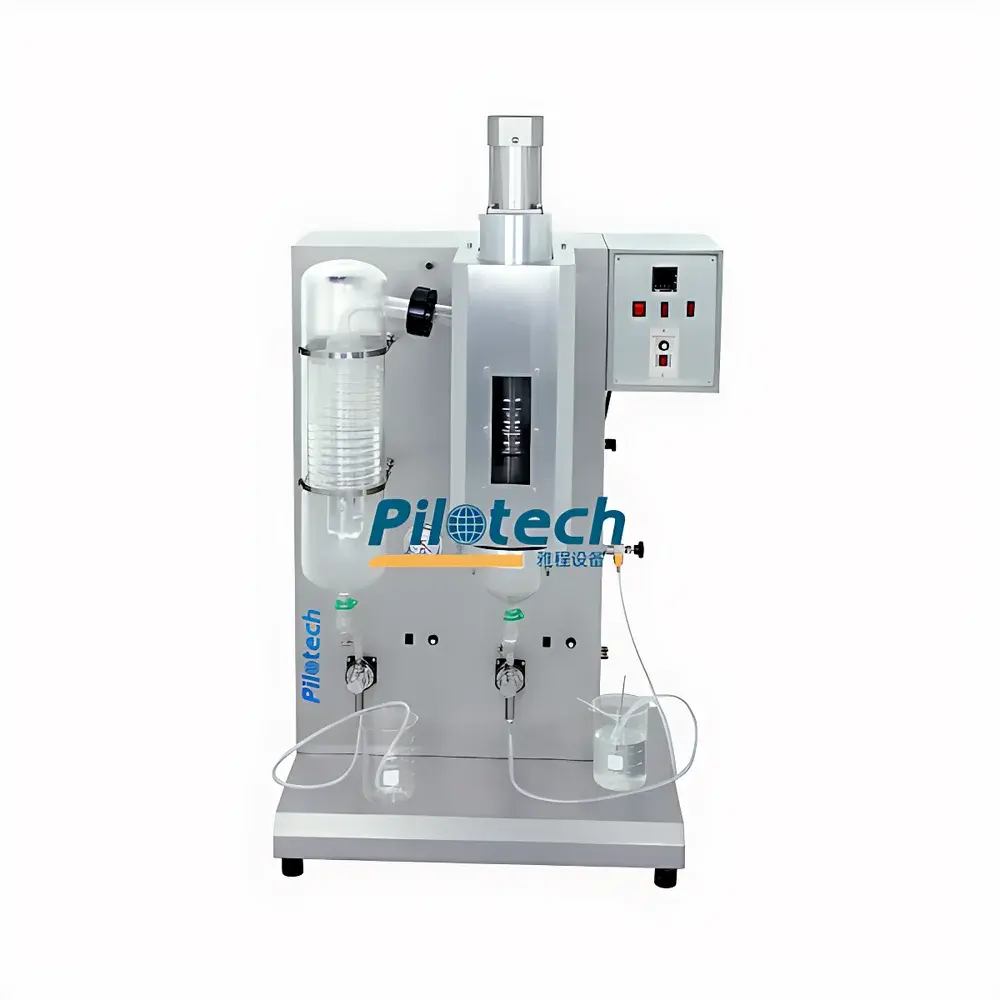
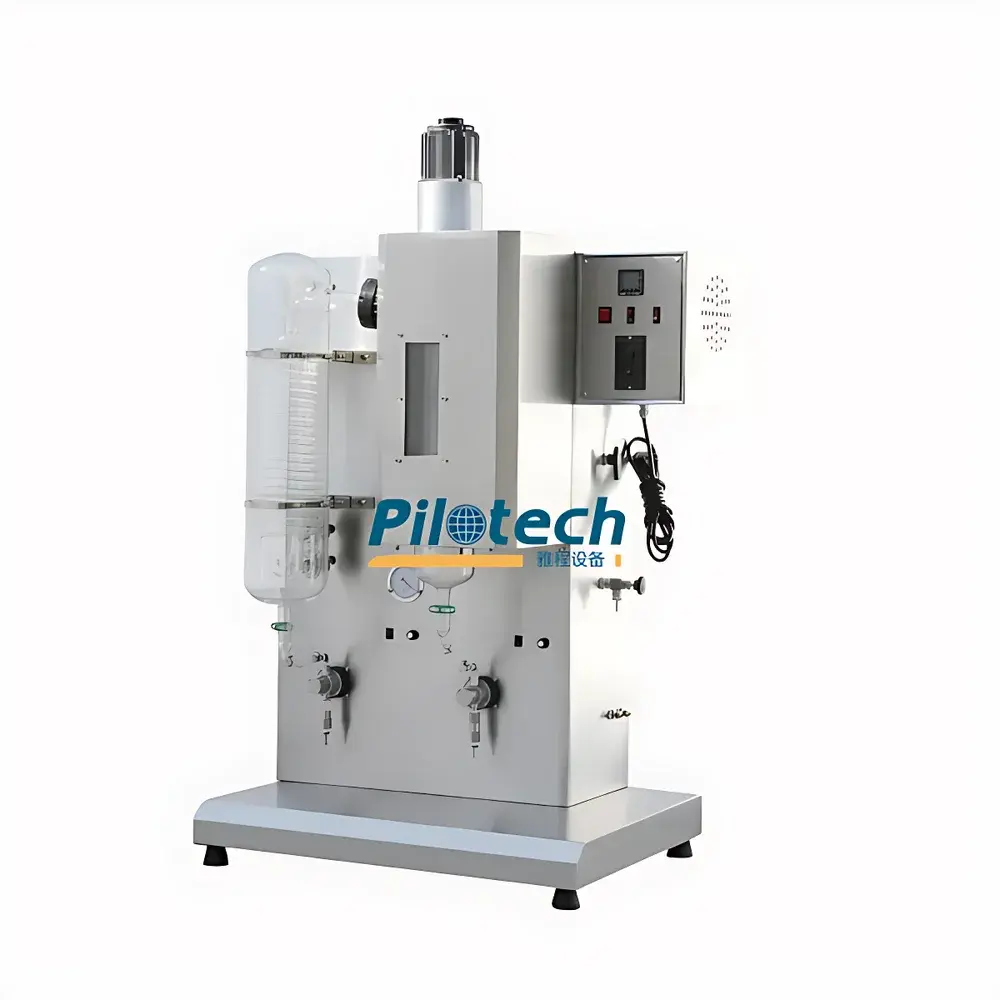
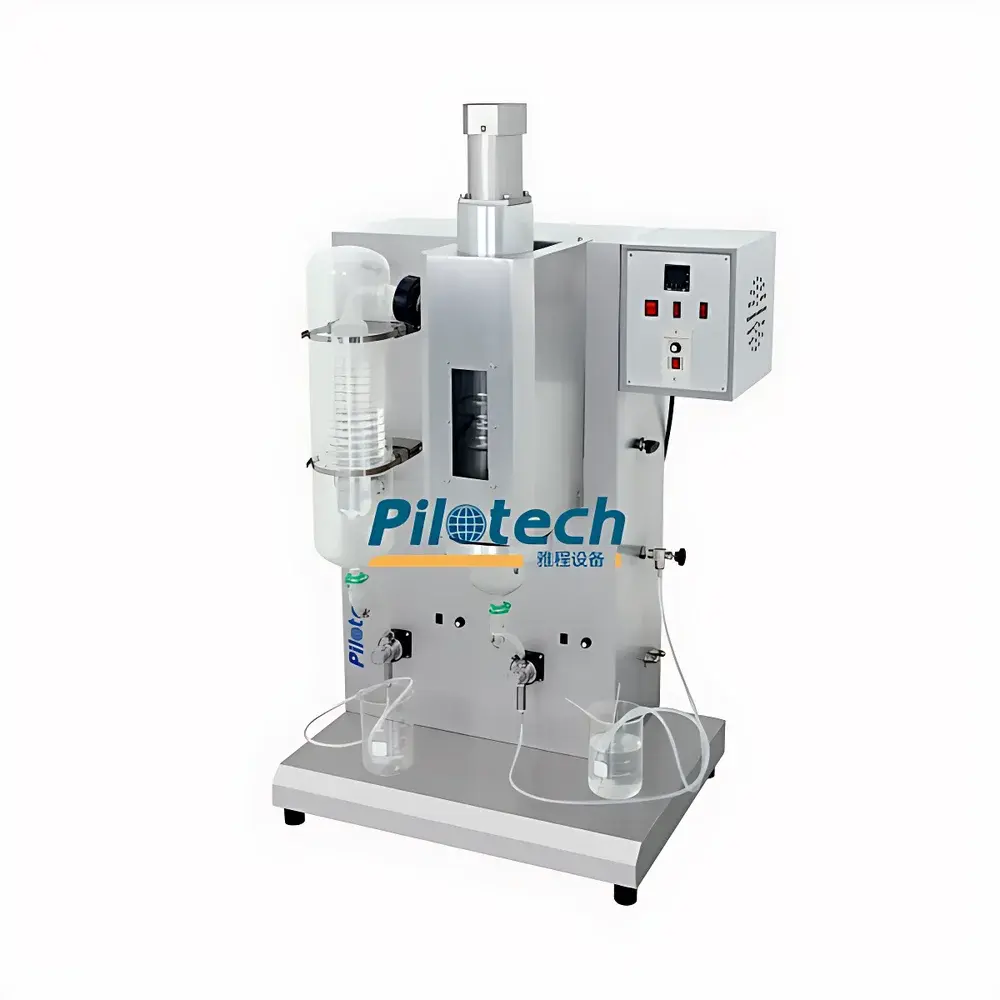
PiloTech YC-210 Wiped-Film Rapid Concentrator
| Brand | PiloTech |
|---|---|
| Model | YC-210 |
| Type | Automated Quantitative Concentrator |
| Origin | Shanghai, China |
| Manufacturer | PiloTech (Domestic Production) |
| Pricing | Upon Request |
Overview
The PiloTech YC-210 Wiped-Film Rapid Concentrator is an engineered solution for gentle, high-throughput concentration of thermolabile, viscous, or foaming liquid samples under controlled vacuum conditions. Unlike conventional rotary evaporators—where batch processing leads to extended thermal exposure—the YC-210 employs a continuous-feed wiped-film evaporation principle grounded in thin-film heat and mass transfer theory. In operation, feed solution is introduced tangentially onto the inner surface of a vertically oriented, heated cylindrical evaporator body. A high-precision rotating wiper assembly (typically PTFE- or stainless-steel-bladed) spreads the liquid into a uniform, sub-millimeter-thick film that flows downward under gravity while simultaneously undergoing rapid solvent vaporization. This design ensures minimal residence time—typically under 30 seconds from inlet to concentrated product outlet—thereby preserving labile compounds such as proteins, peptides, natural extracts, and unstable APIs. The system operates under adjustable vacuum (down to <1 mbar), enabling solvent removal at significantly reduced boiling points, and integrates real-time control over feed rate, wiper speed, jacket temperature, and vacuum level.
Key Features
- Continuous-flow architecture eliminates batch hold-up and thermal degradation associated with static evaporation vessels
- Adjustable wiper speed (50–300 rpm) and variable feed rate (0.5–50 mL/min) enable optimization across viscosity ranges (1–50,000 cP)
- High-efficiency glass evaporator body fabricated from borosilicate 3.3 (Duran®-grade), chemically resistant and optically transparent for process monitoring
- Integrated heating jacket with PID-controlled temperature regulation (ambient to 200 °C) and calibrated RTD feedback
- Automated quantitative endpoint detection via integrated conductivity or density sensing (optional), supporting programmable volume reduction ratios (e.g., 10× to 100×)
- Modular condenser assembly with dual-stage cooling (−20 °C primary, −80 °C secondary) ensures >99.5% solvent recovery efficiency for common organics (ethanol, methanol, acetone, ethyl acetate)
- Full-system validation documentation provided: IQ/OQ protocols, 72-hour continuous runtime test report, and material compliance certificates (USP Class VI, ISO 9001 manufacturing)
Sample Compatibility & Compliance
The YC-210 accommodates aqueous, alcoholic, and mixed-solvent systems—including high-viscosity botanical extracts, fermentation broths, polymer solutions, and emulsions prone to foaming. Its non-metallic wetted path (glass + PTFE seals) prevents catalytic decomposition and metal ion leaching, making it suitable for GMP-aligned processes in pharmaceutical development (ICH Q5, Q5A) and natural product isolation (AOAC 992.14). The system conforms to ISO 22000 food-grade handling requirements and supports audit-ready operation per FDA 21 CFR Part 11 when paired with optional electronic logbook software. All electrical components meet CE/EMC Directive 2014/30/EU; vacuum pumps and chillers are selected to comply with EU RoHS and REACH regulations.
Software & Data Management
The YC-210 is operated via a 7-inch industrial touchscreen HMI running embedded Linux OS. Preloaded firmware enables full parameter logging (time-stamped temperature, pressure, flow, wiper RPM) at 1 Hz resolution, exportable in CSV or PDF format. Optional PiloTech ControlSuite™ software provides remote monitoring, multi-user access control, electronic signatures, and ALCOA+ compliant audit trails—including user action history, method versioning, and deviation flagging. Data integrity safeguards include automatic backup to encrypted USB storage and optional cloud synchronization (AWS S3, GDPR-compliant). System calibration records, maintenance logs, and performance qualification reports are stored within the same secure database framework.
Applications
- Rapid concentration of heat-sensitive herbal extracts (e.g., polysaccharides, flavonoids, alkaloids) without Maillard browning or epimerization
- Downstream processing of monoclonal antibody harvests and viral vector supernatants prior to chromatography
- Solvent exchange in nanoparticle synthesis (e.g., PLGA encapsulation) and lyophilization pre-concentration
- Dehydration of enzyme-containing reaction mixtures while retaining >92% residual activity (validated per USP & EP enzymatic assay protocols)
- Recovery and reuse of high-purity solvents in pilot-scale API crystallization workflows
- Simultaneous concentration and degassing of viscous cosmetic actives (hyaluronic acid, squalane blends)
FAQ
What is the minimum sample volume the YC-210 can process continuously?
The system is optimized for feed rates ≥0.5 mL/min; lower flow rates require optional micro-dosing module (P/N YC-MD-01) to maintain stable film formation.
Can the YC-210 handle suspensions or particulates?
Yes—up to 5 wt% suspended solids (<50 µm particle size); inline filtration (5–25 µm) is recommended upstream to prevent wiper blade wear.
Is cleaning validation supported?
All wetted surfaces are accessible without tools; standard operating procedure (SOP) templates for swab testing and rinse sampling are included in the validation package.
Does the system support integration with LIMS or MES platforms?
Yes—via Modbus TCP or OPC UA protocol; API documentation and driver libraries are provided upon request.
What vacuum pump options are certified for use with the YC-210?
Recommended configurations include oil-free diaphragm pumps (for solvent compatibility) or two-stage scroll pumps rated for ≤0.05 mbar ultimate vacuum; PiloTech provides validated pump models and sizing guides.



