
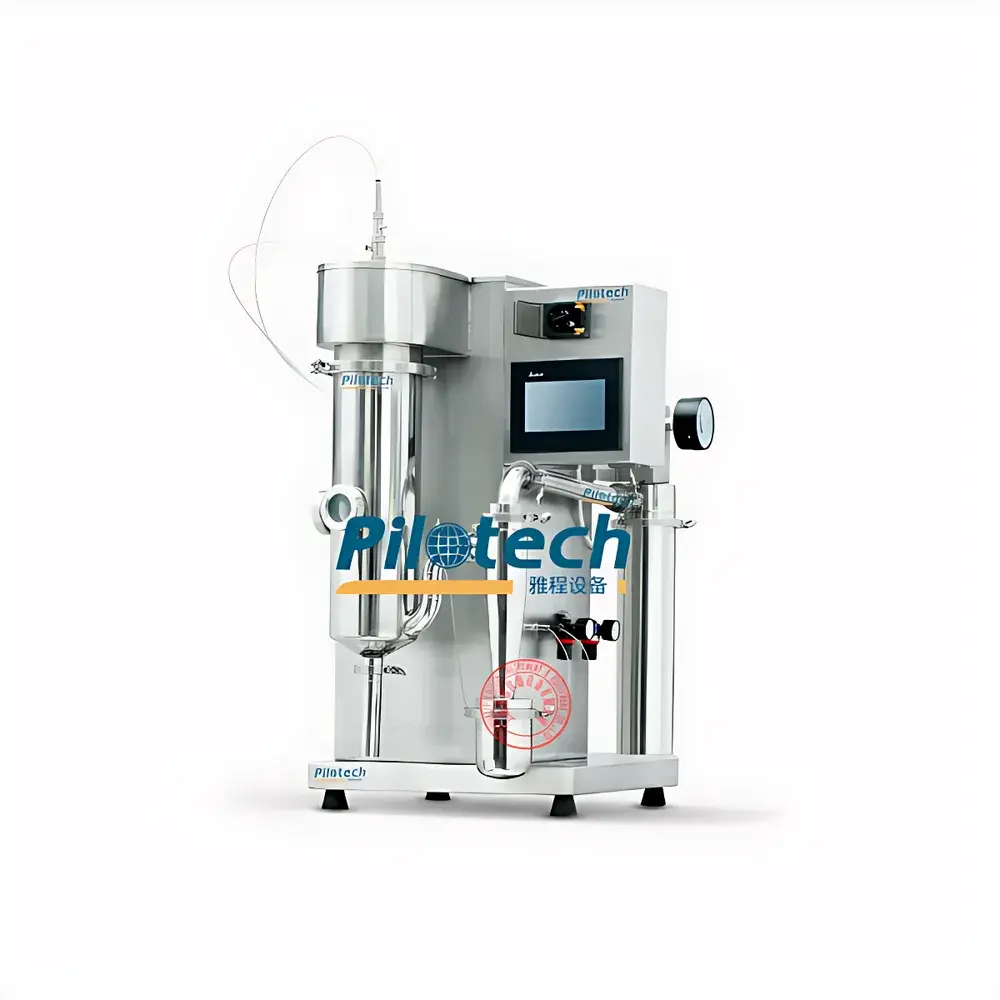
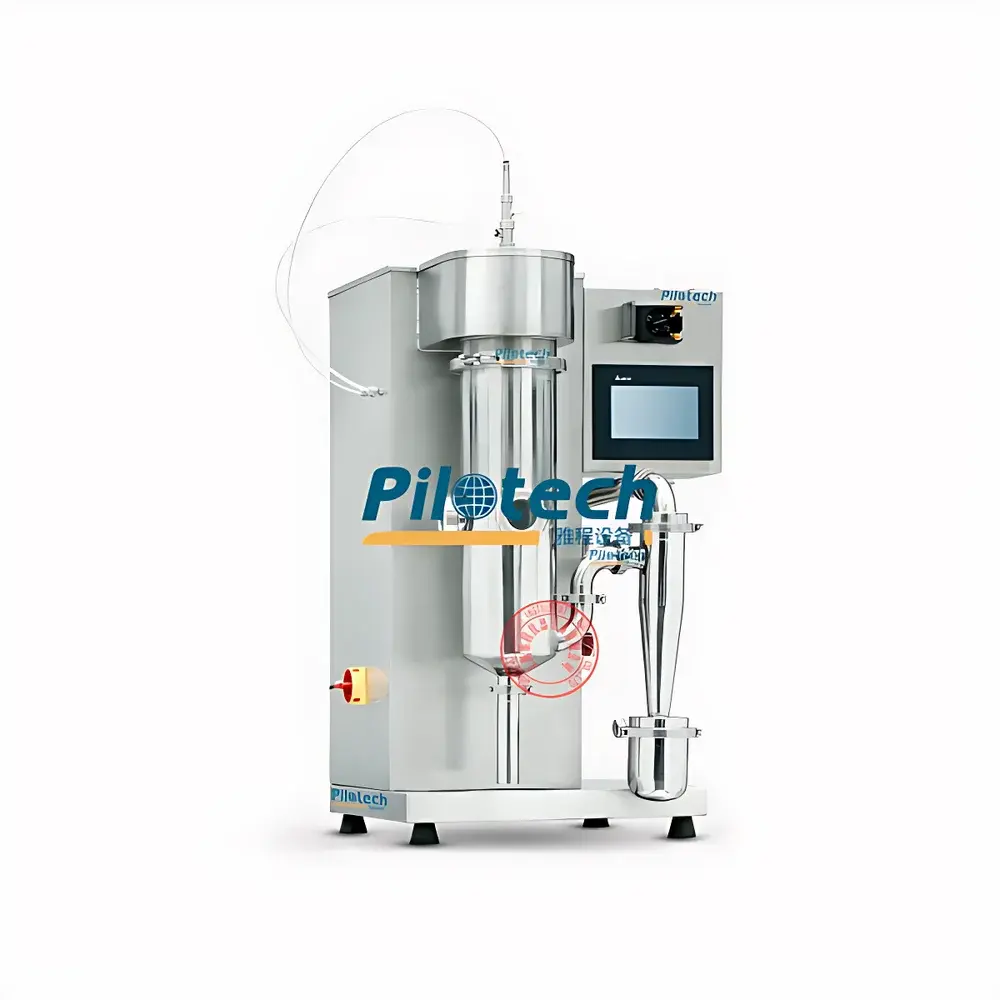
YaCheng YC-500 Benchtop Spray Dryer
| Brand | YaCheng / PILOTECH |
|---|---|
| Origin | Shanghai, China |
| Manufacturer Type | Direct Manufacturer |
| Country of Origin | China |
| Model | YC-500 |
| Sample Compatibility | Aqueous solutions (organic solvents with optional YC-501 nitrogen recirculation system) |
| Max Feed Rate | 500 mL/h |
| Inlet Air Temperature Range | Up to 200 °C |
| Outlet Air Temperature Range | As low as 80 °C (solvent-dependent) |
| Particle Size Distribution | 1–25 µm |
| Nozzle Orifice | 1.0 mm standard (0.5/0.8/1.5/2.0 mm optional) |
| Construction | Full SUS304 stainless steel |
| Power Supply | 2 kW / 220 V |
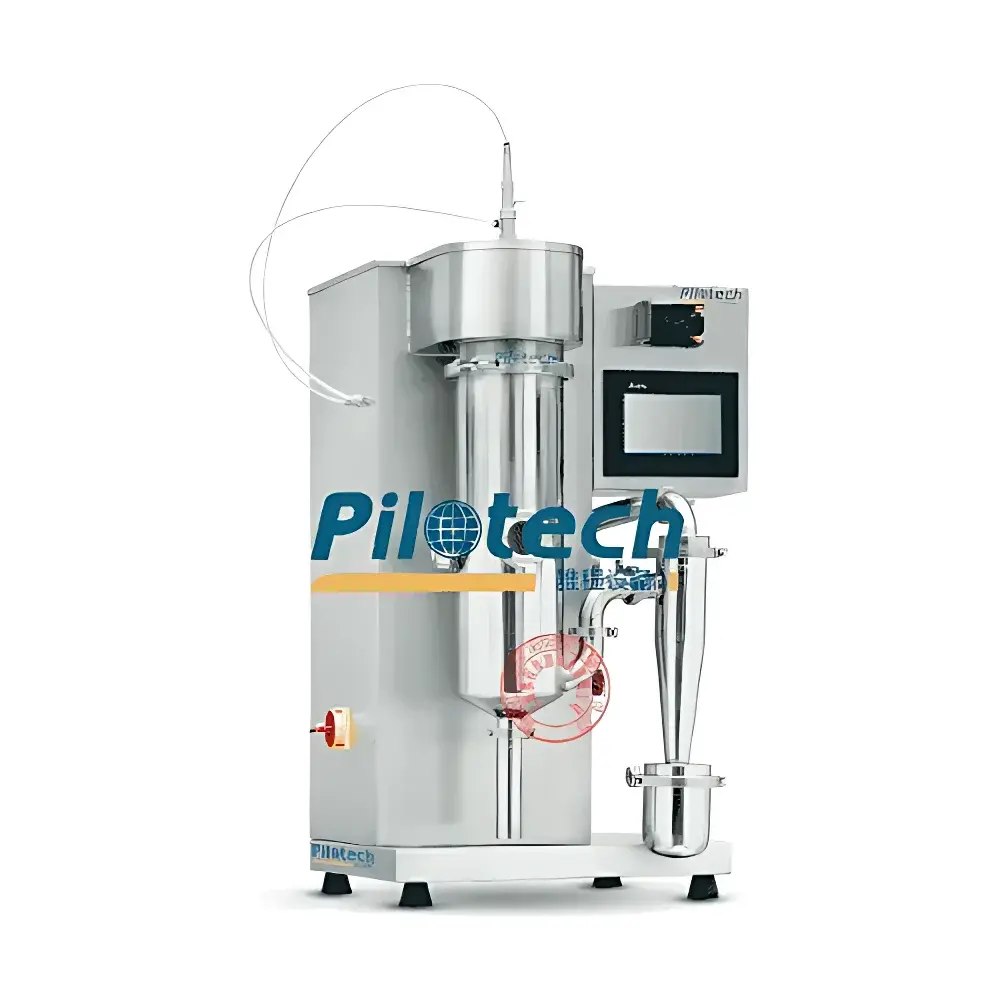
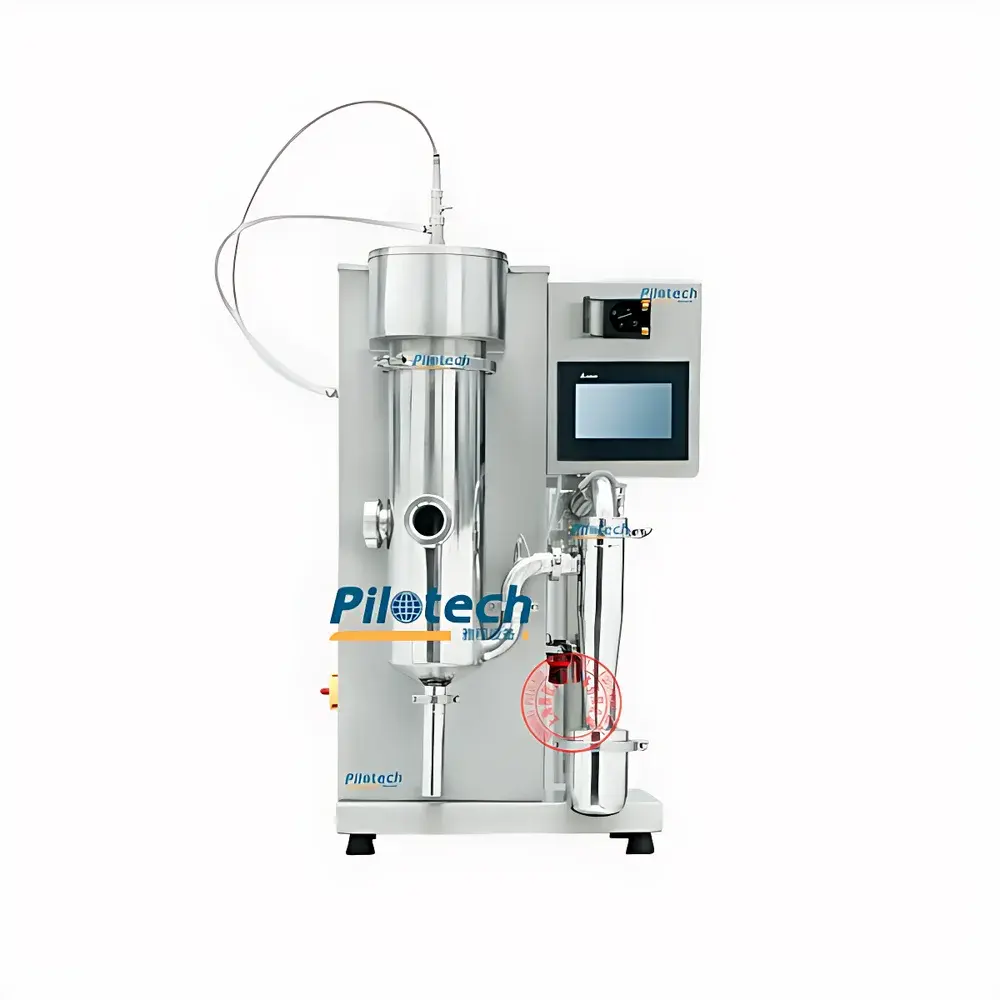
| Display | Color LCD touchscreen with real-time animation and parameter monitoring (inlet temp, fan frequency, peristaltic pump speed, needle cleaning frequency) |
Overview
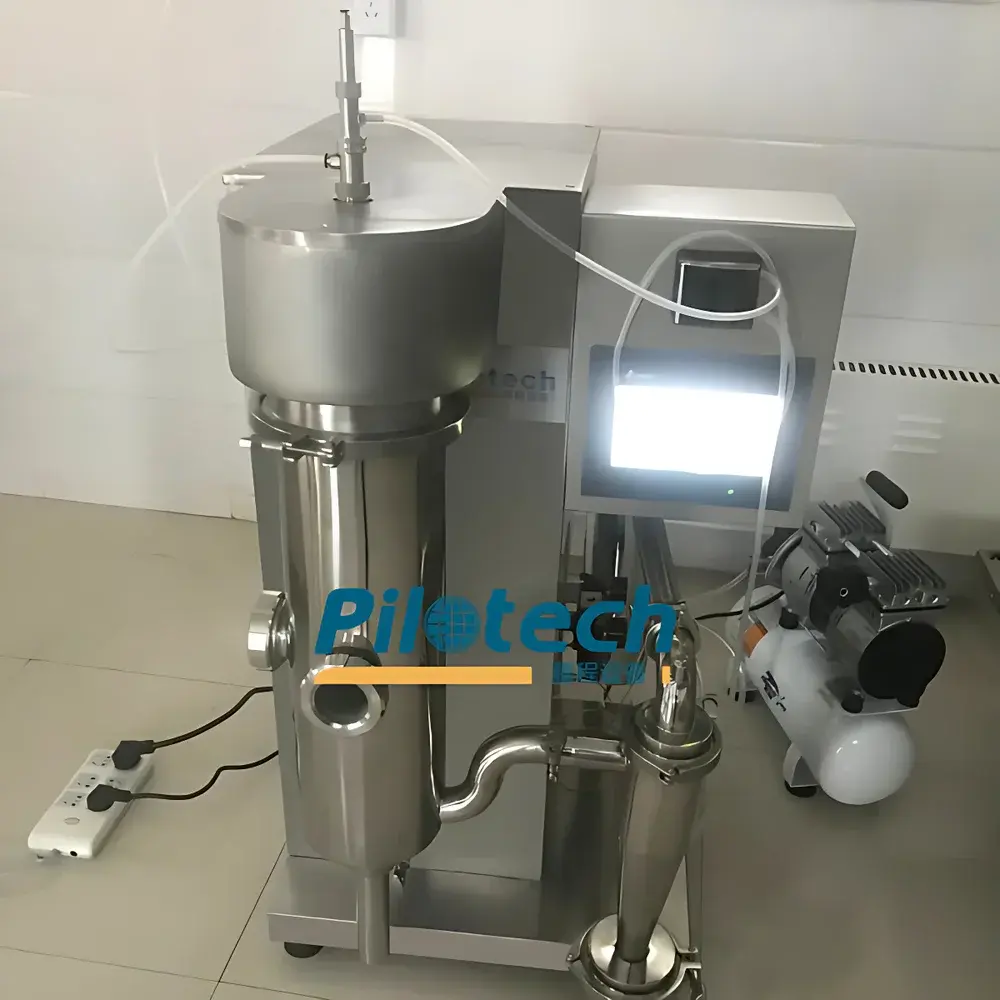
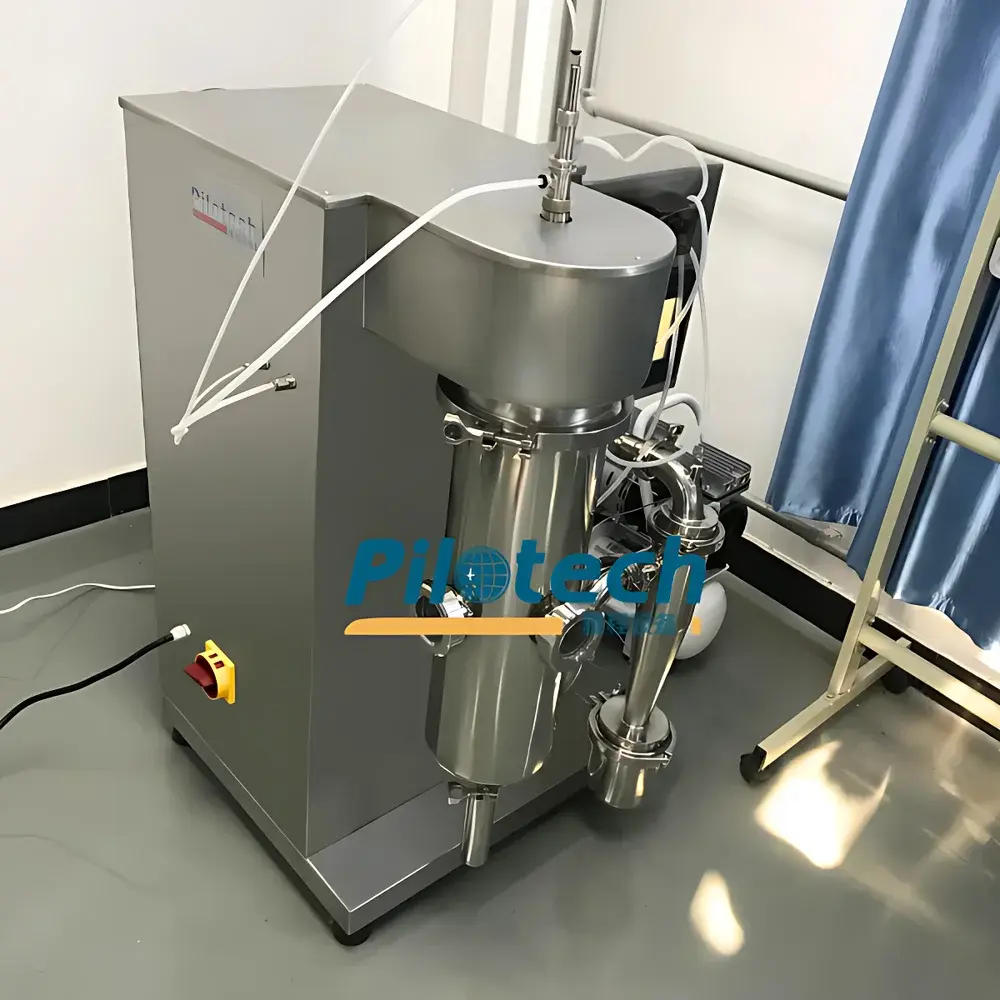
The YaCheng YC-500 Benchtop Spray Dryer is a compact, precision-engineered laboratory-scale instrument designed for rapid, reproducible conversion of liquid feedstocks—primarily aqueous solutions—into free-flowing dry powders via single-stage concurrent spray drying. Operating on the principle of flash evaporation through atomization into a heated air stream, the YC-500 delivers controlled thermal processing with high mass transfer efficiency and minimal thermal degradation. Its design adheres to fundamental fluid dynamics and heat/mass transfer theory, enabling consistent droplet formation, solvent removal kinetics, and particle morphology control. Engineered specifically for benchtop deployment in academic labs, pharmaceutical R&D centers, and materials science facilities, the system integrates seamlessly into existing workflows without requiring dedicated utility infrastructure. The YC-500 supports both open-air operation (for water-based feeds) and closed-loop inert gas recirculation (when paired with the optional YC-501 nitrogen system), extending its applicability to thermolabile compounds and flammable organic solvents under Class I Division 2 or ATEX-compliant conditions.
Key Features
- Modular benchtop architecture: Compact footprint (≤0.5 m²) allows direct placement on standard lab benches or integration with the YC-501 nitrogen recirculation module for organic solvent compatibility—no reconfiguration or structural modification required.
- Coaxial two-fluid nozzle: Precision-machined concentric nozzle ensures symmetrical atomization with zero eccentricity, eliminating wall impingement and maximizing powder recovery (>85% typical for model proteins and polysaccharides). Vertical nozzle adjustment enables optimization of spray trajectory relative to drying chamber geometry and residence time distribution.
- High-viscosity feed tolerance: Optimized air-liquid ratio and pressure regulation accommodate feed viscosities up to 250 cP without clogging—validated with sodium alginate (2% w/v), chitosan (1.5% w/v), and nanoemulsion formulations.
- Dual-mode thermal management: PID-controlled electric heating element (max 200 °C inlet) with redundant overtemperature cutoff; outlet temperature dynamically stabilized between 80–110 °C depending on solvent volatility and feed solids content.
- Integrated cyclonic dust collection + optional secondary filter: Reduces environmental emissions and improves yield for fine or electrostatically cohesive particles (e.g., liposomes, PLGA nanoparticles); particulate capture efficiency exceeds 92% for ≥1 µm aerosols.
- Full SUS304 construction with borosilicate viewing port: Corrosion-resistant wetted parts comply with ISO 8573-1 (compressed air purity) and support cleaning-in-place (CIP) protocols; transparent chamber enables real-time process observation without interruption.
Sample Compatibility & Compliance
The YC-500 is validated for aqueous colloidal systems including protein solutions (BSA, lysozyme), polymer dispersions (PVP, HPMC), inorganic precursors (silica sols, metal nitrates), and food-grade emulsions (whey protein isolate, maltodextrin). With the YC-501 nitrogen recirculation system, it extends to methanol, ethanol, acetone, ethyl acetate, and chloroform-based feeds—enabling GMP-aligned processing of active pharmaceutical ingredients (APIs) and catalyst precursors. The system meets mechanical safety requirements per EN 61000-6-2 (EMC immunity) and EN 61000-6-4 (EMC emission), and its stainless-steel construction satisfies FDA 21 CFR Part 11 data integrity prerequisites when used with compliant software logging. While not certified to ISO 22000 or ICH Q5C directly, its operational parameters align with critical quality attributes defined in USP and Ph. Eur. 2.9.34 for dried biopharmaceutical intermediates.
Software & Data Management
Real-time process monitoring is delivered via a 7-inch capacitive color touchscreen interface featuring animated drying chamber visualization, trend graphs for inlet/outlet temperature, airflow rate, and pump speed, plus timestamped event logging (e.g., needle purge cycles, temperature deviations >±2 °C). All parameters are stored locally in CSV format with UTC timestamps; export is supported via USB 2.0. Audit trail functionality records user logins, parameter changes, and system alarms—meeting GLP traceability requirements. Optional Ethernet connectivity enables remote diagnostics and integration with LIMS platforms using Modbus TCP protocol. Data files include metadata headers compliant with ASTM E2500-13 (standard guide for specification, design, and verification of pharmaceutical and biopharmaceutical manufacturing systems).
Applications
- Pharmaceutical formulation development: Production of amorphous solid dispersions, inhalable microparticles, and vaccine adjuvant carriers.
- Nanomaterial synthesis: Scalable generation of silica, titania, and iron oxide nanoparticles with narrow PSD (Dv50 = 5–12 µm, span <1.8).
- Food & nutraceutical research: Encapsulation of probiotics, omega-3 oils, and anthocyanins with controlled moisture content (<3.5% w/w).
- Materials science: Preparation of battery cathode precursors (LiCoO₂, NMC), ceramic slurries, and conductive polymer powders.
- Academic teaching: Hands-on demonstration of mass transfer principles, droplet evaporation kinetics, and powder flow characterization per ASTM D6393.
FAQ
Can the YC-500 process organic solvents without the YC-501 nitrogen system?
No. Organic solvent operation requires the YC-501 closed-loop nitrogen recirculation unit to maintain oxygen concentration below 8% v/v and prevent explosive atmospheres.
What is the minimum sample volume required for a valid run?
Typical minimum feed volume is 10–20 mL, dependent on total solids content and desired powder yield; lower volumes may be used with gravimetric feed calibration.
Is the touchscreen interface programmable for multi-step temperature profiles?
Yes—the system supports up to five sequential setpoint segments with ramp/soak logic, enabling staged drying for heat-sensitive biologics.
Does the YC-500 meet regulatory requirements for GMP documentation?
It supports ALCOA+ data integrity principles when paired with validated electronic record procedures; full 21 CFR Part 11 compliance requires supplementary validation of user access controls and electronic signatures.
What maintenance intervals are recommended for the coaxial nozzle and heating element?
Nozzle inspection and ultrasonic cleaning are advised after every 10–15 runs; the heating element has demonstrated >5,000 hours MTBF under continuous operation at ≤180 °C inlet temperature.



