
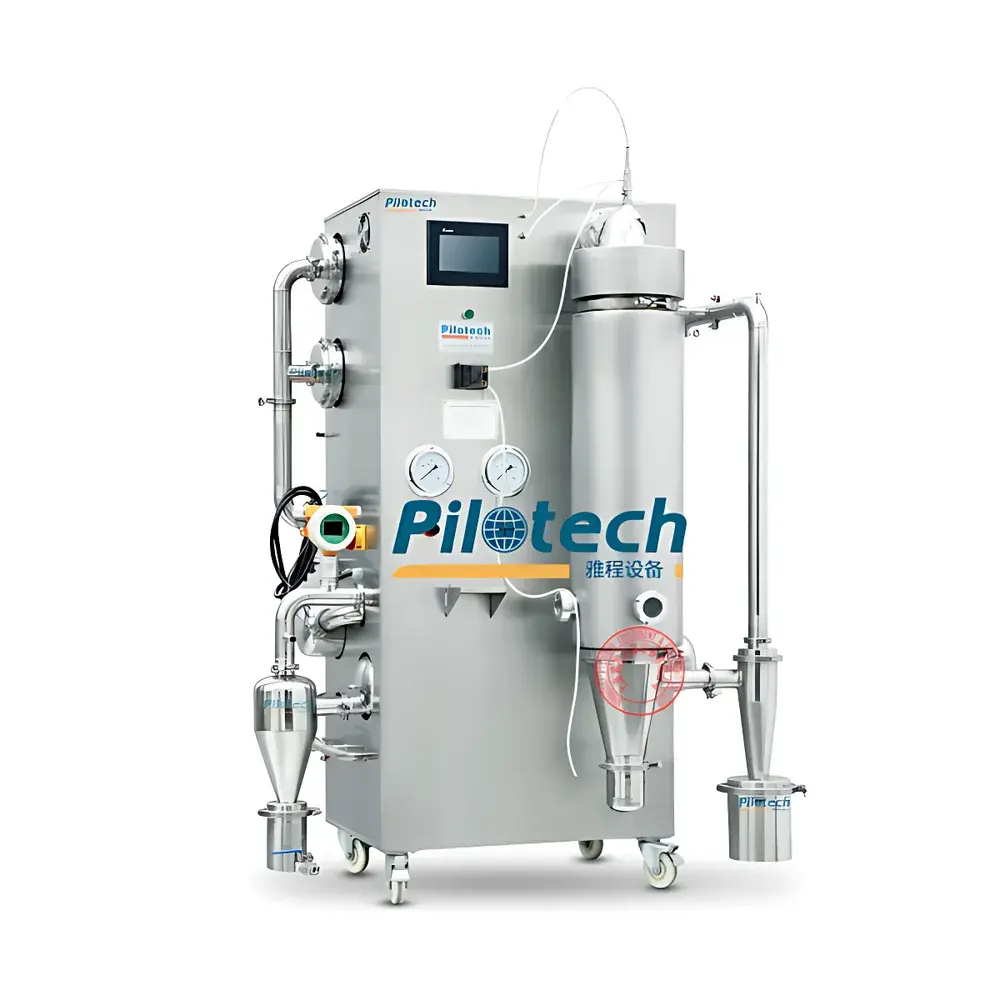
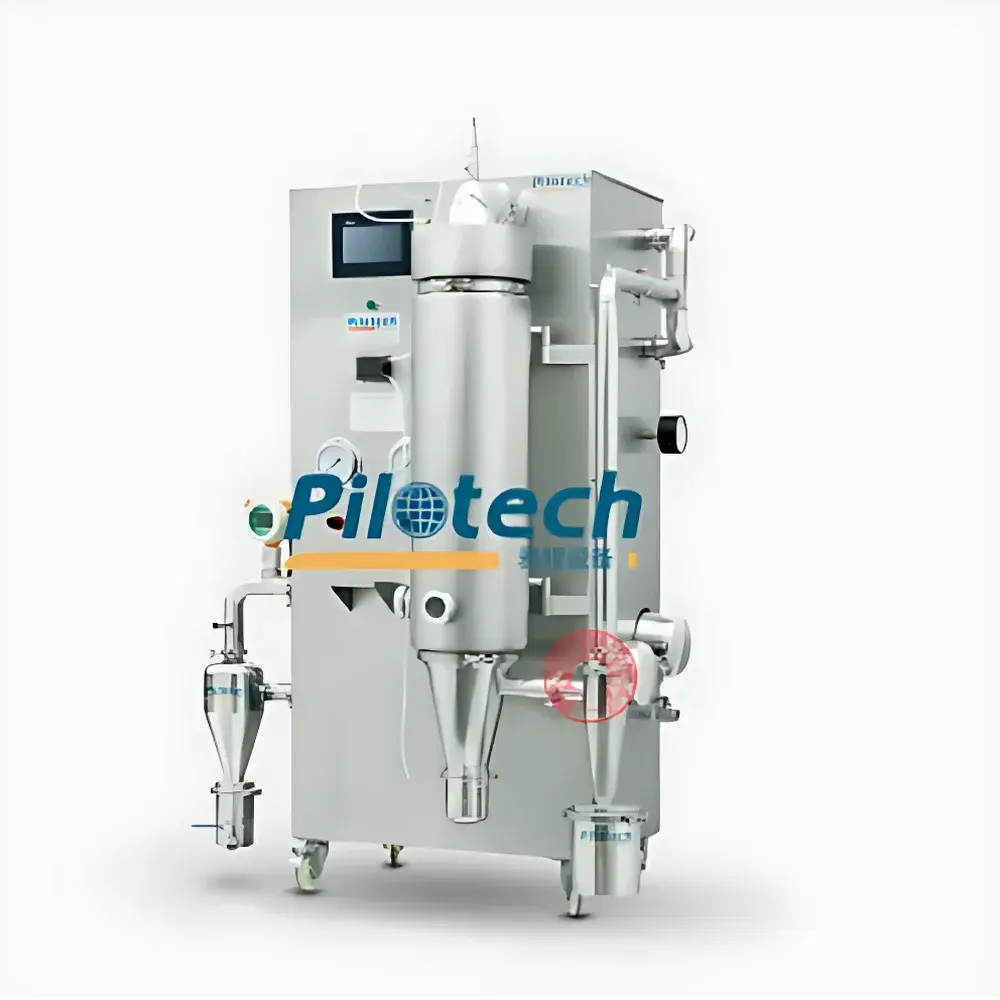
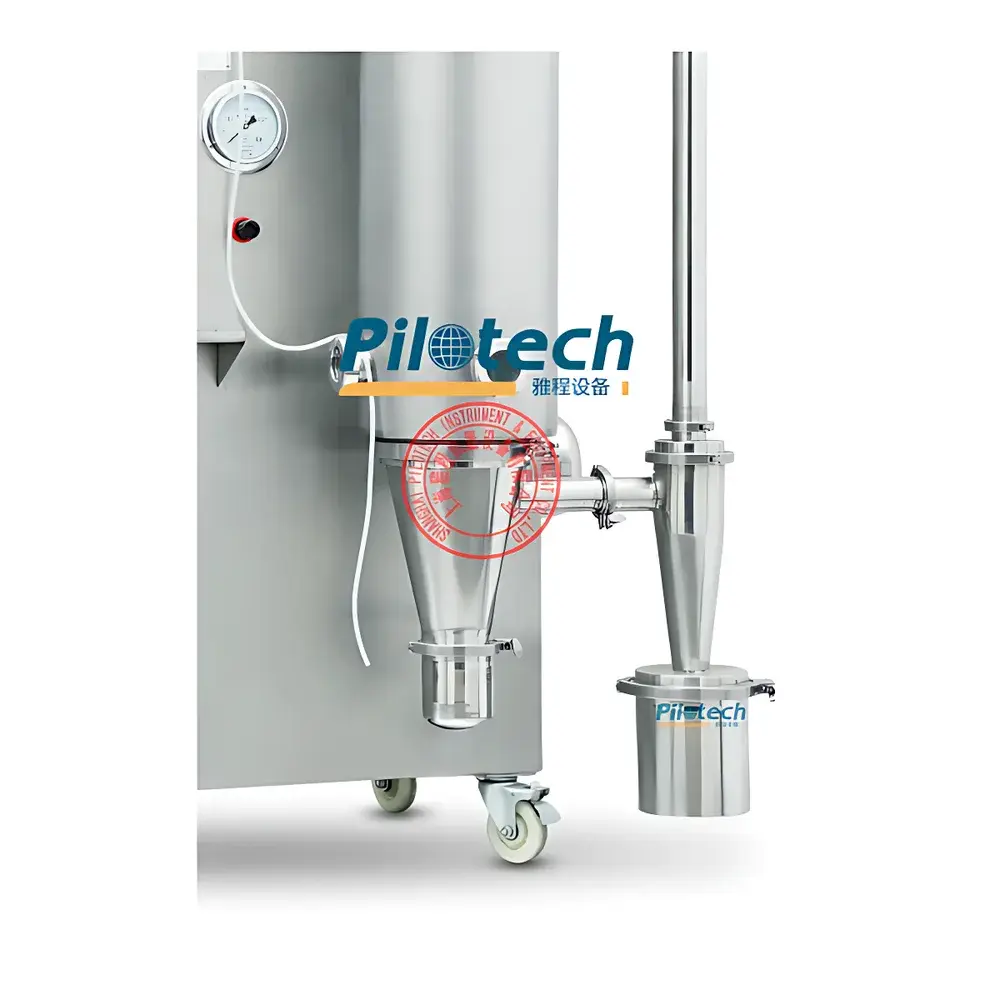
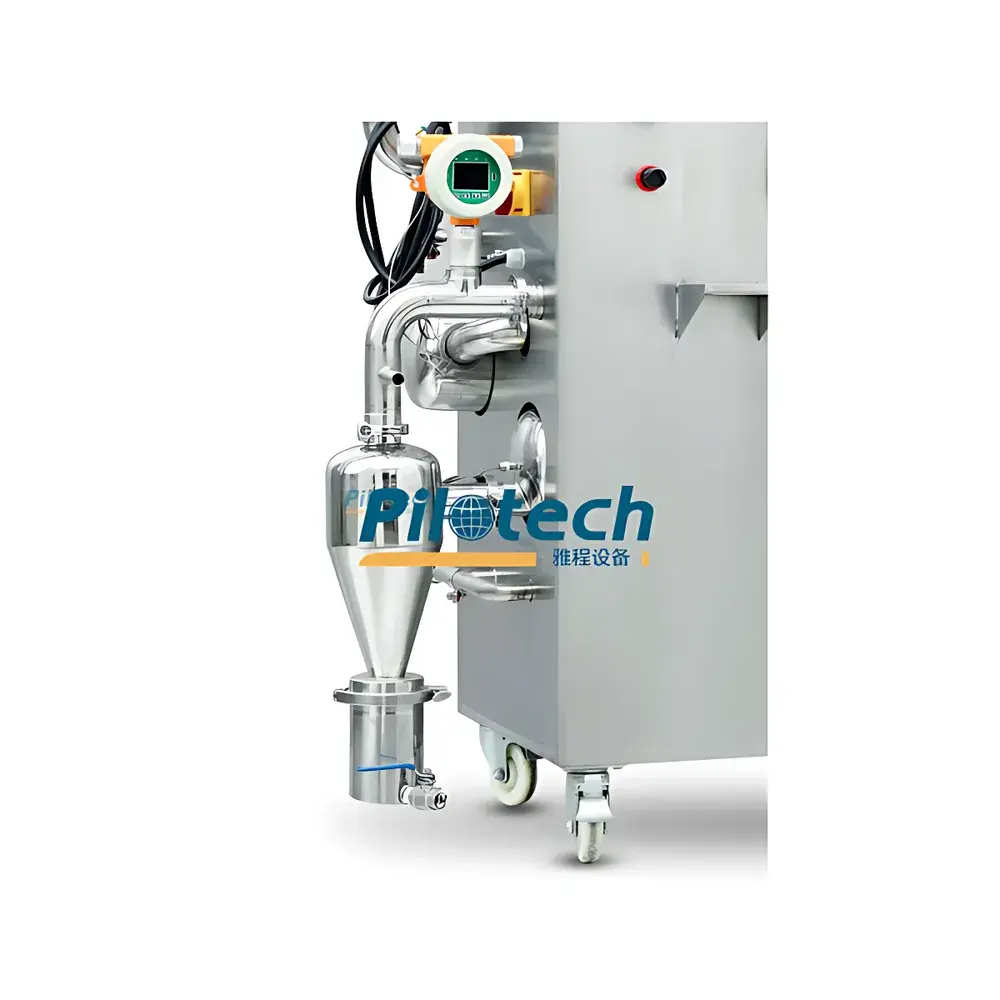
雅程YC-018A有机溶剂喷雾干燥机
| Brand | Yacheng / PILOTECH |
|---|---|
| Origin | Shanghai, China |
| Manufacturer Type | OEM Manufacturer |
| Product Category | Domestic |
| Model | YC-018A |
| Sample Type Compatibility | Multiphase Liquids (Aqueous & Organic Solutions) |
| Maximum Feed Rate | 3000 mL/h |
| Inlet Air Temperature Range | Up to 200 °C |
| Particle Size Distribution | 1–80 µm |
| Oxygen Monitoring Threshold | Auto-Shutdown at ≥2.5% O₂ |
| Nozzle Diameter | Standard 1.5 mm (Optional: 0.5 / 0.8 / 1.0 / 2.0 mm) |
| Temperature Control Accuracy | ±2 °C (PID) |
| Integrated Solvent Recovery | Yes (Condensation-Based) |
| Nitrogen Recirculation System | Yes |
| Optional Cryogenic Cooling Module | Available |
Overview
The Yacheng YC-018A Closed-Cycle Organic Solvent Spray Dryer is an engineered laboratory-scale system designed for the safe, efficient, and reproducible conversion of heat-sensitive, oxidation-prone, or hazardous organic solutions into free-flowing dry powders. Unlike conventional open-loop spray dryers, the YC-018A operates under a fully sealed nitrogen recirculation environment—eliminating contact between flammable solvent vapors and ambient oxygen. This architecture adheres to fundamental principles of inert-atmosphere processing, where atomization occurs via concentric two-fluid nozzles, drying proceeds through controlled convective heat transfer with preheated N₂, and solvent-laden exhaust is thermally condensed and recovered in-line. The system integrates real-time oxygen monitoring, automatic safety interlocks, and PID-regulated thermal control to ensure process integrity across diverse solvents—including acetone, ethanol, ethyl acetate, dichloromethane, and tetrahydrofuran—with boiling points as low as 40 °C. Its design supports both R&D-scale formulation development and pilot-stage process validation under GLP-aligned operational conditions.
Key Features
- Inert gas closed-loop operation with continuous O₂ concentration monitoring (alarm and auto-shutdown at ≥2.5% v/v)
- 7-inch color touchscreen HMI with intuitive Chinese/English interface, displaying inlet temperature, peristaltic pump speed, needle cleaning frequency, and real-time O₂ level
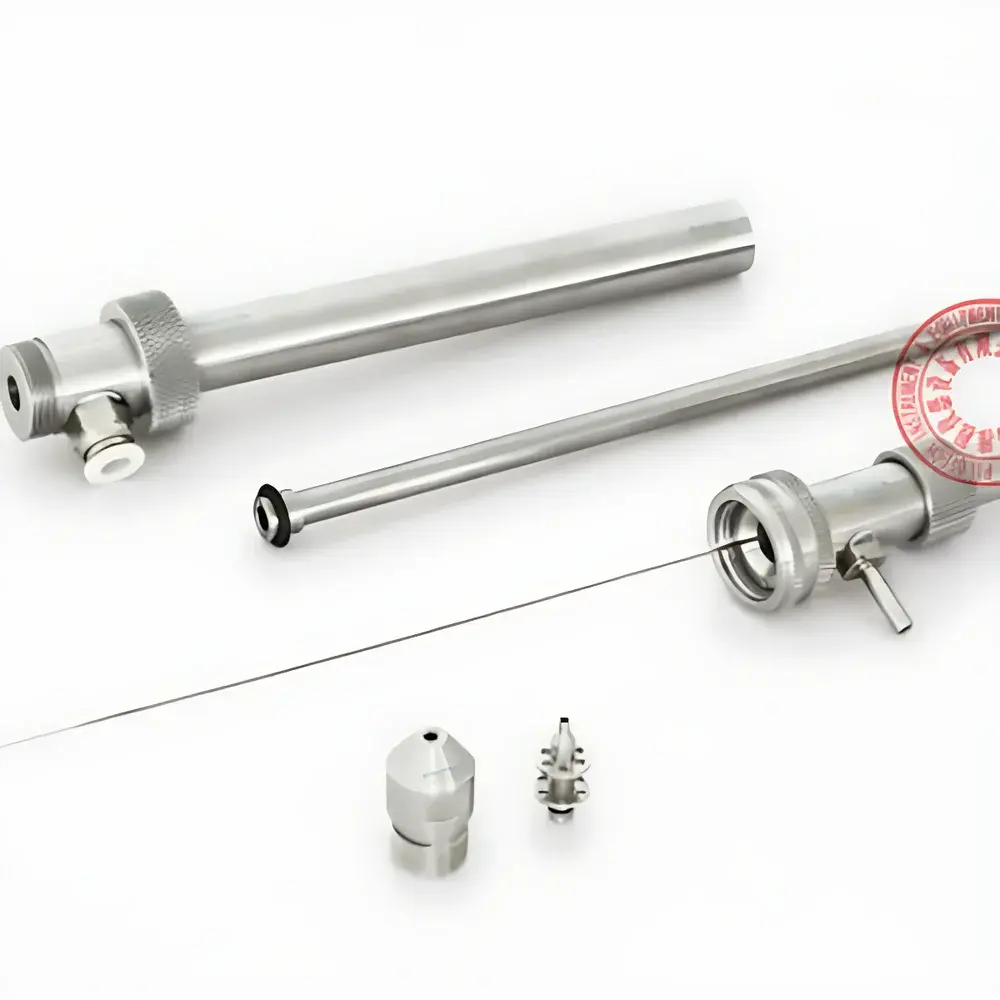
- Concentric dual-channel nozzle assembly enabling precise, non-eccentric atomization—minimizing wall deposition and maximizing powder recovery efficiency
- Modular nitrogen recirculation circuit including high-efficiency heat exchanger, refrigerated condenser, and inline solvent collection vessel
- PLC-based automation with one-touch startup, programmable drying profiles, and parameter adjustment during active runs (e.g., feed rate, inlet temp, airflow)
- Post-drying cooldown protocol: fan continues operation until chamber temperature falls below preset safety threshold (preventing thermal damage or residual vapor ignition)
- Corrosion-resistant blower assembly—no contact between solvent vapors and rotating components—ensuring long-term reliability and contamination-free air delivery
- Minimal sample requirement: as low as 100 mL per run; scalable throughput up to 3000 mL/h for rapid screening or small-batch production
Sample Compatibility & Compliance
The YC-018A accommodates aqueous and organic liquid feeds—including emulsions, suspensions, polymer solutions, and nanoparticle colloids—without phase separation during atomization. It is routinely deployed for drying thermolabile biomolecules (e.g., enzymes, peptides, monoclonal antibody fragments), oxidizable actives (e.g., polyphenols, unsaturated lipids), and regulated pharmaceutical intermediates requiring solvent residue control per ICH Q3C guidelines. The system’s closed architecture inherently satisfies OSHA 1910.119 (Process Safety Management) requirements for handling Class I flammable liquids. Optional integration of audit-trail-capable software enables compliance with FDA 21 CFR Part 11 for electronic records and signatures when paired with validated data logging modules. All electrical components meet IP54 ingress protection standards; structural materials conform to ASTM A240 stainless steel specifications for chemical resistance.
Software & Data Management
Control logic resides in a CE-certified industrial PLC with deterministic scan cycles and non-volatile memory for recipe storage (up to 100 user-defined protocols). The touchscreen interface logs timestamped operational data—including temperature ramps, pump revolutions, O₂ traces, and shutdown events—to internal SD card storage. Export formats include CSV and PDF reports compatible with LIMS integration. Optional Ethernet/Wi-Fi connectivity supports remote monitoring via secure HTTPS endpoints, while optional add-on modules provide automated calibration verification logs and deviation alert escalation via email/SMS. Data integrity safeguards include write-protected configuration files, operator-level access controls (admin/operator/guest), and tamper-evident digital signatures for critical parameters.
Applications
- Pharmaceutical R&D: Encapsulation of APIs in biodegradable polymers (e.g., PLGA, Eudragit®) using volatile organic solvents
- Agrochemical formulation: Production of water-dispersible granules (WDG) from organophosphate or neonicotinoid solutions
- Food science: Stabilization of anthocyanins, omega-3 oils, and probiotic cultures without Maillard degradation
- Nanomaterial synthesis: Continuous generation of metal-organic framework (MOF) nanoparticles and quantum dot dispersions
- Academic research: Solvent removal from conductive polymer inks (e.g., PEDOT:PSS in DMSO) for printed electronics substrates
FAQ
Can the YC-018A handle chlorinated solvents such as chloroform or dichloromethane?
Yes—provided the optional corrosion-resistant condenser coil and solvent collection vessel are specified; material compatibility must be verified against ASME B31.3 process piping standards.
Is nitrogen consumption minimized during operation?
Yes—the system achieves >95% N₂ recirculation efficiency; makeup flow is only required to compensate for minor leaks or solvent vapor displacement.
What validation documentation is provided with the instrument?
Factory acceptance test (FAT) report, IQ/OQ templates, material certificates for wetted parts (316L SS, PTFE, Viton®), and electrical safety certification (CE, RoHS) are included.
Can particle morphology be tuned via process parameters?
Yes—feed concentration, inlet temperature, atomization pressure, and nozzle geometry collectively influence sphericality, surface roughness, and hollow-core formation—enabling empirical DOE studies.
Is third-party calibration support available?
Yes—Yacheng maintains ISO/IEC 17025-accredited partners in North America and EU for on-site temperature uniformity mapping and flowmeter verification.



