
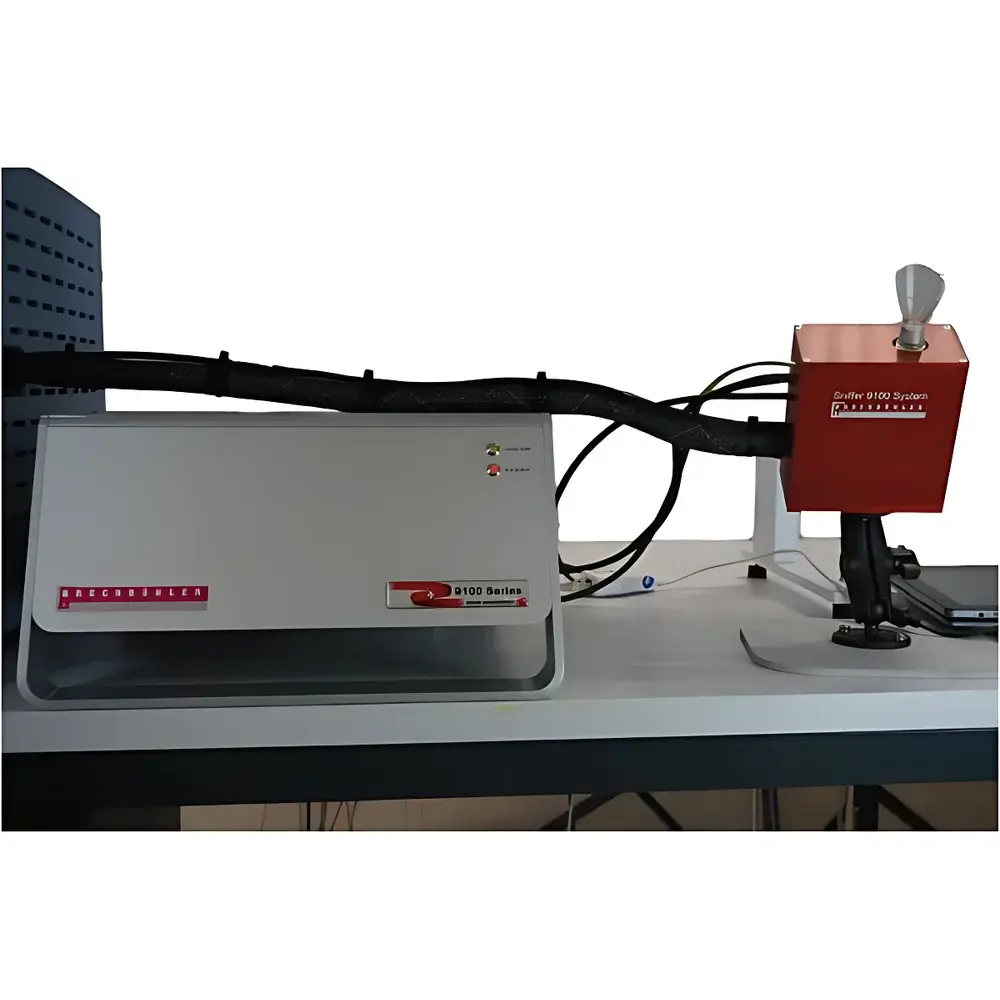
Sniffer9100 GC-O Olfactometry System by Brechbühler
| Brand | Brechbühler |
|---|---|
| Origin | Switzerland |
| Model | Sniffer9100 |
| Interface Tube Length | 80 cm or 140 cm |
| Control Module Dimensions | 350 × 375 × 195 mm |
| Temperature Control Range | 50–325 °C (1 °C resolution, max recommended 280 °C) |
| Output Signals | 0–1 V, 0–5 V, 0–10 V |
| I/O Synchronization | Start In, Stop In, Ready Out, Inhibit Ready In |
| Network Interface | TCP/IP LAN |
| Max Concurrent Units per GC | 3 |
Overview
The Sniffer9100 GC-O Olfactometry System is a precision-engineered sensory interface module developed by Brechbühler (Switzerland) for gas chromatography–olfactometry (GC-O) applications. It enables human assessors—trained odor panelists—to serve as biological detectors in parallel with instrumental detectors (e.g., FID, MS) during chromatographic separation. Unlike conventional electronic nose systems, the Sniffer9100 does not replace human perception with sensor arrays; instead, it integrates olfactory evaluation directly into the GC workflow via thermally controlled, inert capillary routing from the column effluent to a standardized sniffing port. This architecture preserves volatile compound integrity and ensures temporal alignment between chromatographic retention time and perceived odor onset—a prerequisite for reliable aroma-active compound identification. The system adheres to established GC-O methodological frameworks defined in ASTM E679, ISO 11035, and IFRA guidelines for fragrance characterization, making it suitable for R&D, quality control, and regulatory support in flavor & fragrance, food science, environmental odor monitoring, and consumer product development.
Key Features
- Modular design: Operates either as a standalone olfactometry interface compatible with any commercial GC (including Agilent, Thermo Fisher, Shimadzu, and PerkinElmer platforms) or as part of an integrated GC-O configuration.
- Thermally regulated GC-to-sniffing-port interface: Precision temperature control (50–325 °C, 1 °C increments; 280 °C max recommended) prevents condensation and thermal degradation of labile odorants.
- Dual-path effluent splitting: A high-stability, low-dead-volume splitter directs a defined fraction of column effluent to the human assessor while maintaining full flow to the primary detector—ensuring quantitative correlation between instrumental response and sensory perception.
- Multi-unit scalability: Up to three Sniffer9100 units can be synchronized on a single GC via configurable TCP/IP LAN communication, enabling multi-panelist concurrent assessment or cross-validation studies.
- Hardware-level synchronization: Dedicated digital I/O lines (Start In, Stop In, Ready Out, Inhibit Ready In) provide deterministic timing alignment with GC acquisition software, supporting GLP-compliant data traceability.
- Standardized odor intensity encoding: Built-in analog signal outputs (0–1 V, 0–5 V, 0–10 V) allow direct integration with third-party data acquisition systems for real-time intensity logging synchronized to chromatographic time.
Sample Compatibility & Compliance
The Sniffer9100 supports volatile and semi-volatile organic compounds (VOCs and SVOCs) across a broad polarity and volatility range—including aldehydes, esters, terpenes, sulfur compounds, and pyrazines—provided they elute within standard GC temperature programs and remain stable at interface temperatures up to 280 °C. Sample introduction is fully compatible with split/splitless injectors, PTV, and thermal desorption units. The system meets mechanical and electrical safety requirements per IEC 61010-1 and is designed for use in laboratories operating under ISO/IEC 17025, FDA 21 CFR Part 11 (when paired with compliant acquisition software), and EU GMP Annex 11 environments. All wetted surfaces are constructed from electropolished stainless steel and fused silica, ensuring minimal adsorption and carryover.
Software & Data Management
The Sniffer9100 operates without proprietary acquisition software; instead, it delivers hardware-synchronized analog and digital signals to external platforms such as Chromeleon, OpenLab CDS, Empower, or custom LabVIEW/Python-based systems. Its TCP/IP interface enables remote status monitoring, firmware updates, and parameter configuration via standard web browsers. Audit trails—including operator ID, session timestamps, temperature setpoints, and I/O event logs—are maintained externally by the host GC software or LIMS. For structured sensory data collection, the system interoperates with validated sensory databases (e.g., Compusense Cloud, FIZZ, or internally developed SQL-backed repositories) that support attribute coding, panelist calibration tracking, and consensus analysis per ASTM E1432 and ISO 8586.
Applications
- Aroma impact compound identification in essential oils, natural extracts, and synthetic fragrance blends.
- Off-odor root cause analysis in packaged foods, pharmaceutical excipients, and polymer-based materials.
- Sensory-guided method development for GC-MS/MS quantitation of key odorants.
- Consumer perception mapping: correlating chromatographic peak areas with hedonic scores and descriptive attributes.
- Environmental odor profiling: characterizing landfill leachate, wastewater treatment emissions, and industrial stack gases.
- Regulatory dossier preparation for IFRA, REACH, or EPA submissions requiring human-relevant odor threshold data.
FAQ
Can the Sniffer9100 be used with cryo-focused GC systems?
Yes—its heated interface accommodates cryogenic modulation when operated above the dew point of condensed analytes; temperature ramp profiles must be coordinated with the modulator’s thermal cycle.
Is panelist training supported by Brechbühler?
Brechbühler provides technical documentation and interface validation protocols, but panel recruitment, screening, and sensory training follow ISO 8586 and are conducted by the end-user’s sensory science team.
Does the system comply with FDA 21 CFR Part 11 requirements?
The hardware itself is Part 11–neutral; compliance is achieved at the software layer—i.e., when integrated with validated GC data systems offering electronic signatures, audit trails, and role-based access control.
What maintenance is required for long-term reliability?
Annual verification of temperature calibration and leak integrity is recommended; capillary tubing and O-rings should be replaced per usage frequency (typically every 6–12 months under continuous operation).
Can odor intensity data be exported in CSV or XML format?
Yes—intensity signals are acquired as time-series analog voltages; export format depends solely on the host acquisition software’s capabilities.





