
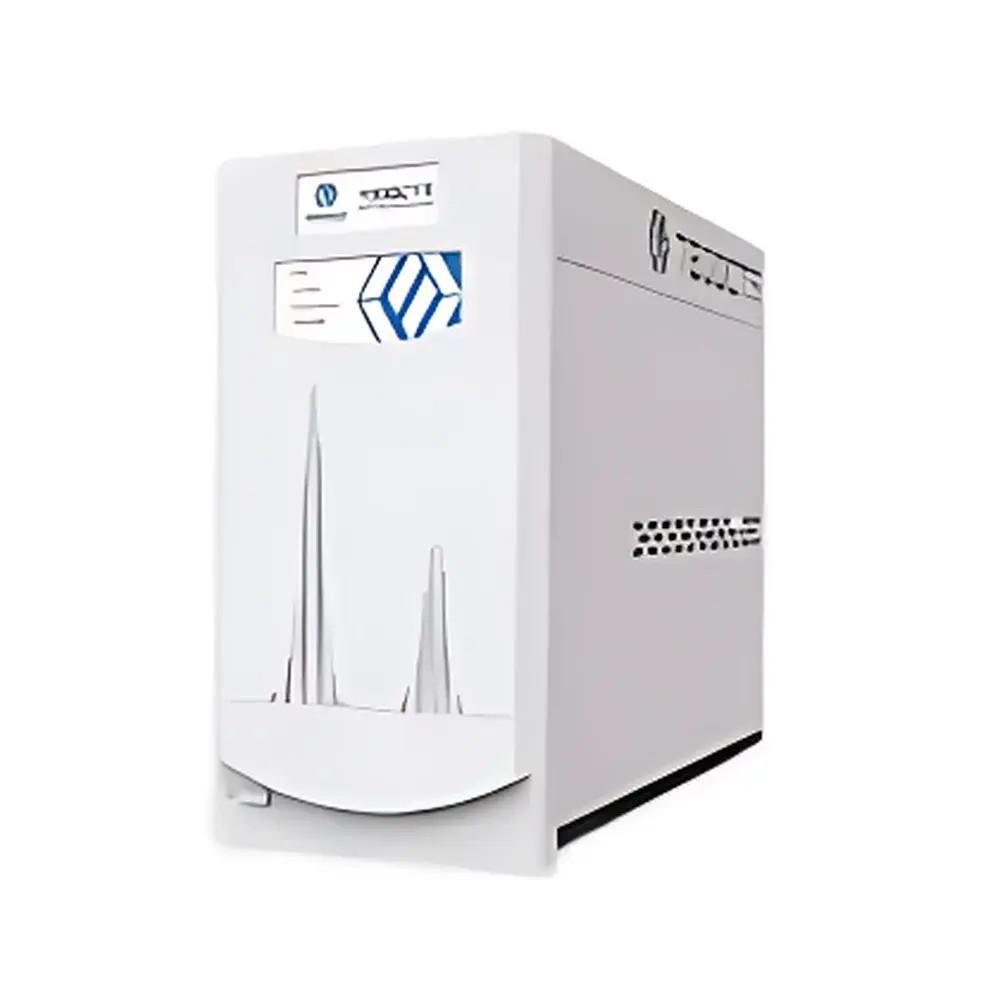
Entech 7200CTS Atmospheric Pre-concentrator with Multi-Capillary Trap System (MCCTS)
| Brand | Entech |
|---|---|
| Origin | Imported |
| Model | 7200CTS |
| Compliance | HJ 759-2023, GB/T 14678-93, EPA TO-15A |
| VOC Boiling Point Range | −50 °C to >230 °C |
| Water Removal Efficiency | >99.99% |
| Dynamic Quantitation Range | sub-ppb to ppm |
| Sample Pressure Range | 0.1–30 psia |
| C₂-Specific Capture Pathway | Integrated Dual-Trap Architecture (C₂ Capillary Trap + Main MCCTS) |
| Detection Interface | GC-FID and GC-MS Compatible |
| Cryogen-Free Operation | Yes |
| Valve Technology | Pneumatic Actuated, Non-Magnetic, Low-Adsorption Stainless Steel Manifolds |
Overview
The Entech 7200CTS Atmospheric Pre-concentrator is an advanced, cryogen-free thermal desorption system engineered for high-fidelity preconcentration of volatile organic compounds (VOCs) from ambient air samples collected in electropolished stainless steel canisters. Unlike conventional preconcentrators relying on liquid nitrogen or mechanical cryo-coolers, the 7200CTS employs a proprietary Multi-Capillary Trap System (MCCTS) — a thermally optimized array of fused-silica capillary traps with tailored surface chemistries — to achieve quantitative capture across an exceptionally broad volatility spectrum (−50 °C to >230 °C boiling point). Its operation is grounded in sequential adsorption–desorption thermodynamics: VOCs are focused at ambient or mildly cooled trap temperatures, then rapidly flash-desorbed into the GC inlet via resistive heating (≤1000 °C/s ramp rate), minimizing band broadening and ensuring chromatographic integrity. Designed for regulatory compliance and laboratory scalability, the 7200CTS serves as the front-end interface for both GC-FID and GC-MS analysis workflows, delivering reproducible, low-background quantitation required for environmental monitoring, ambient air quality assessment, and method validation under ISO/IEC 17025-accredited conditions.
Key Features
- Cryogen-free operation eliminates dependency on liquid nitrogen supply chains, reducing operational cost, safety hazards, and system downtime associated with cryogenic infrastructure.
- Multi-Capillary Trap System (MCCTS) provides uniform flow distribution, minimized channeling, and enhanced surface-area-to-volume ratio — enabling complete trapping of C₂ hydrocarbons (e.g., ethane, ethylene) without breakthrough, even at high humidity and low sample pressure (down to 0.1 psia).
- Dedicated C₂-specific capillary trap pathway isolates low-boiling compounds for selective introduction to FID detection — eliminating matrix interference from higher-boiling VOCs and improving accuracy for EPA Method TO-15A C₂ speciation.
- Hydrophobic capillary trap chemistry achieves >99.99% water removal efficiency while preserving polar analytes (e.g., formaldehyde, acetaldehyde), mitigating water-induced column degradation and ion source contamination in GC-MS.
- Pneumatically actuated, non-magnetic stainless steel manifold valves eliminate VOC adsorption sites common in solenoid valves — ensuring trace-level recovery (>95%) for reactive and sulfur-containing compounds (e.g., H₂S, methanethiol).
- Wide dynamic quantitation range (sub-ppb to ppm) supports both background ambient monitoring and elevated industrial emission screening within a single analytical run.
Sample Compatibility & Compliance
The 7200CTS is validated for use with standard 6-L and 1-L SUMMA®-electropolished canisters and compatible with all major canister sampling protocols. It meets the instrumental performance criteria specified in HJ 759–2023 (China’s standard for 65 VOCs in ambient air), GB/T 14678–93 (for reduced-sulfur compounds), and U.S. EPA Method TO-15A (VOCs in canister-collected air via GC-MS). The system supports GLP-compliant data acquisition when integrated with LIMS-enabled GC control software and maintains full audit trail capability per FDA 21 CFR Part 11 requirements when paired with compliant data systems. Its low carryover (<0.1% for benzene post-100 ppb injection) and consistent trap conditioning cycles ensure long-term stability across multi-day unattended runs.
Software & Data Management
The 7200CTS operates via Entech’s Windows-based 7200 Series Control Software, supporting method-driven automation, real-time temperature/pressure logging, and event-triggered diagnostics. All instrument parameters — trap temperatures, desorption timing, valve sequencing, and carrier gas flows — are programmable and stored with version-controlled method files. Raw data output conforms to ASTM E1947-compliant ASCII formats and integrates natively with Thermo Chromeleon, Agilent OpenLab, and Waters Empower platforms. Audit trails record user actions, parameter changes, and system alerts with time-stamped, immutable entries — satisfying internal QA/QC and external accreditation body requirements for traceability and data integrity.
Applications
- Ambient air monitoring networks requiring unattended, multi-week deployment with minimal maintenance intervals.
- Indoor air quality (IAQ) studies targeting aldehydes, terpenes, and halogenated VOCs in commercial and residential environments.
- Method development and validation laboratories verifying recovery, precision, and linearity per ISO 16000-6 and EPA Compendium Method TO-17.
- Industrial hygiene assessments where rapid turnaround and low detection limits are critical for OSHA PEL and ACGIH TLV compliance reporting.
- Research applications involving reactive VOC kinetics, atmospheric oxidation product profiling, and inter-laboratory comparison studies.
FAQ
Does the 7200CTS require liquid nitrogen or external refrigeration?
No — it is fully cryogen-free and uses thermoelectrically stabilized trap zones and rapid resistive heating for desorption.
Can the system handle humid samples without compromising sensitivity?
Yes — its hydrophobic MCCTS architecture removes >99.99% of water vapor while retaining water-soluble carbonyls and sulfur species.
How does the 7200CTS address C₂ compound breakthrough?
It incorporates a dedicated low-temperature C₂ capillary trap upstream of the main MCCTS, followed by a dedicated FID-only transfer path to prevent co-elution interference.
Is the system compatible with existing GC-MS configurations?
Yes — it interfaces seamlessly with all major GC-MS platforms via standard transfer lines and supports both split and splitless injection modes.
What maintenance is required for routine operation?
Annual trap regeneration and quarterly manifold leak checks are recommended; no cryogen refills, compressor servicing, or valve replacements are needed under normal use.



