
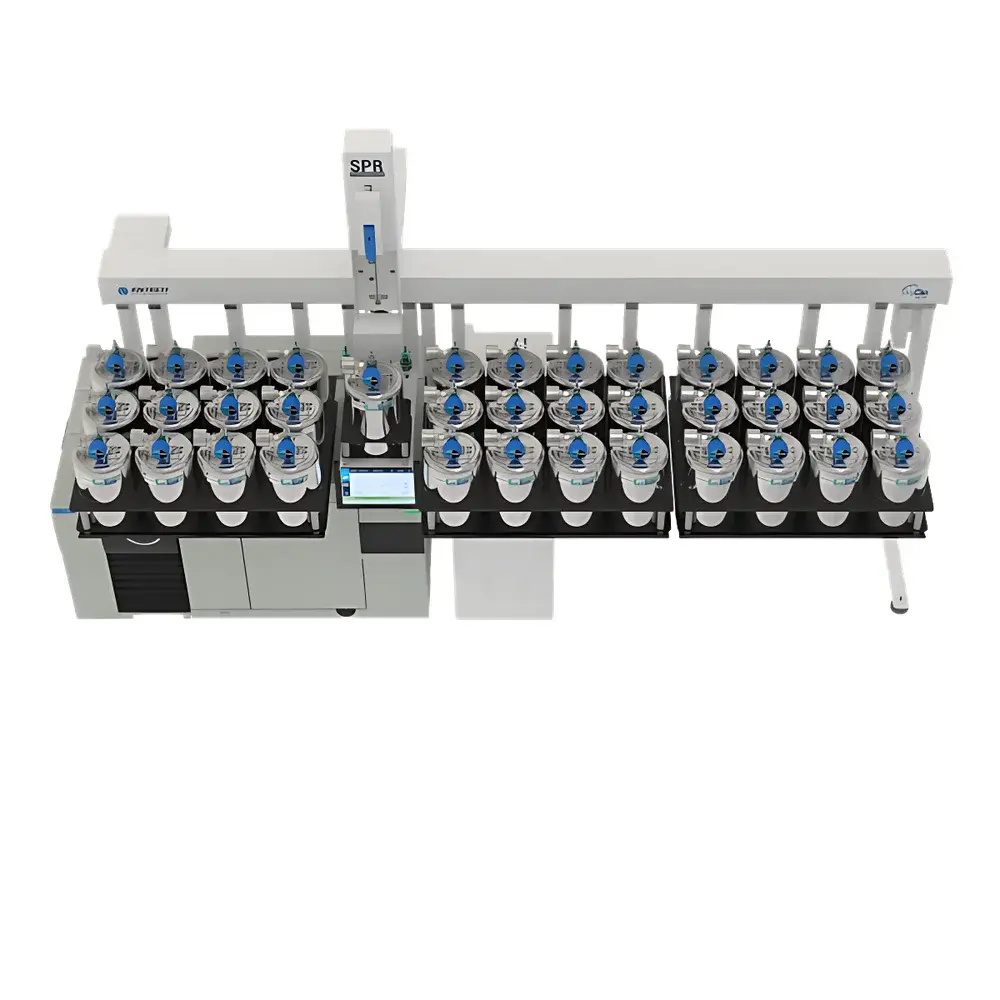
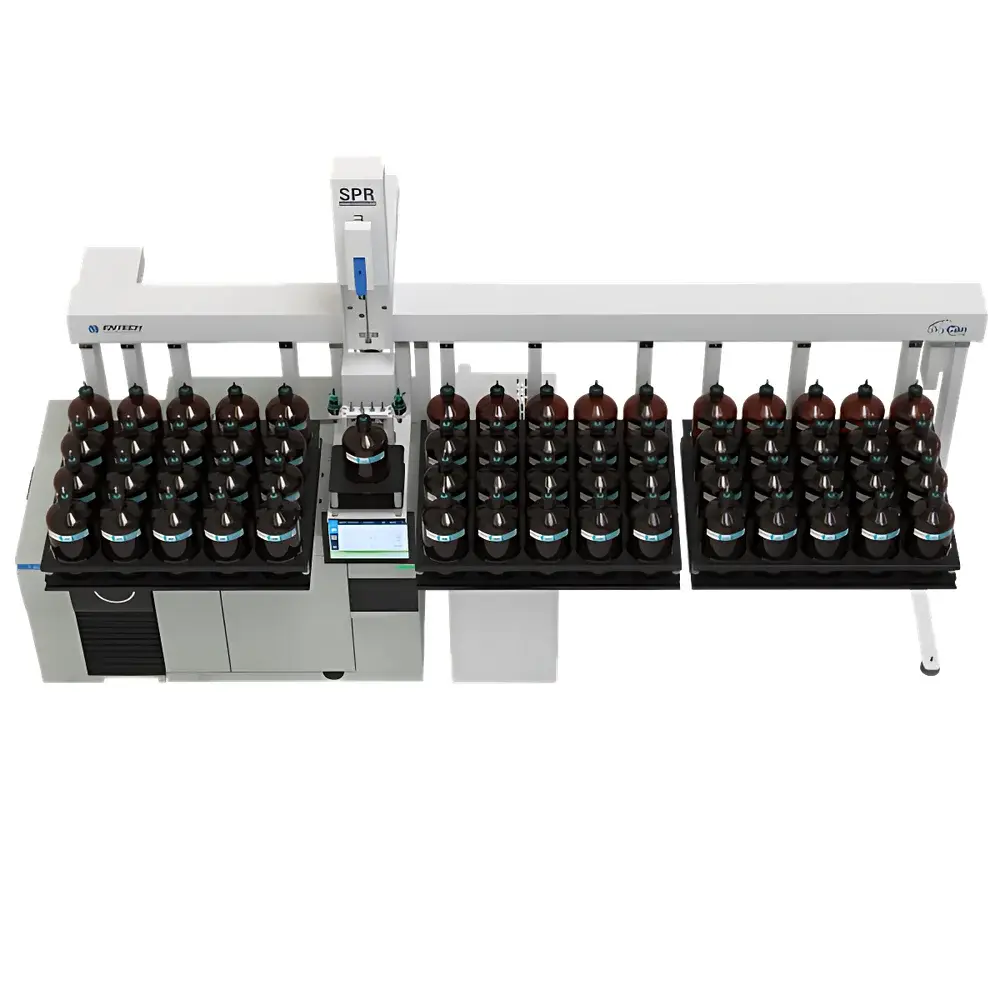
Entech SKYCan Automated Sample Introducer for Atmospheric Pre-concentration and GC/GC-MS Analysis
| Brand | Entech |
|---|---|
| Origin | Imported |
| Model | SKYCan |
| Application Modes | Cryogenic Pre-concentration (with 7200/7200CTS) & Direct Loop Injection (GC/GC-MS) |
| Sample Interfaces | Pressurized Canisters (SUMMA®, SilcoCan®), Vials (1–22 mL), Gas Bags (Tedlar®, FlexFoil®) |
| Dual Quantitation Loops | 1.0 mL Sample Loop + 0.5 mL Internal Standard Loop |
| Tubing | Heated, Silonite™-deactivated Stainless Steel |
| Vacuum Bakeout Capability | Yes |
| Screening Mode | Rapid concentration screening in 6–10 min per sample |
| Footprint | Top-mount design for GC/GC-MS instruments |
Overview
The Entech SKYCan Automated Sample Introducer is an engineered solution for high-throughput, low-level volatile organic compound (VOC) analysis in environmental and industrial compliance laboratories. Designed to operate in two distinct analytical workflows—cryogenic pre-concentration coupled with the Entech 7200 or 7200CTS Atmospheric Pre-concentrators, and direct quantitative loop injection into gas chromatography (GC) or GC-mass spectrometry (GC-MS) systems—the SKYCan bridges method flexibility with rigorous contamination control. Its core architecture employs a precision robotic arm with gripper-based sample handling, eliminating manual canister-to-instrument mechanical coupling (e.g., threaded fittings required by legacy models such as the 7106D). This contact-on-demand approach ensures that sample pathways remain isolated until the moment of introduction, minimizing surface adsorption, carryover, and system memory effects. All fluidic paths—including transfer lines, valves, and loops—are constructed from Silonite™-deactivated stainless steel and maintained at user-defined elevated temperatures (up to 150 °C), ensuring quantitative recovery of reactive, polar, and sulfur-containing VOCs across wide volatility ranges (C₂–C₁₂).
Key Features
- Modular dual-path architecture: Independent quick-connect modules for cryogenic pre-concentration and direct loop injection prevent cross-contamination between high- and low-concentration samples.
- Gripper-based robotic sample handling: Fully automates retrieval, positioning, pressurization, and depressurization of canisters, vials, and gas bags—no manual threading or leak-checking required.
- Dual quantitation loops: Configurable 1.0 mL sample loop and 0.5 mL internal standard loop support EPA Method TO-14A, TO-15, ASTM D5502, and laboratory-developed methods requiring isotopic or surrogate spiking.
- Integrated vacuum bakeout and purge: Post-analysis cleaning cycle evacuates residual analytes and moisture from sampling lines and valves using high-vacuum (<10⁻³ Torr) and heated purging (up to 150 °C), reducing method blanks to sub-ppt levels.
- Top-mount GC/GC-MS integration: Compact footprint installs directly atop analytical instruments, conserving bench space without compromising accessibility or serviceability.
- Rapid screening mode: Delivers semi-quantitative VOC concentration estimates within 6–10 minutes per sample—ideal for priority-setting in large-volume ambient air monitoring programs.
Sample Compatibility & Compliance
The SKYCan accommodates standardized environmental sampling media including electropolished SUMMA® canisters (0.5–6 L), SilcoCan® canisters, 1–22 mL crimp-top or screw-cap vials (with septa-compatible lids), and flexible gas bags (Tedlar®, FlexFoil®). Its flow path design conforms to U.S. EPA requirements for inertness and thermal stability under Methods TO-14A and TO-15. System validation protocols support GLP and GMP environments: audit trails for method parameters, sequence logs, and vacuum/purge cycle records are timestamped and exportable. Optional 21 CFR Part 11-compliant software modules provide electronic signatures, role-based access control, and data integrity safeguards for regulated laboratories.
Software & Data Management
Controlled via Entech’s proprietary SkySoft™ platform (Windows-based), the SKYCan supports method-driven automation, sequence scheduling, real-time status monitoring, and integrated diagnostics. Sequence files include full metadata tagging (sample ID, collection date/time, media type, pressure, temperature), enabling traceability from field collection to final report. Raw acquisition data and instrument logs are stored in vendor-neutral formats (CSV, XML) for seamless import into LIMS or third-party data review tools. Remote monitoring and alerting (email/SNMP) are configurable for unattended overnight runs or multi-day ambient campaigns.
Applications
- Ambient air monitoring for regulatory compliance (EPA NAAQS, EU Air Quality Directive)
- Industrial fence-line and stack emission testing (Method 18, TO-15)
- Indoor air quality assessments in commercial and residential buildings
- Soil vapor intrusion investigations requiring ultra-trace benzene, vinyl chloride, and chlorinated methanes
- Method development and validation for emerging contaminants (e.g., fluorinated VOCs, oxygenates)
- High-volume screening in emergency response scenarios (HAZWOPER, CAMEO)
FAQ
Can the SKYCan be used with non-Entech pre-concentrators or GC systems?
Yes—it interfaces with third-party GC and GC-MS instruments via standard TTL and analog I/O signals; however, optimal cryogenic trapping performance requires synchronization with Entech 7200-series hardware.
Does the system support unattended operation for extended sequences?
Yes—fully validated for 72+ hour unattended runs with automated vacuum regeneration, pressure monitoring, and error recovery protocols.
How is calibration verified across both pre-concentration and direct injection modes?
Calibration standards are introduced identically in both modes using certified gas mixtures or liquid spiking; system suitability checks include retention time stability, peak symmetry, and loop reproducibility (RSD <2.5% for n=10 injections).
Is Silonite™ deactivation compatible with hydrogen carrier gas?
Yes—Silonite™-treated surfaces demonstrate long-term stability under H₂ carrier gas at elevated temperatures, with no observed siloxane bleed or catalytic degradation of sensitive analytes.
What maintenance intervals are recommended for routine operation?
Valve seals and O-rings require replacement every 6 months under continuous use; tubing and loops are inspected quarterly via blank analysis and replaced if background signals exceed method detection limits by >3×.



