
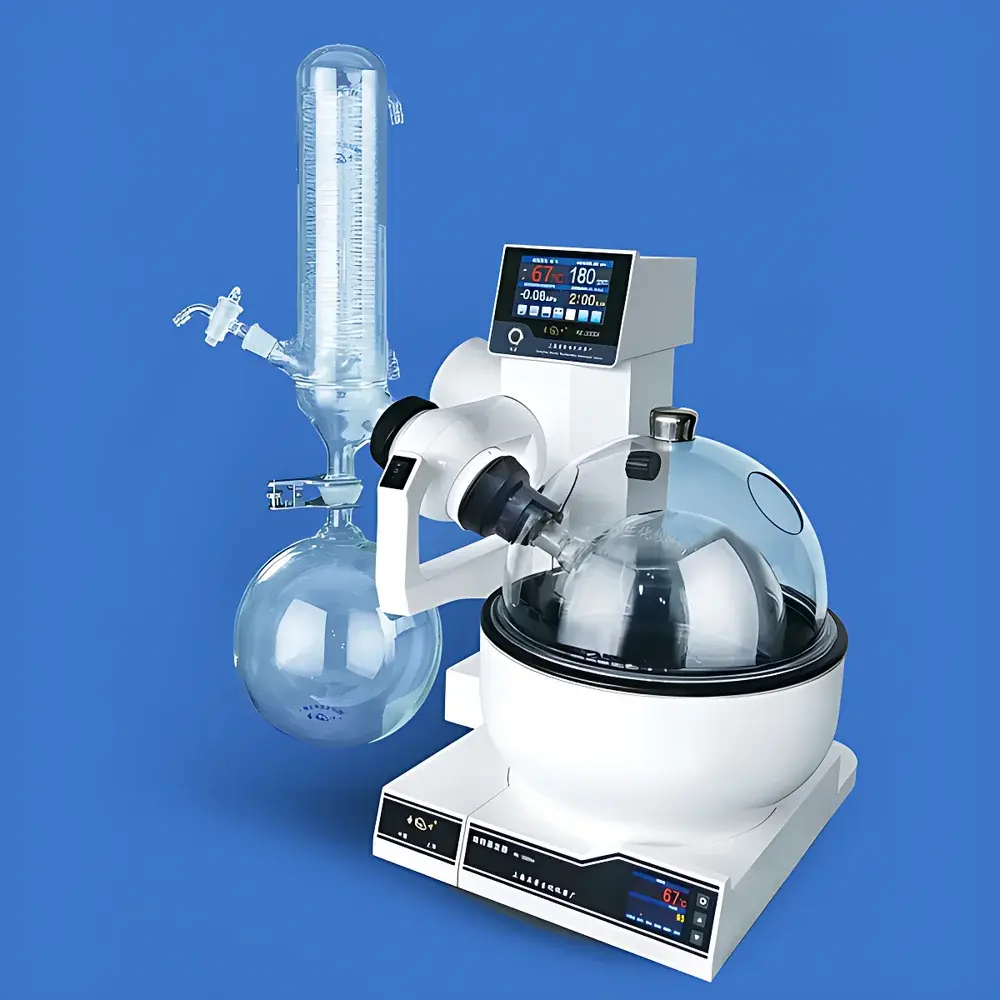
Shanghai Yarong RE-3000A Rotary Evaporator
| Brand | Shanghai Yarong |
|---|---|
| Model | RE-3000A |
| Evaporation Flask Capacity | 50–3000 mL |
| Ultimate Vacuum Range | −0.01 to −0.095 MPa (built-in vacuum controller, ±0.2–0.5% reading accuracy) |
| Rotation Speed | 0–200 rpm |
| Bath Temperature Control Range | Ambient to 99 °C (PID-controlled, LED digital display) |
| Temperature Accuracy | ±1 °C |
| Condenser Cooling Surface Area | 0.15 m² |
| Condenser Type | Standardized 24/40 ball-joint condenser with extended glass shaft (M42 locking nut) |
Overview
The Shanghai Yarong RE-3000A Rotary Evaporator is a precision-engineered laboratory instrument designed for efficient solvent removal, concentration, and purification of heat-sensitive samples under reduced pressure. Based on the fundamental principle of rotary evaporation—where simultaneous rotation, heating, and vacuum application lower the boiling point of solvents while enhancing surface area and mass transfer—the RE-3000A delivers reproducible, scalable performance across R&D, quality control, and pilot-scale preparation workflows. Its robust stainless-steel frame, integrated vacuum regulation system, and dual-display interface (main control panel + independent water bath display) support seamless operation in regulated environments requiring traceable parameter monitoring. The unit complies with general design expectations for Class I laboratory evaporators per ISO 8573-1 (compressed air purity) and meets mechanical safety requirements aligned with IEC 61010-1 for electrical equipment used in laboratory settings.
Key Features
- Integrated built-in vacuum controller with adjustable setpoint range from −0.01 to −0.095 MPa and calibrated accuracy of ±0.2–0.5% of full scale—enabling precise solvent recovery without external vacuum pumps or gauges.
- Dual digital display system: main touchscreen LCD panel shows real-time rotation speed, bath temperature, vacuum level, and timer; separate LED display on the water bath housing provides immediate visual verification of thermal status.
- PID temperature regulation with ±1 °C stability across 0–99 °C range ensures consistent thermal input during prolonged evaporation cycles, minimizing sample degradation risks.
- 0–200 rpm stepless rotation control accommodates viscous solutions, crystallizing mixtures, and low-boiling solvents via optimized film formation on flask inner surfaces.
- Standardized 24/40 ball-joint condenser with extended glass shaft (M42 locking nut) ensures leak-tight assembly, high thermal conductivity, and compatibility with common lab glassware interchange standards (e.g., ASTM E287, DIN 12250).
- Cooling surface area of 0.15 m² supports efficient condensate recovery for solvents with moderate to high latent heat of vaporization (e.g., ethanol, acetone, ethyl acetate, dichloromethane).
Sample Compatibility & Compliance
The RE-3000A accommodates standard evaporation flasks ranging from 50 mL to 3000 mL (including pear-shaped, round-bottom, and short-path variants), making it suitable for small-volume analytical prep through mid-scale synthesis workups. It is routinely deployed in applications involving organic extracts, natural product isolates, polymer solutions, pharmaceutical intermediates, and aqueous-organic emulsions. While not certified for GMP manufacturing use out-of-the-box, its digital parameter logging capability, stable thermal and rotational control, and repeatable vacuum response support GLP-compliant documentation when paired with validated SOPs. Users may configure audit trails and electronic records in accordance with FDA 21 CFR Part 11 requirements using third-party LIMS integration or timestamped manual logs.
Software & Data Management
The RE-3000A operates via embedded firmware without proprietary software dependency. All operational parameters—including time, temperature, rotation speed, and vacuum setpoint—are digitally recorded and retained in non-volatile memory for up to 99 cycles. Timestamped session data can be manually transcribed or exported via optional RS-232/USB interface modules (sold separately). For laboratories implementing digital workflow management, the device’s analog-compatible outputs allow integration into centralized SCADA or ELN platforms via standard 4–20 mA or 0–10 V signal mapping for temperature and vacuum channels.
Applications
- Concentration of bioactive compounds from plant extracts and fermentation broths under gentle thermal conditions.
- Removal of residual solvents following column chromatography or solid-phase extraction (SPE) in QC labs.
- Preparation of thin films and precursor solutions for coating processes in materials science research.
- Dehydration and crystallization initiation of hygroscopic APIs and fine chemical intermediates.
- Recovery and recycling of high-purity solvents in sustainable lab practices (e.g., ISO 14001-aligned waste reduction protocols).
FAQ
What is the maximum recommended flask size for continuous operation?
The RE-3000A is mechanically rated for stable rotation with up to 3000 mL flasks; however, optimal film uniformity and condensation efficiency are achieved at 1000–2000 mL volumes under typical vacuum and temperature settings.
Is the water bath compatible with silicone oil or other high-temperature media?
Yes—the stainless-steel bath chamber supports immersion heating fluids up to 150 °C; however, the factory-calibrated PID algorithm and ±1 °C accuracy specification apply only within the stated 0–99 °C range using water or aqueous glycol mixtures.
Can the vacuum controller be recalibrated onsite?
The built-in vacuum sensor is factory-trimmed and sealed; field recalibration requires authorized service tools and traceable pressure standards compliant with ISO/IEC 17025 guidelines.
Does the unit meet CE or UL certification requirements?
As supplied, the RE-3000A conforms to general EMC and low-voltage directive principles (2014/30/EU and 2014/35/EU); formal CE marking is issued upon completion of end-user country-specific conformity assessment, including risk analysis and technical file compilation.
What maintenance intervals are recommended for long-term reliability?
Daily wipe-down of glass components and periodic inspection of PTFE seals and O-rings are advised; vacuum pump oil (if externally connected) should be changed every 200 operating hours, and bath heater calibration verified annually against NIST-traceable thermometers.



