
FBF FBF7075 High-Pressure Homogenizer System
| Brand | FBF |
|---|---|
| Origin | Italy |
| Model | FBF7075 |
| Flow Rate | 8,000 L/h (fixed), variable via VFD option |
| Primary Homogenization Pressure | up to 250 bar (adjustable) |
| Secondary Homogenization Pressure | up to 50 bar (adjustable) |
| Maximum Sample Viscosity | 500 cP |
| Max. Inlet Particle Size | 500 µm |
| Max. Operating Temperature | 90 °C |
| Cleaning-in-Place (CIP) Time | 30 min |
| Sterilization-in-Place (SIP) Temperature | up to 145 °C |
| Cooling Water Requirement | 90–120 L/h at 2–6 bar |
| Main Motor | 75 kW, IP55 |
| Dimensions | 150 × 210 × 150 cm |
| Weight | 2500 kg |
| Power Supply | 380 V / 50 Hz |
Overview
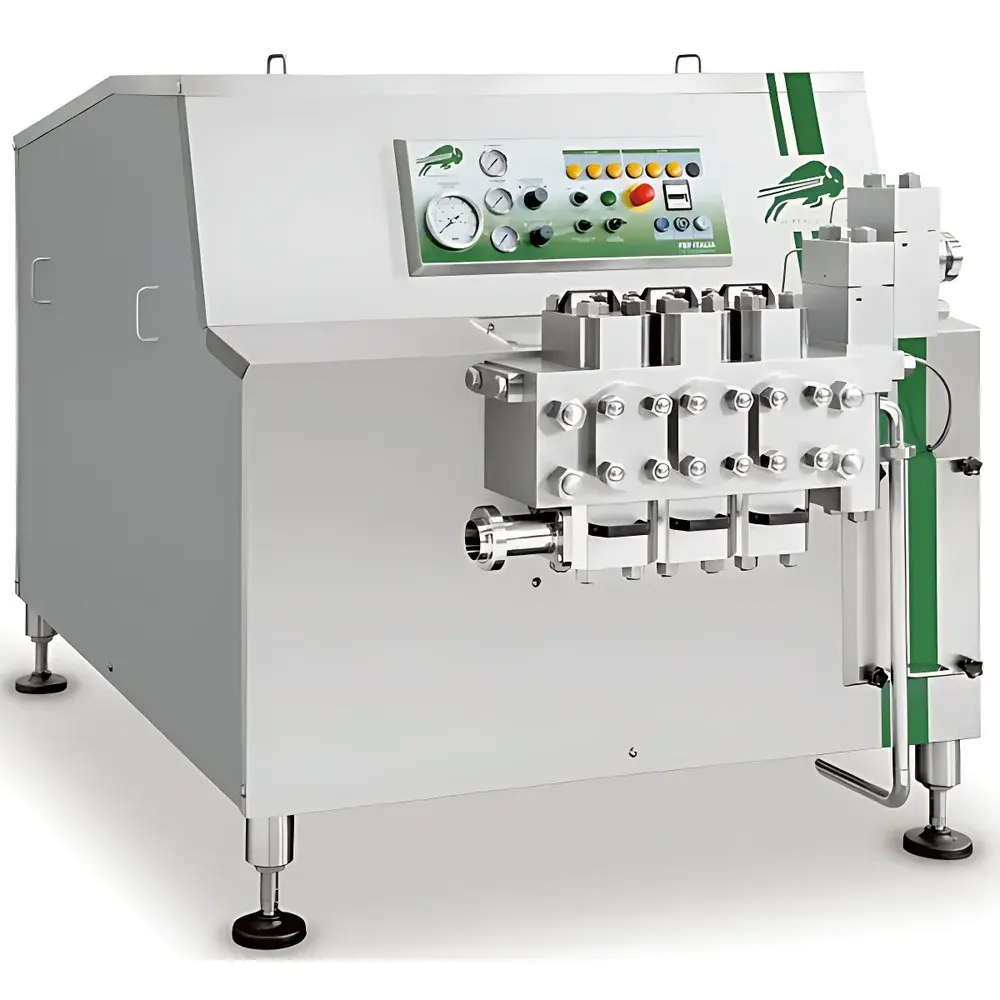
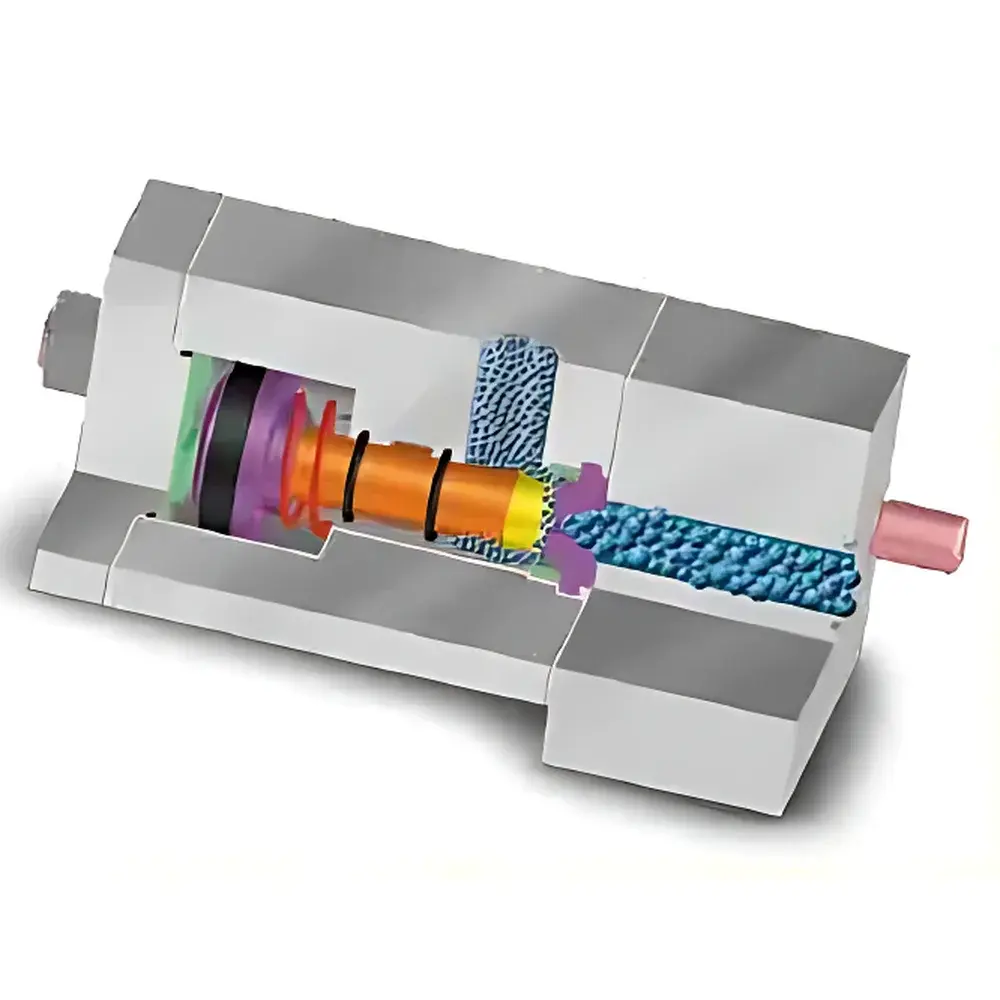
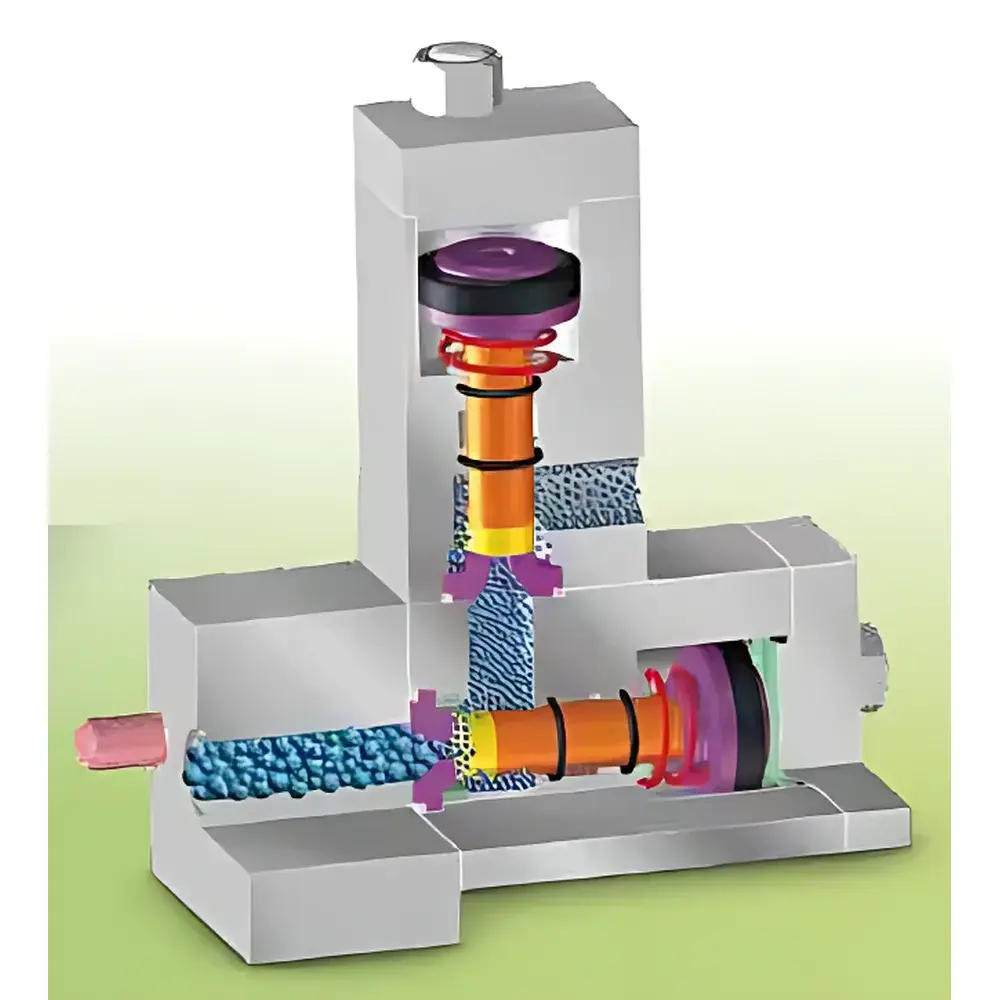
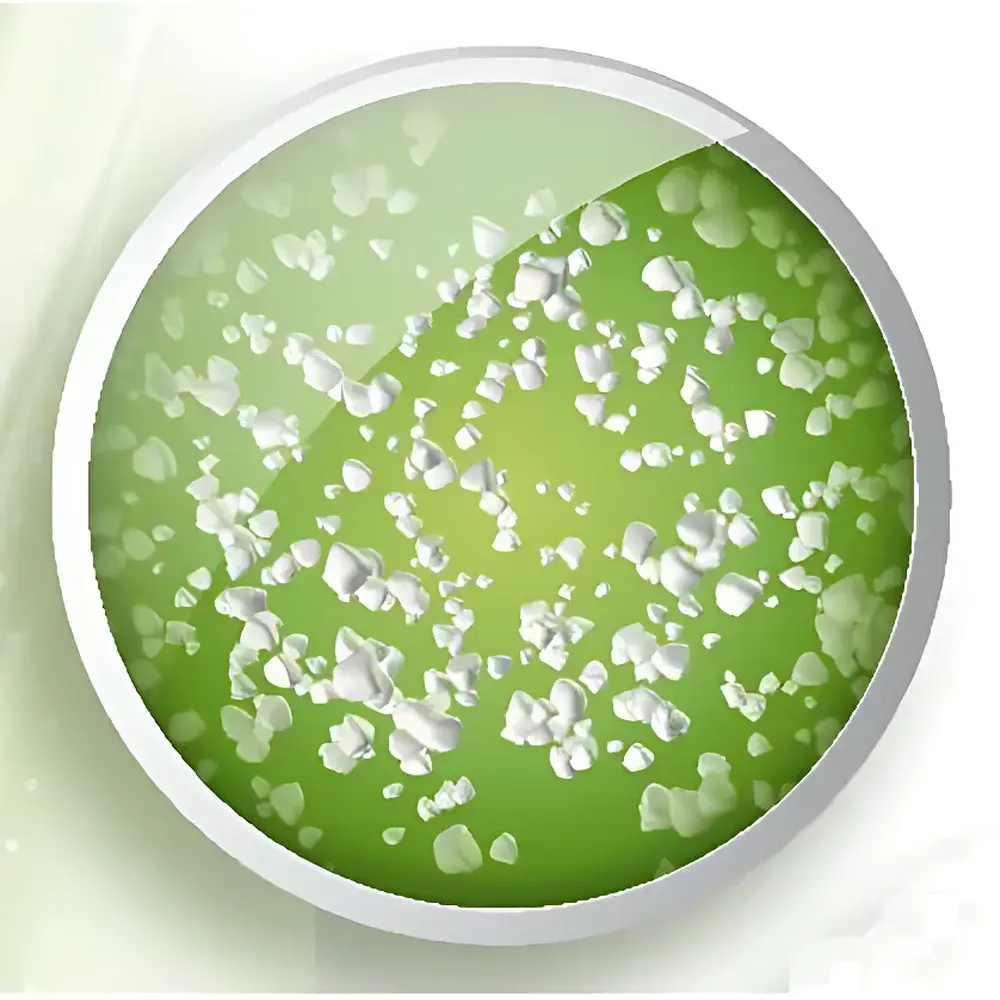
The FBF FBF7075 High-Pressure Homogenizer System is an industrial-grade, CE-certified processing platform engineered for scalable, repeatable, and GMP-compliant homogenization of suspensions, emulsions, liposomes, nanosuspensions, and biopharmaceutical formulations. Based on the principle of controlled fluid shear and cavitation under ultra-high pressure, the system forces product through a precisely engineered homogenization valve—where rapid pressure drop induces intense mechanical disruption, particle size reduction, and uniform dispersion. Designed and manufactured in Italy by FBF, the FBF7075 integrates a tri-plunger positive displacement pump, dual-stage pressure regulation, and hygienic stainless-steel wetted components compliant with 3-A Sanitary Standards and EHEDG guidelines. Its architecture supports both batch and continuous operation, with full traceability features aligned with FDA 21 CFR Part 11 and EU Annex 11 requirements for regulated pharmaceutical manufacturing environments.
Key Features
- Tri-plunger high-pressure pump with AISI 316 stainless-steel compression blocks, guaranteed against cracking or structural defects for five years
- Homogenization valve assembly mounted on individually inspected AISI 316 blocks, ensuring dimensional stability and thermal consistency across repeated cycles
- Cryogenically manufactured piston assemblies with dual linear guides for axial alignment precision and extended service life
- Unidirectional valve components fabricated from chemically resistant, low-wear elastomers and ceramics—validated for compatibility with aqueous, organic, and high-salinity media
- Energy-optimized homogenization valve geometry delivering stable pressure profiles with minimal mechanical vibration and thermal drift
- Hygienic spring-loaded safety relief valve with replaceable seat and poppet—rated for sterile process integrity and ASME BPE compliance
- Integrated secondary homogenization stage, independently pressure-controlled via hydraulic actuation for multi-step particle refinement
- Digital pressure monitoring with 4–20 mA analog output and configurable alarm thresholds for automatic pressure cutoff
Sample Compatibility & Compliance
The FBF7075 accommodates feed streams with viscosities up to 500 cP and inlet particle diameters ≤500 µm. It is validated for processing heat-sensitive biologicals—including monoclonal antibodies, mRNA-LNPs, viral vectors, and vaccine adjuvants—under temperature-controlled conditions (<90 °C operational, ≤145 °C during SIP). All wetted surfaces are electropolished to Ra ≤0.4 µm and passivated per ASTM A967. The system meets CE Machinery Directive 2006/42/EC, PED 2014/68/EU, and EMC Directive 2014/30/EU. Optional sterile barrier configurations support ISO 5 (Class 100) cleanroom integration, while CIP/SIP protocols comply with ASME BPE-2022 and PDA Technical Report No. 69.
Software & Data Management
The system operates via a PLC-based control panel with HMI interface supporting recipe-driven operation, real-time pressure/flow/temperature logging, and audit-trail-enabled event history (timestamped, user-ID tagged, non-erasable). Data export is available in CSV and PDF formats. Optional Ethernet/IP or Modbus TCP connectivity enables integration into MES/SCADA platforms. All electronic records conform to ALCOA+ principles and support 21 CFR Part 11 compliance when paired with qualified electronic signature modules and role-based access control.
Applications
- Nanoparticle size reduction for drug delivery systems (e.g., lipid nanoparticles, polymeric micelles)
- Cell disruption and subcellular fractionation in bioprocessing
- Stabilization of oil-in-water and water-in-oil emulsions for food, cosmetic, and pharmaceutical use
- Preparation of uniform colloidal dispersions for diagnostic reagents and contrast agents
- Continuous manufacturing of sterile parenteral formulations under GMP conditions
- Scale-up from laboratory homogenizers (e.g., Microfluidizer® or APV Gaulin) to production-level throughput
FAQ
What is the maximum allowable viscosity for processing on the FBF7075?
The system is rated for feed materials up to 500 cP at 20 °C. Higher viscosities may be accommodated with pre-heating or dilution, subject to pump torque limits and thermal management constraints.
Can the FBF7075 operate under aseptic conditions?
Yes—optional sterile barrier configurations, SIP-capable design (up to 145 °C), and fully drainable flow paths enable compliance with ISO 13408-1 and EU GMP Annex 1 requirements.
Is remote monitoring and control supported?
Standard Ethernet connectivity allows integration with plant-wide automation systems; optional OPC UA or MQTT gateways enable cloud-based supervision and predictive maintenance analytics.
What validation documentation is supplied?
Each unit ships with Factory Acceptance Test (FAT) reports, IQ/OQ templates, material certifications (EN 10204 3.1), and CE Declaration of Conformity. Site-specific PQ support is available upon request.
How is maintenance access designed for routine servicing?
Modular construction enables tool-free removal of pump heads, valve assemblies, and cooling manifolds. Lubrication points are centralized and labeled per ISO 14122, with scheduled maintenance intervals defined in the technical manual.



