
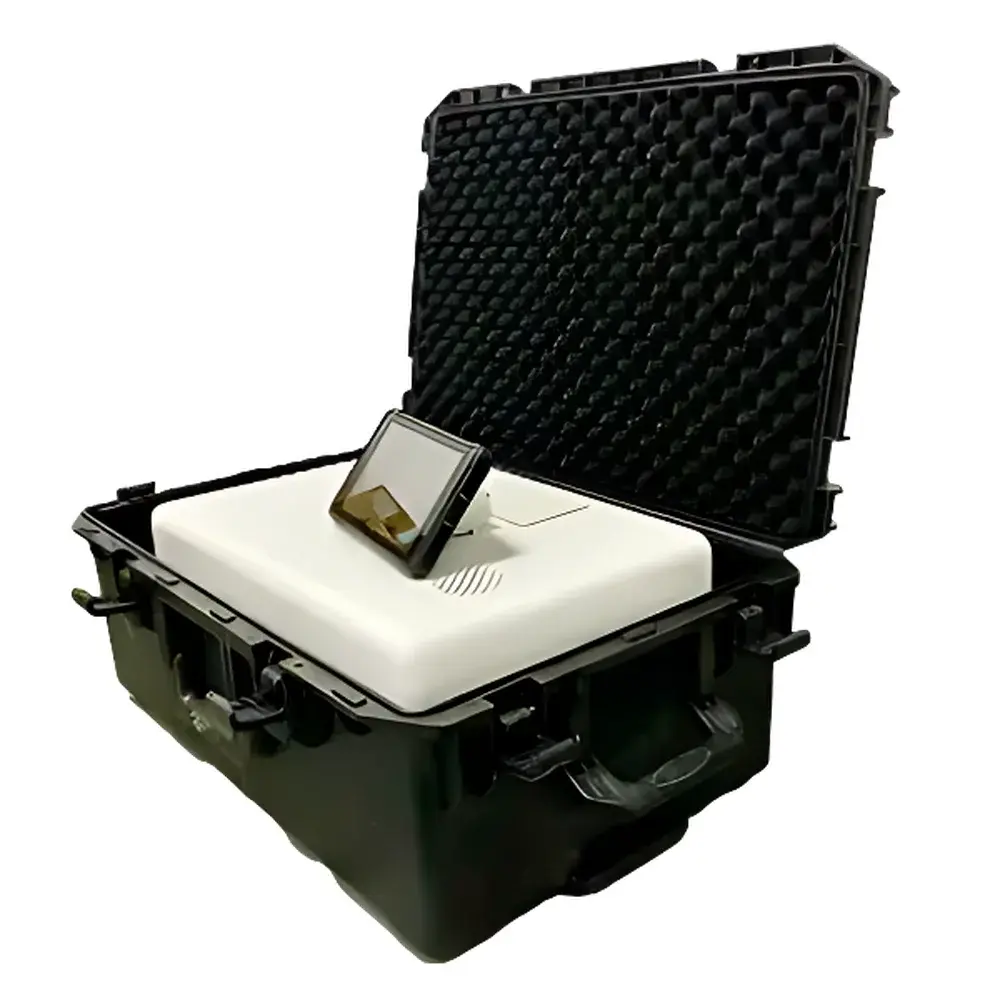
Synpec GMA3760 Portable Gas Phase Molecular Absorption Spectrometer
| Brand | Synpec |
|---|---|
| Origin | Shanghai, China |
| Manufacturer Type | Direct Manufacturer |
| Regional Classification | Domestic (China) |
| Model | GMA3760 |
| Price Range | USD 42,000 – 56,000 |
Overview
The Synpec GMA3760 Portable Gas Phase Molecular Absorption Spectrometer is an integrated, field-deployable analytical instrument engineered for rapid, on-site quantification of key nitrogen- and sulfur-containing species in aqueous environmental samples. It operates on the fundamental principle of gas-phase molecular absorption spectroscopy (GPMAS): target analytes—including ammonia nitrogen (NH₃-N), total nitrogen (TN), nitrate nitrogen (NO₃⁻-N), nitrite nitrogen (NO₂⁻-N), and sulfide (S²⁻)—are selectively converted into volatile molecular gases (e.g., NH₃, NO, NO₂, H₂S) via controlled chemical reactions in solution. These gaseous species are then swept into an optical cell where their characteristic UV–visible absorption bands are measured with high spectral resolution using a deuterium lamp source and a CCD diode array detector. Unlike conventional wet-chemistry or segmented-flow methods, GPMAS eliminates interferences from colored or turbid matrices and delivers direct, stoichiometric quantification without reliance on calibration curves for each matrix. The GMA3760 is purpose-built for emergency response, mobile monitoring, and regulatory compliance verification in wastewater treatment plants, surface water stations, and industrial effluent discharge points.
Key Features
- Compact, battery-operable design with integrated power management—enabling >6 hours of continuous operation in field conditions
- Dual-light-source architecture: primary deuterium lamp (190–400 nm) for broadband molecular absorption; optional plug-in hollow-cathode lamps (e.g., mercury lamp) for elemental vapor-phase detection per EPA Method 7045A
- Onboard automated dilution system with 1:2 to 1:100 programmable dilution ratios, ensuring linear dynamic range extension without manual intervention
- Cold-trap condensation module coupled with membrane-based automatic desiccation, achieving <5 ppmv residual moisture in carrier gas stream to prevent optical path contamination
- Integrated UV photolysis reactor for total nitrogen digestion: 254 nm low-pressure mercury lamp with real-time intensity monitoring and thermal stabilization
- Automated cleaning sequence between analyses: acid wash, rinse, and purge cycles triggered post-measurement to minimize carryover (<0.3% for NH₃-N at 1 mg/L)
- Ammonia oxidation module with controlled NaOCl dosing and reaction-time optimization for complete conversion of organic nitrogen precursors
- Optional autosampler (24/48-position PTFE vial carousel) with barcode recognition and sample ID logging
Sample Compatibility & Compliance
The GMA3760 accepts liquid samples with suspended solids ≤50 mg/L and chloride concentrations ≤5,000 mg/L without pretreatment. It supports direct analysis of raw wastewater, river water, groundwater, and treated effluents. All measurement protocols conform to Chinese national and ecological standards, including GB/T 42027–2022 (determination of ammonia nitrogen by gas-phase molecular absorption spectrometry), HJ 195–2023 (ammonia nitrogen), HJ 200–2023 (sulfide), HJ/T 198–2005 (nitrate nitrogen), HJ/T 197–2005 (nitrite nitrogen), and HJ 199–2023 (total nitrogen). Instrument validation documentation supports GLP-compliant data integrity requirements, with audit trails for method parameters, calibration history, and operator actions traceable per ISO/IEC 17025:2017 Annex A.2.
Software & Data Management
The GMA3760 runs Synpec’s SpectraLink v3.2 acquisition and analysis software, compliant with FDA 21 CFR Part 11 for electronic records and signatures. Key capabilities include: real-time spectral visualization with peak identification and baseline correction algorithms; multi-point calibration with forced zero and quadratic fitting; automatic QC flagging (e.g., signal-to-noise ratio 2% over 5 min); encrypted local database storage with daily backup export to USB or network drive; and CSV/PDF report generation with embedded metadata (sample ID, analyst, instrument serial number, timestamp, environmental conditions). Software updates are delivered via secure OTA channel with cryptographic signature verification.
Applications
- Rapid assessment of ammonia breakthrough during nitrification/denitrification process control in municipal WWTPs
- Field verification of total nitrogen removal efficiency under EPA Clean Water Act Section 304(h) reporting
- Emergency response to accidental spills involving ammoniacal fertilizers or sulfide-rich industrial discharges
- Regulatory compliance monitoring at NPDES-permitted outfalls where HJ 195–2023 and HJ 199–2023 enforcement is mandated
- Research-grade speciation studies of nitrogen transformation pathways in constructed wetlands and sediment porewater
- Method validation and cross-checking against ISO 14911 (water quality — determination of ammonia nitrogen — gas-phase molecular absorption spectrometric method)
FAQ
Does the GMA3760 require external gas cylinders or compressed air sources?
No—the instrument integrates an oil-free diaphragm pump and permeation dryer; only ambient air is needed as carrier gas.
Can it quantify total Kjeldahl nitrogen (TKN)?
Not directly; however, TKN can be derived by subtracting nitrate/nitrite nitrogen from total nitrogen measured after alkaline persulfate digestion.
Is remote diagnostics supported?
Yes—via optional Ethernet/Wi-Fi module with TLS 1.2-secured connection for live status monitoring and firmware troubleshooting by Synpec technical support.
What is the typical analysis time per sample for ammonia nitrogen?
Under standard protocol (including auto-dilution if required), cycle time is 90–120 seconds, including cleaning.
How is mercury detection implemented when the optional lamp is installed?
Mercury is reduced to atomic vapor using SnCl₂, swept into the optical path, and quantified at 253.7 nm using peak-area integration with internal standard correction.



