
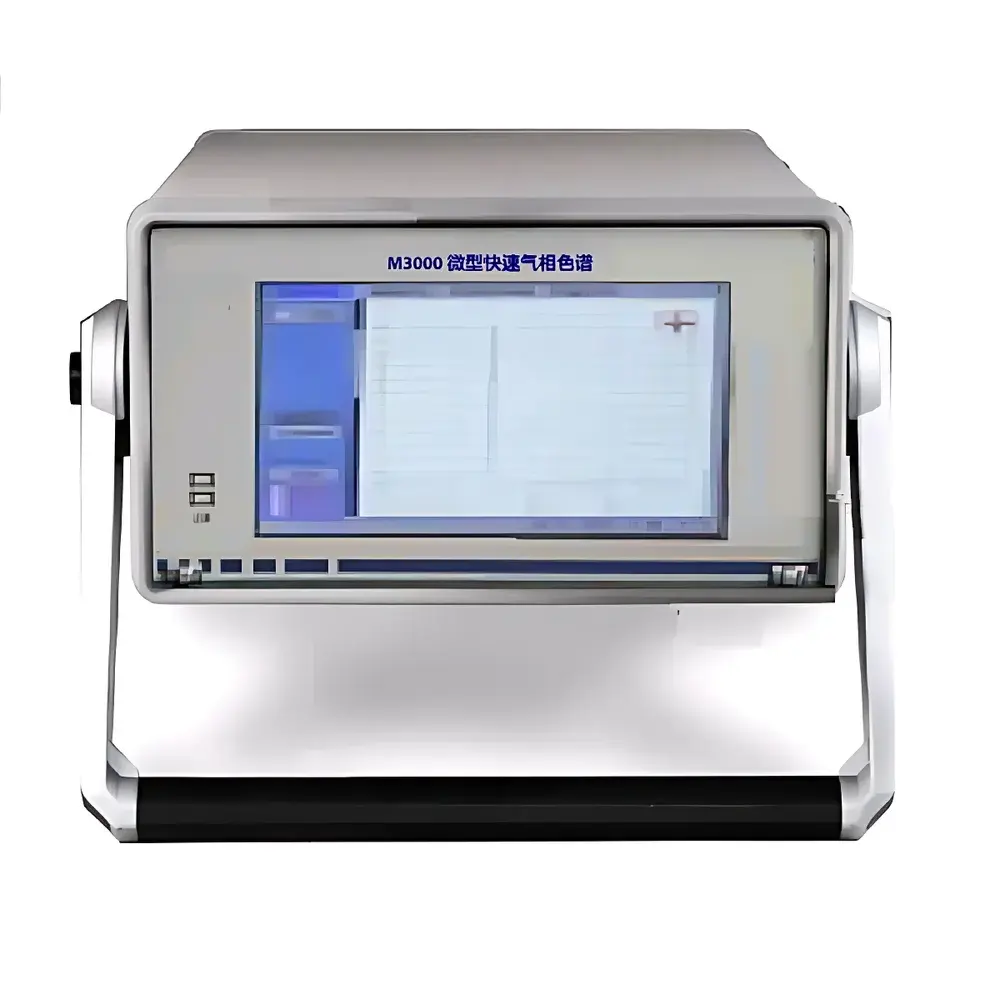
Synpec M3000 Micro Gas Chromatograph
| Brand | Synpec |
|---|---|
| Model | M3000 Micro GC |
| Origin | Shanghai, China |
| Manufacturer Type | Direct Manufacturer |
| Detection Principle | Micro-Electro-Mechanical Systems (MEMS)-Based Thermal Conductivity Detection (μTCD) |
| Detector Pool Volume | 200 nL |
| Detection Limit | 0.5 ppm (for H₂, CO, CH₄, etc., in N₂ carrier) |
| Analysis Time | < 30 s per channel (multi-channel parallel operation) |
| Column Type | Capillary micro-column (ID ≤ 0.15 mm) |
| Power Supply | Internal rechargeable Li-ion battery (8 h continuous operation) |
| Carrier Gas | Integrated miniature high-pressure gas cylinder (N₂ or He) |
| Communication Interfaces | RS-485, MODBUS RTU, digital/analog I/O |
| Software | Onboard embedded OS with method editor, real-time data processing, and automated report generation |
| Compliance | Designed to support GLP/GMP-aligned workflows |
Overview
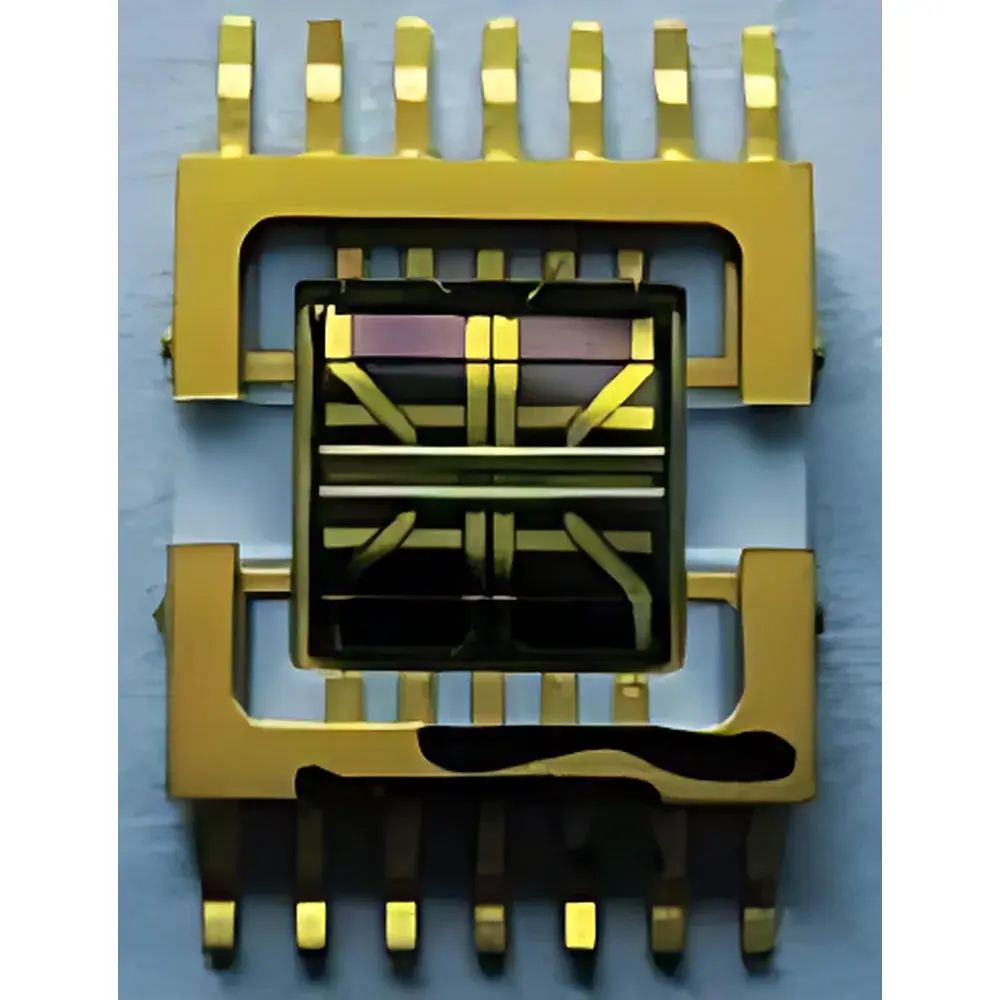
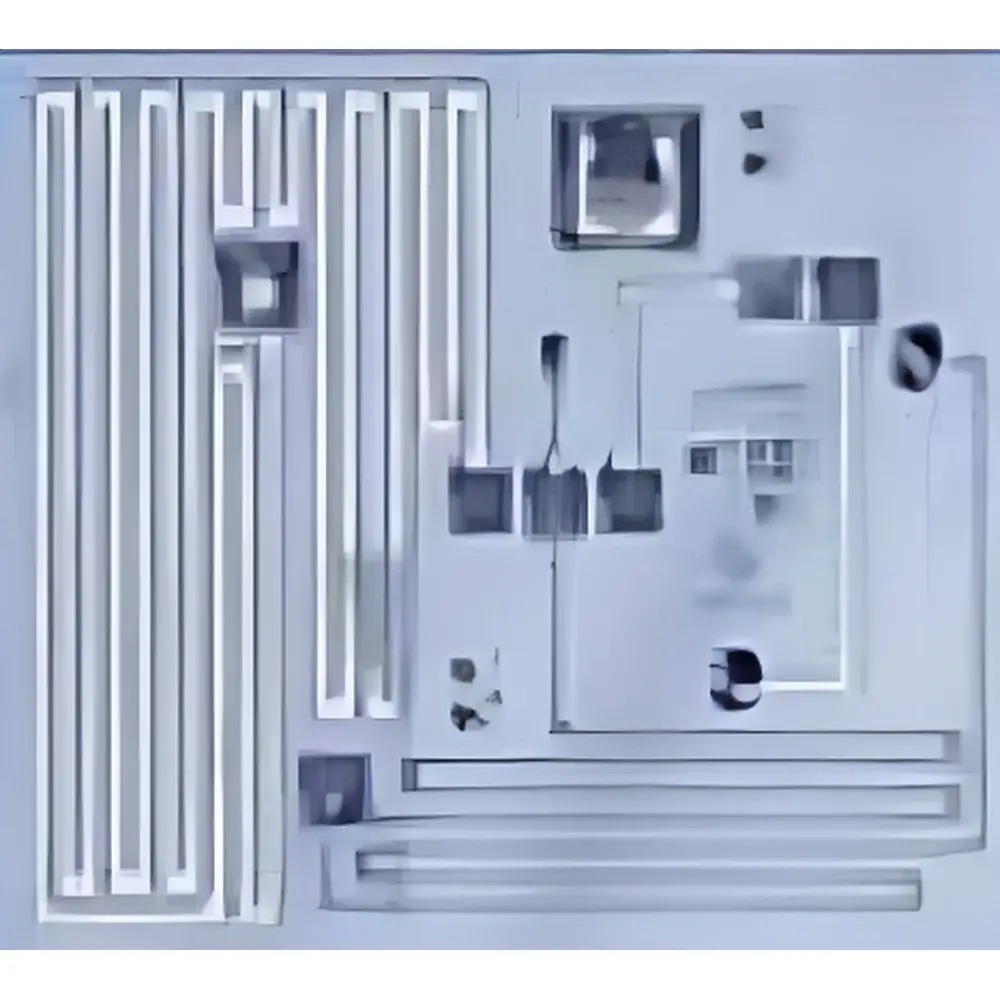
The Synpec M3000 Micro Gas Chromatograph is a field-deployable, MEMS-engineered analytical instrument designed for rapid, reliable, and quantitative gas-phase separation and detection. Unlike conventional benchtop GC systems, the M3000 integrates microfabricated components—including a MEMS-based micro-injector, ultra-low-volume μTCD (200 nL cell volume), and temperature-controlled capillary micro-columns—into a single, ruggedized platform. Its core measurement principle relies on differential thermal conductivity between carrier gas and analyte molecules, enabling selective, non-destructive detection of permanent gases (e.g., H₂, O₂, N₂, CO, CO₂, CH₄) and light hydrocarbons without requiring ionization or radioactive sources. The system operates fully autonomously: onboard CPU handles all acquisition, peak integration, calibration application, and result export—eliminating dependency on external PCs or network infrastructure. This architecture makes it suitable for unattended operation in remote sites, mobile labs, process skids, and hazardous environments where power, carrier gas, or IT connectivity are constrained.
Key Features
- MEMS-fabricated μTCD with 200 nL thermal cell volume—delivering sub-ppm detection limits (0.5 ppm typical for key permanent gases) and exceptional baseline stability over extended run times.
- Multi-channel parallel analysis architecture: up to four independent chromatographic channels operate simultaneously, each with dedicated column oven, injector, and detector—reducing total cycle time to under 30 seconds per full gas profile.
- Fully integrated portable configuration: includes sealed, pressure-regulated internal carrier gas cylinder (N₂ or He) and industrial-grade Li-ion battery pack supporting ≥8 hours of continuous analysis at 25°C ambient.
- Embedded real-time operating system with native method editor, automatic retention time alignment, and customizable calibration curve management (linear, quadratic, multi-point).
- Rugged aluminum chassis rated IP54 for dust and splash resistance; operational temperature range: −10°C to +50°C; shock-tested to MIL-STD-810G for transport and field deployment.
- Native support for industrial communication protocols: MODBUS RTU over RS-485, analog 4–20 mA output (user-configurable per component), and discrete digital I/O for alarm triggering or PLC handshake.
Sample Compatibility & Compliance
The M3000 is optimized for gaseous samples within standard temperature and pressure (STP) ranges (−20°C to 60°C sample inlet temp; 0–100% relative humidity, non-condensing). It accepts direct sampling via stainless-steel inlet line or through optional heated transfer lines for moisture-sensitive or reactive matrices. Sample introduction is pressure-controlled and flow-compensated to ensure reproducible injection volumes across varying backpressures. While not certified as explosion-proof (ATEX/IECEx), its low-power design (<12 W average), absence of high-voltage components, and sealed detector housing make it appropriate for Zone 2/Class I Division 2 environments when installed with appropriate barrier systems. The firmware supports configurable audit trails, user-access levels (admin/operator/viewer), and timestamped raw-data archiving—enabling alignment with GLP, ISO/IEC 17025, and internal QA/QC requirements. Data export formats include CSV, XML, and Modbus register mapping for third-party SCADA or DCS integration.
Software & Data Management
The M3000 runs a deterministic embedded Linux-based OS with a web-accessible interface (HTTPS-enabled) and local touchscreen control. All chromatographic methods—including oven ramp profiles, detector gain settings, integration parameters, and calibration tables—are stored internally and version-controlled. Raw signal data (detector voltage vs. time) is retained at 100 Hz resolution with lossless compression. Processed results—including concentration values, confidence intervals, and pass/fail flags against user-defined specification limits—are auto-generated and transmitted via MODBUS registers or analog outputs without manual intervention. Optional cloud synchronization (via secure MQTT over cellular or Wi-Fi) enables centralized fleet monitoring, predictive maintenance alerts, and remote method updates—all compliant with enterprise IT security policies. For regulated environments, optional validation packages include IQ/OQ documentation templates and electronic signature support aligned with FDA 21 CFR Part 11 Annex 11 expectations.
Applications
- On-site natural gas composition verification (C₁–C₅, H₂S, CO₂) prior to pipeline injection or LNG liquefaction.
- Real-time biogas quality monitoring in anaerobic digesters—tracking CH₄/CO₂ ratio, H₂S breakthrough, and siloxane surrogate compounds.
- Leak detection and emission quantification in petrochemical flare stacks, compressor stations, and refinery vent streams.
- In-line purity verification of industrial nitrogen or argon supply lines used in semiconductor fabrication or pharmaceutical inerting.
- Field screening of landfill gas, coal mine ventilation air, and hydrogen production off-gas for safety and process optimization.
- Academic and defense applications requiring rapid, portable speciation of chemical warfare agent simulants or combustion byproducts.
FAQ
Does the M3000 require external carrier gas or power to operate?
No. The instrument includes an integrated high-pressure micro-cylinder (pre-filled with N₂ or He) and a field-rechargeable Li-ion battery pack, enabling fully autonomous operation for up to 8 hours.
Can multiple M3000 units be synchronized for coordinated multi-point monitoring?
Yes. Units can be daisy-chained via RS-485 or managed centrally via MQTT-enabled gateways, with synchronized clocking and unified data tagging for spatial-temporal correlation.
Is method development possible directly on the device?
Yes. The onboard method editor supports gradient oven programming, peak width thresholds, baseline correction algorithms, and multi-component calibration—all configurable without external software.
What maintenance is required for long-term field deployment?
Annual detector cleaning (μTCD cell purge), column reconditioning (if exposed to heavy contaminants), and battery health verification constitute the primary scheduled maintenance—no consumables beyond carrier gas refills.
How does the M3000 handle moisture or particulate-laden gas streams?
A heated sample line (optional accessory) and stainless-steel sintered filter (standard) mitigate condensation and particulate ingress; for aggressive matrices, a coalescing pre-filter module is available as an add-on.





