
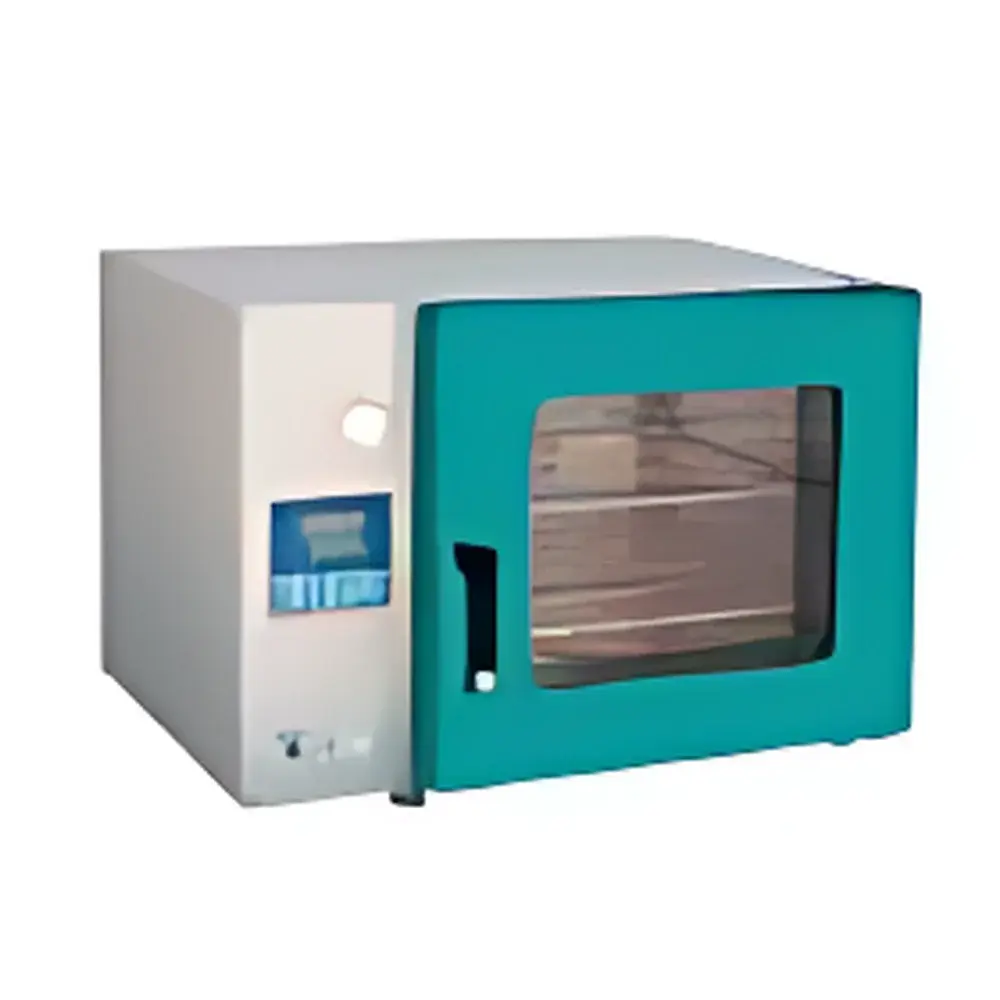
LabCompanion HH-235 High-Temperature Forced-Air Drying Oven
| Brand | LabCompanion |
|---|---|
| Origin | Guangdong, China |
| Manufacturer Type | Direct Manufacturer |
| Country of Origin | China |
| Model | HH-235 |
| Temperature Range | RT–260 °C |
| Control Accuracy | ±0.5 °C |
| Chamber Dimensions (H×W×D) | 600×650×600 mm |
| External Dimensions (H×W×D) | ≈1230×1100×680 mm |
| Heating Method | Bottom-mounted stainless steel tubular heaters |
| Air Circulation | Horizontal forced-air convection with adjustable intake vent |
| Insulation | Mineral wool between inner and outer chambers |
| Interior Material | SUS430 stainless steel (≥1.2 mm thick) |
| Exterior Material | SECC cold-rolled steel with powder-coated finish (≥1.5 mm thick) |
| Ramp Time | ~15 min (RT to 100 °C) |
| Safety Protections | Motor overload protection, phase sequence protection, over-temperature cut-off |
Overview
The LabCompanion HH-235 is a precision-engineered high-temperature forced-air drying oven designed for controlled thermal processing in laboratory and industrial quality control environments. It operates on the principle of convective heat transfer: ambient air is drawn through an adjustable intake vent, accelerated by a robust horizontal blower, heated uniformly via bottom-mounted stainless steel tubular heating elements, and distributed across the chamber through a perforated baffle wall. This horizontal airflow architecture ensures exceptional temperature uniformity (±0.5 °C at setpoint) throughout the 235 L working volume—critical for reproducible drying, baking, preheating, sterilization, and thermal stabilization protocols. Unlike natural-convection ovens, the HH-235’s active air circulation system eliminates thermal stratification and significantly reduces process cycle times, particularly for low-mass or hygroscopic samples such as polymer granules, pharmaceutical excipients, electronic components, and coated substrates.
Key Features
- Stainless steel interior (SUS430, ≥1.2 mm thickness) resistant to oxidation and corrosion under repeated thermal cycling up to 260 °C
- Cold-rolled steel exterior (SECC, ≥1.5 mm) with durable electrostatic powder coating for mechanical and chemical resilience
- High-efficiency mineral wool insulation (≥80 mm thickness) minimizing thermal leakage and energy consumption
- Digital PID temperature controller with intuitive LED display, enabling precise setpoint programming and real-time monitoring
- Integrated timer function allowing independent control of temperature and dwell time—essential for standardized drying protocols (e.g., ASTM D792, ISO 62)
- Adjustable air intake vent and top-mounted exhaust fan for dynamic moisture removal and humidity management
- Comprehensive safety architecture including over-temperature cut-off, motor overload protection, and three-phase power phase sequence detection
Sample Compatibility & Compliance
The HH-235 accommodates diverse sample formats—including stacked trays, wire mesh baskets, crucibles, and Petri dishes—within its spacious 600×650×600 mm chamber. Its RT–260 °C operating range supports applications ranging from low-temperature desiccation (e.g., moisture content determination per USP ) to high-temperature thermal aging (e.g., IEC 60068-2-2 for electronics reliability testing). The unit complies with general electrical safety requirements per IEC 61010-1 and is engineered to support GLP/GMP-aligned workflows: temperature stability data can be logged externally via optional analog/digital outputs, and its repeatable ramp-and-soak performance enables validation against IQ/OQ/PQ protocols. While not certified for Class I Div 1 hazardous locations, it meets standard laboratory environmental safety expectations for non-explosive atmospheres.
Software & Data Management
The HH-235 features a stand-alone digital PID controller without embedded software or network connectivity. However, its 0–10 V analog output and RS-485 interface (optional accessory) allow integration into centralized lab monitoring systems (e.g., LabVIEW, Ignition SCADA) for automated data logging, alarm triggering, and audit trail generation. When paired with validated external data loggers compliant with FDA 21 CFR Part 11 requirements, the oven supports traceable recordkeeping for regulated industries—including pharmaceutical manufacturing (ICH Q5C), medical device sterilization (ISO 11137), and polymer formulation QC. All temperature setpoints, dwell durations, and alarm thresholds are user-configurable and retained after power interruption.
Applications
- Polymer processing: Pre-drying of engineering resins (e.g., PA6, PBT, PC) prior to injection molding to prevent hydrolytic degradation
- Pharmaceutical development: Moisture reduction of active pharmaceutical ingredients (APIs) and excipients per USP
- Electronics manufacturing: Baking of PCB assemblies and conformal coatings to eliminate residual solvents and entrapped moisture
- Materials science: Thermal conditioning of composites, ceramics, and metal powders before sintering or mechanical testing
- Food & agriculture R&D: Low-temperature dehydration of botanical samples for proximate analysis (AOAC 930.15)
- Quality assurance labs: Standardized drying of filter papers, weighing bottles, and calibration standards per ISO/IEC 17025
FAQ
What is the maximum continuous operating temperature of the HH-235?
The HH-235 is rated for continuous operation up to 260 °C, with thermal cutoff protection activated at 280 °C.
Can the HH-235 be used for sterilization of glassware?
It is suitable for dry-heat sterilization of heat-stable items (e.g., pipettes, metal instruments) at ≥160 °C for ≥2 hours per ISO 17665-1, but does not replace steam autoclaves for microbiological validation.
Is the temperature uniformity verified across the entire chamber?
Yes—horizontal forced-air circulation achieves ≤±0.5 °C deviation at steady state when measured at nine standardized points (per ASTM E2207), confirmed during factory calibration.
Does the HH-235 support programmable multi-step temperature profiles?
No—the standard controller supports single-setpoint operation with timer-based dwell; multi-segment ramp/soak requires external programmable logic controller (PLC) integration.
What maintenance is required to sustain long-term accuracy?
Annual verification of sensor calibration (PT100 probe) and blower motor performance is recommended; stainless steel interior requires only periodic wipe-down with neutral detergent—no lubrication or consumable replacement is needed.



