
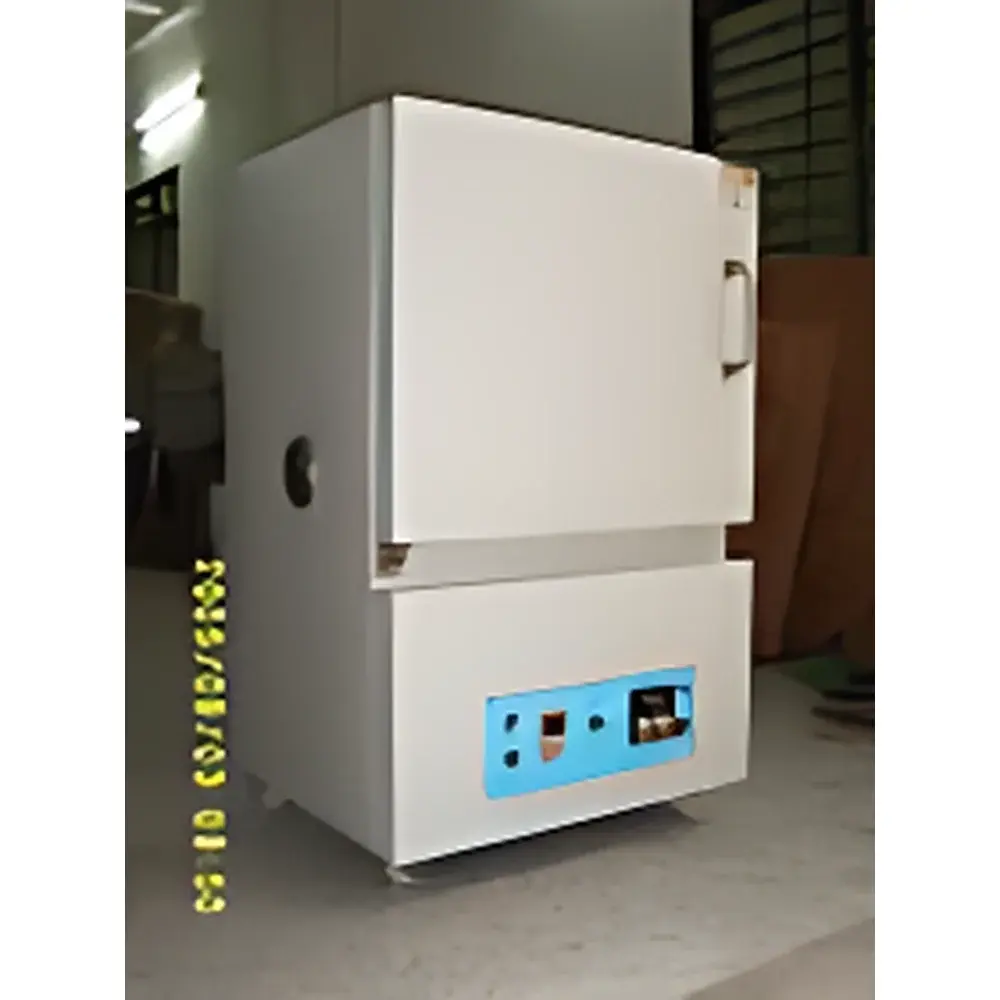
LabCompanion HH Series 2 High-Temperature Environmental Test Chamber
| Brand | LabCompanion |
|---|---|
| Origin | Guangdong, China |
| Manufacturer Type | Direct Manufacturer |
| Country of Origin | China |
| Model | HH Series 2 |
| Price | Upon Request |
| Temperature Range | RT+10°C to 250°C |
| Temperature Resolution | ±0.1°C |
| Temperature Uniformity | ±0.5°C |
| Timer Range | 1–9999 min |
| Internal Dimensions (W×D×H) | 450 × 550 × 550 mm |
| External Dimensions (W×D×H) | 600 × 710 × 845 mm |
| Standard Shelving | 2 adjustable stainless steel trays |
| Power Supply | 220 V, 50 Hz, 1500 W |
| Heating System | Forced-air convection with high-temperature axial fan |
| Interface | RS485 for data logging and PC connectivity |
| Construction | Interior – mirror-finish SUS430 stainless steel (≥1.2 mm) |
| Ramp Rate | ~15 min from RT to 100°C |
| Compliance | Designed to meet IPC-TM-650 test method requirements for thermal stress evaluation |
Overview
The LabCompanion HH Series 2 High-Temperature Environmental Test Chamber is an engineered solution for controlled thermal exposure testing in R&D laboratories, quality assurance departments, and materials validation facilities. It operates on the principle of forced-air convection, utilizing a high-efficiency, low-noise axial fan capable of continuous operation at elevated temperatures—ensuring uniform heat distribution across the chamber volume. Unlike passive ovens or static heating enclosures, this chamber maintains precise thermal profiles through closed-loop PID control of resistive heating elements, combined with real-time feedback from calibrated platinum resistance thermometers (PT100). Its design adheres to core thermal metrology principles outlined in ISO 17025-accredited calibration practices and supports repeatable execution of thermal aging, solderability, and thermal shock pre-conditioning protocols as defined in IPC-TM-650 Sections 2.6.25, 2.6.26, and 2.6.27.
Key Features
- Stable, high-fidelity temperature control within ±0.5°C uniformity across the working volume, validated per IEC 60068-3-5 for environmental test chambers
- Mirror-finish SUS430 stainless steel interior (≥1.2 mm thickness) ensures corrosion resistance and ease of cleaning under repeated thermal cycling
- Robust exterior housing fabricated from SECC cold-rolled steel with electrostatic powder coating (≥1.5 mm), providing mechanical durability and long-term dimensional stability
- Digital microprocessor-based temperature controller with programmable timer (1–9999 minutes), offering both manual setpoint operation and stepwise thermal profiling capability
- Integrated RS485 serial interface compliant with Modbus RTU protocol, enabling seamless integration with SCADA systems, data loggers, or custom LabVIEW/Python-based monitoring platforms
- Optimized airflow architecture featuring adjustable baffle plates and rear-mounted high-temp axial fan, delivering consistent thermal homogeneity without hot/cold zones
Sample Compatibility & Compliance
The HH Series 2 accommodates standard laboratory specimens—including PCB assemblies, polymer components, battery cells, adhesives, and coated substrates—within its 450 × 550 × 550 mm internal cavity. Its thermal performance meets the spatial uniformity and temporal stability criteria required for IPC-TM-650-compliant thermal stress testing, including preconditioning prior to JEDEC J-STD-020 moisture sensitivity level (MSL) evaluations. While not certified to full IEC 60068-2-2 or MIL-STD-810G qualification levels out-of-the-box, the chamber’s construction, sensor placement, and control architecture align with GLP/GMP documentation expectations for in-house thermal validation studies. Traceable calibration certificates (NIST-traceable PT100 sensors) are available upon request to support audit readiness.
Software & Data Management
The built-in controller provides local display and manual operation but does not include proprietary software. Instead, the RS485 interface allows third-party integration with industry-standard platforms such as MATLAB, WinCC, or custom Python scripts using PySerial libraries. Users may configure automated data acquisition at user-defined intervals (e.g., every 10 seconds), storing timestamped temperature readings in CSV or SQLite formats. For regulated environments requiring electronic records integrity, optional firmware upgrades support 21 CFR Part 11-compliant audit trails when paired with validated external software—enabling secure user authentication, change history logging, and digital signature workflows.
Applications
- Thermal aging of elastomers, encapsulants, and conformal coatings per ASTM D573 and ISO 188
- Pre-bake conditioning of printed circuit boards prior to reflow soldering process qualification
- Accelerated life testing of lithium-ion battery separators and electrode binders
- Validation of thermal stability limits for pharmaceutical excipients and medical device packaging materials
- Supporting failure analysis labs in replicating field-induced thermal degradation mechanisms
- Calibration reference environment for secondary temperature sensors and infrared thermography systems
FAQ
What is the maximum safe operating temperature for continuous use?
The chamber is rated for continuous operation up to 250°C. Sustained operation above 220°C requires periodic verification of fan bearing lubrication and door gasket integrity.
Can the unit be configured for humidity control?
No—this is a dry-heat-only chamber. Humidity functionality is available in the LabCompanion CH Series combined environmental chambers.
Is NIST-traceable calibration included with shipment?
A factory calibration report is provided; NIST-traceable certification with uncertainty budget is available as an optional add-on service.
Does the controller support ramp-soak profiles?
Yes—the microprocessor controller supports up to 10 programmable segments with independent ramp rates and dwell times.
What maintenance intervals are recommended?
Fan inspection and filter cleaning every 500 operational hours; annual verification of temperature sensor drift and controller PID tuning parameters.



