
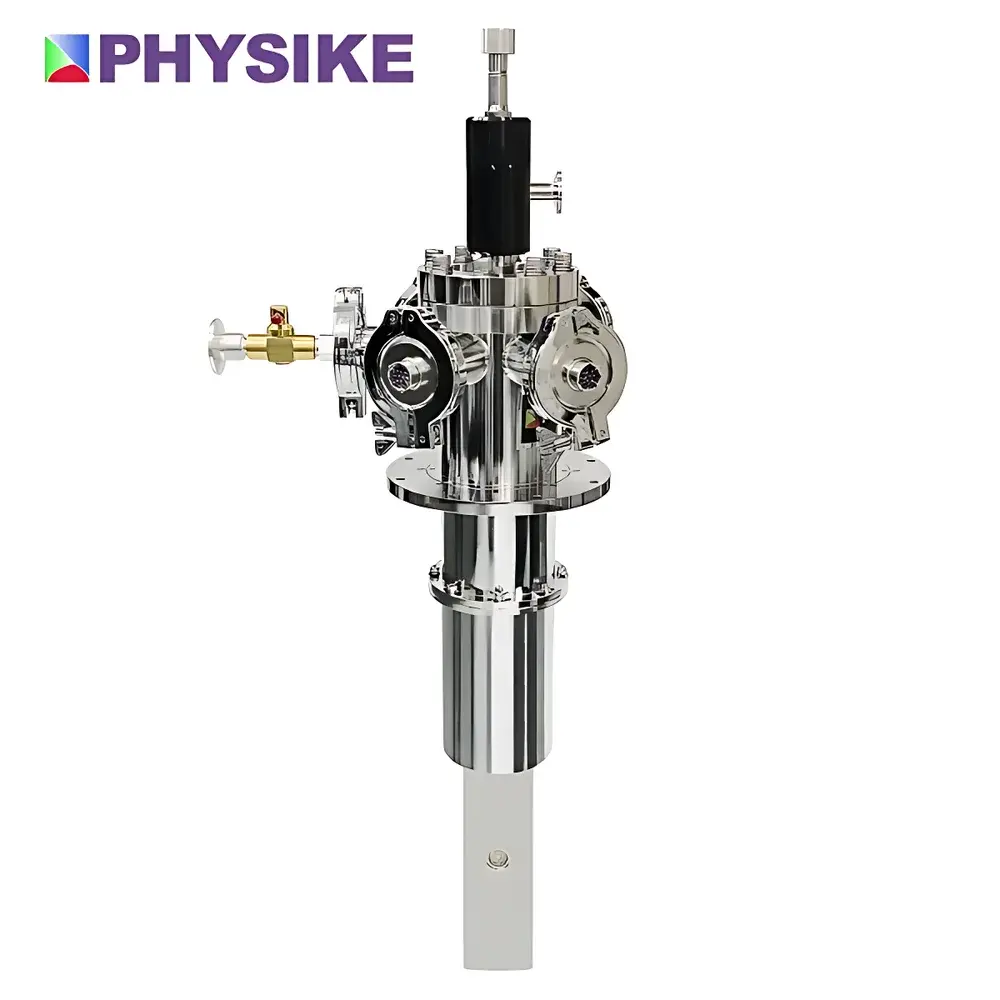
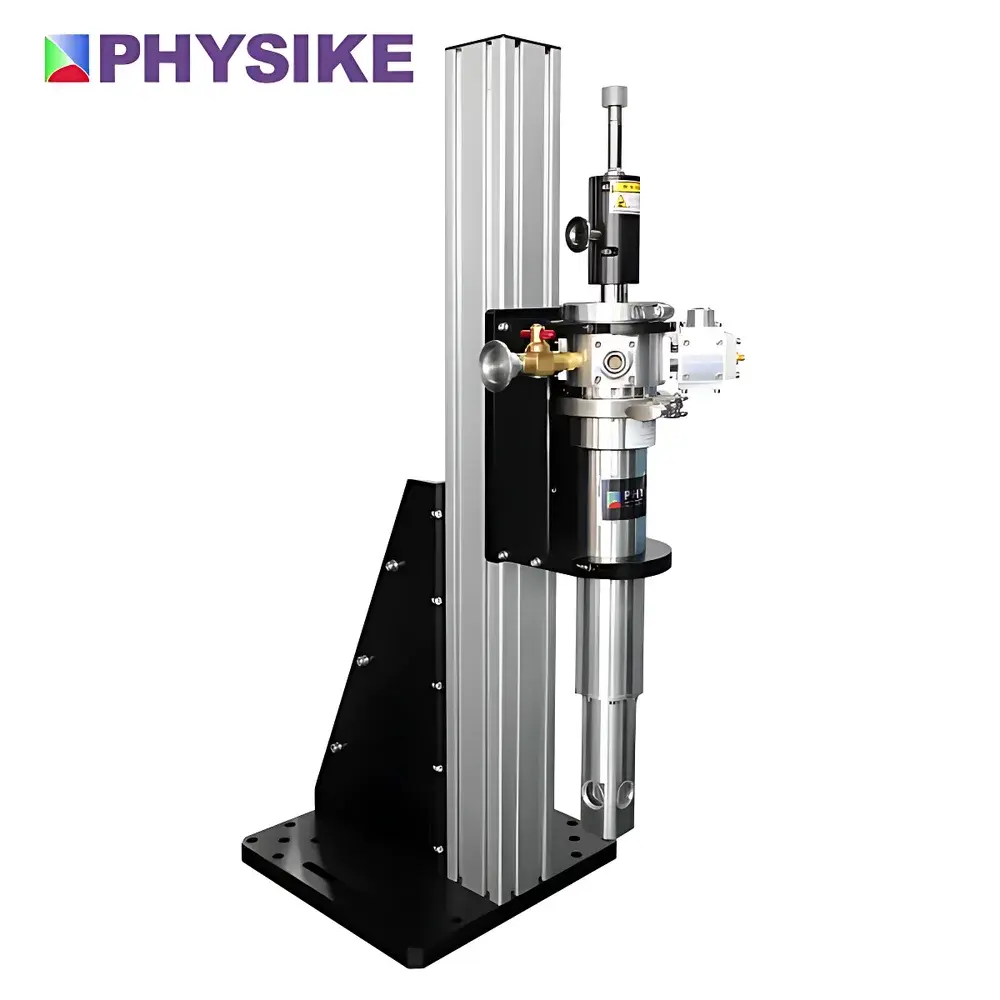
PHYSIKE Scryo-S-100 Continuous-Flow Cryogenic Thermostat
| Brand | PHYSIKE |
|---|---|
| Origin | Beijing, China |
| Manufacturer Type | Direct Manufacturer |
| Product Origin | Domestic (China) |
| Model | Scryo-S-100 |
| Minimum Temperature | 2 K |
| Cryogen Medium | Helium Gas (Gaseous or Liquid Helium Compatible) |
| Temperature Range | 2 K to 420 K (standard), up to 800 K with high-temperature option |
| Cooling Method | Continuous-flow cryogenic system with integrated high-efficiency vaporizer and ultra-low-loss flexible transfer line |
| Standard Sensor | Calibrated ZrON resistance thermometer |
| Control Precision | High-stability closed-loop temperature control via external precision temperature controller |
Overview
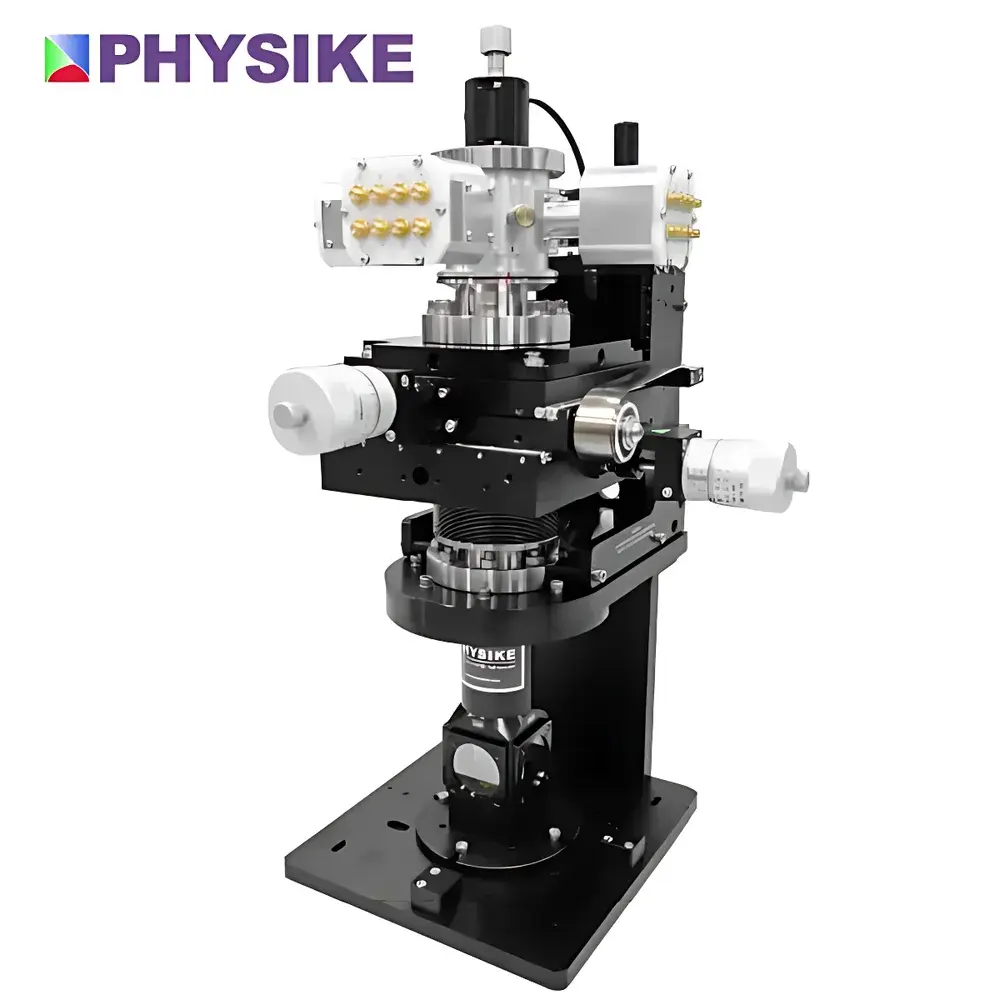
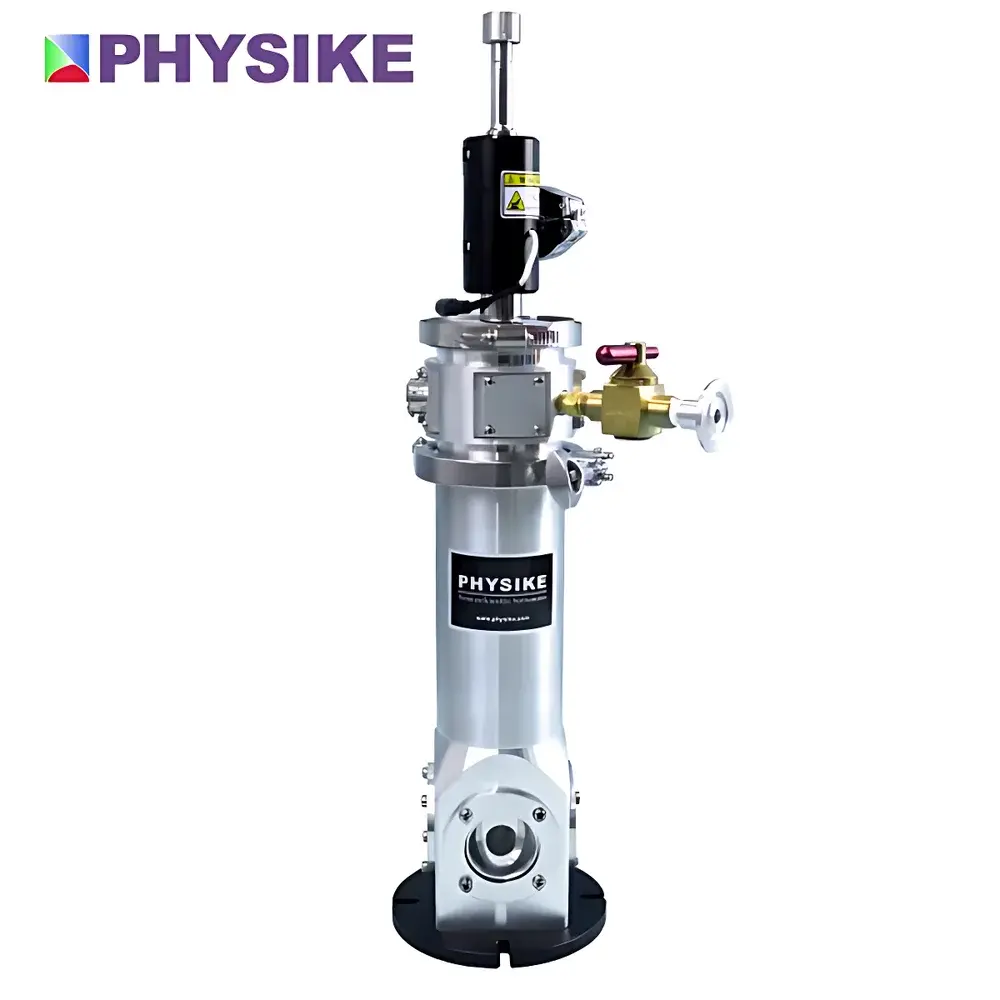
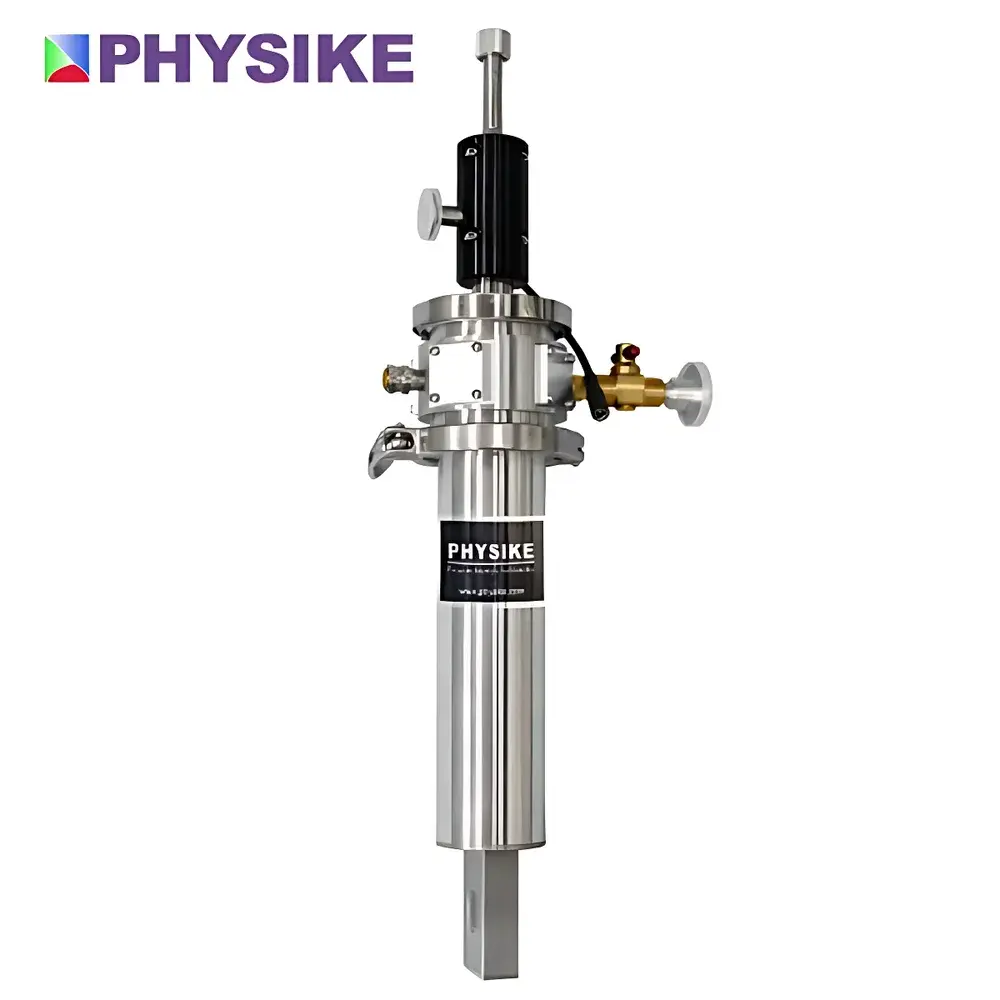
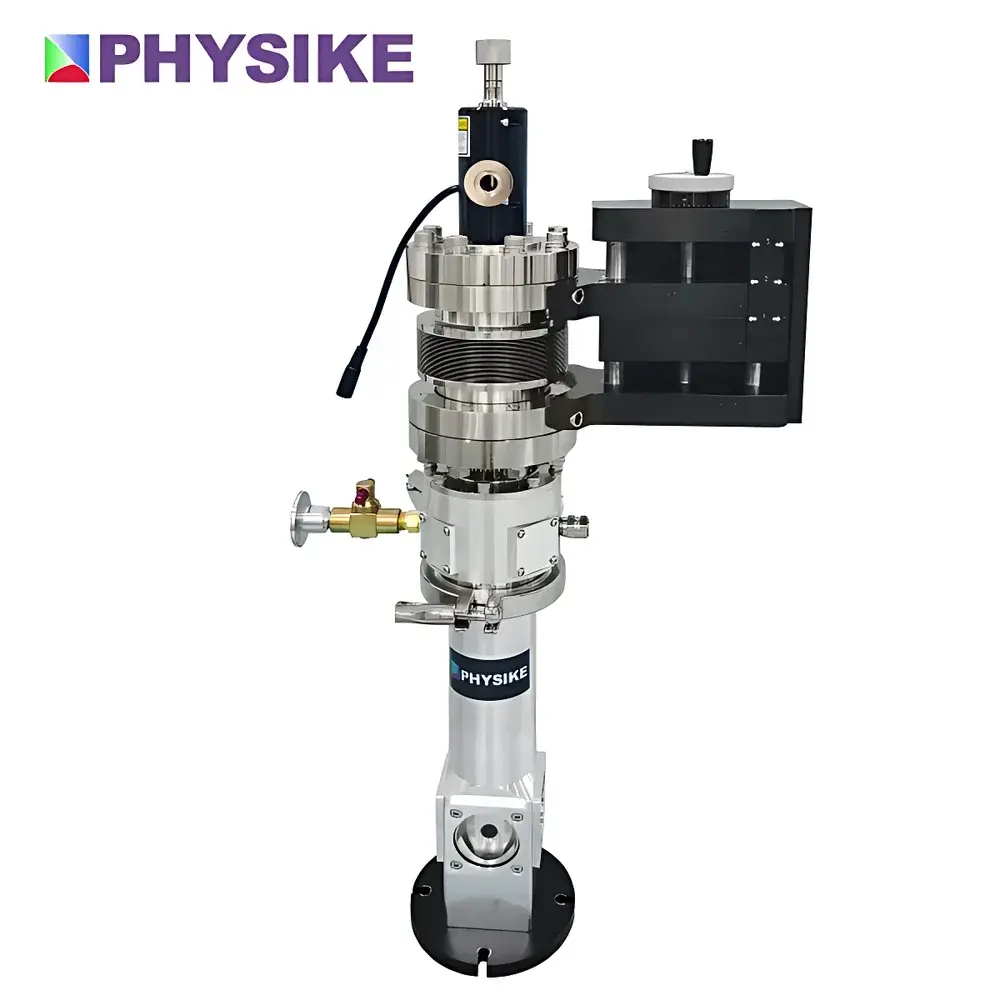
The PHYSIKE Scryo-S-100 is a modular, continuous-flow cryogenic thermostat engineered for high-reproducibility low-temperature experimentation across optical, spectroscopic, magneto-optical, and quantum transport applications. It operates on the principle of controlled helium gas flow through an integrated high-efficiency vaporizer, enabling rapid cooldown from ambient to base temperature (<2 K) while minimizing cryogen consumption. Unlike bath-type cryostats, the Scryo-S-100 employs a dynamic flow architecture—helium is liquefied externally (e.g., via a Qcryo® closed-cycle refrigerator) or supplied as liquid helium, then precisely metered, vaporized, and directed through ultra-insulated flexible transfer lines into the sample chamber. This design ensures minimal thermal lag, exceptional temperature stability (±5 mK typical under steady-state conditions), and compatibility with both liquid helium and closed-cycle helium refrigeration systems (Qcryo-S-100 configuration). Its vacuum-jacketed construction, combined with multi-layer superinsulation and low-conductivity support structures, achieves thermal isolation sufficient for sustained operation at 2 K in high-vacuum environments (<1×10⁻⁶ mbar).
Key Features
- Base temperature ≤2 K with liquid helium or Qcryo®-integrated dry operation
- Continuous temperature control from 2 K to 420 K (extendable to 800 K with optional high-temperature module)
- Standard calibrated ZrON resistance thermometer for NIST-traceable temperature measurement
- Ultra-low-loss flexible helium transfer line with integrated needle valve for precise mass flow regulation
- Quick-release bayonet-style clamping mechanism for rapid sample chamber access
- Dual standard vacuum shrouds: F=1.0 and F=0.9 configurations, optimized for beamline integration and optical throughput
- Four fused-silica optical viewports with broadband transmission (X-ray to THz), configurable with custom window materials (e.g., sapphire, CaF₂, polyethylene, diamond)
- Low-vibration mechanical architecture suitable for interferometric, scanning probe, and single-photon detection setups
- Modular vacuum feedthrough options including multi-pin electrical, RF (SMA, 2.92 mm, 2.4 mm, 1.85 mm), triaxial BNC, fiber optic, and gas inlet ports
- Compact tail-end variants available for integration with superconducting magnets, electromagnets, and space-constrained spectrometers (e.g., Bruker VERTEX 80V, Horiba Fluorolog-QM)
Sample Compatibility & Compliance
The Scryo-S-100 accommodates diverse sample geometries and experimental requirements through a comprehensive suite of interchangeable sample stages: electrical pucks (Puck/DIP/LCC), transmission holders, DLTS substrates, solar cell mounts, probe-based carriers, liquid cells, and thermal transport platforms. All vacuum components comply with ISO-KF and CF flange standards (CF35, CF63, CF100); electrical feedthroughs meet IEC 61000-4-2 ESD immunity requirements. The system supports GLP/GMP-aligned workflows when paired with validated temperature controllers featuring audit trail functionality (e.g., compliant with FDA 21 CFR Part 11 when used with third-party certified software). Vacuum integrity is verified per ASTM E595 outgassing specifications; all internal surfaces are electropolished stainless steel or oxygen-free copper to minimize hydrocarbon contamination and ensure compatibility with UHV (<1×10⁻⁹ mbar) retrofits.
Software & Data Management
While the Scryo-S-100 itself is hardware-controlled, it integrates seamlessly with industry-standard temperature management platforms—including Lakeshore 336/372, Oxford Instruments ITC503, and BlueFors TCU series—enabling programmable ramping, PID optimization, and real-time logging. Optional LabVIEW™ and Python APIs allow full automation of temperature sweeps synchronized with spectrometer triggers (e.g., FTIR step-scan mode), lock-in amplifier reference signals, or data acquisition cards. All temperature sensor calibrations are stored in IEEE 1241-compliant coefficient files, supporting traceable post-processing and inter-laboratory comparison. When deployed in Qcryo-S-100 dry-mode configurations, the system logs helium pressure, flow rate, cold-head temperature, and stage setpoint deviations—critical for predictive maintenance and thermal budget modeling in long-duration experiments.
Applications
The Scryo-S-100 serves as a foundational platform for advanced low-temperature characterization across physics, chemistry, and materials science. It is routinely employed in Fourier-transform infrared (FTIR) and far-infrared spectroscopy, matrix-isolation studies, Mössbauer spectroscopy, photoluminescence (PL) and electroluminescence (EL) mapping, magneto-optical Kerr effect (MOKE) measurements, synchrotron X-ray diffraction, neutron scattering sample environments, diamond anvil cell (DAC) integration, deep-level transient spectroscopy (DLTS), thermoelectric property evaluation, superconducting quantum interference device (SQUID) calibration, and terahertz time-domain spectroscopy (THz-TDS). Its compatibility with electromagnetic fields (up to 12 T with custom magnet adapters) and ultra-low vibration performance make it particularly suited for quantum sensing, cavity optomechanics, and single-molecule fluorescence studies requiring sub-mK thermal stability.
FAQ
Can the Scryo-S-100 operate without liquid helium?
Yes—it is fully compatible with the Qcryo® closed-cycle helium refrigerator, forming the Qcryo-S-100 dry system, which achieves ≤2 K without consumable cryogens.
What optical spectral ranges does the standard viewport support?
Standard fused silica windows transmit from 190 nm (UV) to 2.5 µm (mid-IR); optional windows extend coverage to X-ray (beryllium), THz (polyethylene), and deep-UV (CaF₂).
Is the system compatible with commercial FTIR spectrometers?
Yes—pre-engineered mounting interfaces and compact tail configurations are available for Bruker VERTEX 80V, Thermo Nicolet iS50, and PerkinElmer Frontier systems.
How is temperature uniformity maintained across the sample stage?
A copper cold finger with high thermal conductivity and symmetric heater/sensor placement ensures radial uniformity better than ±15 mK over a 10 mm diameter area at 4 K.
Are custom vacuum feedthroughs available for RF or microwave measurements?
Yes—SMA, 2.92 mm, 2.4 mm, and 1.85 mm RF feedthroughs are offered with VSWR <1.2 up to 67 GHz; microwave semi-rigid coaxial cables (UT-085, UT-141) are supported.



