
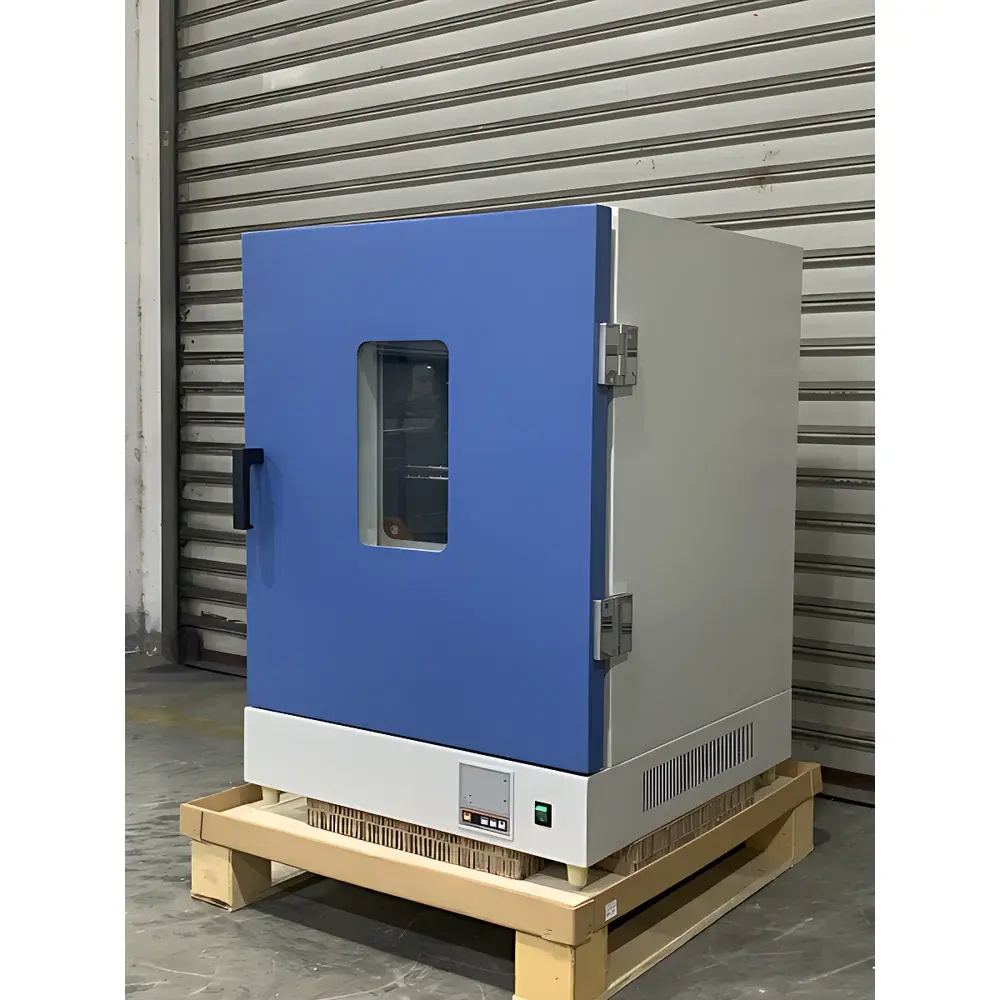
LabCompanion 140-240 Forced-Convection Electric Hot-Air Oven
| Brand | LabCompanion |
|---|---|
| Origin | Guangdong, China |
| Manufacturer Type | Direct Manufacturer |
| Model | 140-240 |
| Temperature Range | RT+10°C to 300°C |
| Temperature Uniformity | ±1°C |
| Temperature Resolution | 0.1°C |
| Heating Rate | 1.0–3.0°C/min |
| Timer Range | 1–9999 min |
| Interior Material | Stainless Steel (Austenitic 304, Argon Arc Welded) |
| Exterior Material | Cold-Rolled Steel with Epoxy Powder Coating |
| Viewing Window | Double-Layer Tempered Glass |
| Air Circulation | High-Temperature Resistant Imported Centrifugal Blower + Optimized Horizontal Airflow Duct Design |
| Ambient Operating Conditions | 5–35°C, ≤85% RH |
Overview
The LabCompanion 140-240 Forced-Convection Electric Hot-Air Oven is a precision-engineered laboratory drying and thermal conditioning system designed for reproducible, uniform heat treatment across diverse scientific and industrial workflows. Based on the principle of forced convection—where a high-temperature-stable centrifugal blower actively circulates heated air through an optimized horizontal airflow duct—the oven achieves rapid thermal equilibration and exceptional temperature homogeneity (±1°C) within its 30 L working chamber. Unlike natural-convection ovens, this design eliminates stratification and cold spots, ensuring consistent drying kinetics, residual solvent removal, sterilization validation, and material stability testing per ISO 17025-compliant protocols. Its operational range from ambient +10°C to 300°C supports applications spanning low-temperature desiccation (e.g., moisture content analysis per ASTM D2231), medium-temperature curing (polymer crosslinking, adhesive setting), and high-temperature ashing pre-treatment (per USP or EPA Method 3050B). The unit is engineered for continuous-duty operation in QC labs, R&D facilities, and GLP-regulated environments where traceable, repeatable thermal exposure is critical.
Key Features
- Stainless steel interior chamber (AISI 304) fabricated via argon arc welding—ensuring corrosion resistance, structural integrity, and ease of decontamination between batches.
- Dual-layer tempered glass observation window with integrated safety seal—enabling real-time visual monitoring without thermal interruption or pressure compromise.
- Microprocessor-based PID temperature controller with 0.1°C resolution and programmable ramp/soak profiles—supporting both manual setpoint operation and multi-step thermal protocols.
- High-efficiency forced-air circulation system featuring an imported, thermally rated centrifugal blower and symmetrical airflow channel geometry—guaranteeing ≤±1°C spatial uniformity across the full load volume (verified per IEC 60068-3-5).
- Epoxy-powder-coated carbon steel exterior with ergonomic handle and recessed door latch—providing mechanical durability, chemical resistance, and long-term dimensional stability under routine lab handling.
- Extended timer function (1–9999 minutes) with audible end-of-cycle alert and auto-shutdown—enabling unattended operation while maintaining compliance with OSHA and local electrical safety standards.
Sample Compatibility & Compliance
The 140-240 oven accommodates standard laboratory ware including porcelain crucibles, borosilicate glass Petri dishes, stainless steel trays, and polymer-coated sample racks—compatible with weight loads up to 15 kg distributed evenly on the adjustable shelf. It meets essential electromagnetic compatibility (EMC) requirements per EN 61326-1 and safety specifications under EN 61010-1 for laboratory electrical equipment. While not certified for Class I Division 1 hazardous locations, it complies with general-purpose lab ventilation guidelines outlined in ANSI/AIHA Z9.5. For regulated environments, the unit supports audit-ready documentation when paired with external calibrated reference thermometers (e.g., NIST-traceable Pt100 probes) and loggers compliant with FDA 21 CFR Part 11 requirements for electronic records.
Software & Data Management
This model operates via embedded firmware without proprietary software dependency; however, it features RS-232 serial output (optional) for integration into centralized lab data acquisition systems (e.g., LabArchives, DeltaV, or custom SCADA platforms). When interfaced, users can export timestamped temperature logs—including setpoint, actual chamber reading, and elapsed time—at configurable intervals (1–60 sec). All internal controller events (power cycles, alarm triggers, parameter changes) are stored in non-volatile memory with 30-day retention. For GxP workflows, third-party validation packages—including IQ/OQ templates aligned with ASTM E2500 and Annex 11—are available upon request to support installation qualification and operational verification.
Applications
- Moisture content determination in pharmaceutical excipients (USP ) and food-grade powders (AOAC 950.46).
- Pre-drying of filter papers and gravimetric sampling media prior to particulate mass analysis (EPA Method 201A).
- Thermal aging studies of elastomers and composites per ASTM D573 and ISO 188.
- Residual solvent evaporation from HPLC vials and GC sample preparation plates.
- Baking of coated substrates in thin-film R&D and microelectronics packaging prototyping.
- Low-intensity sterilization of non-critical lab tools using dry-heat protocols (160°C for 2 hours per WHO TRS 961 Annex 2).
FAQ
What is the maximum safe operating temperature for continuous use?
The oven is rated for sustained operation at 300°C; however, prolonged exposure above 250°C may accelerate gasket aging and reduce long-term calibration stability. For >200°C applications, we recommend quarterly verification using a secondary reference thermometer.
Can the unit be validated for GMP environments?
Yes—though the base unit lacks built-in 21 CFR Part 11 functionality, it supports external validation via documented sensor mapping, alarm logging, and procedural SOPs. Full IQ/OQ documentation kits are provided by LabCompanion’s regulatory affairs team.
Is over-temperature protection included?
Yes—a redundant mechanical cut-off switch (independent of the main controller) interrupts power if chamber temperature exceeds 320°C, satisfying EN 61010-1 Clause 10.2 requirements.
How often should the air filter be cleaned?
The intake filter requires inspection every 500 operational hours; cleaning frequency depends on ambient dust load. In ISO Class 8 cleanrooms, monthly maintenance is advised.
Does the oven support nitrogen purging?
No—this model lacks gas inlet/outlet ports or pressure-rated seals. For inert-atmosphere drying, consider the LabCompanion N2-Series ovens with integrated purge control and O₂ monitoring options.



