
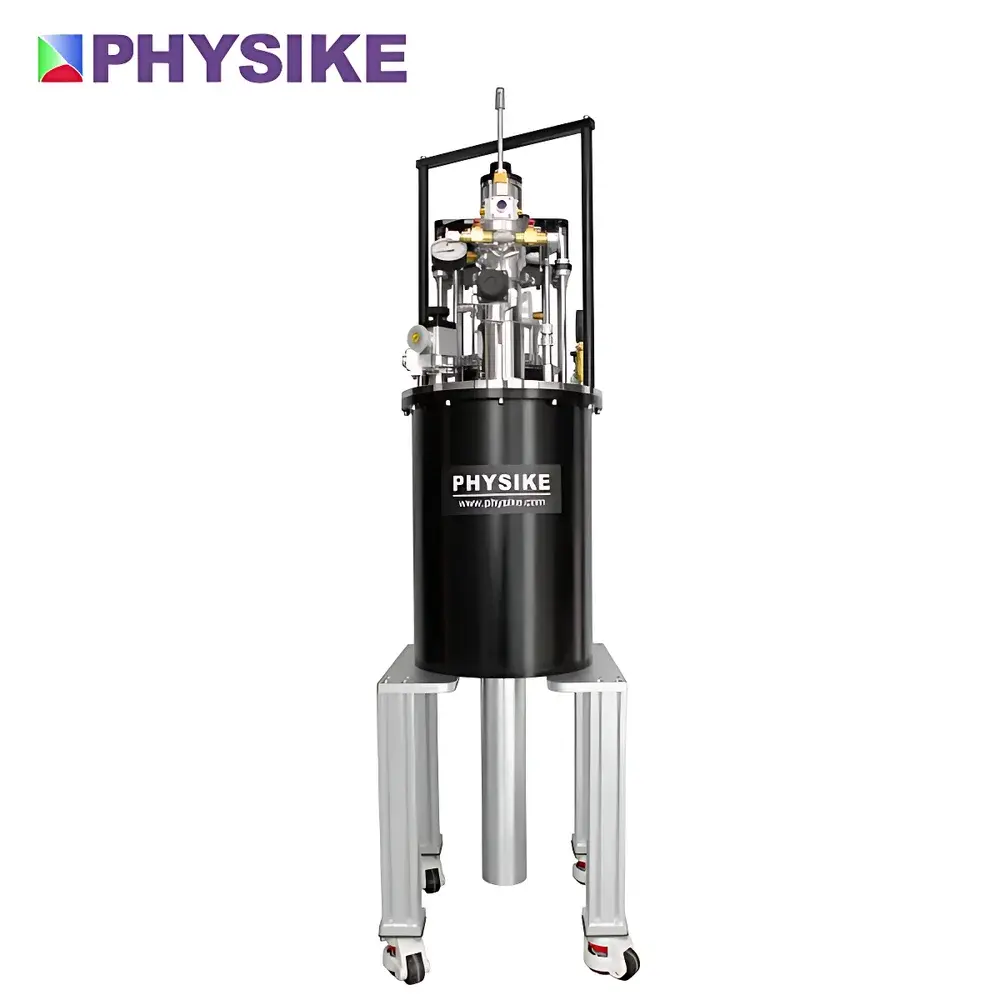
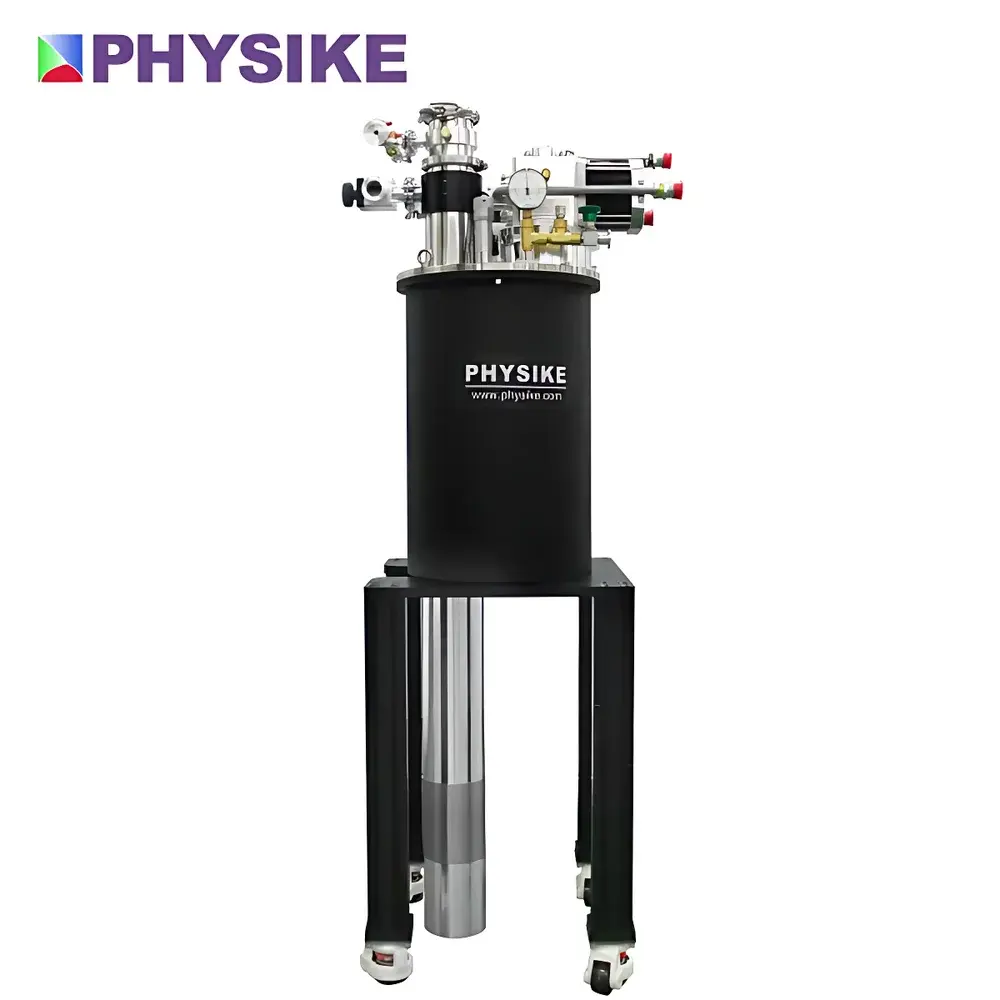
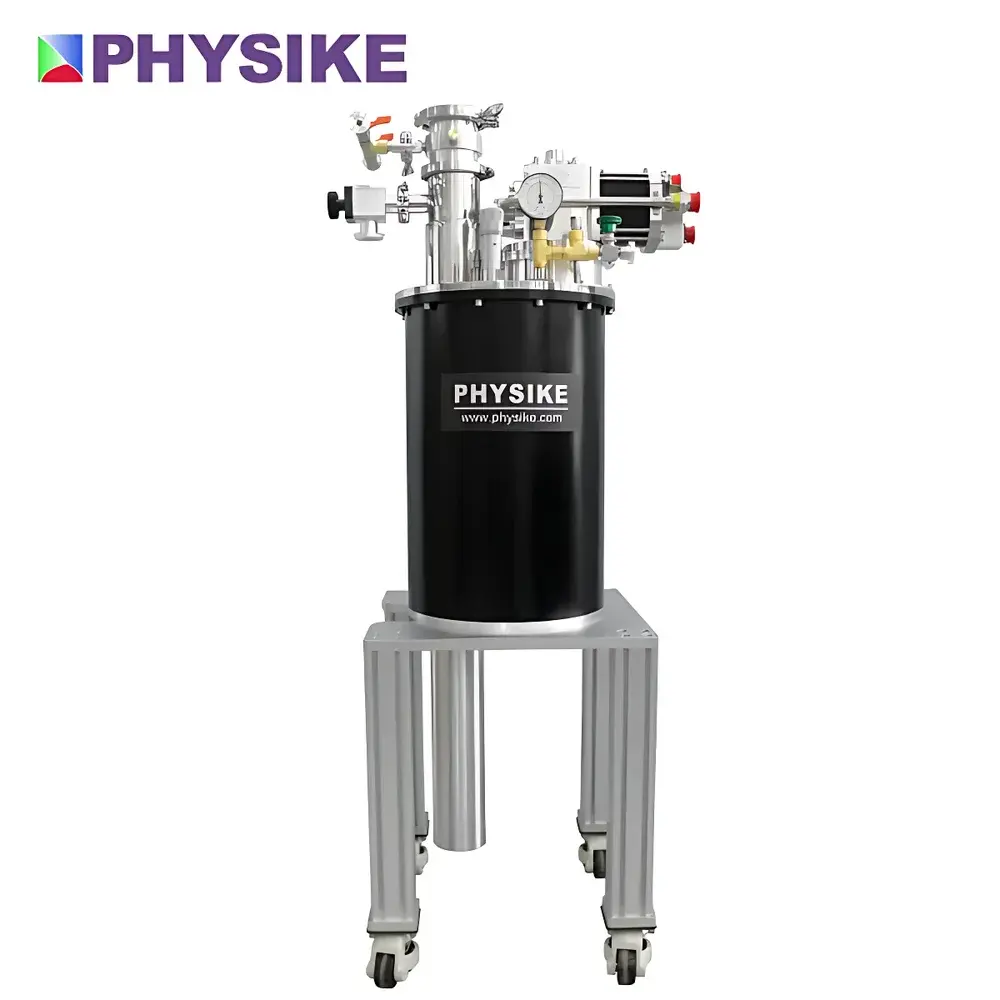
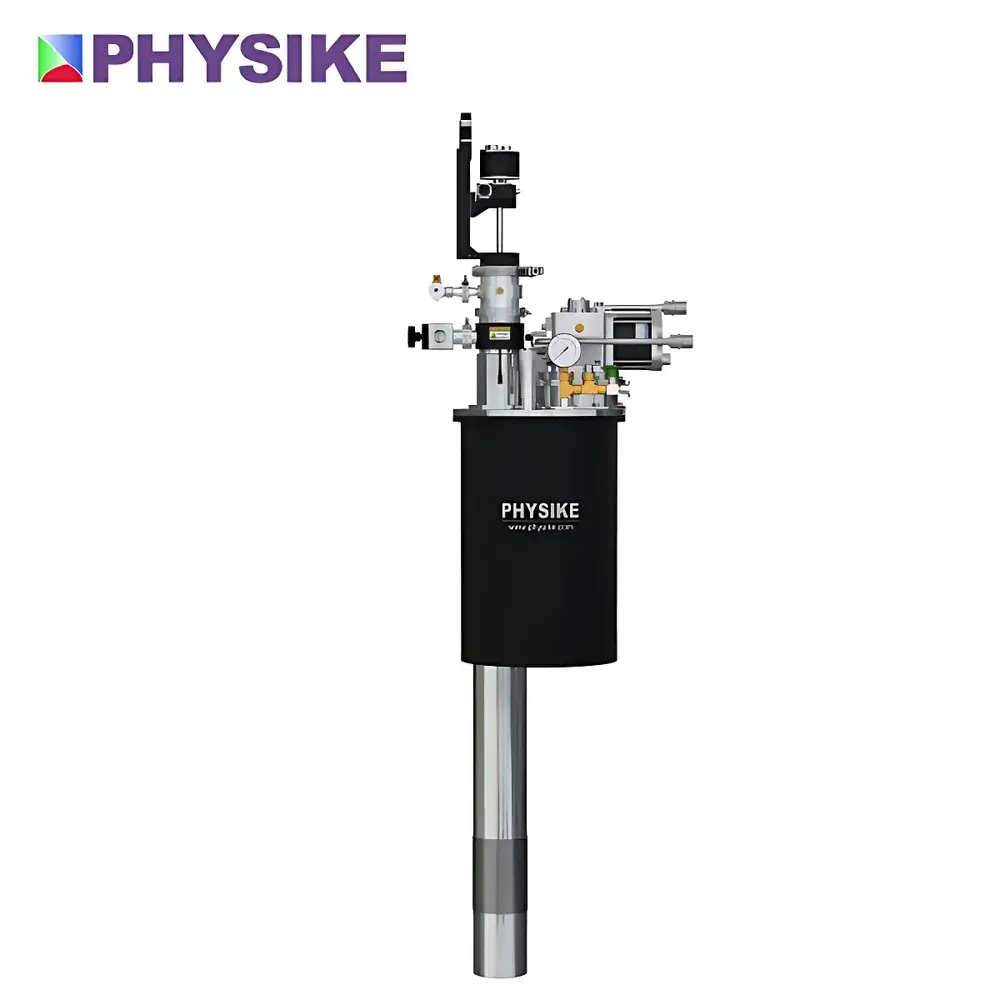
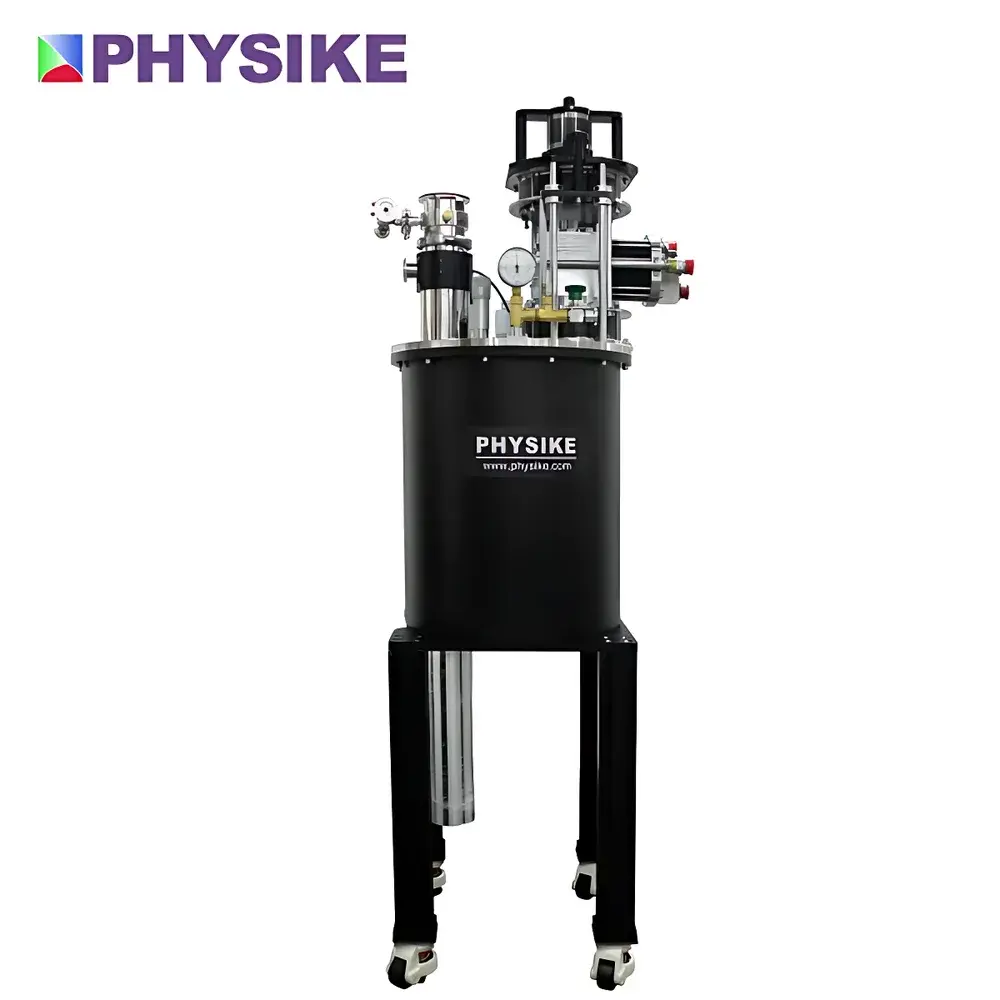
Physiké Acryo-TL-1.5K Top-Loading Cryogenic Refrigerator
| Brand | Physiké |
|---|---|
| Origin | Beijing, China |
| Manufacturer Type | Direct Manufacturer |
| Product Origin | Domestic (China) |
| Model | Acryo-TL-1.5K |
| Pricing | Upon Request |
Overview
The Physiké Acryo-TL-1.5K is a top-loading cryogenic refrigeration system engineered for high-throughput, low-temperature experimental physics and materials science. Operating down to 1.5 K, it employs a closed-cycle helium-based cooling architecture—typically driven by either a Gifford-McMahon (GM) cryocooler or a pulse-tube refrigerator—to achieve stable, vibration-managed base temperatures without liquid cryogen consumption. Its top-loading configuration enables rapid sample exchange via interchangeable sample probes, eliminating the need for system warm-up and re-pump cycles common in bath-style cryostats. This design is particularly advantageous for iterative device characterization—such as quantum bit (qubit) screening—where thermal cycling efficiency, mechanical accessibility, and thermal decoupling of fragile or geometrically complex specimens (e.g., powder samples, high-pressure diamond anvil cells, fluid-filled capsules, or irregular thin-film heterostructures) are critical. The system’s thermal architecture integrates optimized heat sinking paths, low-conductance suspension elements, and staged thermal radiation shielding to ensure reproducible cooldown profiles and minimal thermal drift during extended measurements.
Key Features
- Base temperature capability: ≤1.5 K with optional sub-1.5 K configurations (e.g., <1.3 K with He-3 insert)
- Top-loading sample access via modular, quick-connect probe interface—enabling <5-minute sample swap without breaking vacuum or warming the cold stage
- Configurable cold head options: GM cryocoolers (2–10 W @ 4.2 K) or pulse-tube refrigerators (with valve-isolated compressor for ultra-low vibration)
- Two specialized variants: TL-1.5K-MB (micro-vibration optimized; ≤100 nm RMS at cold plate with valve-isolated pulse tube), and TL-1.5K-NEU (neutron scattering optimized; 61 mm bore, vanadium neutron window, integrated motorized Z-translation & rotation stage, static exchange gas environment)
- Standard thermal stability: ±2.5 mK over 1 hour at base temperature (TL-1.5K-NEU); typical cooldown time from 300 K to 1.5 K: <270 minutes
- Modular vacuum tail section supporting optical, X-ray, neutron, and microwave compatibility through customizable window materials (e.g., sapphire, vanadium, Kapton, Mylar, IR-transparent polyethylene)
Sample Compatibility & Compliance
The Acryo-TL-1.5K accommodates diverse sample geometries and measurement modalities—including solid-state films, single crystals, nanopowders, liquid-phase cells, and high-pressure DAC assemblies—via a family of standardized and custom-engineered sample probes. All variants comply with ISO 27893 (cryogenic equipment safety), IEC 61000-6-3 (EMC emissions), and meet essential requirements for integration into GLP- and GMP-aligned laboratory infrastructure. Vacuum integrity is maintained per ISO 10816-3 (vibration severity thresholds) and ASTM E2214 (cryostat performance verification). Optional He-3 and dilution refrigerator (DR) inserts enable compliance with low-temperature metrology standards referenced in NIST SP 250-99 and ISO/IEC 17025 for traceable thermometry below 1 K.
Software & Data Management
System operation is coordinated via Physiké’s CryoControl Suite—a Windows-based platform supporting real-time PID tuning, multi-channel temperature logging (up to 16 channels, 0.1 mK resolution), vacuum monitoring (capacitance manometer + ion gauge), and programmable cooldown/ramp sequences. All data streams are timestamped and exportable in HDF5 and CSV formats. The software includes audit-trail functionality compliant with FDA 21 CFR Part 11 for electronic records and signatures, enabling full traceability in regulated research environments. Remote operation via Ethernet or RS-485 is supported, with TLS-encrypted API access for integration into LabVIEW, Python (PyVISA), or MATLAB-based automated test frameworks.
Applications
- Quantum device characterization: DC/AC transport, microwave reflectometry, and coherence time mapping of superconducting qubits and spin qubits
- Condensed matter physics: Magnetotransport (Hall effect, Shubnikov–de Haas oscillations), specific heat, AC susceptibility, and thermal conductivity under magnetic field
- Neutron scattering: Inelastic and quasielastic scattering on large-volume samples using the TL-1.5K-NEU variant with vanadium windows and motorized positioning
- High-pressure science: Integration with diamond anvil cells (DACs) up to 100 GPa, enabled by 61 mm bore and high-strength titanium sample tubes
- Spectroscopy: THz time-domain spectroscopy, FTIR, UV-Vis-NIR absorption, and magneto-optical Kerr effect (MOKE) with optical access variants
- Materials synthesis & testing: In-situ tensile deformation, electrochemical impedance spectroscopy (EIS), and NMR probe interfacing (with RF-compatible vacuum feedthroughs)
FAQ
What is the standard cooldown time from room temperature to 1.5 K?
Typical cooldown time is less than 270 minutes for the TL-1.5K-NEU configuration; standard TL-1.5K systems range between 240–300 minutes depending on cold head selection and thermal load.
Can the system be integrated with a superconducting magnet?
Yes—compact tail modules with radial or axial field compatibility are available, including non-magnetic structural reinforcements and field-compensated thermal anchoring for fields up to 12 T.
Is vacuum feedthrough customization supported?
Yes—multi-pin electrical, SMA, BNC, triaxial, fiber-optic, and coaxial feedthroughs are configurable per IEC 61076-2-106 and MIL-DTL-38999 standards.
Does the system support in-situ pressure tuning during cryogenic operation?
Yes—optional in-line pressure regulation modules and piezo-driven volume actuators are available for DAC and gas-cell applications, with calibrated pressure readout down to 10⁻⁴ mbar.
What level of vibration isolation is achievable with the TL-1.5K-MB variant?
With a valve-isolated pulse-tube cold head and suspended cold stage, RMS vibration amplitude is ≤100 nm at the sample position; with GM-based configurations and internal damping, it remains below 1 µm RMS.
Related Products



