
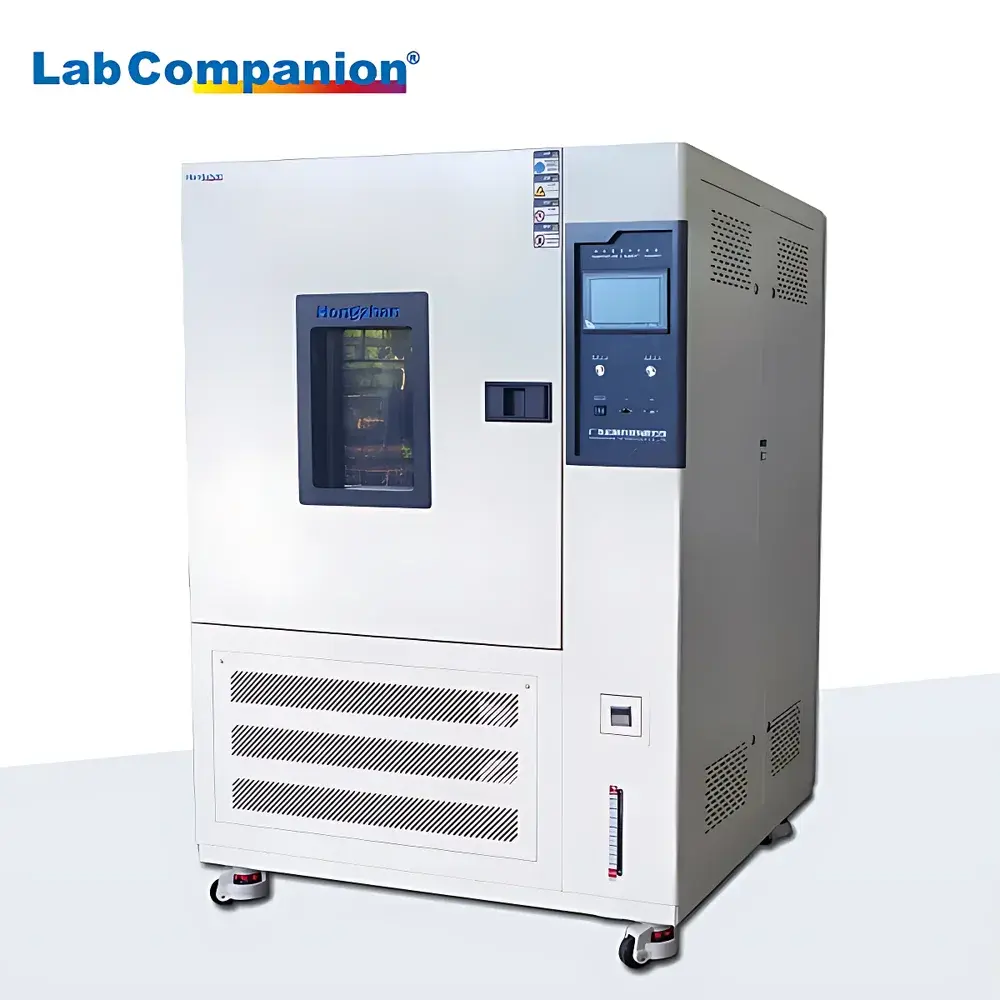
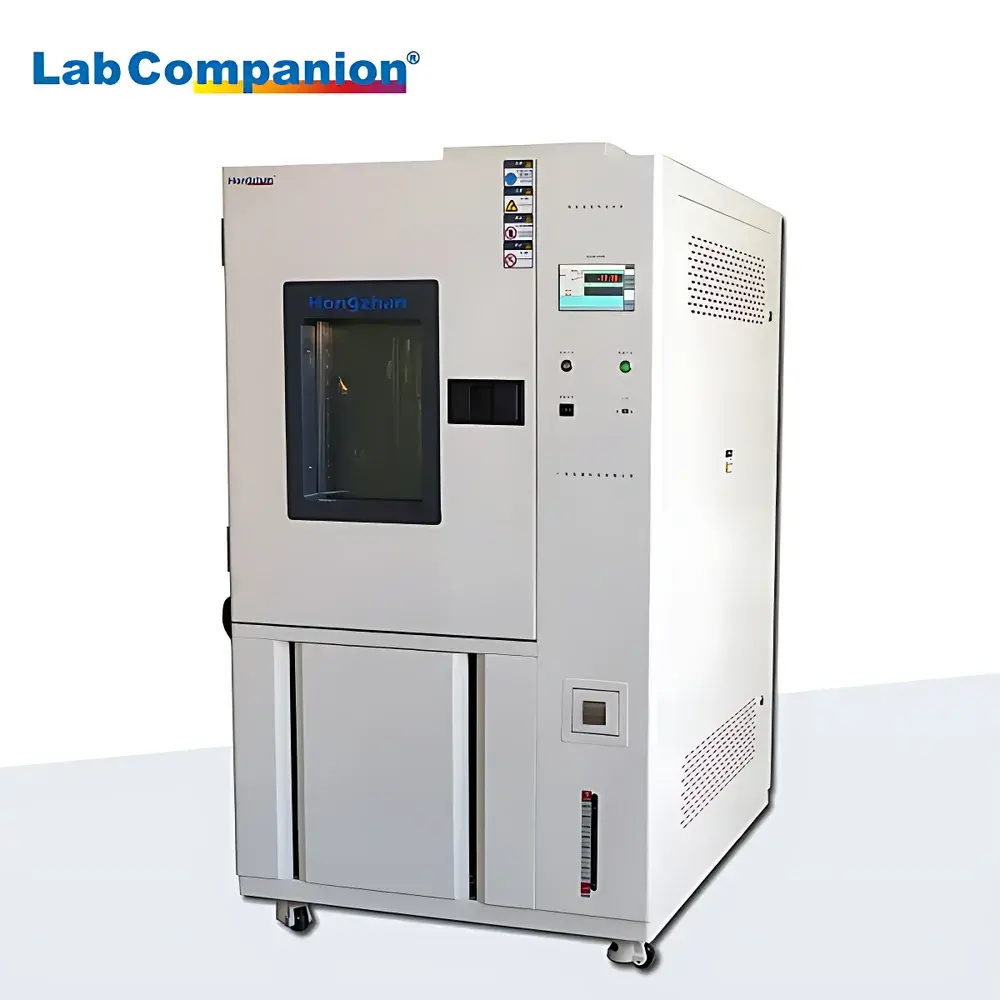
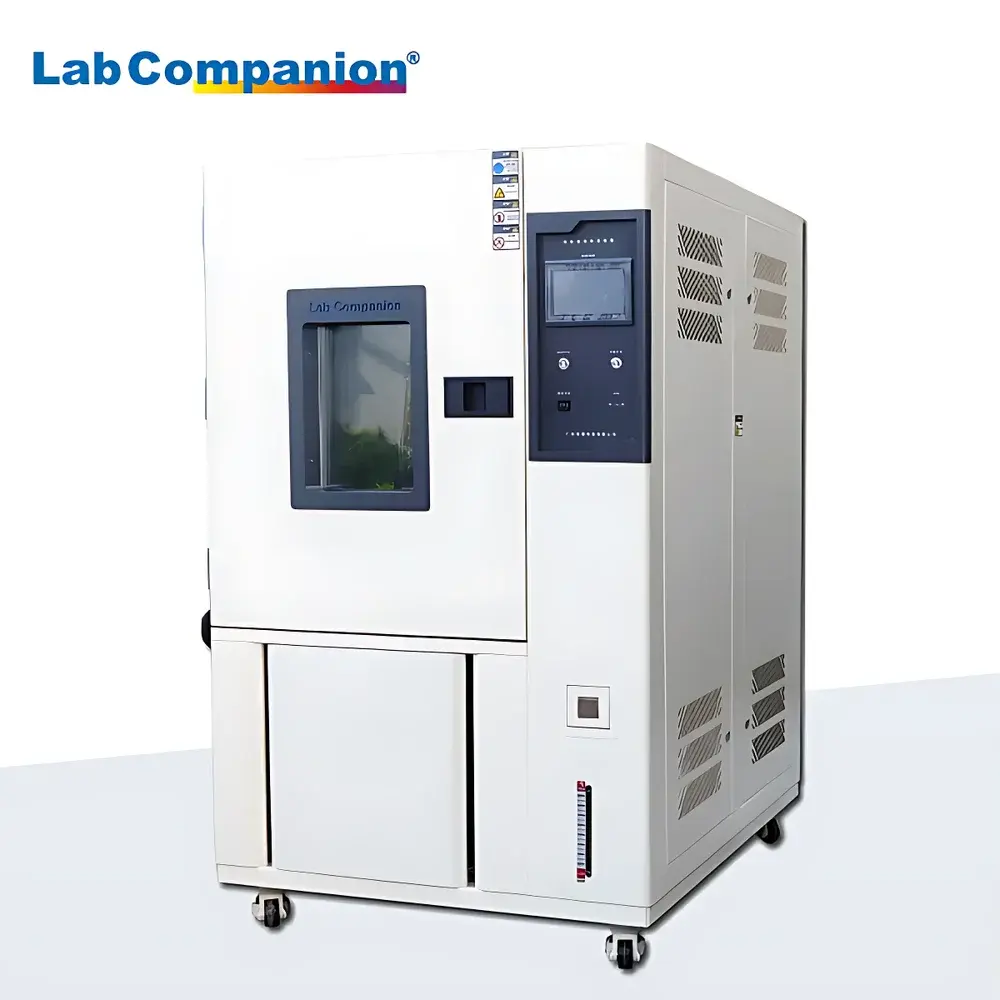
LabCompanion C-408-20-3 Low Temperature Environmental Test Chamber
| Brand | LabCompanion |
|---|---|
| Origin | Guangdong, China |
| Manufacturer Type | Direct Manufacturer |
| Country of Origin | China |
| Model | C-408-20-3 |
| Price Range | USD 6,300 – 7,000 (FOB Guangdong) |
| Temperature Range | −20 °C to +150 °C |
| Temperature Uniformity | ≤2.0 °C |
| Temperature Fluctuation | ±0.5 °C |
| Temperature Control Accuracy | ±0.01 °C |
| Heating Rate (20 °C to +150 °C, no load, non-linear) | ~3.5 °C/min |
| Cooling Rate (20 °C to −20 °C, no load, non-linear) | ~1.0 °C/min |
Overview
The LabCompanion C-408-20-3 Low Temperature Environmental Test Chamber is an engineered precision system designed for controlled thermal stress evaluation of materials, components, and finished products under reproducible low-temperature and ambient-to-elevated temperature conditions. It operates on a dual-refrigeration cascade system architecture with independent PID-controlled heating and cooling circuits, enabling stable operation across its full −20 °C to +150 °C working range. Unlike single-stage refrigeration chambers, the cascade configuration ensures reliable sub-zero performance without compressor overload or condensation-induced instability—critical for long-duration qualification tests per IEC 60068-2-1 (cold), IEC 60068-2-2 (dry heat), and MIL-STD-810H Method 502.7. The chamber’s insulated double-wall construction with high-density polyurethane foam (≥100 mm thickness) and electro-polished stainless-steel interior minimizes thermal bridging and supports contamination-sensitive applications in electronics, automotive, aerospace, and pharmaceutical packaging validation.
Key Features
- High-stability dual-cascade refrigeration system with hermetic compressors and electronic expansion valves for consistent −20 °C hold capability
- PID-based digital temperature controller with real-time deviation compensation and auto-tuning functionality
- Internal chamber volume of 408 L (600 × 850 × 800 mm W×H×D), optimized for industrial-scale sample loading while maintaining uniform thermal distribution
- Stainless-steel interior (SUS304) with rounded corners and removable floor tray for ease of cleaning and residue-free operation
- Insulated observation window with electrically heated anti-fog coating and integrated LED interior lighting
- Over-temperature, over-pressure, and phase-failure protection with audible/visual alarm and automatic shutdown
- RS485 interface supporting Modbus RTU protocol for integration into centralized lab monitoring systems
Sample Compatibility & Compliance
The C-408-20-3 accommodates diverse sample geometries—including PCB assemblies, polymer films, battery cells, medical device housings, and sealed packaging—via adjustable stainless-steel shelves (standard: 2 pcs, load capacity: 30 kg/shelf). Its internal airflow design employs rear-mounted axial fans with baffle-guided laminar circulation, ensuring ≤2.0 °C uniformity and ±0.5 °C fluctuation across the working volume (per ASTM E744-22 Annex A1 verification methodology). The chamber meets structural and operational requirements for ISO/IEC 17025-accredited laboratories performing environmental qualification testing. It supports test execution under GLP-compliant workflows when paired with validated data logging software and audit-trail-enabled controllers. Optional I/O ports enable external sensor inputs (e.g., thermocouples, humidity probes) for multi-point validation per ISO 17025 Clause 6.4.3.
Software & Data Management
The standard controller includes embedded data logging (up to 10,000 data points, 1-second resolution) with timestamped CSV export via USB. For advanced traceability, LabCompanion’s optional PC-based LabView-compatible software (LCS-EnvSuite v3.2) provides real-time graphing, multi-channel trending, automated report generation (PDF/Excel), and FDA 21 CFR Part 11-compliant user access control, electronic signatures, and immutable audit trails. All logged parameters—including setpoint, actual chamber temperature, ramp/soak status, and alarm events—are time-synchronized and exportable in formats compatible with LIMS and MES platforms. Calibration certificates (NIST-traceable) are provided with each unit; annual recalibration services are available through LabCompanion’s ISO/IEC 17025-certified service centers.
Applications
- Accelerated aging studies of lithium-ion battery modules at sub-zero operating temperatures
- Thermal cycling validation of automotive ECUs per AEC-Q200 Rev D
- Stability testing of sterile barrier systems (ISO 11607-1) under cold storage conditions
- Material embrittlement assessment of elastomers and thermoplastics below Tg
- Pre-conditioning of optical sensors and MEMS devices prior to functional testing
- Qualification of avionics enclosures per DO-160G Section 4 (operational temperature)
FAQ
What is the minimum achievable temperature with sustained stability?
The chamber maintains ≤±0.5 °C fluctuation at −20 °C for durations exceeding 96 hours, verified using calibrated Class A PT100 sensors per IEC 60751.
Can this chamber perform temperature cycling per JEDEC JESD22-A104F?
Yes—when equipped with the optional cycling module (LCS-CycleKit), it executes defined ramp-soak profiles with programmable rates from 0.5 °C/min to 5.0 °C/min and dwell times from 1 minute to 999 hours.
Is humidity control available on the C-408-20-3 model?
No—the C-408-20-3 is a dry-temperature-only variant. For combined temperature/humidity testing, refer to the LabCompanion PDR-408 series (5–98% RH, −20 °C to +150 °C).
Does the unit comply with CE marking requirements?
Yes—it carries CE marking under the EU Machinery Directive 2006/42/EC and Electromagnetic Compatibility Directive 2014/30/EU, with full technical documentation available upon request.
What maintenance intervals are recommended for optimal long-term performance?
Compressor oil and refrigerant levels should be inspected annually; air intake filters require cleaning every 3 months; full preventive maintenance (including PID recalibration and sensor verification) is advised biannually per LabCompanion Service Bulletin ENV-2023-08.



