
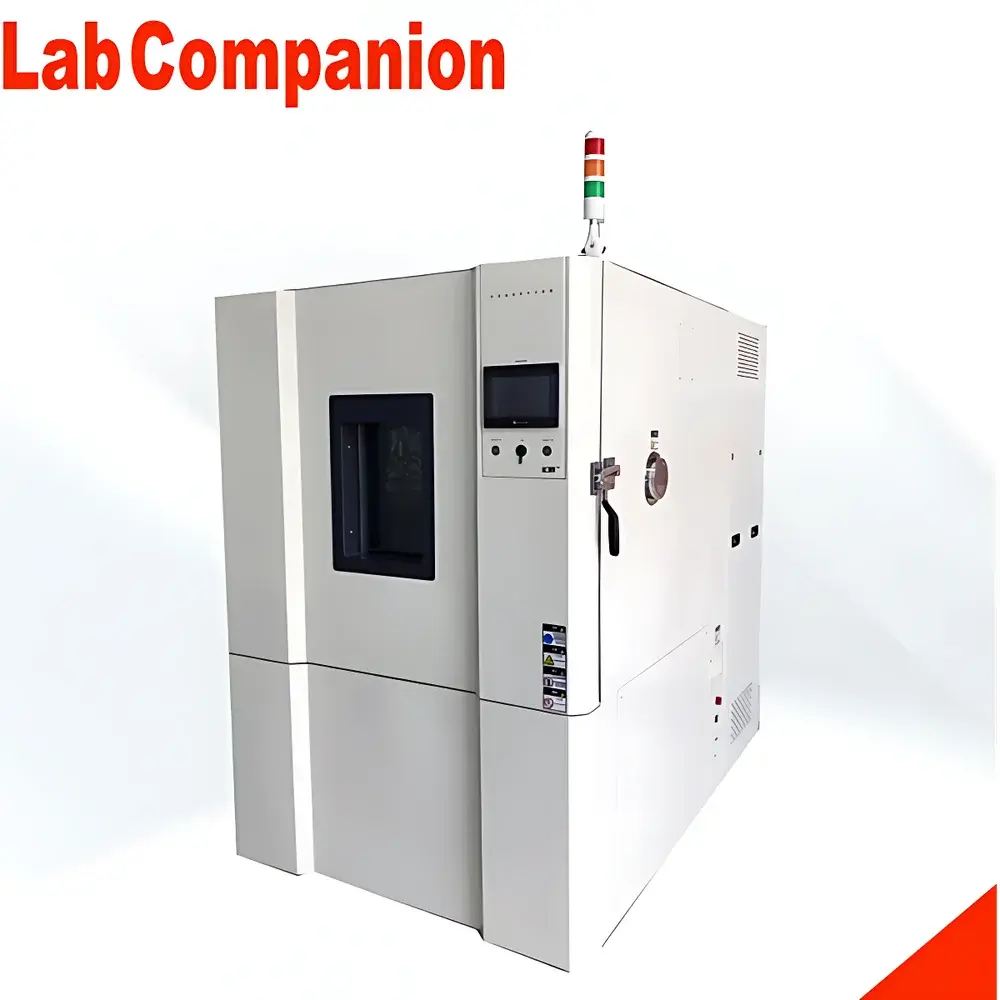
LabCompanion PDL-408 Low-Humidity High-Low Temperature Environmental Test Chamber
| Brand | LabCompanion |
|---|---|
| Origin | Guangdong, China |
| Manufacturer Type | Direct Manufacturer |
| Country of Origin | China |
| Model | PDL-408 |
| Temperature Range | −40 °C to +150 °C |
| Refrigeration Method | Compressor-based Cooling |
| Explosion-Proof | Standard (Non-Explosion-Proof) |
| Temperature Fluctuation | ±0.5 °C |
| Temperature Uniformity | ±2.0 °C |
| Temperature Deviation | ±2 °C |
| Ramp-Up Time (−40 °C to +150 °C) | ≤60 min |
| Internal Dimensions (W×H×D) | 800 × 850 × 600 mm |
| Volume | 408 L |
| Humidity Range | 5–98 %RH |
| Low-Humidity Capability | Down to 5 %RH at 10 °C and 40 °C |
| Humidity Control Method | Drum-type Regenerative Desiccant Dehumidification + Miniature Steam Humidifier |
| Control System | Balanced Temperature & Humidity Control (BTHC) with Dual PID and Water Vapor Partial Pressure Algorithm |
| Network Interface | Ethernet-enabled for remote monitoring and data logging |
Overview
The LabCompanion PDL-408 Low-Humidity High-Low Temperature Environmental Test Chamber is an engineered solution for accelerated environmental stress testing under rigorously controlled temperature and humidity conditions—including extended low-humidity operation down to 5 %RH. Designed for compliance-driven industries such as aerospace, defense electronics, automotive electronics, and telecommunications, the chamber employs a dual-loop Balanced Temperature & Humidity Control (BTHC) architecture grounded in physical vapor pressure modeling and real-time dew point feedback. Unlike conventional chambers relying solely on refrigerant-based dehumidification or desiccant wheel cycling with fixed regeneration intervals, the PDL-408 integrates a continuously regenerating drum-type desiccant system synchronized with compressor cooling and precision steam humidification—enabling stable, repeatable humidity control across the full operational temperature span (−40 °C to +150 °C), even at elevated temperatures where condensation risk and moisture retention are critical concerns.
Key Features
- Stable low-humidity performance: Achieves and maintains 5 %RH at both 10 °C and 40 °C—validated per IEC 60068-3-5 and ASTM E145 Annex A4 for humidity uniformity and stability.
- Drum-type regenerative desiccant system: Eliminates consumable silica gel cartridges; enables continuous dehumidification without manual intervention or downtime for desiccant replacement.
- Miniature steam humidifier: Delivers fine-grained moisture injection with minimal thermal load and no water droplet carryover—critical for avoiding localized condensation during rapid humidity transitions.
- Dual-PID + vapor pressure control algorithm: Dynamically adjusts refrigerant flow, desiccant rotation speed, and steam output based on real-time partial pressure calculations—ensuring <±0.5 °C temperature fluctuation and <±2.0 °C spatial uniformity (measured per ISO 16750-4 Annex B).
- Modular thermal separation design: When operating above 100 °C, the main chamber body and desiccant module can be physically decoupled—preventing heat-induced desiccant degradation and preserving long-term humidity accuracy.
- Ethernet-enabled interface (RJ45): Supports Modbus TCP and HTTP API protocols for integration into centralized test management systems (e.g., NI TestStand, Keysight PathWave, or custom MES platforms); includes timestamped audit logs compliant with FDA 21 CFR Part 11 requirements when paired with validated software clients.
Sample Compatibility & Compliance
The PDL-408 accommodates samples up to 800 × 850 × 600 mm (W×H×D) with unobstructed airflow via rear-mounted centrifugal fans and perforated stainless-steel shelves. Its internal 304 stainless-steel construction meets ASTM B117 salt-spray resistance standards, while the insulation layer complies with EN 60068-2-1 (cold) and EN 60068-2-2 (dry heat) thermal mass specifications. The chamber is CE-marked and conforms to IEC 61000-6-2/6-4 for electromagnetic compatibility. For GxP environments, optional IQ/OQ documentation packages are available—including traceable calibration certificates (NIST-traceable Pt100 sensors), temperature/humidity mapping reports (per ISO 17025-accredited providers), and electronic audit trail configuration templates aligned with GLP and GMP Annex 11 expectations.
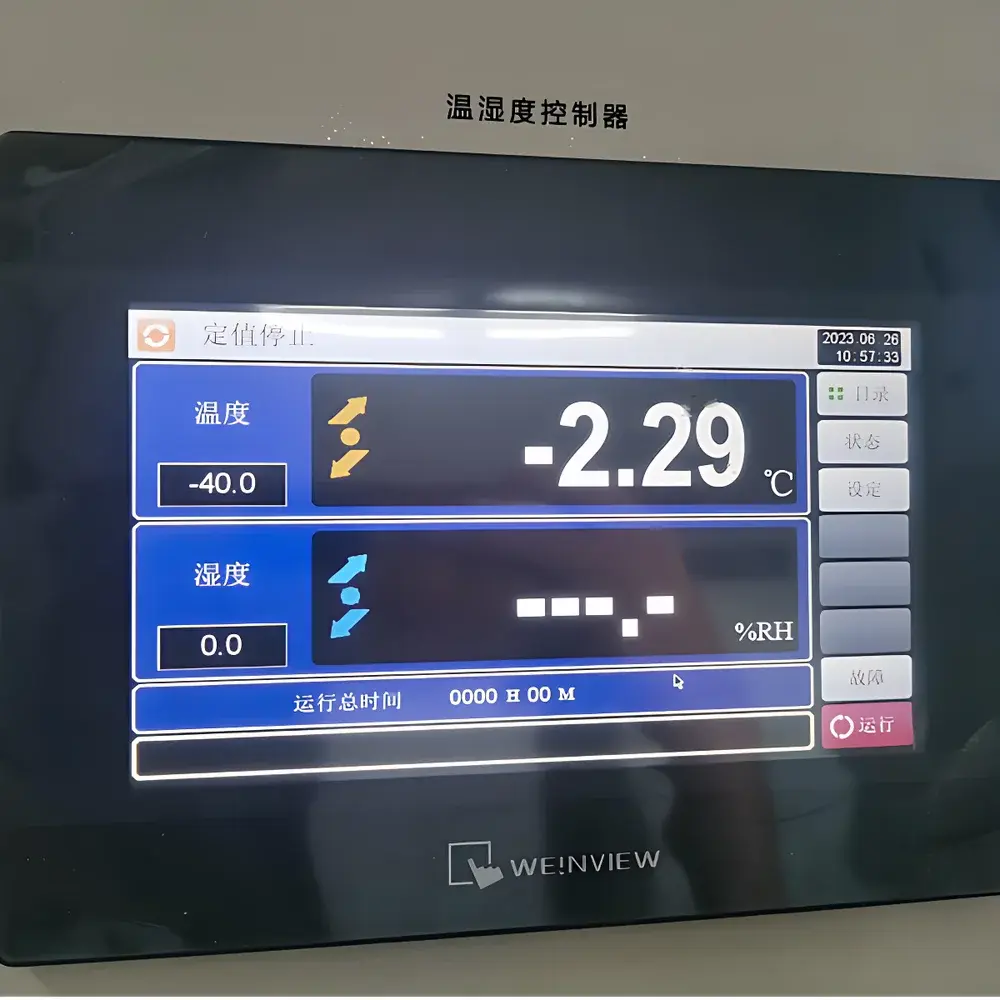
Software & Data Management
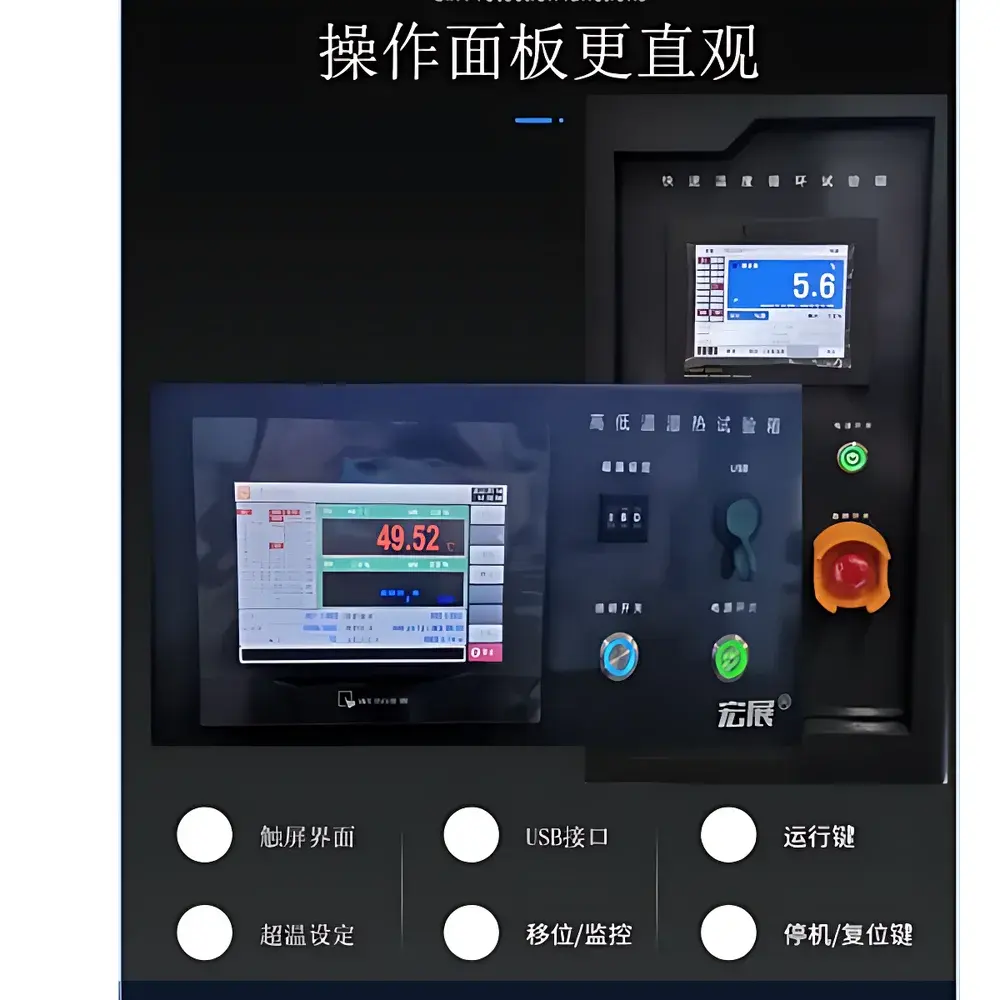
The embedded controller supports local touchscreen operation and remote access via web browser or dedicated LabCompanion ChamberLink™ client (Windows/Linux/macOS). All temperature and humidity setpoints, ramp rates, dwell times, and alarm thresholds are programmable in multi-step profiles. Real-time data streams include chamber air temperature (3-point average), relative humidity (capacitive sensor with automatic drift compensation), dew point, and desiccant drum status. Logged data is stored internally (≥30 days at 1-second resolution) and exportable in CSV or XML format. Optional cloud synchronization enables secure, role-based access control and automated report generation (PDF/Excel) with digital signatures—fully supporting 21 CFR Part 11 electronic record requirements when deployed with configured user authentication and event logging.
Applications
- Aerospace component validation: Thermal cycling of avionics enclosures under low-humidity conditions to assess outgassing, conformal coating integrity, and capacitor dielectric stability per RTCA DO-160 Section 4.6.
- Automotive ECUs: Reliability screening of engine control units exposed to −40 °C startup followed by 85 °C/85 %RH soak, then transitioning to 40 °C/5 %RH dry-out phases per ISO 16750-4.
- Medical device packaging: Accelerated aging studies of sterile barrier systems (e.g., Tyvek® pouches) under controlled low-RH storage conditions to quantify moisture transmission rate (MVTR) effects on seal strength.
- Optoelectronic materials: Evaluation of anti-reflective coating delamination on laser diode housings subjected to repeated −20 °C ↔ +85 °C cycles with <10 %RH hold periods.
- Research-grade polymer characterization: Monitoring dimensional stability and creep behavior of high-performance thermoplastics (e.g., polyimide, PEEK) under combined thermal stress and desiccating environments.
FAQ
What is the lowest achievable humidity level, and at which temperatures is it guaranteed?
The PDL-408 achieves and sustains 5 %RH at 10 °C and 40 °C, verified per IEC 60068-3-5 Clause 6.2. At −20 °C, minimum humidity is limited by frost point constraints; typical operation is ≥15 %RH below 0 °C.
Is the chamber suitable for testing lithium-ion battery modules?
Yes—when operated within its certified safety envelope (non-explosion-proof configuration requires external ventilation per UL 1642 and UN 38.3 thermal abuse protocols); optional inert gas purge ports are available upon request.
How is temperature uniformity validated across the working volume?
Uniformity is measured using nine calibrated Pt100 sensors positioned per ISO 17025-compliant mapping protocol: center, six face centers, and two corners—reporting worst-case deviation from setpoint over 30 minutes at steady state.
Does the drum-type desiccant system require scheduled maintenance?
No scheduled replacement is required; however, annual inspection of drum seals and motor drive alignment is recommended per the preventive maintenance schedule included in the operator manual.
Can the chamber be integrated into an existing SCADA or LIMS infrastructure?
Yes—via native Modbus TCP register mapping or custom RESTful API endpoints; LabCompanion provides full register documentation and sample Python/Node.js integration scripts upon request.



