
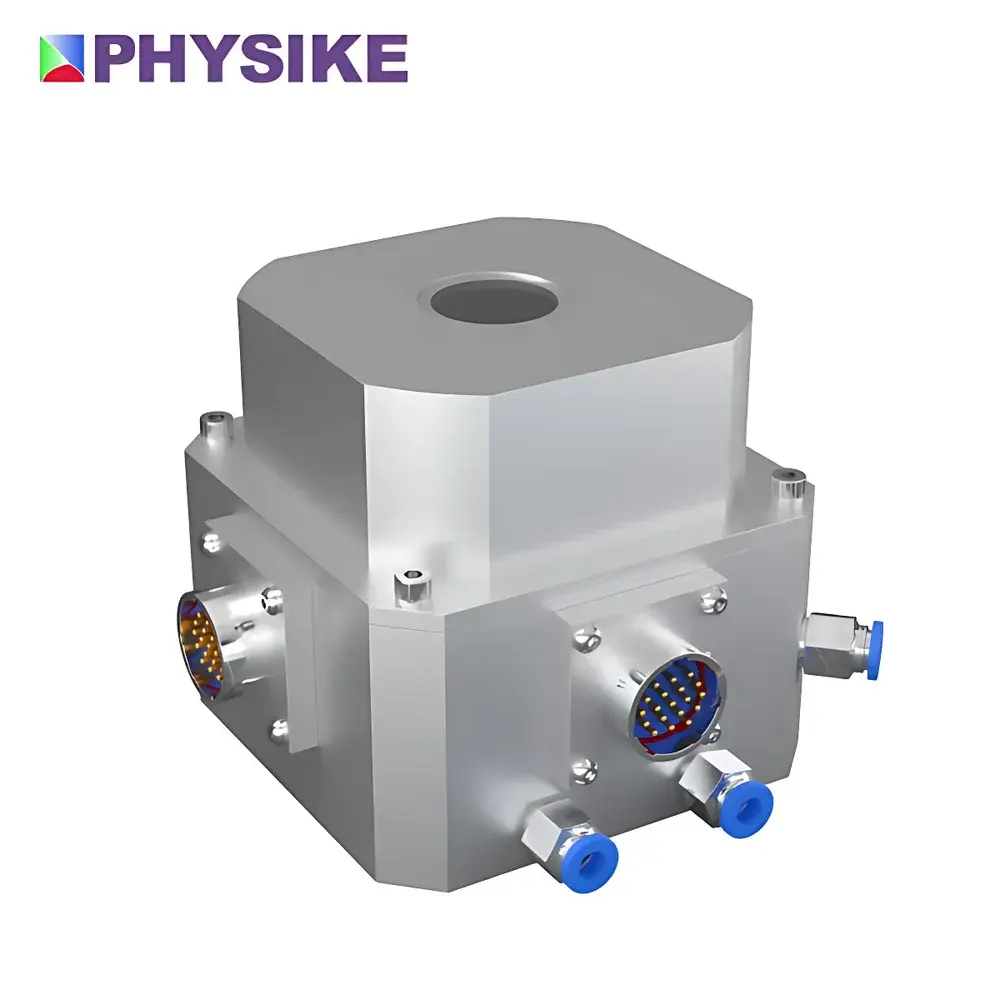
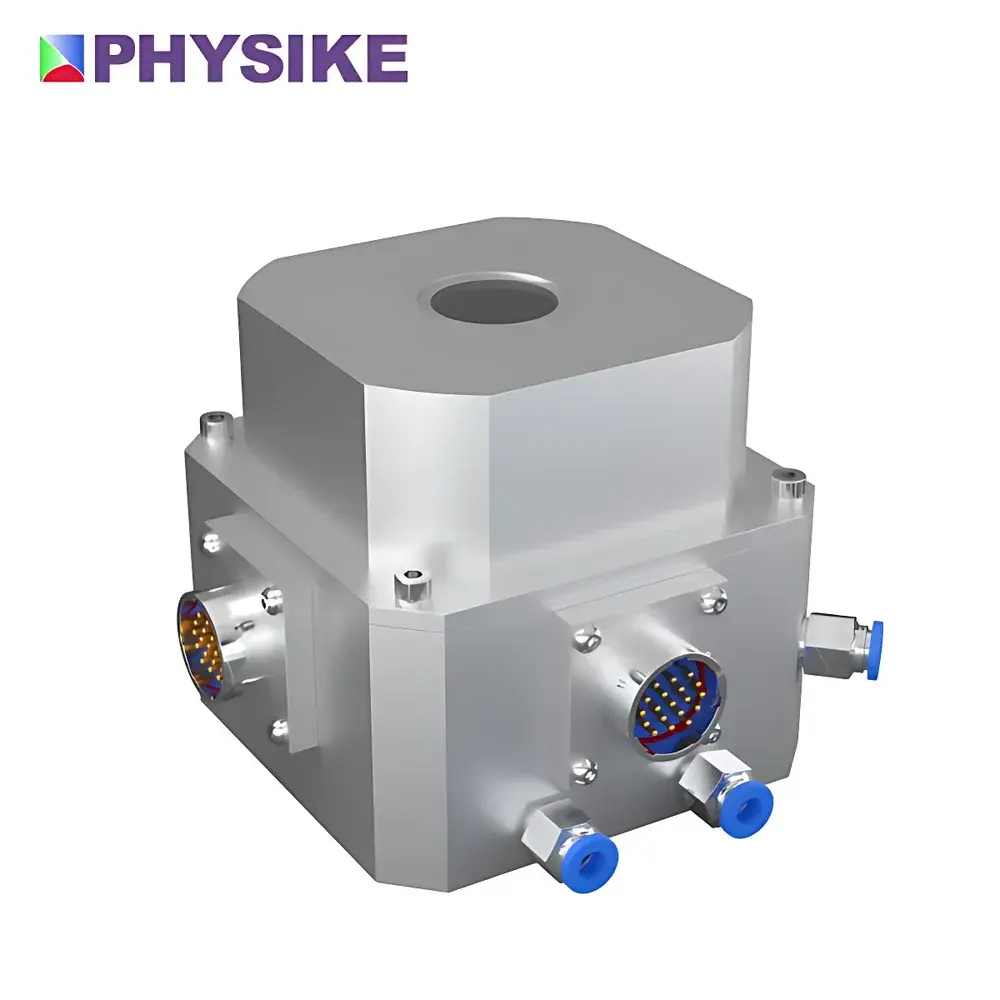
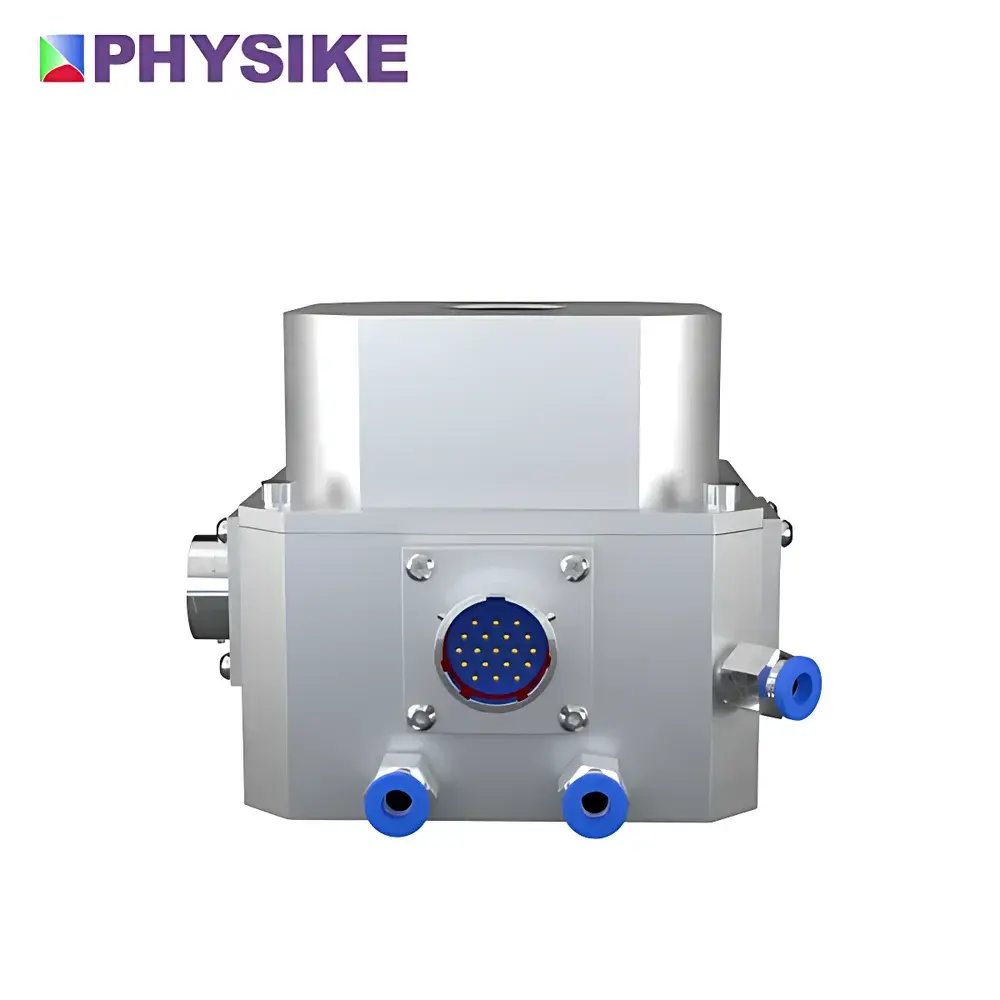
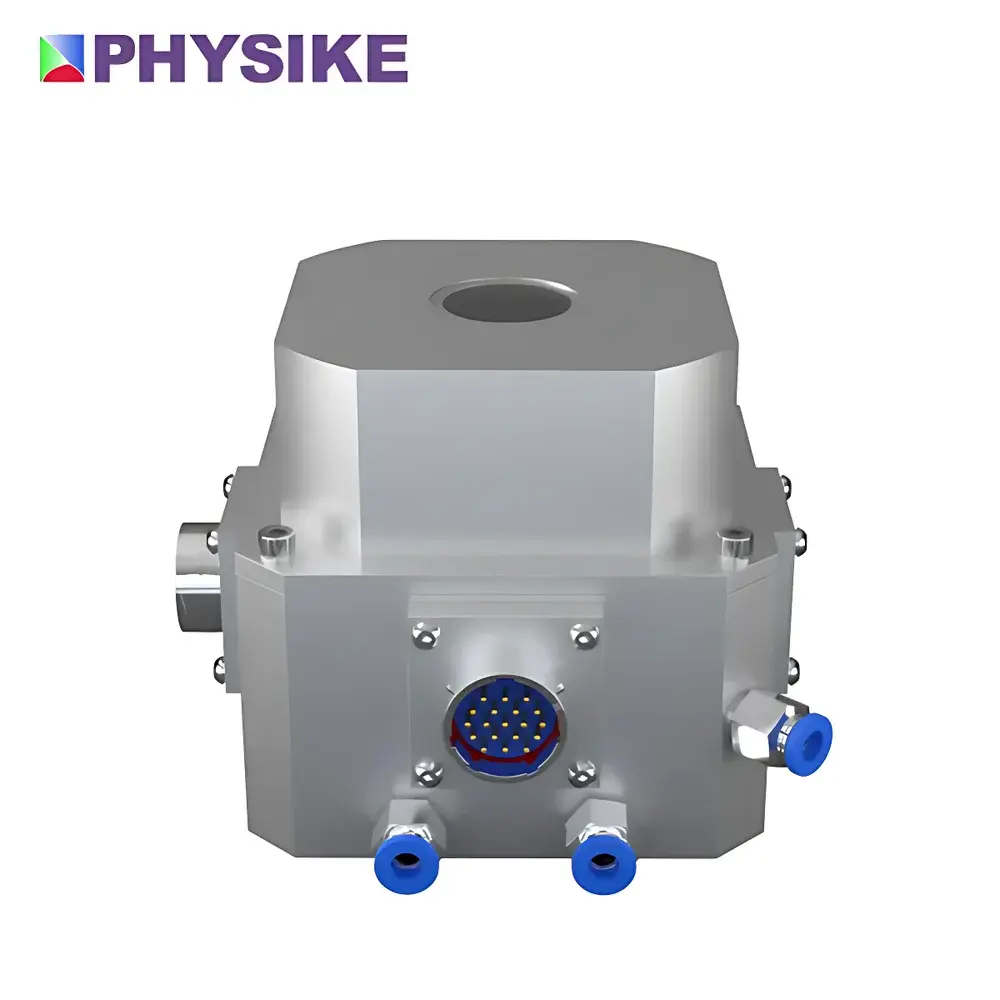
PHYSIKE Labcryo Peltier-Based Cryogenic Thermostat
| Brand | PHYSIKE |
|---|---|
| Origin | Beijing, China |
| Manufacturer Type | Direct Manufacturer |
| Model | Labcryo |
| Temperature Range | -50 °C to +200 °C |
| Temperature Stability | Better than ±25 mK |
| Cooling Method | Multi-stage Peltier (Thermoelectric) |
| Vacuum Feedthrough Options | Multi-pin, SMA / 2.92 mm / 1.85 mm Microwave, BNC, Triax, Fiber Optic |
| Sample Holders | Electrical pucks (DIP, LCC), Transmission holders, Solar cell mounts, Probe-based holders |
| Optical Windows | Gamma-ray, X-ray, UV, Vis, IR, THz-transparent options |
| Low-Temp Cabling | Twisted-pair, Flexible coaxial, Semi-rigid microwave, Triaxial cables |
| Mounting | Omnidirectional (no orientation dependency) |
| Power Supply | Standard AC input (no cryogens required) |
Overview
The PHYSIKE Labcryo is a high-precision, solid-state cryogenic thermostat engineered for demanding low-temperature experimental environments where mechanical vibration, acoustic noise, and cryogen dependency must be eliminated. Unlike conventional liquid-nitrogen or closed-cycle refrigerator systems, the Labcryo leverages multi-stage Peltier thermoelectric modules to achieve stable thermal control across a continuous range from –50 °C to +200 °C. Its core architecture separates the sample stage from the Peltier elements via high-efficiency flexible thermal straps—minimizing conductive thermal load while preserving mechanical decoupling. This design ensures sub-30 mK temperature stability (typ. <±25 mK) under steady-state conditions, with rapid thermal response times (<5 min to reach setpoint from ambient). The absence of moving parts confers intrinsic advantages in ultra-low-vibration applications such as atomic force microscopy (AFM), optical interferometry, and single-photon detection, where microseismic or compressor-induced disturbances would otherwise degrade signal integrity.
Key Features
- Multi-stage Peltier cooling architecture enabling cryogenic operation down to –50 °C without liquid cryogens or compressors
- Modular, vibration-isolated sample stage connected via high-conductance flexible thermal straps
- Omnidirectional mounting capability—compatible with vertical, horizontal, or inverted optical configurations
- Integrated high-resolution temperature controller with PID tuning, real-time logging, and external trigger support
- Low-noise electrical feedthroughs including multi-pin, SMA (up to 40 GHz), 2.92 mm, 1.85 mm, BNC, Triax, and fiber optic ports
- Customizable vacuum-compatible sample holders: electrical pucks (standard DIP/LCC footprints), transmission cells, solar cell test mounts, and probe-integrated platforms
- Optical window options spanning gamma-ray, hard X-ray, UV–Vis–NIR, mid-IR, and THz spectral ranges (material-dependent)
- Pre-terminated low-temperature cabling solutions: twisted-pair for DC/low-frequency, flexible coaxial for RF, semi-rigid microwave lines, and triaxial for guarded measurements
Sample Compatibility & Compliance
The Labcryo is designed for integration into UHV (≤10–9 mbar) and HV (≤10–6 mbar) systems. All internal materials comply with ASTM F519 and ISO 15732 standards for outgassing performance. Electrical feedthroughs meet MIL-STD-202G for dielectric strength and thermal cycling endurance. Optical windows are selected per application-specific transmission requirements and certified for vacuum compatibility (e.g., CaF2 for UV, Si for IR, diamond for high-pressure DAC use). The system supports GLP/GMP-aligned workflows through optional audit-trail-enabled controller firmware compliant with FDA 21 CFR Part 11 requirements for electronic records and signatures.
Software & Data Management
PHYSIKE provides the Labcryo Control Suite—a cross-platform (Windows/macOS/Linux) application supporting real-time temperature monitoring, ramp/soak profile programming, multi-channel data acquisition (via optional analog/digital I/O expansion), and export to CSV, HDF5, or MATLAB .mat formats. The software implements IEEE 1588 Precision Time Protocol (PTP) synchronization for time-correlated measurements with external instruments (e.g., spectrometers, lock-in amplifiers). Remote operation is enabled via TCP/IP and Modbus TCP interfaces, allowing integration into LabVIEW, Python (PyVISA), or EPICS-based control frameworks. Firmware updates preserve calibration traceability; each unit ships with NIST-traceable calibration certificate for primary sensor channel.
Applications
- Confocal and super-resolution microscopy requiring sub-micron thermal drift control
- Raman and Brillouin scattering spectroscopy under variable-temperature conditions
- Photoluminescence and electroluminescence characterization of perovskites, quantum dots, and 2D materials
- High-pressure diamond anvil cell (DAC) experiments with simultaneous optical access and electrical transport measurement
- THz time-domain spectroscopy (THz-TDS) and Fourier-transform infrared (FTIR) transmission studies
- Calibration of radiation-hardened detectors in high-energy physics test stands
- Quantum transport measurements in mesoscopic devices (e.g., graphene Hall bars, topological insulator nanoribbons)
- Accelerated lifetime testing of photovoltaic cells and OLED stacks under thermal stress protocols
FAQ
Does the Labcryo require liquid nitrogen or other cryogens?
No. It operates exclusively on electrical power using solid-state Peltier modules.
Can it be mounted upside-down inside a vacuum chamber?
Yes. Its symmetrical thermal strap design and lack of gravity-dependent components enable full 360° orientation flexibility.
What is the typical cooldown time from 25 °C to –40 °C?
Approximately 4.5 minutes under standard vacuum and thermal load conditions (10 g Cu sample, 10–7 mbar).
Is vacuum feedthrough customization available?
Yes—custom pin counts, coaxial configurations (including impedance-matched 50 Ω and 75 Ω variants), and hybrid optical/electrical feedthroughs can be specified at order entry.
How is temperature uniformity across the sample stage characterized?
Measured spatial gradient is ≤0.15 K over a 12 mm diameter area at –50 °C, verified by calibrated micro-thermocouple mapping.



