
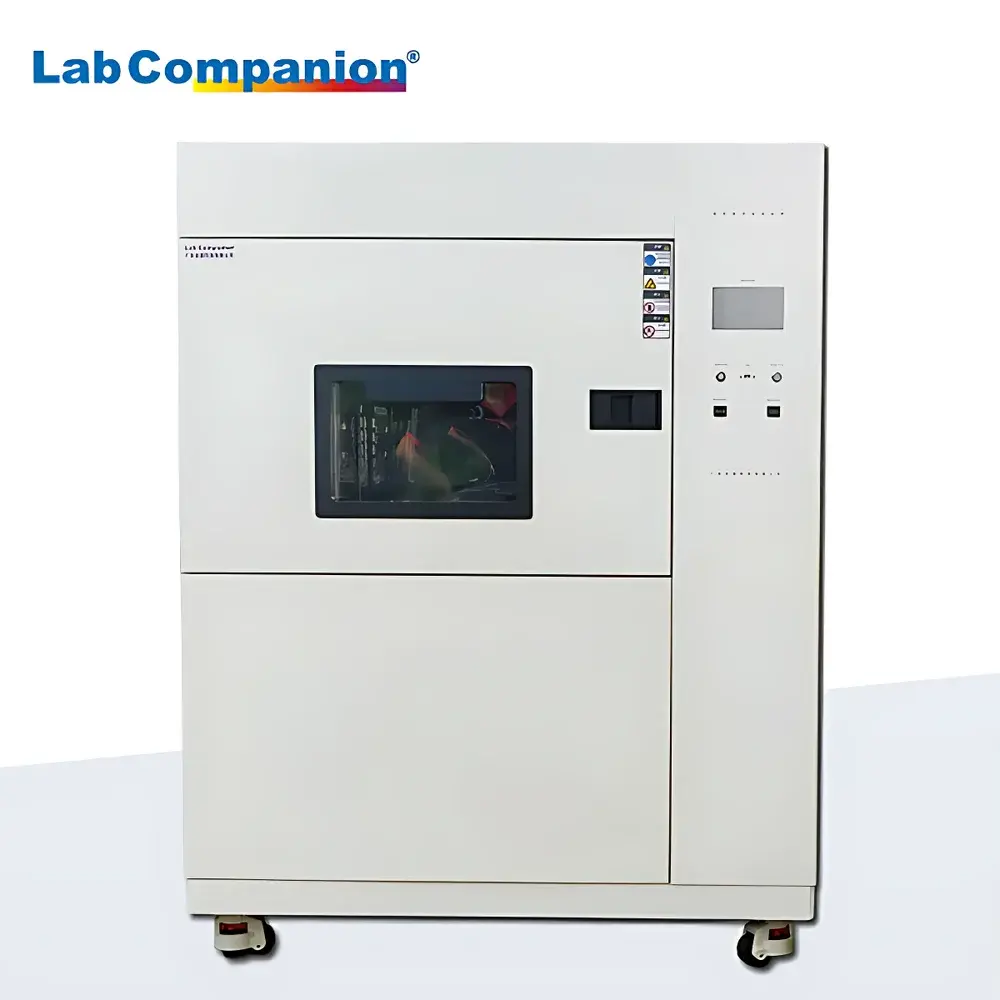
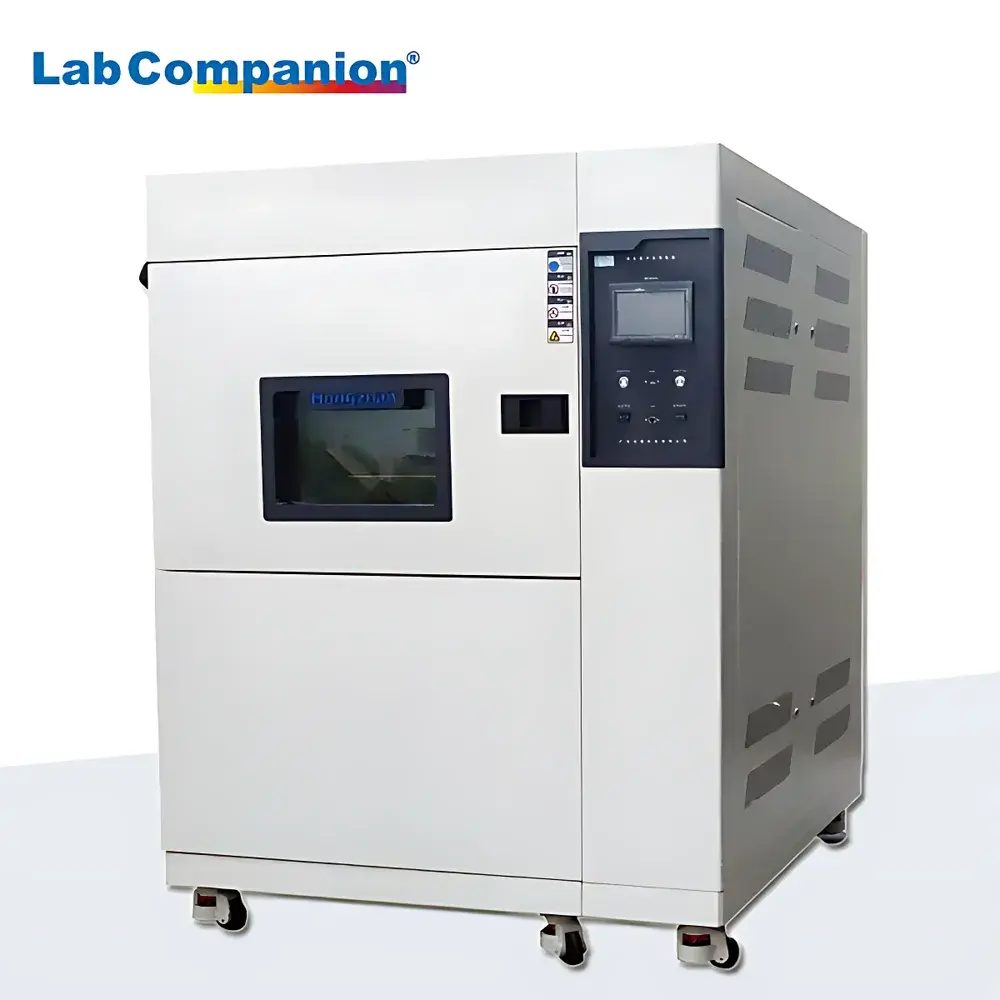
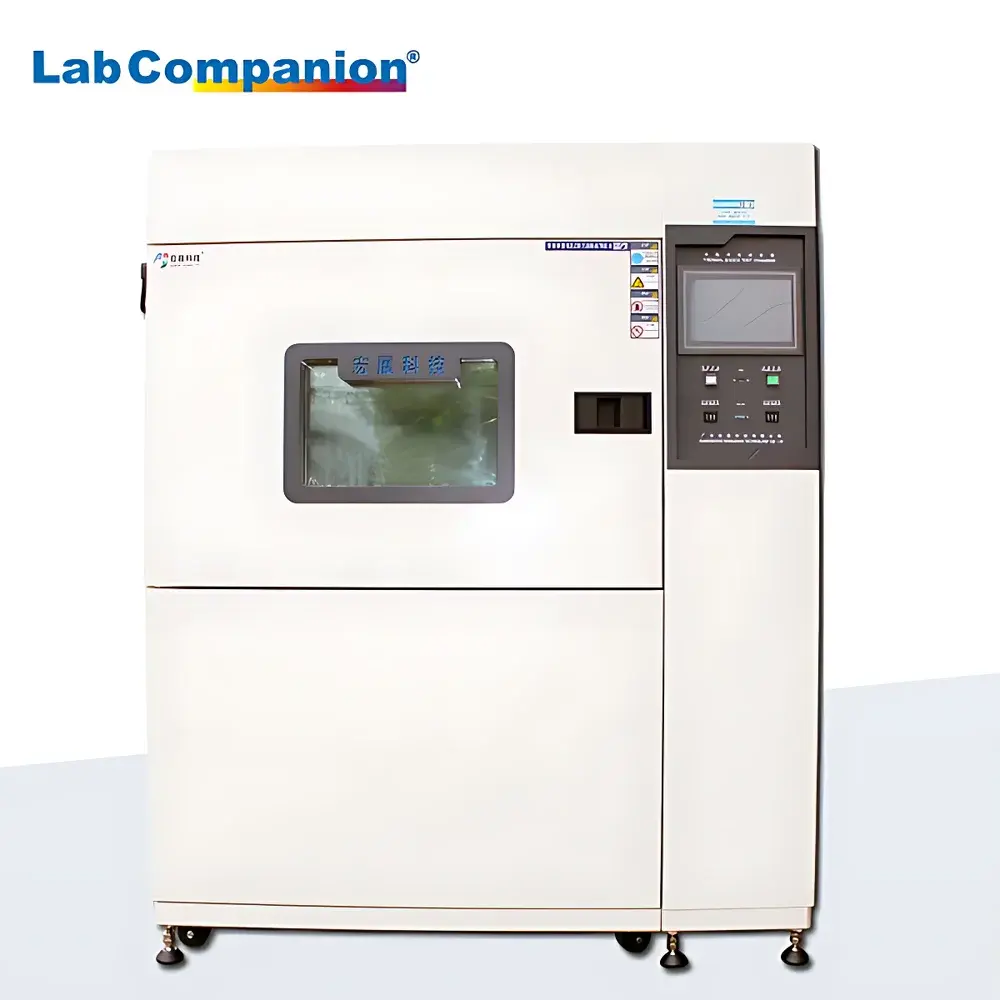
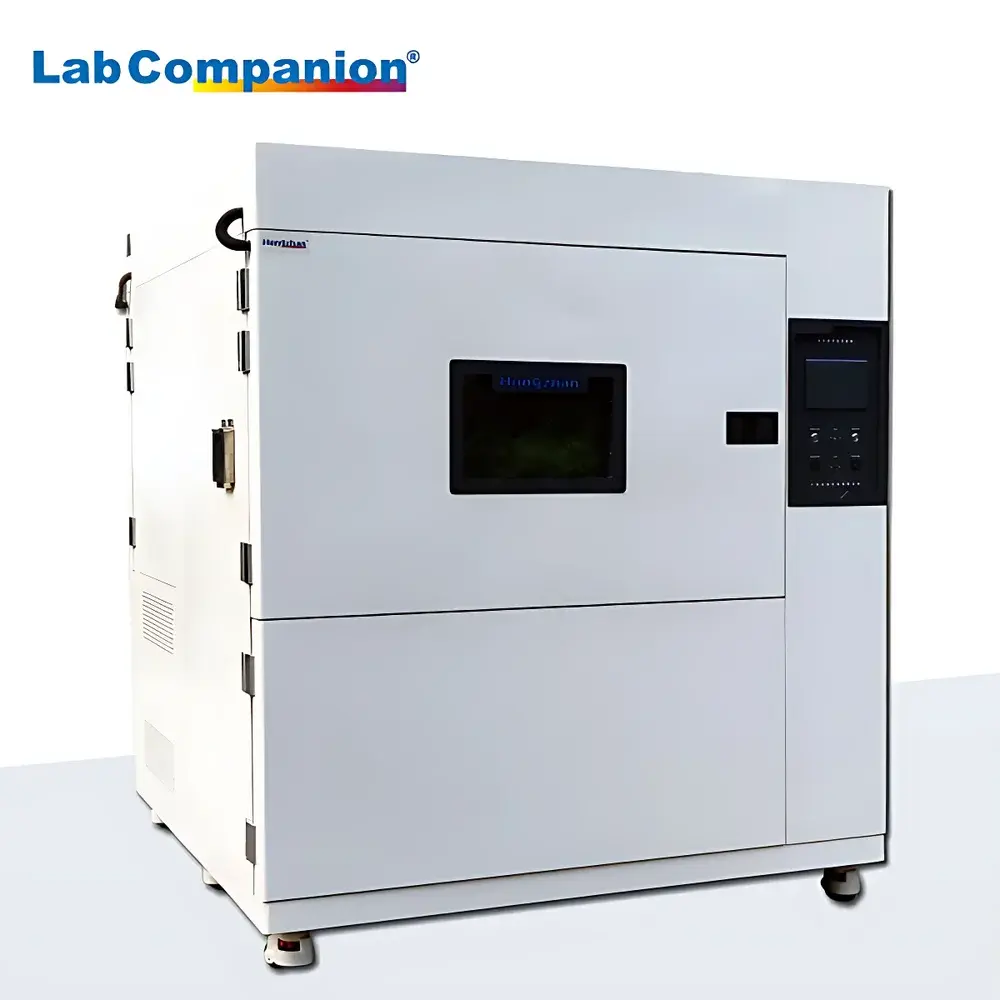
LabCompanion TSL-80W Three-Zone Thermal Shock Test Chamber
| Brand | LabCompanion |
|---|---|
| Origin | Guangdong, China |
| Manufacturer Type | Direct Manufacturer |
| Model | TSL-80W |
| High-Temperature Range | +60 °C to +200 °C |
| Low-Temperature Range | −78 °C to 0 °C |
| Thermal Shock Range | −40 °C to +150 °C |
| Temperature Stability | ±2 °C |
| Heating Rate | +60 °C to +200 °C ≤ 20 min |
| Cooling Rate | +20 °C to −75 °C ≤ 60 min |
Overview
The LabCompanion TSL-80W is a precision-engineered three-zone thermal shock test chamber designed for accelerated reliability evaluation of electronic components, aerospace materials, automotive modules, and hermetically sealed devices under rapid, repetitive temperature transitions. Unlike two-chamber (hot/cold) systems, the TSL-80W employs a dedicated test zone flanked by independent high-temperature and low-temperature reservoirs—enabling true zero-dwell thermal cycling with minimal thermal inertia and no cross-contamination between extreme environments. Its operation is based on pneumatic air damper switching, which physically isolates the test specimen from both reservoirs during dwell phases and rapidly transfers it into either hot or cold zones via a motorized lift-and-transfer mechanism. This architecture ensures high reproducibility of thermal stress profiles, critical for qualifying products against JEDEC JESD22-A104, MIL-STD-810H Method 503.5, IEC 60068-2-14, and automotive AEC-Q200 requirements.
Key Features
- Three-zone architecture with separate heating chamber (+60 °C to +200 °C), cooling chamber (−78 °C to 0 °C), and insulated test chamber—eliminating thermal lag and enabling precise dwell control.
- Pneumatically actuated stainless-steel air dampers with leak-tight sealing (≤0.5% leakage rate per ISO 10791-5) ensure rapid environmental isolation and repeatable transfer timing.
- Test chamber temperature stability maintained at ±2 °C across full operational range, verified per ASTM E742 and calibrated using traceable NIST-traceable PT100 sensors.
- Heating rate of ≥6 °C/min (from +60 °C to +200 °C in ≤20 minutes) and cooling rate of ≥1.2 °C/min (from +20 °C to −75 °C in ≤60 minutes), measured under no-load, steady-state conditions per IEC 60068-3-5.
- Internal test volume of 80 L (W500 × H400 × D400 mm), accommodating up to 30 kg load capacity on reinforced stainless-steel test shelves; maximum specimen mass: 7.5 kg.
- Integrated safety interlocks including over-temperature cutoff, refrigerant pressure monitoring, door-open thermal abort, and emergency power-off compliant with UL 61010-1 and EN 61000-6-4 EMC standards.
Sample Compatibility & Compliance
The TSL-80W supports a broad range of sample geometries and packaging formats—including plastic-encapsulated ICs (e.g., QFP, BGA), PCB assemblies, MEMS sensors, optical modules, and polymer-based structural components. Its thermal recovery time of ≤5 minutes (measured from chamber setpoint deviation after specimen insertion, per IEC 60068-3-10 Annex B) ensures consistent thermal loading regardless of specimen thermal mass. The system complies with GLP-relevant operational documentation protocols and supports audit-ready calibration records aligned with ISO/IEC 17025:2017 requirements. Optional validation packages include IQ/OQ documentation templates compatible with FDA 21 CFR Part 11–governed environments.
Software & Data Management
Controlled via LabCompanion’s Windows-based ThermalPro™ software (v4.2+), the TSL-80W provides real-time multi-channel logging (up to 16 thermocouple inputs), programmable ramp/dwell cycles, automatic data timestamping, and CSV export with metadata tagging (operator ID, cycle ID, chamber status). All test logs include digital signatures, change history, and tamper-evident audit trails—meeting ALCOA+ principles for data integrity. Remote monitoring is supported via Ethernet (TCP/IP) or optional RS-485 Modbus RTU interface, enabling integration into centralized MES or LIMS platforms without proprietary middleware.
Applications
- Qualification testing of semiconductor packages per JEDEC JESD22-A104 (Temperature Cycling) and JESD22-A106 (Highly Accelerated Temperature and Humidity Stress Test – HAST).
- Failure mode analysis (FMA) of solder joint fatigue, die attach delamination, and CTE mismatch-induced cracking in multilayer substrates.
- Environmental stress screening (ESS) for avionics hardware per DO-160 Section 4.5 (Temperature Shock) and NASA-STD-7002.
- Material characterization of composites, elastomers, and adhesives subjected to cryogenic-to-elevated thermal excursions.
- Pre-compliance verification for automotive electronics targeting ISO 16750-4 and GMW3172 thermal durability requirements.
FAQ
What distinguishes the three-zone design from conventional two-chamber thermal shock systems?
The three-zone architecture eliminates thermal carryover between hot and cold reservoirs, enabling faster transition times, tighter temperature control during dwell phases, and superior repeatability—particularly for low-mass specimens and high-cycle-count qualification protocols.
Is the TSL-80W suitable for testing samples with internal moisture or outgassing potential?
Yes—the system includes optional dry nitrogen purge capability (0.5–2 L/min flow rate) to suppress condensation and oxidation during low-temperature exposure, supporting testing of hygroscopic or vacuum-sealed components.
Can the chamber be validated for GMP-regulated environments?
With optional IQ/OQ documentation, calibrated sensor mapping, and 21 CFR Part 11–compliant software configuration, the TSL-80W meets baseline validation requirements for pharmaceutical packaging stability and medical device component qualification.
What maintenance intervals are recommended for long-term reliability?
Compressor oil and refrigerant filter replacement every 24 months; damper seal inspection and lubrication every 6 months; annual NIST-traceable sensor recalibration recommended per ISO/IEC 17025 guidelines.



