
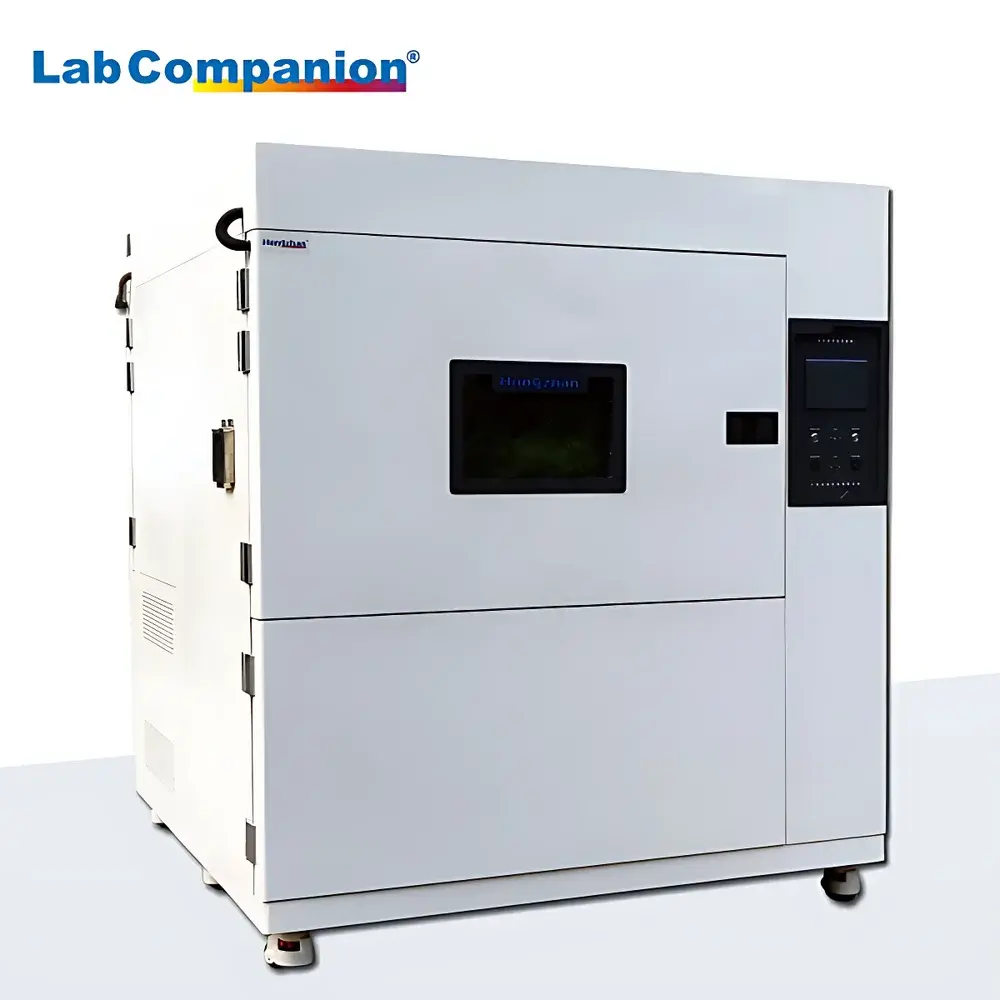
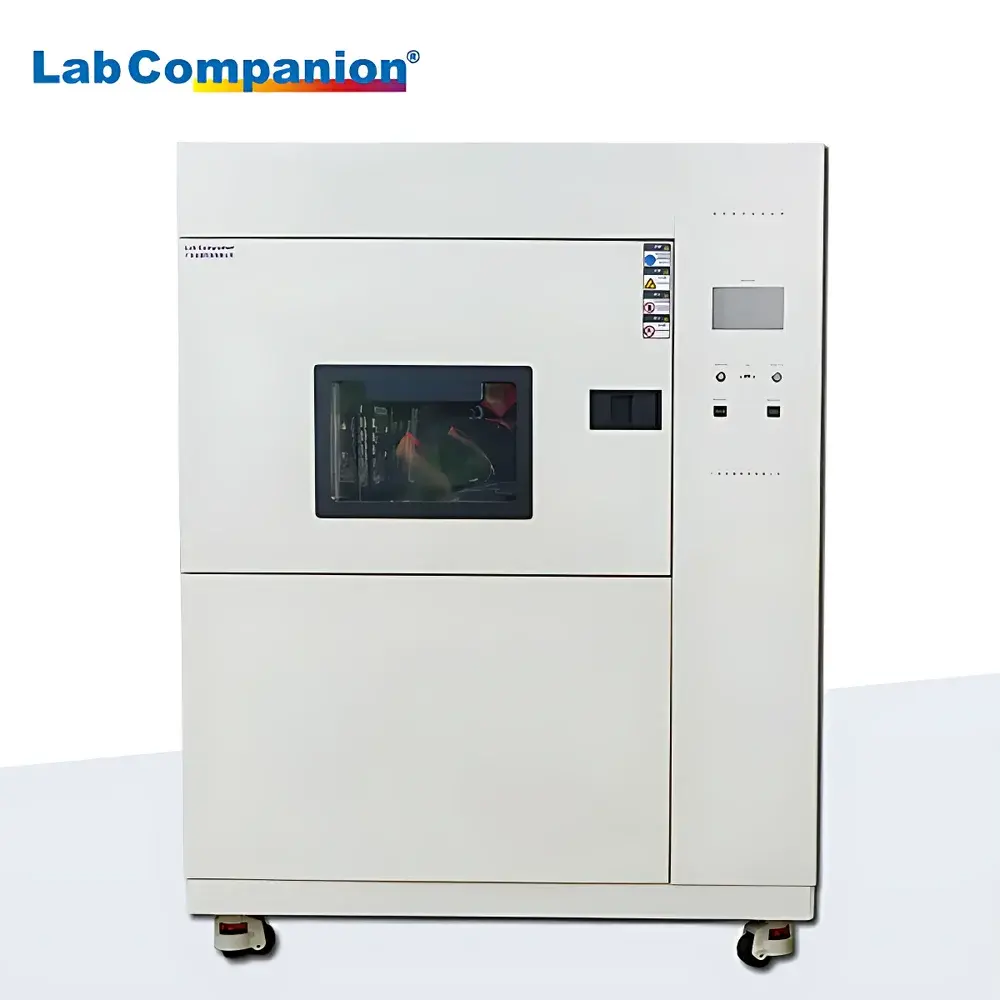
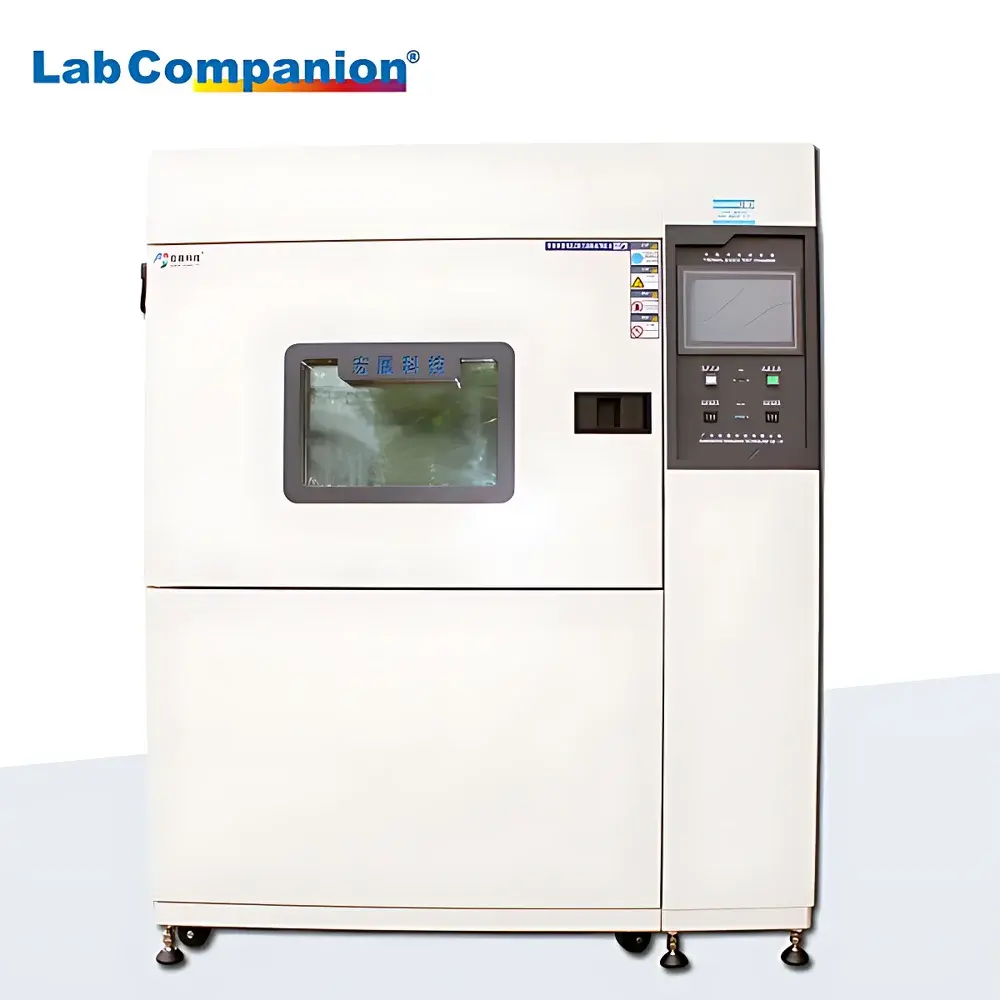
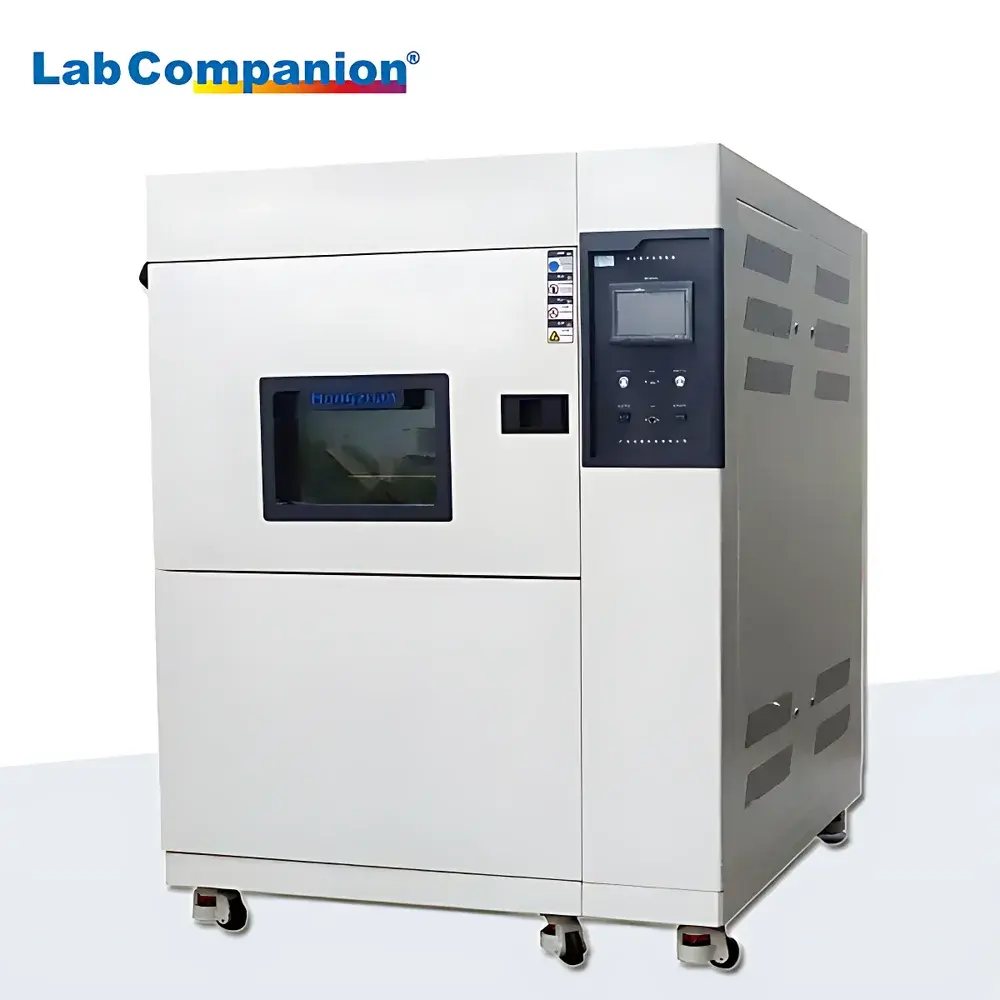
LabCompanion TSU-408W Thermal Shock Test Chamber
| Brand | LabCompanion |
|---|---|
| Origin | Guangdong, China |
| Manufacturer Type | Direct Manufacturer |
| Model | TSU-408W |
| High-Temperature Range | +60 °C to +200 °C |
| Low-Temperature Range | −78 °C to 0 °C |
| Thermal Shock Range | −55 °C to +150 °C |
| Temperature Stability | ±2 °C |
| Heating Rate | +60 °C to −200 °C ≤ 20 min |
| Cooling Rate | +20 °C to −75 °C ≤ 60 min |
Overview
The LabCompanion TSU-408W Thermal Shock Test Chamber is an engineered environmental stress screening (ESS) system designed for rapid, repeatable, and highly controlled temperature transitions between extreme thermal states. It operates on a three-zone architecture—comprising independent high-temperature, low-temperature, and test chambers—enabling precise thermal shock testing via pneumatic air-door switching. This configuration eliminates thermal mass interference from the test zone during transition, ensuring minimal overshoot and high reproducibility in thermal cycling profiles. The chamber is purpose-built for evaluating material integrity, solder joint reliability, packaging robustness, and interfacial adhesion under accelerated thermal stress conditions—critical for aerospace components, automotive electronics, semiconductor packages (e.g., plastic-encapsulated ICs), and medical device assemblies.
Key Features
- Three-chamber design with independent temperature control: separate hot zone (+60 °C to +200 °C), cold zone (−78 °C to 0 °C), and insulated test chamber
- Pneumatically actuated high-speed air doors enabling shock transitions with ≤5-minute temperature recovery time (measured per MIL-STD-810H Method 503.5, ambient reference: +25 °C, circulating water at +25 °C)
- Thermal shock range of −55 °C to +150 °C, compliant with IEC 60068-2-14, JESD22-A104, and ASTM D5229/D5229M for composite and polymer thermal cycling validation
- Temperature uniformity and stability maintained at ±2 °C across the working volume (W850 × H600 × D800 mm internal dimensions)
- Robust stainless-steel construction with double-wall insulation, silicone-sealed viewing window, and integrated safety interlocks for over-temperature, over-pressure, and door-open protection
- Programmable ramp-and-soak profiles supporting multi-step cycles, dwell times, and user-defined dwell-to-shock ratios
Sample Compatibility & Compliance
The TSU-408W accommodates samples up to 10 kg (maximum load capacity: 30 kg on adjustable stainless-steel shelves) and is routinely deployed for qualification testing of PCBAs, molded interconnect devices (MIDs), MEMS sensors, and hermetically sealed optoelectronic modules. Its thermal performance meets the operational requirements of IPC-9701A (Performance Classes for Thermal Cycling of Solder Interconnections) and supports GLP-compliant validation protocols. All control logic and data logging comply with FDA 21 CFR Part 11 principles for audit trail generation, electronic signatures, and data integrity—when paired with optional validated software packages. Calibration traceability follows ISO/IEC 17025 guidelines through accredited third-party providers.
Software & Data Management
Equipped with LabCompanion’s proprietary TSCore™ control interface, the TSU-408W offers real-time monitoring of chamber temperatures, door position status, compressor discharge pressure, and heater current draw. The embedded controller supports USB and Ethernet connectivity for remote operation, firmware updates, and CSV export of time-stamped temperature logs (sample interval: 1 s). Optional PC-based software enables full GMP-aligned reporting—including cycle deviation alerts, pass/fail flagging against user-defined limits, and PDF report generation with digital signature fields. Data archives are stored in encrypted SQLite databases with immutable timestamps, satisfying long-term retention mandates under ISO 9001:2015 Clause 7.5.3.
Applications
- Qualification of automotive ECUs subjected to under-hood thermal gradients (SAE J2223, ISO 16750-4)
- Reliability assessment of wafer-level chip-scale packages (WLCSP) and fan-out wafer-level packages (FOWLP) per JEDEC JESD22-A106B
- Accelerated aging studies of lithium-ion battery modules under cyclic thermal stress
- Validation of adhesive bond strength in multi-material assemblies (e.g., metal-to-polymer bonding in surgical instruments)
- Pre-screening of flight hardware per NASA-HDBK-7005 for thermally induced fatigue mechanisms
FAQ
What is the maximum sample volume supported by the TSU-408W?
The internal test chamber measures W850 × H600 × D800 mm, accommodating standard test fixtures and up to 10 kg of active payload.
Does the system support automated calibration verification?
Yes—optional NIST-traceable PT100 probe sets and auto-calibration routines are available for routine sensor validation per ISO/IEC 17025 Annex A.3.
Can the TSU-408W be integrated into a centralized lab monitoring network?
It supports Modbus TCP and OPC UA protocols for seamless integration with SCADA or MES platforms, including Siemens Desigo, Rockwell FactoryTalk, and Emerson DeltaV.
Is the cooling system based on mechanical refrigeration or liquid nitrogen?
The system uses cascade mechanical refrigeration with environmentally compliant R404A/R23 mixed-refrigerant stages—no cryogenic consumables required.
How is temperature uniformity verified during IQ/OQ?
A 9-point sensor mapping protocol (per ICH Q5C Annex 2) is included in the validation package, with documented uncertainty budgets for all measurement points.



