
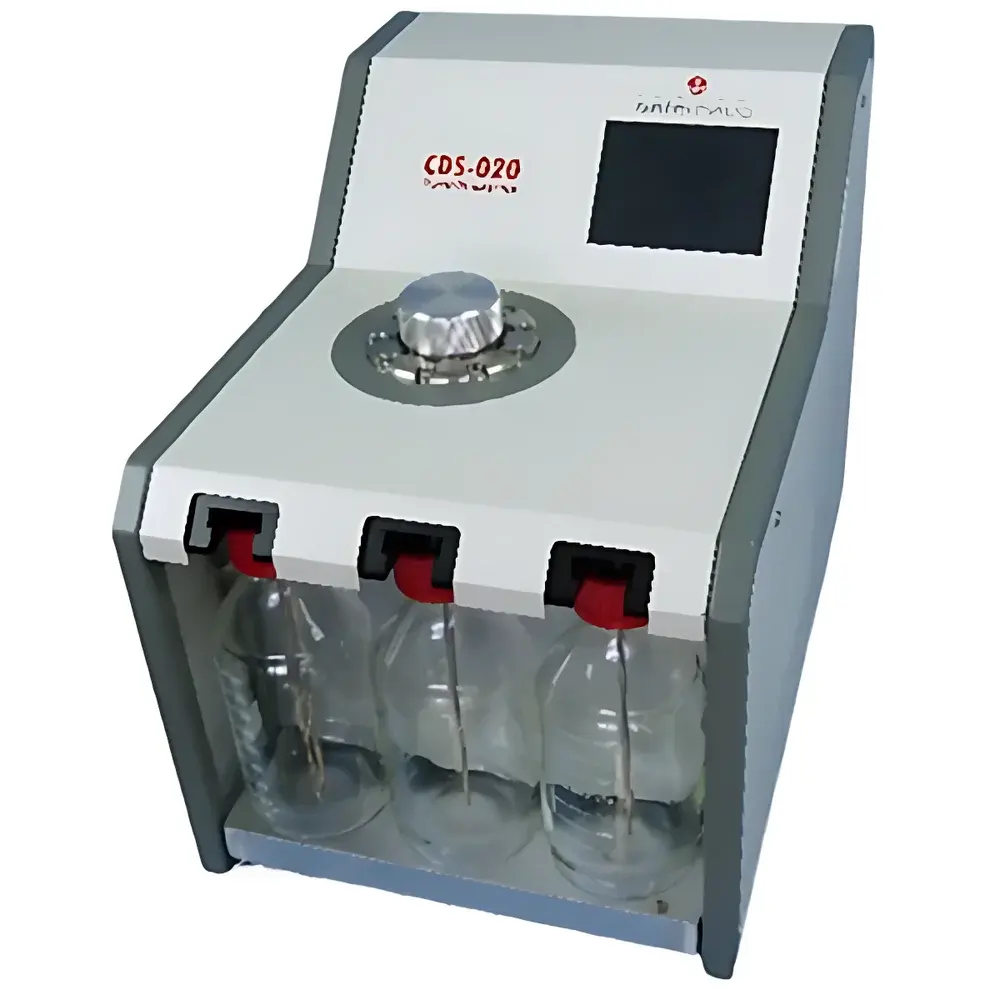
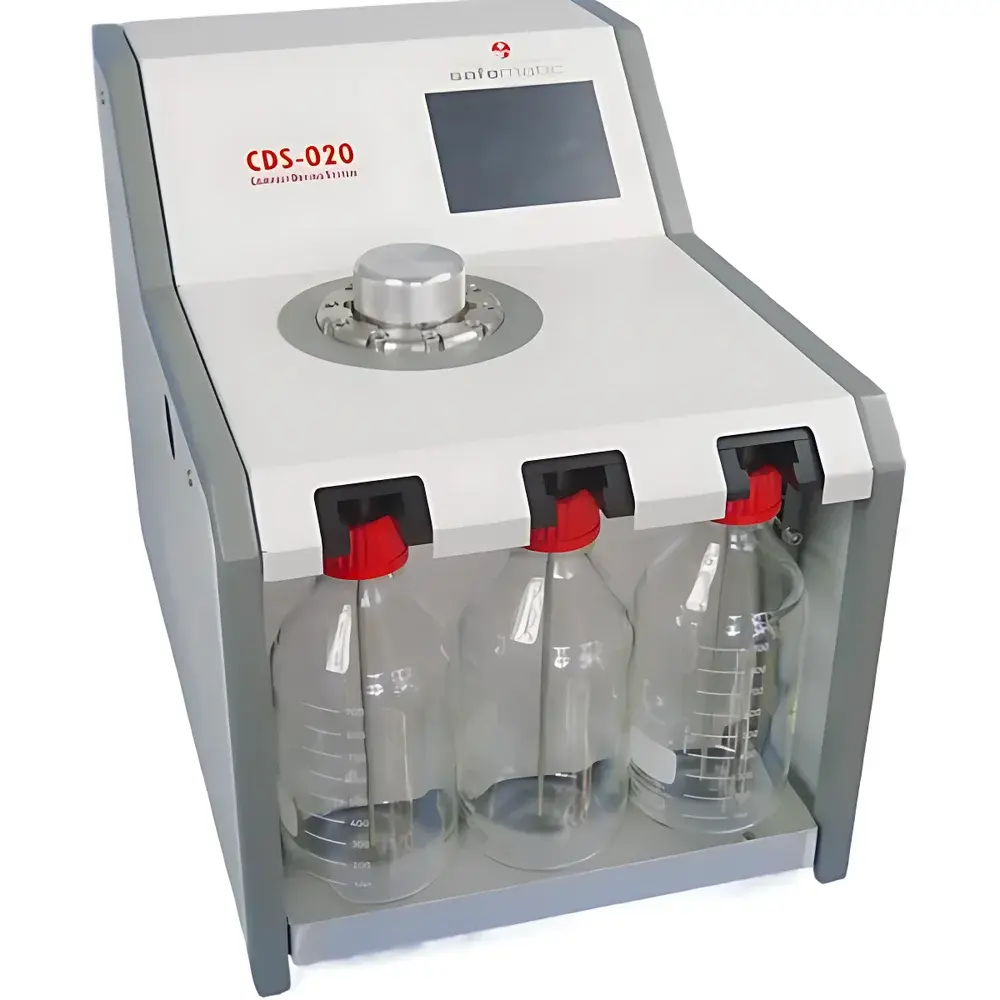
Safematic CDS-020 Automated Gradient Dehydration and Critical Point Dryer
| Brand | Safematic |
|---|---|
| Origin | Switzerland |
| Model | CDS-020 |
| Pressure Range | 1–1150 psi |
| Temperature Range | 0 to +40 °C |
| Compliance | Designed for ISO/IEC 17025-aligned laboratories |
| Software | Integrated control with audit trail capability |
| Sample Capacity | Up to 30 mm diameter specimens |
| Refrigerant-Free Operation | Yes |
Overview
The Safematic CDS-020 is a fully automated, single-chamber gradient dehydration and critical point drying (CPD) system engineered for high-fidelity sample preparation of hydrated biological and soft-material specimens. It operates on the physical principle of supercritical fluid processing—specifically leveraging carbon dioxide (CO₂) as the transitional medium—to eliminate capillary forces that cause structural collapse during conventional air or vacuum drying. Unlike legacy CPD systems requiring manual solvent exchange or separate dehydration units, the CDS-020 integrates graded ethanol dehydration (e.g., 30–100% vol/vol steps) and CO₂-based critical point drying within one sealed, programmable chamber. This eliminates inter-unit transfer, minimizes contamination risk, and ensures process continuity under controlled pressure–temperature trajectories. The system is calibrated to follow thermodynamic pathways along the CO₂ phase diagram, enabling precise traversal to the critical point (31.1 °C, 1070 psi), where liquid and gas phases become indistinguishable—thus eliminating surface tension at the fluid–solid interface.
Key Features
- Fully automated, unattended operation: Predefined protocols execute overnight; dry, structurally intact samples ready upon morning retrieval.
- Integrated gradient dehydration: Programmable multi-step ethanol series (e.g., 30%, 50%, 70%, 90%, 100%) with timed immersion, agitation, and drainage—no external fume hood or manual pipetting required.
- Refrigerant-free design: Eliminates reliance on cryogenic coolants or hazardous solvents such as HMDS; uses only ethanol and CO₂—reducing operational hazards and disposal complexity.
- Compact footprint: Occupies ≤0.5 m² floor space—optimized for space-constrained EM core facilities or shared microscopy labs.
- Real-time parameter monitoring: Digital pressure transducers (±1 psi accuracy) and PT100 temperature sensors (±0.2 °C) feed closed-loop control during both dehydration and supercritical transition phases.
- Chamber capacity: Accommodates specimens up to 30 mm in diameter and 15 mm in height—compatible with standard SEM stubs, TEM grids in carriers, and multi-well sample holders.
Sample Compatibility & Compliance
The CDS-020 supports a broad range of hydrated soft materials, including fixed plant tissues, insect cuticles, bacterial biofilms, hydrogels, aerogels, and polymer scaffolds. All protocols adhere to established electron microscopy sample preparation workflows defined in ASTM E1558 (Standard Guide for Specimen Preparation for Scanning Electron Microscopy) and ISO 21632:2020 (Microbeam analysis — Preparation of biological specimens for scanning electron microscopy). The system’s embedded logging architecture records timestamped pressure, temperature, solvent volume, and dwell times per step—enabling full traceability for GLP/GMP-regulated environments. While not FDA-cleared as a medical device, its data integrity framework aligns with 21 CFR Part 11 requirements for electronic records and signatures when paired with validated LIMS integration.
Software & Data Management
The CDS-020 runs on Safematic’s proprietary DryControl™ v3.x software, installed on an embedded industrial PC with touchscreen HMI. Users select from pre-validated method templates (e.g., “Mammalian Tissue – Glutaraldehyde/OsO₄ Fixed”, “Plant Leaf – FAA Fixed”) or build custom sequences using stepwise logic (soak time, agitation frequency, CO₂ fill rate, ramp slope, venting profile). Every run generates a .CSV log file containing >200 data points per second—including chamber pressure, jacket temperature, valve actuation status, and error flags. Audit trails are immutable and exportable for regulatory review. Remote monitoring via Ethernet (TCP/IP) allows integration into centralized lab automation platforms without compromising cybersecurity—no cloud dependency or external telemetry.
Applications
- High-resolution SEM imaging of delicate ultrastructures: neural synapses, pollen exines, diatom frustules, and collagen fibrils—preserved without shrinkage or wrinkling.
- TEM specimen preparation for cryo-correlative workflows where room-temperature CPD precedes resin embedding or focused ion beam (FIB) milling.
- Materials science: Drying of sol-gel derived oxides, MOFs, and nanostructured coatings while retaining porosity and specific surface area.
- Quality control in biomanufacturing: Structural validation of lyophilized protein matrices, viral vector pellets, and extracellular vesicle isolates prior to size distribution analysis.
- Forensic and paleontological applications: Stabilization of fragile fossilized soft tissues or degraded evidentiary samples prior to micro-CT scanning.
FAQ
Does the CDS-020 require external CO₂ supply or internal gas cylinders?
No—it connects directly to a standard laboratory-grade CO₂ supply line (regulated to 1200 psi max inlet pressure); no high-pressure internal storage is used.
Can I use alternative solvents besides ethanol for dehydration?
Ethanol is the only solvent validated for full protocol integration; acetone may be used in limited configurations but requires hardware modification and voids warranty.
Is post-drying sample handling affected by residual CO₂ or moisture?
The final venting sequence includes a nitrogen purge stage to displace residual CO₂; dried samples remain stable in ambient air for ≥4 hours before metallization.
What maintenance intervals are recommended for routine operation?
O-ring inspection every 200 cycles; pressure sensor calibration annually; CO₂ filter replacement every 12 months or after 500 runs—documented in the onboard service log.
How does the CDS-020 ensure reproducibility across operators and shifts?
All parameters are locked in method files; user roles (operator, supervisor, administrator) enforce protocol editing restrictions and require electronic sign-off for deviations—supporting ISO 15189 and CAP accreditation requirements.
Related Products



