
Safematic CCU-010 HV High-Vacuum Coating System for Electron Microscopy
| Brand | Safematic |
|---|---|
| Origin | Switzerland |
| Model | CCU-010 HV |
| Vacuum Level | ≤5×10⁻⁷ mbar (with turbomolecular pump) |
| Pumping System | Integrated oil-free turbomolecular pump + diaphragm backing pump |
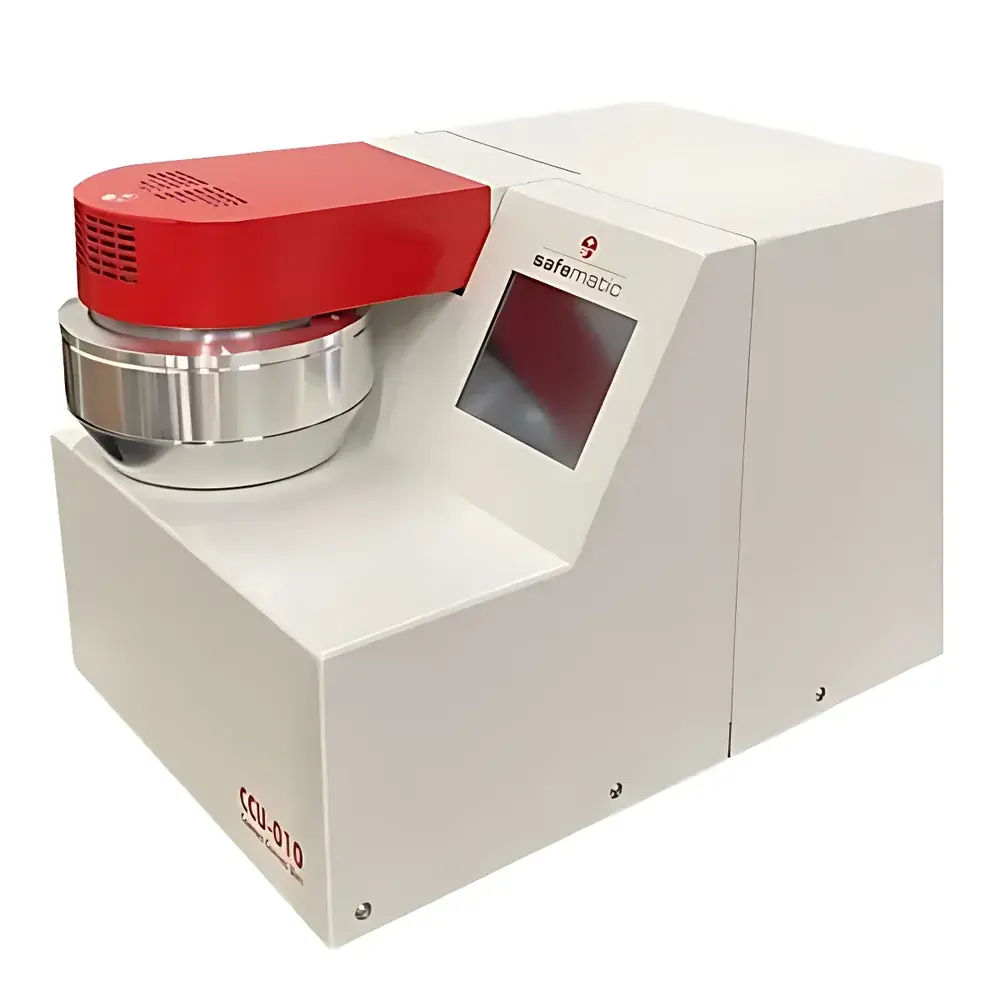
| Chamber Type | Glass or optional LC-006 aluminum chamber (up to 6" wafer compatible) |
| Coating Modes | Magnetron sputtering (Au, Pt, Cr, etc.) and carbon evaporation (filament-based) |
| Plasma Treatment | Optional GD-010 glow discharge unit (air/Ar) |
| Thickness Monitoring | Dual-position quartz crystal microbalance (QCM) |
| Control Interface | TFT touchscreen with programmable recipes |
| Software Options | Coating-LAB (PC-based data logging), RC-010 glovebox remote control (Windows-based) |
| Compliance | Designed for GLP/GMP environments |
Overview
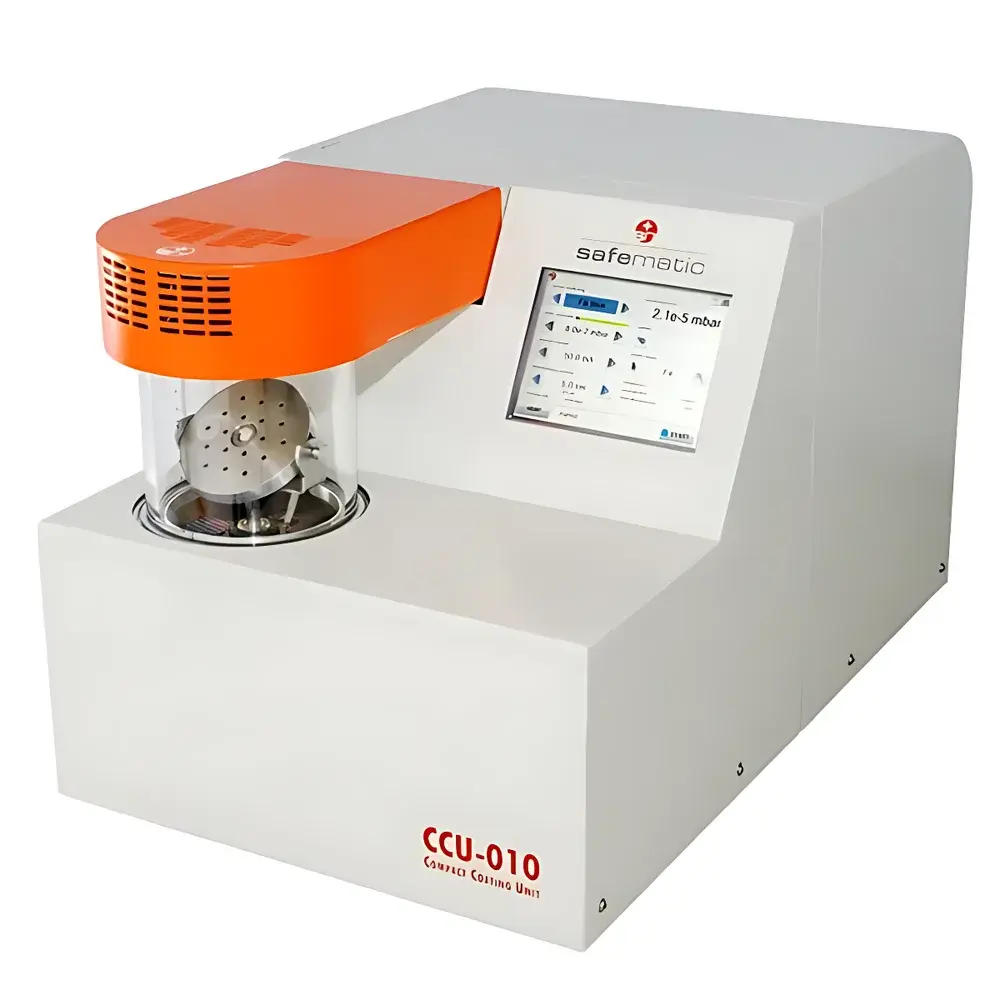
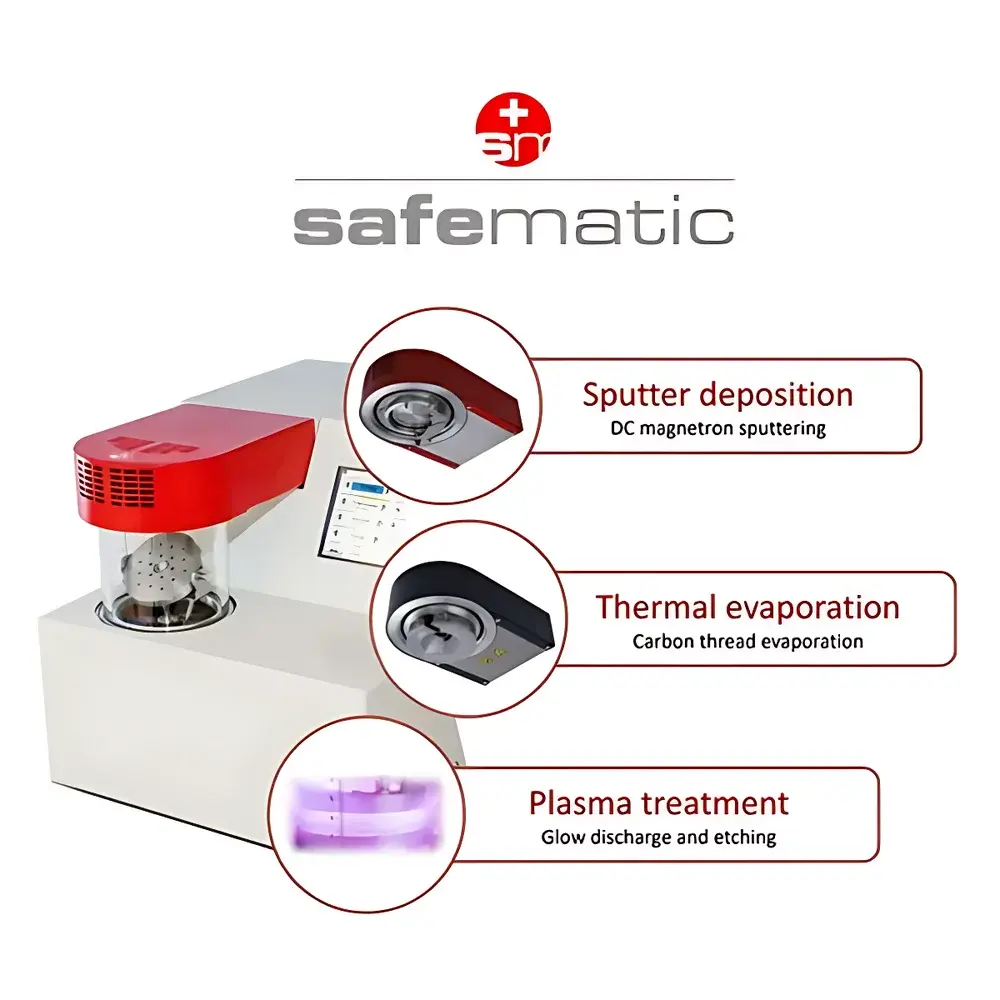
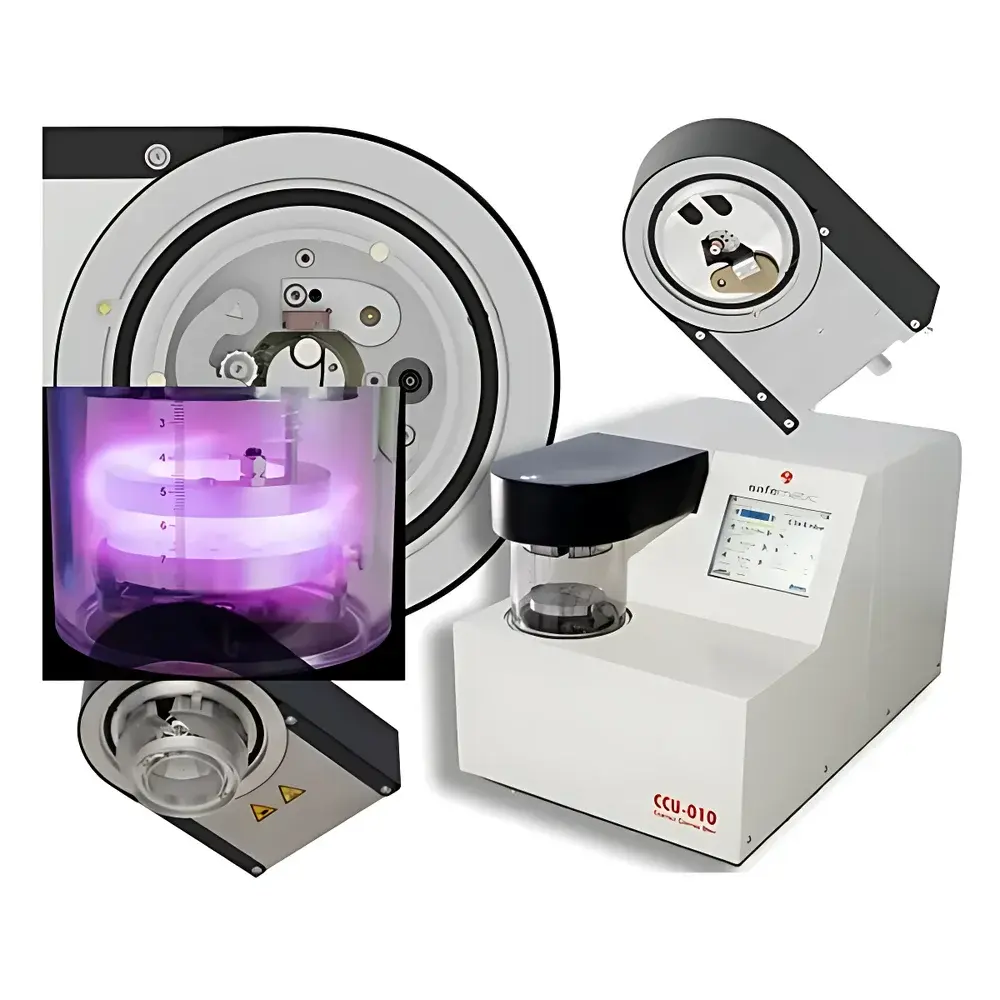
The Safematic CCU-010 HV is a fully automated, high-vacuum coating system engineered specifically for electron microscopy sample preparation and advanced thin-film applications. It integrates magnetron sputtering, thermal carbon evaporation, and optional plasma surface treatment—within a single, compact, oil-free vacuum architecture. Operating at base pressures down to 5×10⁻⁷ mbar, the CCU-010 HV employs a sealed, internal turbomolecular pumping system coupled with a dry diaphragm backing pump—eliminating hydrocarbon contamination risks inherent in oil-lubricated systems. Its modular head-swapping design enables rapid reconfiguration between sputtering (SP-010 or SP-011 modules) and carbon evaporation (CT-010 module) without breaking vacuum or realigning components. This architecture ensures reproducible, contamination-free coatings critical for high-resolution SEM, TEM, FIB-SEM, and analytical TEM specimen preparation. The system complies with fundamental requirements for cleanroom-compatible instrumentation and supports traceable process documentation under GLP and GMP frameworks.
Key Features
- Oil-free, fully integrated vacuum system: Turbomolecular pump + diaphragm pump housed internally—no external oil reservoirs or vacuum lines.
- Modular “plug-and-play” coating heads: SP-010 (optimized for fine-grain noble metal sputtering), SP-011 (high-power sputtering for ITO, DLC, or ferromagnetic targets), and CT-010 (automated carbon filament feed for >30 consecutive depositions without manual intervention).
- Dual-position quartz crystal microbalance (QCM): Enables real-time thickness monitoring across multiple sample positions, compatible with standard 80 mm diameter stages and extended formats including planetary and rotating holders.
- Active-cooled sputtering heads: Maintains stable target temperature during extended runs, minimizing thermal drift and ensuring uniform film morphology.
- In-situ plasma processing: Optional GD-010 glow discharge module permits pre-coating surface cleaning (e.g., hydrocarbon removal) or post-coating functionalization (e.g., carbon hydrophilization) without venting.
- TFT touchscreen interface with recipe-based automation: Stores up to 99 user-defined protocols with pressure ramping, power sequencing, shutter timing, and QCM feedback loops.
Sample Compatibility & Compliance
The CCU-010 HV accommodates standard EM stubs (up to 80 mm), TEM grids, silicon wafers (up to 6″ with optional LC-006 aluminum chamber), and custom substrates via interchangeable stage adapters—including tilt-capable, planetary rotation, and slide-specific holders. All wetted materials comply with ISO 14644-1 Class 5 cleanroom compatibility standards. The system’s all-metal vacuum path (in LC-006 configuration) and ultra-low outgassing chamber seals meet ASTM E1557–22 specifications for residual gas analysis in high-vacuum thin-film deposition. When operated with Coating-LAB software and enabled audit-trail logging, the CCU-010 HV satisfies documentation requirements for ISO/IEC 17025 accredited laboratories and FDA 21 CFR Part 11 electronic records compliance.
Software & Data Management
Coating-LAB is a Windows-based PC application that interfaces directly with the CCU-010 HV via Ethernet or USB. It records time-stamped, parameter-synchronized datasets—including chamber pressure, sputter current/voltage, evaporation rate, QCM thickness, and plasma power—displayed as real-time graphs with export to CSV, Excel, or PNG. Version 3.2+ supports user-role permissions, electronic signatures, and immutable audit logs required for regulated quality systems. For glovebox-integrated workflows, the optional RC-010 remote control software enables full instrument operation from outside inert-atmosphere enclosures, including recipe recall, live parameter visualization, and automated batch execution. Both software packages support firmware updates via secure HTTPS channels and maintain backward compatibility with historical process files.
Applications
- SEM sample preparation: Conductive Au/Pt sputtering for charge dissipation on non-conductive biological or polymeric specimens.
- TEM grid coating: Ultra-thin, low-stress carbon films (≤5 nm) for electron transparency and mechanical support.
- FIB lift-out support: Thick carbon bridges (≥100 nm) deposited with CT-010’s pulsed evaporation mode to withstand ion beam milling stresses.
- Functionalized carbon membranes: Combined CT-010 evaporation + GD-010 air plasma treatment yields hydrophilic carbon surfaces for cryo-EM grid optimization.
- Advanced materials R&D: SP-011-enabled deposition of transparent conductive oxides (ITO), diamond-like carbon (DLC), or magnetic thin films (NiFe, CoPt) under controlled Ar/O₂ partial pressures.
- Failure analysis: In-situ plasma etching (ET-010 module) prior to sputtering removes native oxides from semiconductor cross-sections, improving adhesion and reducing interface voids.
FAQ
What vacuum level does the CCU-010 HV achieve, and how is it measured?
The system reaches a base pressure of ≤5×10⁻⁷ mbar using its integrated turbomolecular pump. Pressure is continuously monitored via a capacitance manometer calibrated to NIST-traceable standards.
Can the CCU-010 HV be used inside a nitrogen-purged glovebox?
Yes—the optional RC-010 remote control software allows full operation from outside the glovebox, and the instrument’s compact footprint (W450 × D520 × H420 mm) fits standard glovebox antechambers.
Is cross-contamination between metal sputtering and carbon evaporation prevented?
Yes—modular head isolation, dedicated vacuum paths, and the optional HS-010 vacuum storage cabinet for spare heads eliminate shared exposure to incompatible vapors or particulates.
Does the CT-010 carbon module support controlled deposition rates for sensitive biological samples?
Yes—its programmable pulse-evaporation mode enables sub-nanometer-per-second deposition rates, minimizing thermal load on cryo-prepared or beam-sensitive specimens.
How is calibration traceability maintained for the QCM thickness monitor?
Quartz crystals are supplied with individual calibration certificates (traceable to PTB, Germany); Coating-LAB stores calibration coefficients per sensor ID and prompts recalibration alerts based on usage cycles.



