

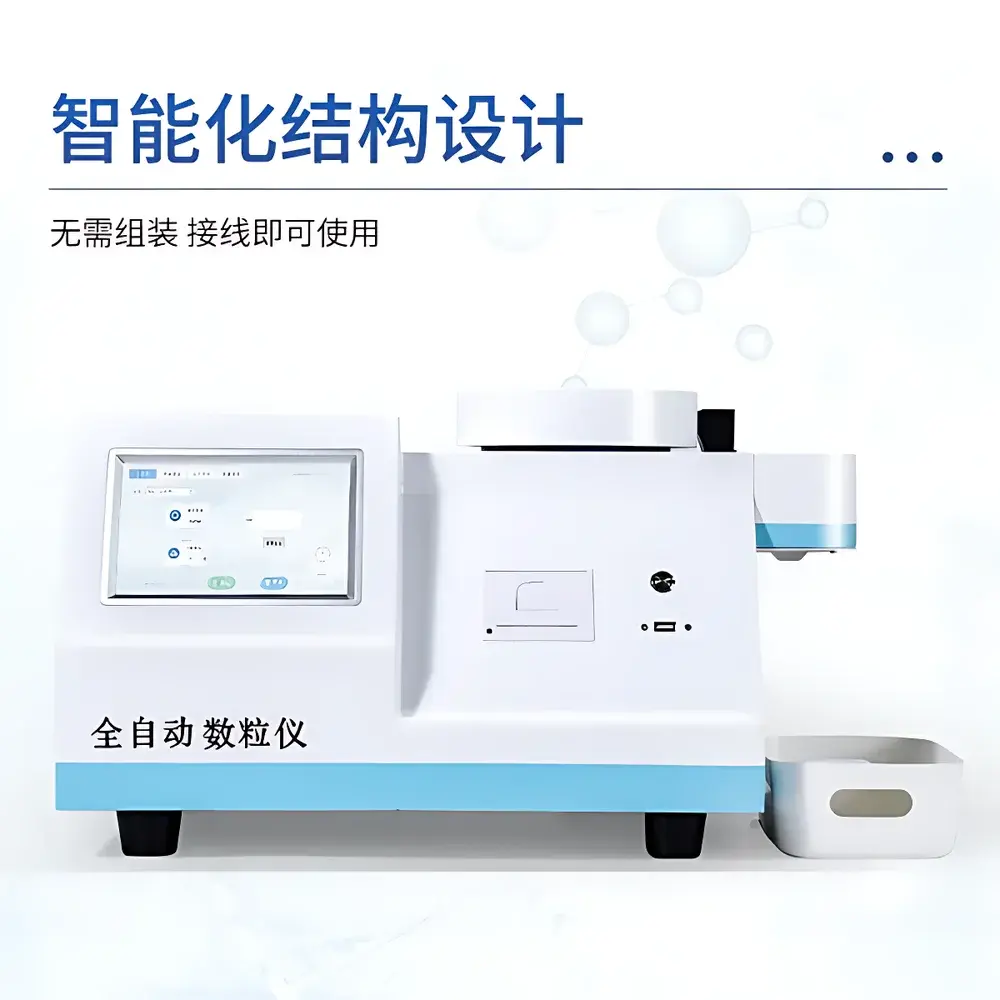
COMECAUSE IN-SL01 Automatic Multi-Function Seed and Small Component Counter
| Brand | COMECAUSE |
|---|---|
| Model | IN-SL01 |
| Application | Automated counting of seeds, electronic components, and small granular materials |
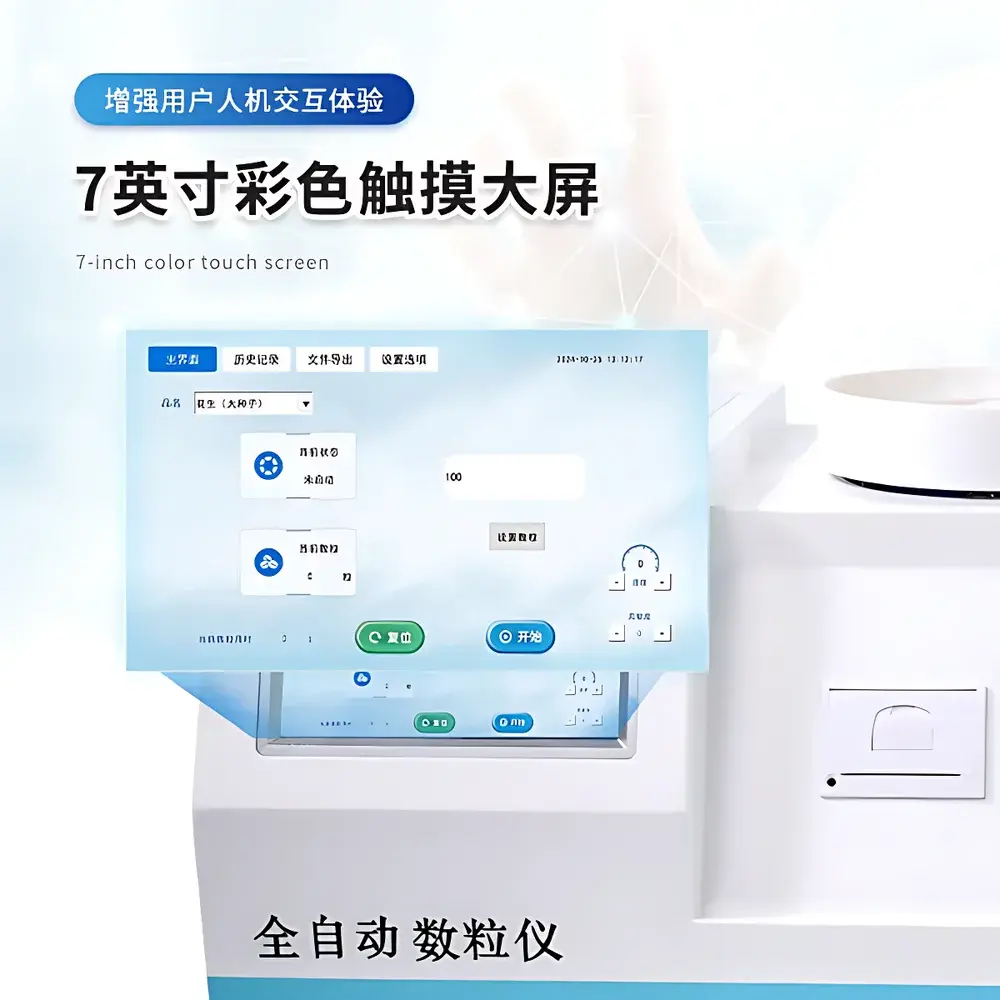
| Display | 7-inch color touchscreen interface |
| Pre-set count range | 1–9999 particles |
| Counting speed | 1000–2000 particles/min (shape- and size-dependent) |
| Counting accuracy | ±0.2% |
| Sensitivity adjustment | 0–10 level |
| Dimensions | 580 × 390 × 336 mm (W×D×H) |
| Weight | 24 kg |
| Operating temperature | −10°C to 50°C |
| Relative humidity | <85% RH |
| Power supply | AC 100–220 V, 50/60 Hz |
| Noise level | ≤80 dB(A) |
| Data storage | Local non-volatile memory with pagination and search |
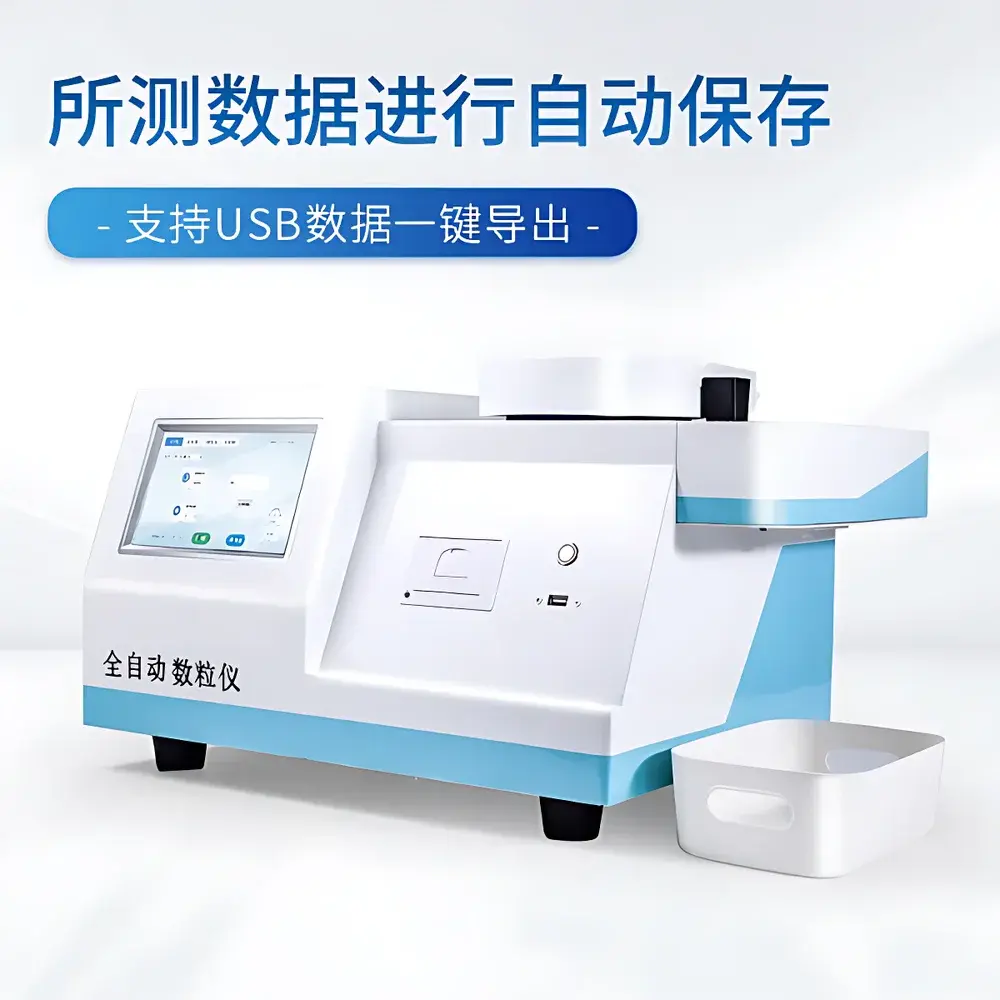
| Data export | USB flash drive support |
| Language | Switchable Chinese/English UI |
| Compliance | Designed for ISO 9001-aligned manufacturing |
Overview
The COMECAUSE IN-SL01 Automatic Multi-Function Seed and Small Component Counter is an industrial-grade optical-mechanical counting system engineered for high-throughput, repeatable enumeration of discrete particulate items in agricultural, electronics manufacturing, pharmaceutical, and quality control environments. It operates on a validated principle combining vibration-assisted monolayer dispersion, high-contrast backlight imaging, and real-time edge-detection algorithms to distinguish individual objects within a dynamic feed stream. Unlike manual or basic photoelectric counters, the IN-SL01 integrates adaptive sensitivity calibration and shape-insensitive threshold logic—enabling reliable counting across heterogeneous populations including irregularly shaped seeds (e.g., soybean, rice, corn), surface-mount devices (SMDs), microcapsules, tablets, and precision hardware components. Its architecture complies with fundamental metrological requirements for counting instrumentation as referenced in ISO 11268-2 (soil organism enumeration standards) and aligns with traceability expectations under Good Laboratory Practice (GLP) and ISO/IEC 17025 frameworks.
Key Features
- 7-inch capacitive color touchscreen with intuitive icon-driven navigation and responsive haptic feedback—designed for gloved operation in field labs or cleanroom-adjacent production areas.
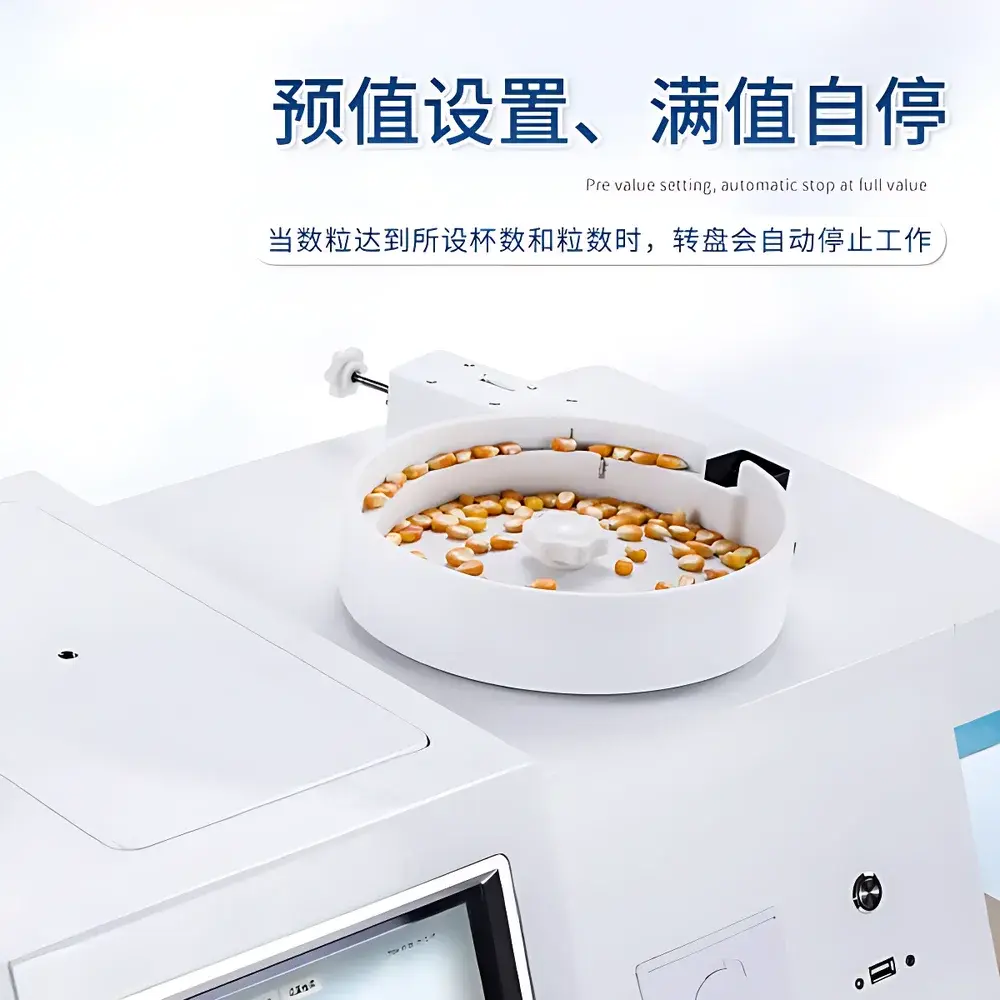
- Programmable target count (1–9999); automatic feed cutoff upon reaching set value, minimizing over-counting and reducing operator intervention.
- Customizable material profiles: users define species/component names, optimal vibration amplitude (0–10 scale), and dwell time per batch—stored in non-volatile memory for rapid recall.
- Integrated thermal direct-label printer producing adhesive-backed, smudge-resistant labels with timestamp, count value, operator ID (if configured), and custom batch ID—fully compatible with standard seed packaging workflows.
- Local data management: all counts are timestamped and archived with metadata (date/time, profile name, sensitivity setting, operator tag). Supports forward/backward pagination and direct index jump to specific entries.
- One-touch data purge function with confirmation prompt to maintain storage integrity and regulatory compliance during routine maintenance cycles.
- USB mass-storage mode enables direct export of CSV-formatted logs—including raw count values, timestamps, and profile identifiers—to external drives for LIMS integration or offline statistical analysis.
- Bilingual firmware (Chinese/English) with single-tap language toggle—no reboot required—facilitating multinational deployment and cross-training scenarios.
Sample Compatibility & Compliance
The IN-SL01 accommodates particles ranging from 0.5 mm to 23 mm in maximum dimension, covering >95% of commercially traded cereal, legume, and vegetable seeds, as well as common passive SMD packages (0402 through 1206), microbeads, and pharmaceutical pellets. Its vibration-controlled feeding mechanism prevents jamming and ensures uniform monolayer presentation without mechanical shearing or static aggregation. All firmware and hardware design elements adhere to IEC 61000-6-3 (EMC emission limits) and IEC 61000-6-2 (immunity standards). While not certified for Class A medical device use, its data logging structure—including immutable timestamps, user session tags, and print-log correlation—supports FDA 21 CFR Part 11 readiness when deployed with controlled access protocols and documented SOPs.
Software & Data Management
Firmware v2.4.x implements a deterministic state machine architecture with no background daemons or third-party libraries—ensuring deterministic boot times and predictable response latency. Count records are written atomically to internal flash memory using wear-leveling algorithms to extend service life beyond 100,000 write cycles. Each exported CSV file includes headers compliant with ASTM E2500-18 Annex A1 (data interchange format for lab instruments). Optional firmware updates are delivered via signed binary packages verified by SHA-256 checksum prior to installation, preserving firmware integrity in regulated settings.
Applications
- Agricultural seed certification labs performing ISTA-compliant purity and germination sample preparation.
- Contract manufacturing organizations (CMOs) verifying component quantities prior to SMT assembly staging.
- Pharmaceutical R&D units conducting dose uniformity testing of multiparticulate formulations.
- Grain trading terminals executing rapid lot verification against contractual weight-to-count ratios.
- University plant science facilities automating phenotyping workflows involving seed size distribution analysis.
FAQ
What particle shapes yield optimal counting accuracy?
Spherical to moderately ellipsoidal objects (aspect ratio < 3:1) achieve ±0.2% repeatability. Irregular shapes (e.g., winged seeds, bent leads) require sensitivity calibration and may benefit from pre-sieving to remove fines.
Is network connectivity supported?
No Ethernet or Wi-Fi interface is included; data transfer relies exclusively on USB host mode for security and electromagnetic isolation in industrial settings.
Can the printer accommodate custom label formats?
Only standard 58 mm thermal roll media is supported; label layout is fixed but includes configurable fields via firmware menu.
How is calibration performed?
No periodic hardware calibration is required. Sensitivity and vibration parameters are empirically tuned per material type during initial setup and stored as reusable profiles.
What maintenance is recommended?
Monthly cleaning of the vibration tray and optical path with lint-free cloth and isopropyl alcohol; annual inspection of feed chute alignment by authorized service personnel.






