
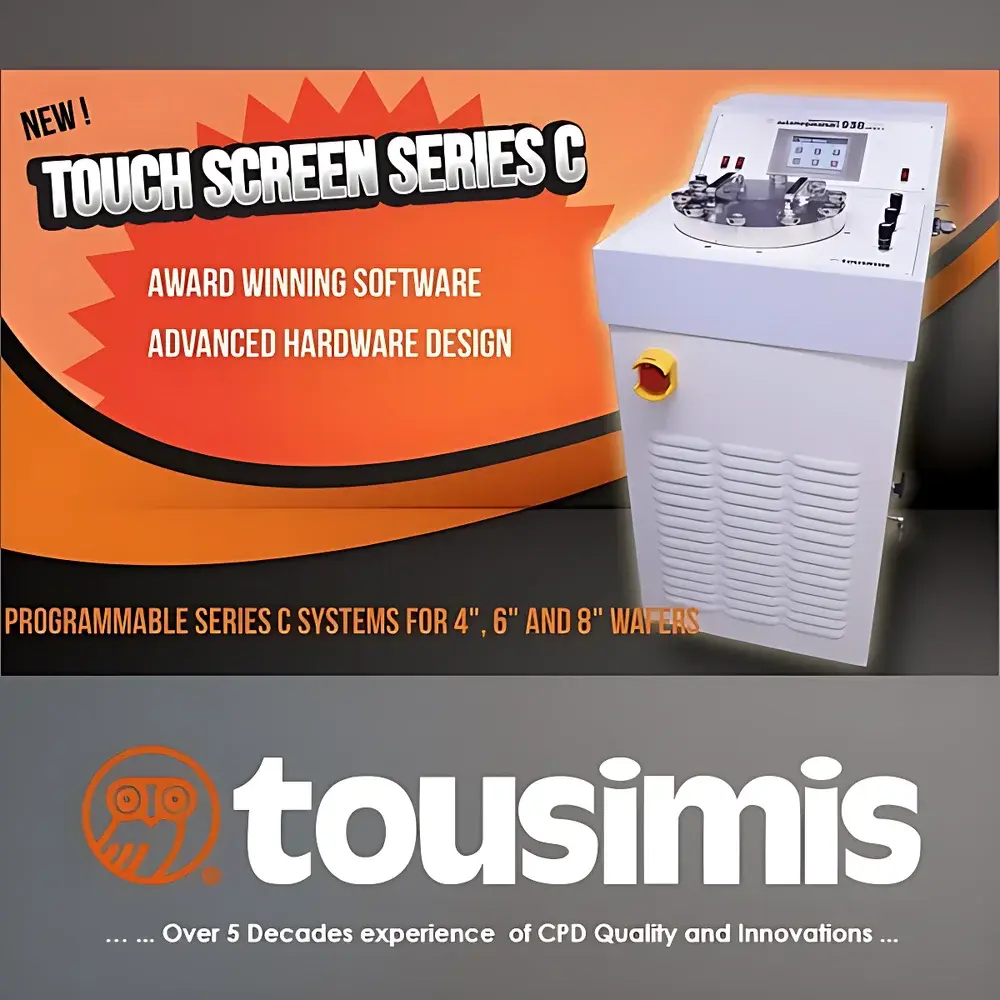
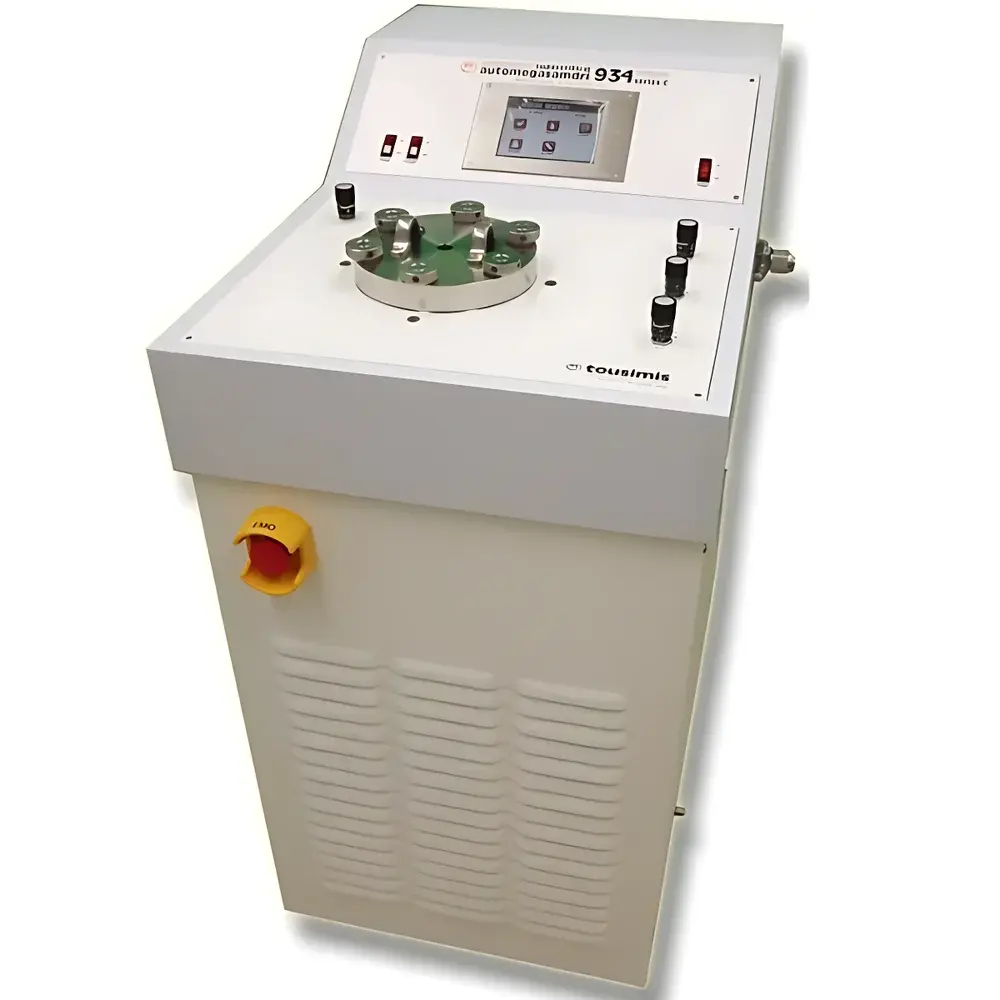
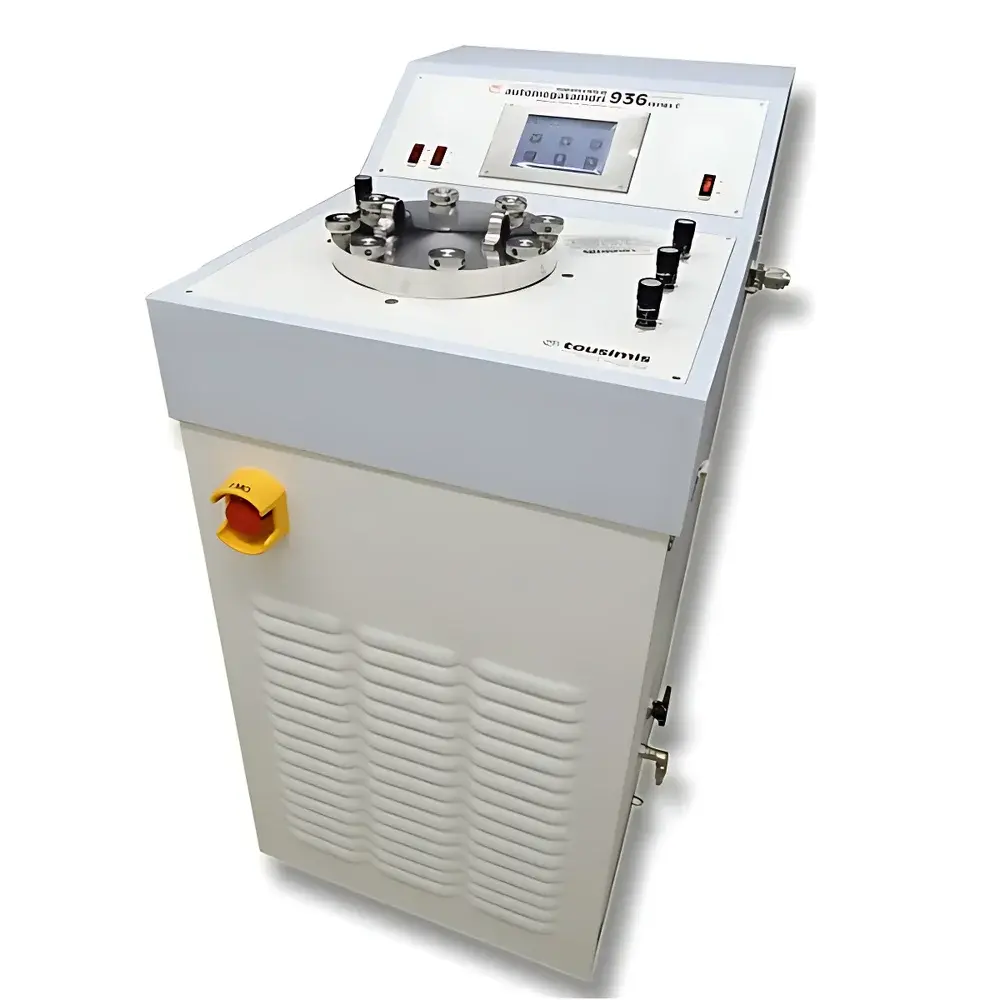
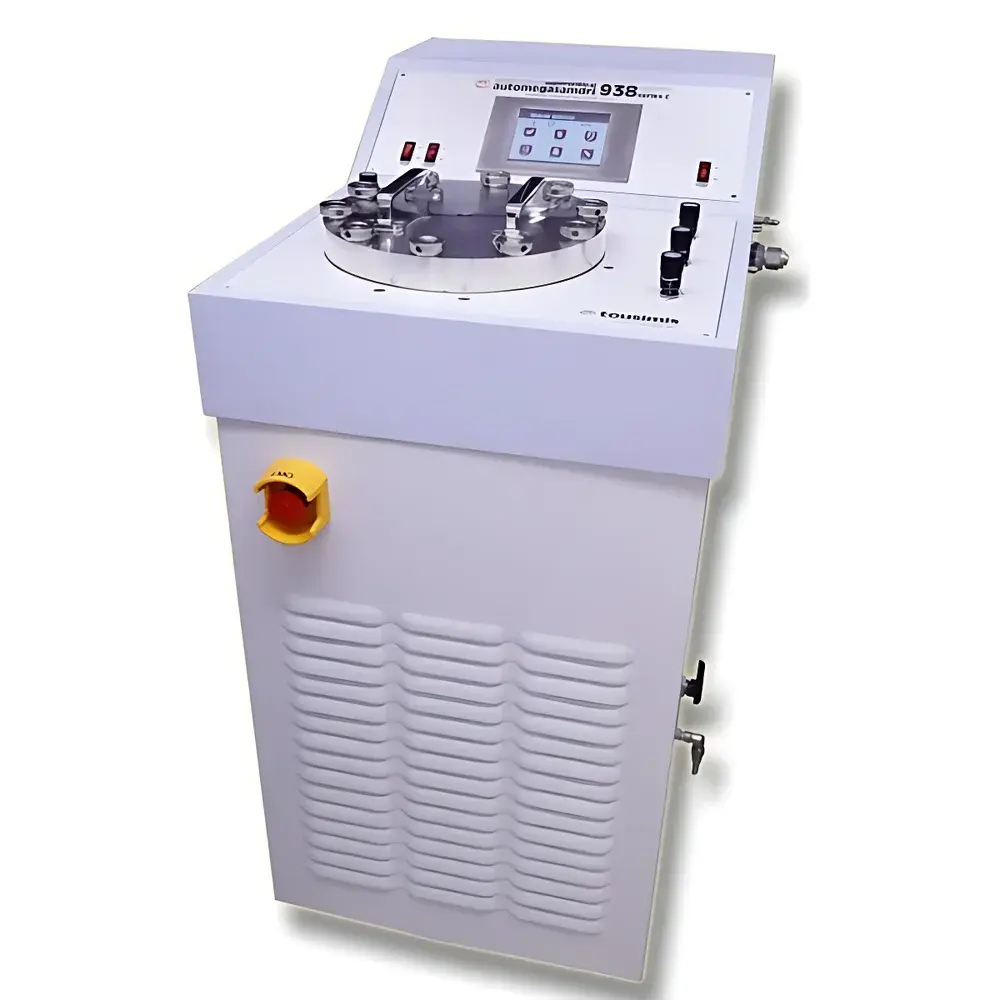
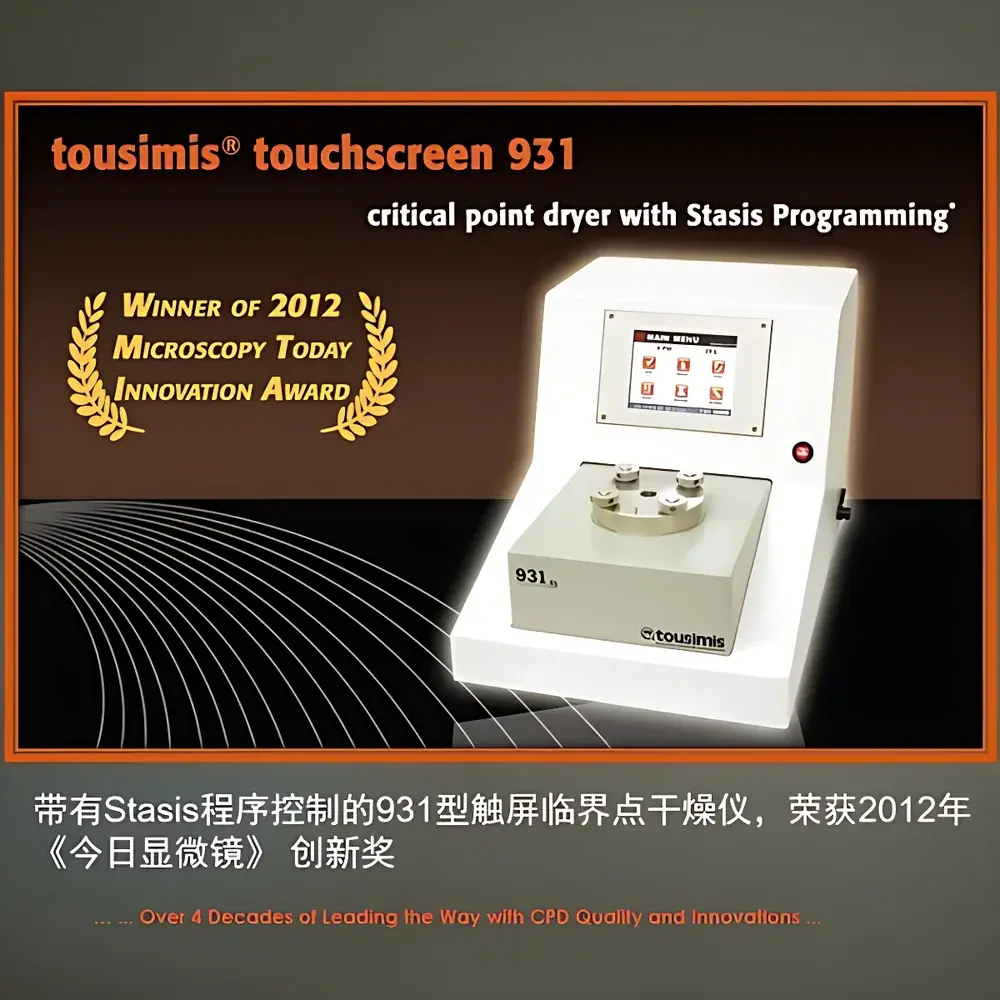
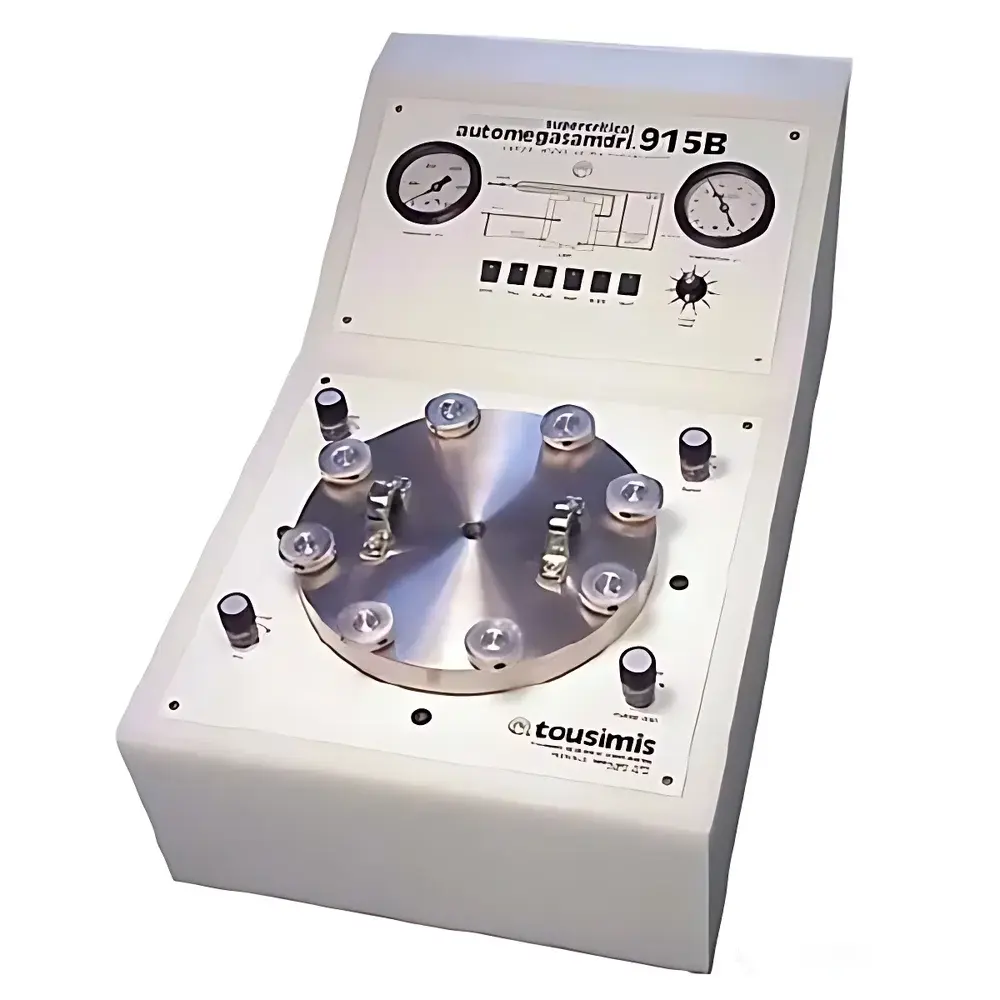
Tousimis Autosamdri-931 Cleanroom Series Critical Point Dryer
| Brand | Tousimis |
|---|---|
| Origin | USA |
| Model | Cleanroom Series (Autosamdri-931 / -934 / -936 / -938 variants) |
| Pressure Range | 0–2000 psi |
| Temperature Range | −30°C to +60°C |
| Chamber Volumes | 25 mL, 100 mL, 186 mL, 326 mL, 679 mL, or 1162 mL (model-dependent) |
| Filtration | 0.08 µm internal CO₂ filter (≥99.999% particle retention) |
| Control Interface | VGA LCD touchscreen with Stasis™ software |
| Compliance | Designed for ISO Class 1–5 cleanroom environments |
| Sample Capacity | Up to 5 wafers or dies per run (1″ to 8″ diameter or 10 mm square) |
| Key Technology | SOTER™ condenser for ethanol/CO₂ phase separation |
| Regulatory Context | Supports GLP-compliant documentation workflows |
Overview
The Tousimis Autosamdri-931 Cleanroom Series Critical Point Dryer is an engineered solution for high-fidelity, non-destructive drying of delicate micro- and nanostructured samples in controlled semiconductor fabrication, MEMS development, and advanced materials research environments. It operates on the principle of supercritical fluid processing—specifically, carbon dioxide (CO₂) at its critical point (31.1°C, 1072 psi)—where the distinction between liquid and gas phases vanishes, eliminating capillary forces and surface tension that cause structural collapse during conventional air-drying or freeze-drying. Unlike water-based critical point drying (CPD), which requires prohibitively high temperatures (374°C) and pressures (3212 psi), CO₂-based CPD enables gentle, low-thermal-stress dehydration of hydrated or solvent-laden specimens—including biological tissues, hydrogels, MOFs, aerogels, graphene monolayers, and patterned silicon wafers—while preserving native 3D morphology at sub-micron resolution. This system is purpose-built for integration into ISO Class 1–5 cleanrooms, featuring electrostatic-dissipative construction, fluoropolymer-compatible sample handling hardware, and ultra-high-purity fluid delivery architecture.
Key Features
- Three standard chamber configurations: 1.25″ I.D. × 1.25″ depth (25 mL), 2.50″ I.D. × 1.25″ depth (100 mL), and 3.40″ I.D. × 1.25″ depth (186 mL); extended-volume C-series models support up to 1162 mL (Automegasamdri-938)
- Integrated dual-stage CO₂ filtration: external T-type particulate filters (≥99.5% retention) followed by internal 0.08 µm membrane filtration (≥99.999% retention), ensuring contaminant-free fluid delivery to the process chamber
- VGA LCD touchscreen interface with intuitive, programmable workflow control; supports user-defined drying protocols, parameter logging, and real-time pressure/temperature monitoring
- SOTER™ condenser technology enables continuous, noiseless separation of spent ethanol (or acetone) from gaseous CO₂, preventing line freezing, static discharge, and cross-contamination
- Stasis™ software suite provides advanced protocol management for complex, multi-step drying sequences—including gradient solvent exchange, slow-fill ramping, and staged depressurization—optimized for fragile gel networks and porous nanomaterials
- Cleanroom-grade construction: all wetted surfaces fabricated from electropolished stainless steel and fluorinated elastomers compatible with ultra-pure ethanol, acetone, and liquid CO₂
- Modular chamber insert system allows dynamic volume reduction via inert filler blocks, maximizing CO₂ utilization efficiency and minimizing cycle time and consumable cost
Sample Compatibility & Compliance
The Autosamdri-931 Cleanroom Series accommodates a broad range of substrate geometries and material classes under strict environmental controls. It routinely processes 1″ to 8″ semiconductor wafers, diced die (up to 10 mm square), MEMS devices with suspended microstructures, metal–organic frameworks (MOFs), silica and polymer aerogels, cryo-fixed biological specimens, and sol–gel-derived nanocomposites. All models comply with ISO 14644-1 requirements for airborne particulate cleanliness and incorporate grounding paths and conductive gasketing to meet SEMI S2-0215 ESD safety guidelines. Internal surface finishes adhere to ASTM B912-02 passivation standards for stainless steel components exposed to aggressive solvents. The system supports audit-ready operation through timestamped parameter logs and optional electronic signature capability aligned with FDA 21 CFR Part 11 principles for regulated laboratories.
Software & Data Management
Stasis™ software serves as the central operational and documentation hub. It enables creation, storage, and recall of validated drying methods—including solvent exchange gradients, temperature ramp profiles, dwell times at critical pressure plateaus, and controlled venting rates. Each run generates a tamper-evident digital record containing pressure vs. time curves, temperature stability metrics, valve actuation timestamps, and operator identification. Export options include CSV and PDF formats compatible with LIMS integration. For GxP environments, optional audit trail modules provide immutable records of method modifications, user logins, and system error events—fully traceable to individual analysts and compliant with GLP/GMP data integrity expectations.
Applications
This instrument is deployed across multiple high-precision domains: semiconductor R&D labs use it to dry post-etch or post-developed wafers without stiction-induced pattern collapse; MEMS foundries rely on it for releasing high-aspect-ratio microstructures prior to packaging; materials science groups employ it to preserve pore architecture in templated carbons and zeolitic imidazolate frameworks (ZIFs); and life science core facilities apply it to prepare cryo-fixed neural tissue, vascular scaffolds, and extracellular matrix hydrogels for high-resolution SEM imaging. Its reproducible, low-drift thermal and pressure regulation ensures inter-run consistency essential for comparative studies involving nanoscale feature quantification or mechanical property correlation.
FAQ
What distinguishes the Cleanroom Series from standard Tousimis CPD systems?
The Cleanroom Series features enhanced particulate control, electrostatic dissipation, fluoropolymer-compatible fixtures, and ISO-compliant construction—optimized for use inside semiconductor fab cleanrooms rather than general-purpose EM labs.
Can the system handle aqueous biological samples directly?
No—aqueous samples require prior solvent exchange (e.g., graded ethanol or acetone series) to replace water before CO₂ introduction; this step is fully automated within Stasis™ protocols.
Is validation support available for regulated environments?
Yes—Tousimis provides IQ/OQ documentation templates, calibration certificates for pressure and temperature sensors (NIST-traceable), and technical guidance for 21 CFR Part 11 implementation.
What maintenance intervals are recommended for the 0.08 µm CO₂ filter?
Filter replacement is advised every 200–300 runs or quarterly—whichever occurs first—based on usage intensity and solvent purity; filter life is logged automatically in Stasis™.
Does the system support remote monitoring or network connectivity?
Standard Ethernet port enables local network access for file export and diagnostic reporting; secure remote access requires additional firewall-configured IT infrastructure and is not enabled by default.



