
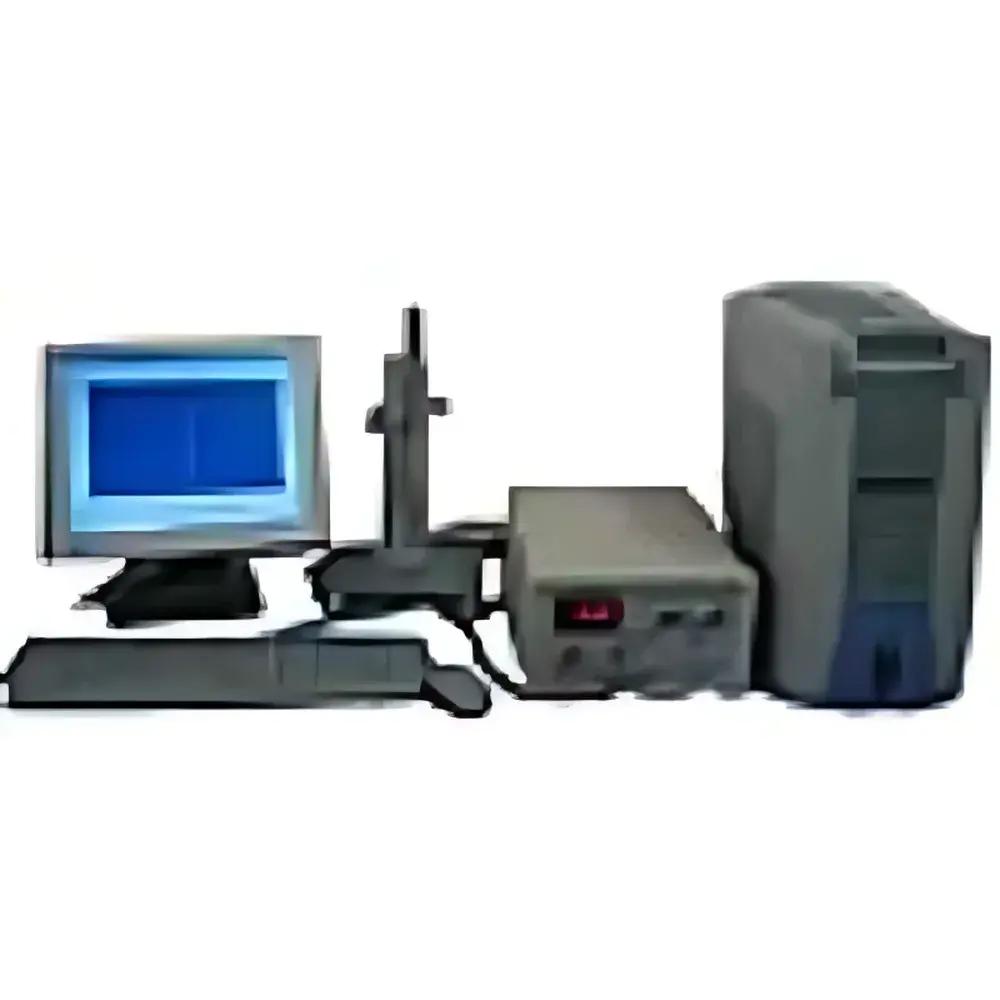
BH1324B Integrated X/γ-Ray Multichannel Spectrometer
| Origin | Beijing, China |
|---|---|
| Manufacturer Type | Authorized Distributor |
| Instrument Type | Radiation Dose Rate & Spectral Analyzer |
| Energy Resolution | <65% FWHM @ 5.16 keV (²³⁹Pu) |
| Energy Linearity | ≤±1% (60 keV–2.0 MeV) |
| Long-Term Stability | ≤±1% over 8 h |
| Operating Temperature | +5°C to +35°C |
| Relative Humidity | ≤80% at 30°C |
| Power Supply | AC 220 V ±10%, 50 Hz ±1 Hz |
| Detector | φ40 mm × 1 mm Si-PIN X-ray detector |
| Interface | RS-232 serial communication |
| Software | PHA18 Pulse Height Analysis software (Windows 98 compatible) |
| Quality System | ISO 9001 certified |
Overview
The BH1324B Integrated X/γ-Ray Multichannel Spectrometer is a compact, PC-based radiation spectrometry system engineered for quantitative energy-dispersive X-ray and low-energy gamma-ray spectral analysis. It operates on the principle of pulse-height analysis (PHA), where incident ionizing radiation generates charge pulses in a silicon PIN diode detector; these pulses are amplified, shaped, and digitized by an integrated multichannel analyzer (MCA) module. The MCA incorporates high-voltage bias supply, preamplifier, shaping amplifier, and analog-to-digital conversion circuitry within a single PCI-compatible card—minimizing external signal degradation and eliminating dependency on proprietary host hardware. Designed primarily for radiation safety monitoring, regulatory compliance verification, and elemental screening in environmental, industrial hygiene, and nuclear facility support applications, the BH1324B delivers reproducible spectral acquisition across the 60 keV to 2.0 MeV energy range with calibrated linearity and long-term baseline stability suitable for routine field or laboratory deployment.
Key Features
- Integrated MCA architecture: Combines high-voltage generator (0–1200 V adjustable), low-noise charge-sensitive preamplifier, Gaussian shaper, and 1024-channel ADC in one module—reducing cabling complexity and electromagnetic interference.
- Optimized Si-PIN detector: 40 mm diameter × 1 mm active thickness sensor with thin beryllium window, providing enhanced sensitivity for characteristic X-rays (e.g., Pb L-lines, Cd K-lines) and low-energy γ-emissions (e.g., ²⁴¹Am, ⁵⁷Co).
- Energy resolution <65% FWHM at 5.16 keV (²³⁹Pu α-induced X-ray peak), enabling reliable separation of adjacent emission lines in multi-element spectra.
- Calibrated energy linearity ≤±1% over 60 keV–2.0 MeV range—verified using NIST-traceable radioactive standards (e.g., ⁵⁵Fe, ¹⁰⁹Cd, ²⁴¹Am, ¹³⁷Cs, ⁶⁰Co).
- Drift-compensated baseline stabilization: Real-time offset correction ensures ≤±1% channel shift over 8-hour continuous operation under ambient thermal conditions.
- RS-232 interface with deterministic packet protocol supports robust data transfer to host PC—even under non-real-time Windows 98 environment.
Sample Compatibility & Compliance
The BH1324B is configured for direct measurement of surface-emitted X-rays from solid or powdered samples, air filters, swipe tests, and low-activity environmental matrices (soil, sediment, dust). It does not require cryogenic cooling or vacuum chambers, making it suitable for rapid in-situ surveys and fixed-station monitoring. All electronic subassemblies comply with IEC 61000-4 electromagnetic compatibility standards. The system adheres to ISO 9001:2015 quality management requirements throughout design, manufacturing, and calibration traceability. While not certified for clinical or pharmaceutical release testing, its performance characteristics align with ASTM E1452 (Standard Guide for Calibration of Germanium Spectrometers) and IAEA Technical Reports Series No. 255 (Gamma-ray Spectrometry in Environmental Monitoring) for qualitative and semi-quantitative radionuclide identification.
Software & Data Management
PHA18 acquisition and analysis software provides real-time spectrum display, region-of-interest (ROI) definition, net peak area calculation, library-based nuclide identification (using built-in isotopic energy libraries), and basic efficiency calibration tools. Data export is supported in ASCII column format (.txt) and CSV for post-processing in third-party platforms (e.g., OriginLab, MATLAB, R). Audit trail functionality is limited to manual log entries; the software does not meet FDA 21 CFR Part 11 requirements for electronic records and signatures. However, raw spectrum files (.spe) retain full metadata (live time, real time, HV setting, gain, calibration coefficients), supporting GLP-aligned documentation practices when paired with laboratory notebook protocols.
Applications
- Radiation protection surveys in nuclear medicine departments, radiopharmacy labs, and decommissioning sites.
- Verification of shielding integrity and contamination control in industrial radiography facilities.
- Screening of scrap metal, construction materials, and imported goods for orphan sources or naturally occurring radioactive material (NORM).
- Environmental monitoring of airborne particulates collected on filter media—particularly for uranium series and thorium series progeny.
- Educational use in health physics laboratories for teaching pulse processing, spectral deconvolution, and decay scheme interpretation.
FAQ
Is the BH1324B suitable for quantitative radionuclide assay?
Yes—when coupled with empirically determined efficiency curves and certified reference materials, it supports semi-quantitative activity determination (±15–25% uncertainty) for common gamma/X-ray emitters in homogeneous geometries.
Can modern Windows operating systems (e.g., Windows 10/11) be used with PHA18?
No—PHA18 was developed exclusively for Windows 98 and lacks native 64-bit or UAC-compliant drivers; virtual machine emulation (e.g., Windows 98 SE in VirtualBox) is required for legacy compatibility.
What detector alternatives are supported?
The system is optimized for the supplied φ40×1 mm Si-PIN detector; substitution with NaI(Tl) or HPGe detectors is not supported due to incompatible bias voltage, pulse shape, and dynamic range requirements.
Does the unit include factory calibration certificates?
Yes—each BH1324B ships with a traceable calibration report listing measured resolution, linearity deviation, and stability test results against reference sources, compliant with ISO/IEC 17025 documentation principles.
Is remote data acquisition possible?
Not natively—the RS-232 interface requires direct physical connection; integration into SCADA or networked monitoring systems necessitates custom middleware development and serial-to-Ethernet bridge hardware.
Related Products







