
COMECAUSE IN-ZLC Fully Automated Integrated Distillation System
| Brand | COMECAUSE |
|---|---|
| Origin | Shandong, China |
| Manufacturer Type | Direct Manufacturer |
| Country of Origin | China |
| Model | IN-ZLC |
| Price | USD 2,400 (approx.) |
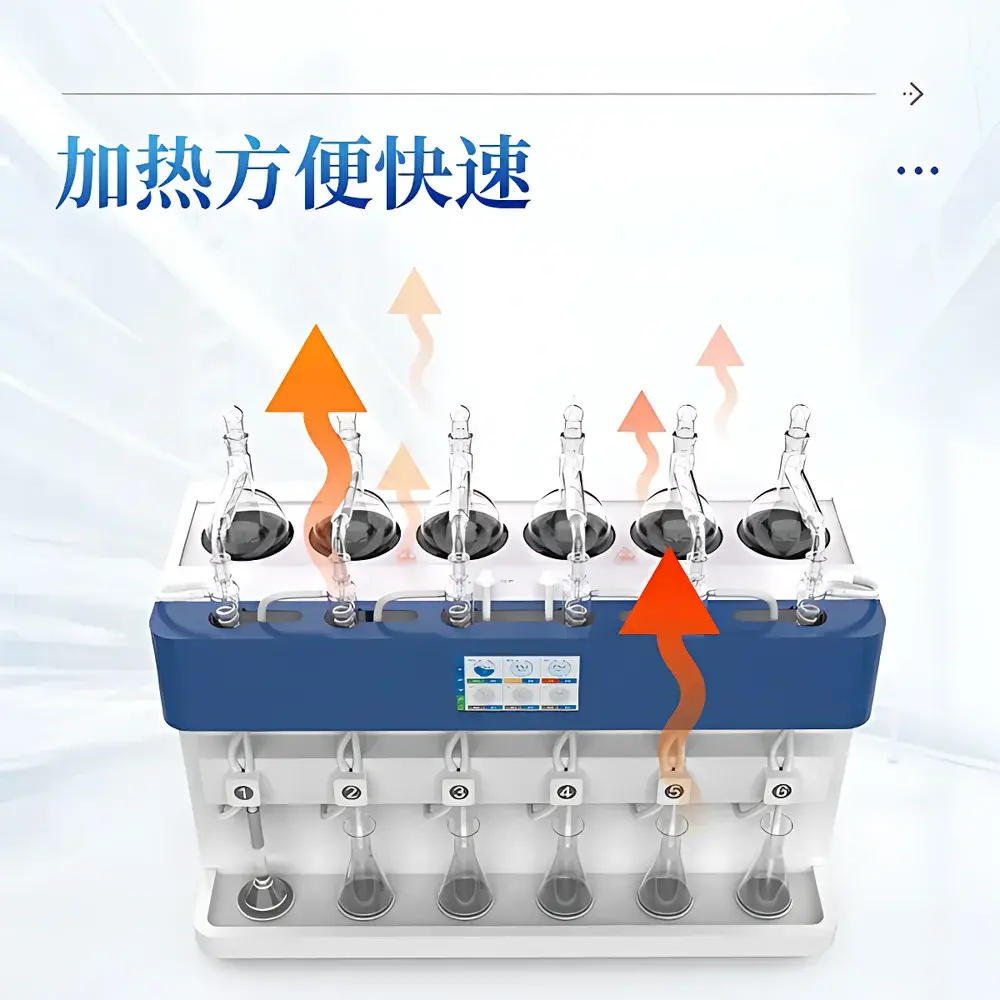
| Heating Method | Far-Infrared Ceramic Heating Bowl (Flame-Free) |
| Cooling Method | External Chilled Water Circulator or Tap Water |
| Distillation Rate | 0–10 mL/min |
| Heating Ramp Time | <20 min |
| Endpoint Control | Dual-Mode — Volume + Time |
| Heating Units | 6 (Individually Controllable per Channel) |
Overview
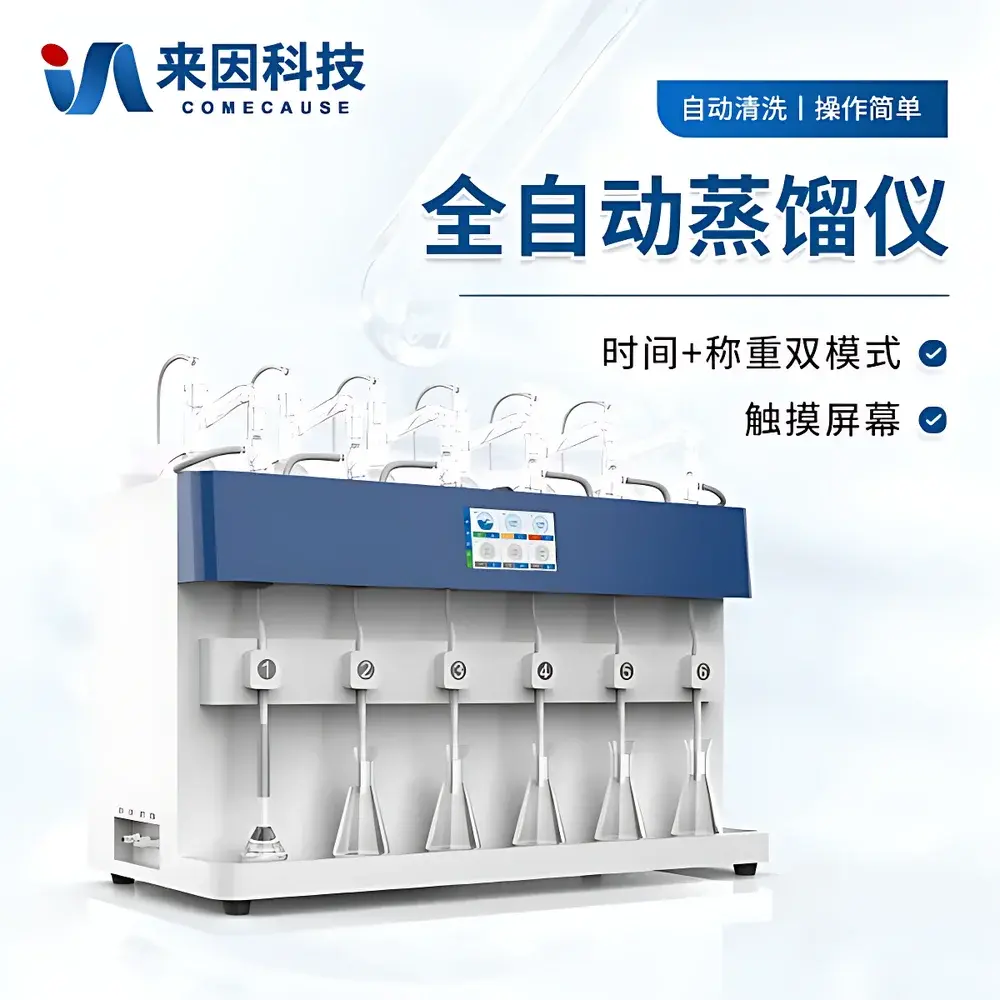
The COMECAUSE IN-ZLC Fully Automated Integrated Distillation System is an engineered solution for precise, reproducible, and unattended distillation in regulated analytical laboratories. Based on classical vapor–liquid equilibrium principles, the system implements controlled thermal separation under atmospheric or reduced pressure conditions—optimized for volatile and semi-volatile analyte recovery in aqueous, soil, sediment, and food matrices. Unlike conventional glassware-based setups requiring manual supervision, the IN-ZLC integrates heating, condensation, volumetric endpoint detection, and safety interlocks into a single compact platform. Its design conforms to the fundamental requirements of method-driven sample preparation: traceable parameter control, minimal operator intervention, and robust repeatability across batched analyses. The system is purpose-built for compliance-critical workflows where distillation serves as a mandatory pretreatment step prior to downstream quantification (e.g., spectrophotometry, titration, or ICP-MS), particularly in environmental monitoring, pharmaceutical QC, and food safety testing.
Key Features
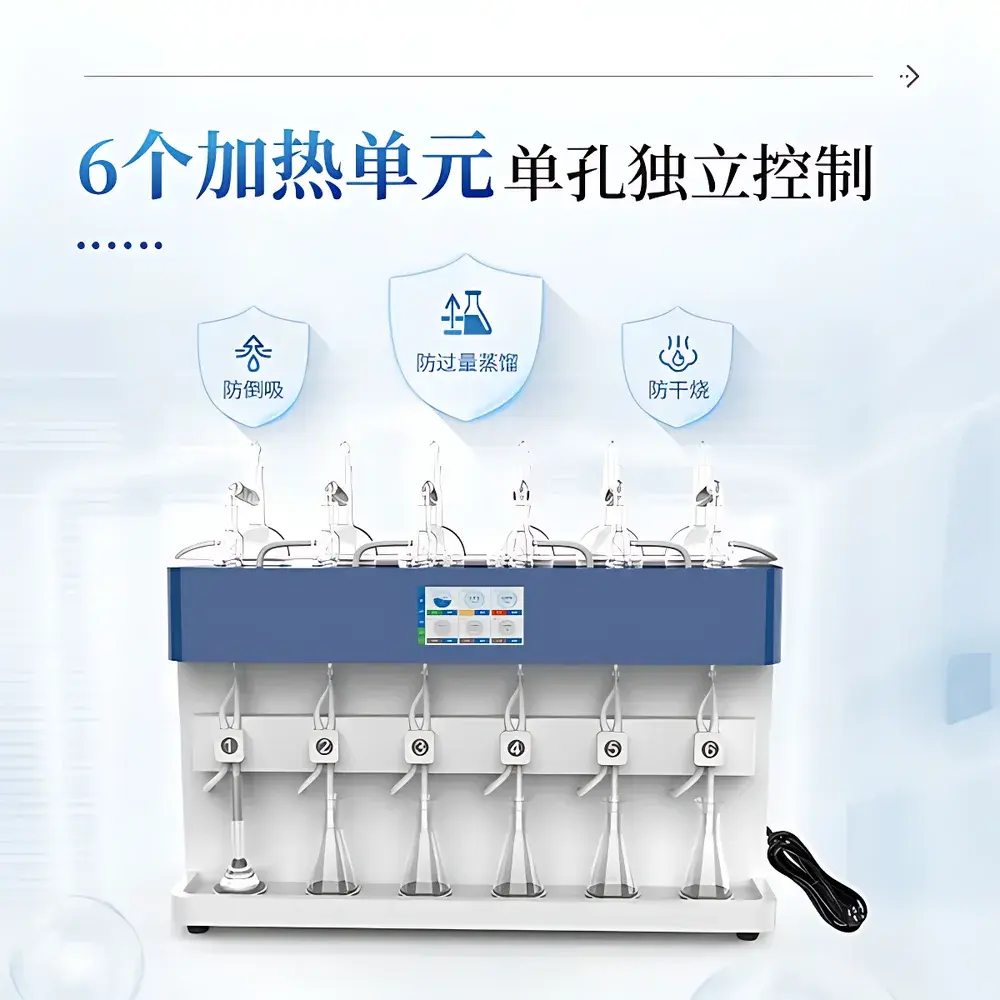
- Six independently controllable distillation channels, each equipped with dedicated far-infrared ceramic heating bowls (600 W max per unit), ensuring uniform thermal transfer to standard 500 mL two-neck round-bottom flasks without flame or hotplate contact.
- Dual-mode endpoint detection: programmable volume threshold (±0.1 mL accuracy via integrated load cell) combined with time-based termination; automatic valve actuation cuts off distillate flow and initiates pressure equalization upon completion.
- Comprehensive safety architecture: anti-suckback solenoid valves, real-time dry-run detection (via temperature + flow rate fusion logic), and hardware-enforced overheat cutoff at 400 °C.
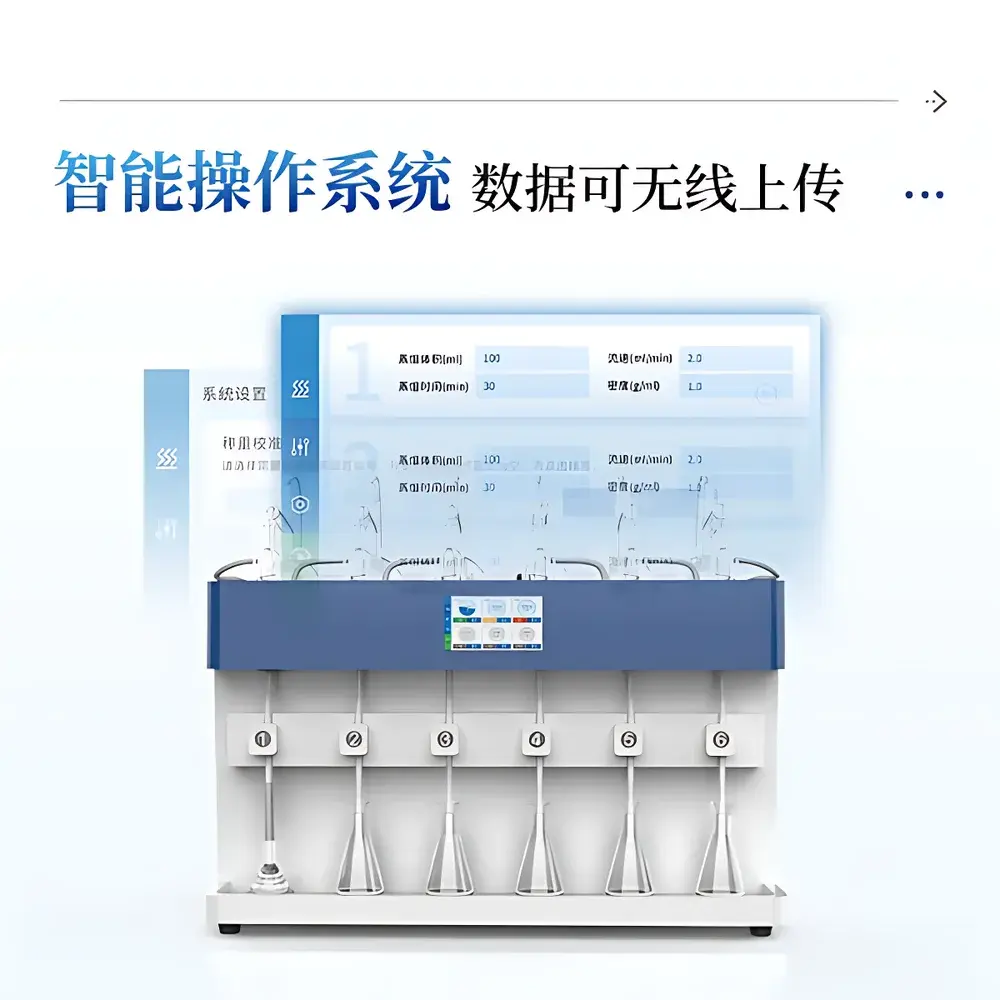
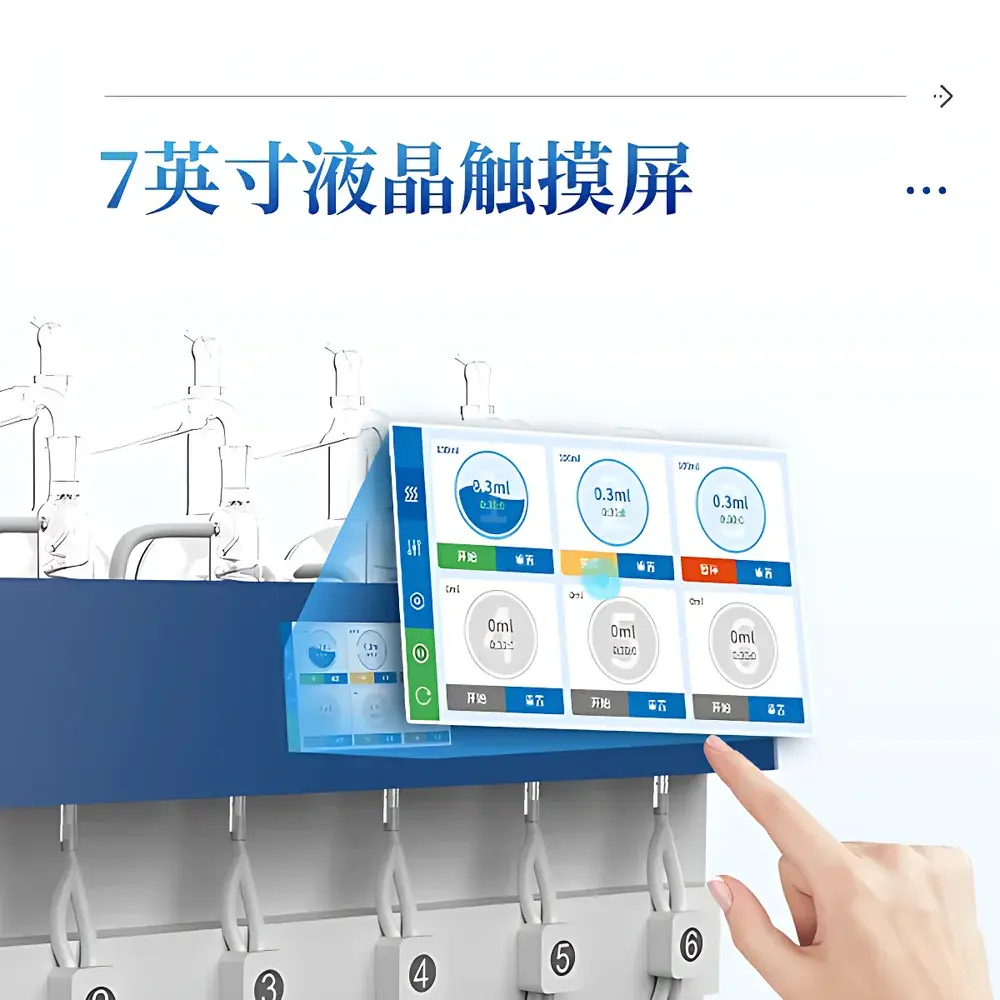
- 7-inch high-resolution color touchscreen interface supporting method storage (≤1000 protocols), auto-recall on power-up, and built-in calibration routines for mass/volume correlation.
- Integrated closed-loop distillate flow control and optional OTA firmware updates ensure long-term method consistency and adaptability to evolving regulatory expectations.
- Modular cooling compatibility: accepts either recirculating chillers (recommended for stable condensation at ≤10 °C) or municipal tap water (with flow-rate monitoring).
Sample Compatibility & Compliance
The IN-ZLC supports aqueous extracts, digested soil/sediment leachates, and homogenized food samples compatible with standard EPA, ISO, and Chinese national methods. It is validated for use in procedures requiring distillative isolation of ammonia nitrogen (HJ 537-2009), cyanide (HJ 484-2009, GB 5009.36-2023), phenols (HJ 503-2009, HJ 998-2018), sulfides (HJ 1226-2021, HJ 833-2017), azide (HJ 1191-2021), and ethanol/methanol (GB 5009.225-2023, GB 5009.266-2016). All operational parameters—including heating ramp profiles, hold times, and volume thresholds—are logged with timestamped audit trails, satisfying GLP/GMP documentation requirements and enabling full traceability per FDA 21 CFR Part 11 principles when paired with secure network configuration.
Software & Data Management
The embedded control firmware provides deterministic execution of user-defined distillation sequences. Each method stores target volume, maximum duration, heating power profile, and density correction factors for mass-to-volume conversion. Historical run logs—including actual distilled volume, elapsed time, peak temperature, and fault events—are exportable in CSV format. No proprietary software installation is required; data retrieval occurs directly via USB or optional Ethernet interface. Firmware supports remote diagnostics and over-the-air updates to maintain alignment with newly published standard methods without hardware modification.
Applications
- Environmental labs performing routine analysis of drinking water (GB/T 5750.5-2023), wastewater, and soil per HJ-series standards.
- Food safety testing facilities quantifying volatile contaminants (e.g., methanol in alcoholic beverages, cyanide in cassava-derived products).
- Pharmaceutical quality control units executing Kjeldahl nitrogen determination (HJ 717-2014) or residual solvent isolation prior to GC analysis.
- Academic and contract research organizations requiring high-throughput, low-variability distillation for method development and validation studies.
- Regulatory reference laboratories conducting inter-laboratory proficiency testing where procedural standardization is mandated.
FAQ
Does the IN-ZLC support ASTM or ISO-standardized distillation methods?
Yes—it is functionally aligned with ISO 5667-3 (water sampling), ISO 11914 (cyanide), and ASTM D129-19 (sulfur in petroleum), though final method validation remains the responsibility of the end user per local accreditation requirements.
Can the system operate without external cooling water?
It can accept tap water as coolant, but continuous operation above 5 mL/min or ambient temperatures >25 °C is strongly discouraged without a recirculating chiller to maintain condenser efficiency and prevent vapor breakthrough.
Is the 0.1 mL volume accuracy verified by third-party certification?
Accuracy is achieved via factory-calibrated load cells and validated during IQ/OQ protocols; however, users must perform periodic verification using NIST-traceable weights per their internal SOPs.
How is data integrity ensured during power interruption?
All active run states are non-volatile memory-resident; the system resumes from last known position upon restart, preserving elapsed time and collected volume data.
What maintenance intervals are recommended for long-term reliability?
Ceramic heating elements require no scheduled replacement; annual inspection of solenoid valves, tubing seals, and condenser coil cleanliness is advised—documentation templates included in the user manual.



