
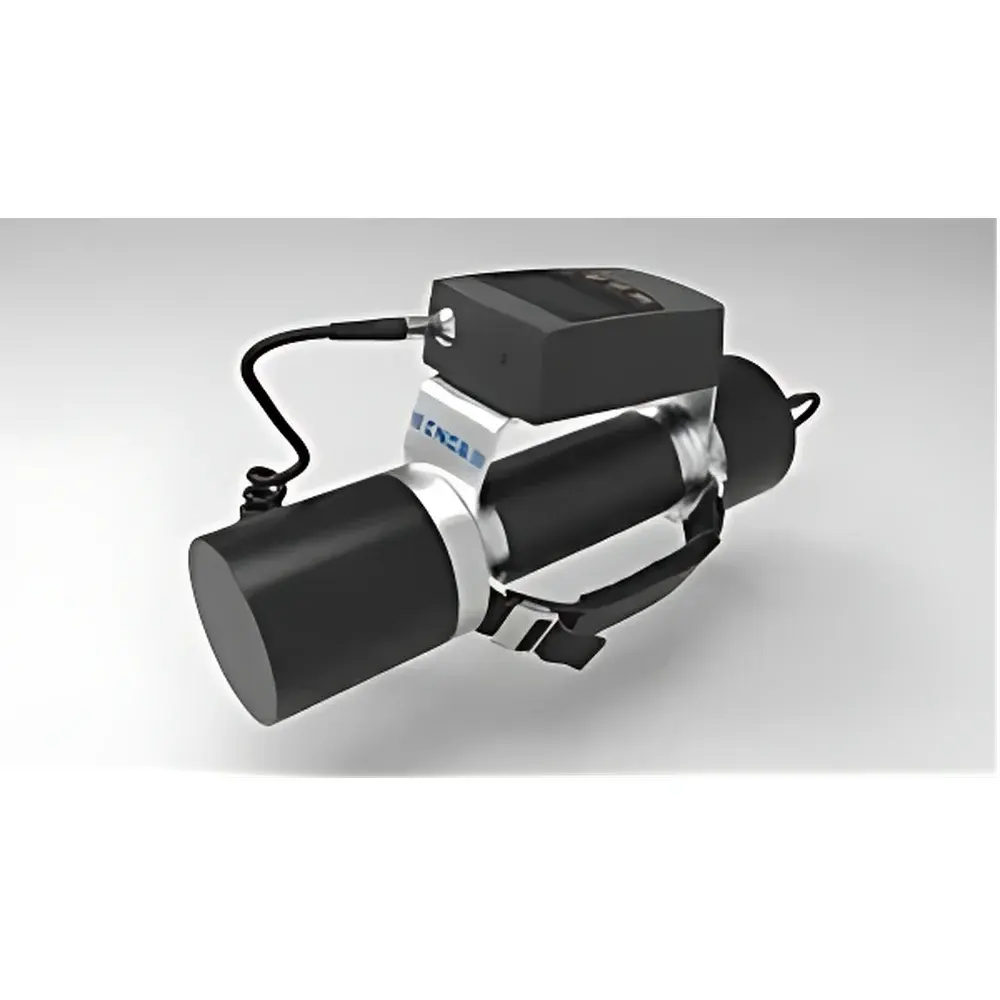
CNCS BH3103C Portable X-γ Dose Rate Meter
| Brand | CNCS |
|---|---|
| Origin | Beijing, China |
| Manufacturer Type | Authorized Distributor |
| Product Category | Domestic |
| Model | BH3103C |
| Instrument Type | Portable Dose Rate Meter |
| Radiation Type | X-ray and Gamma (γ) Radiation |
| Detector Type | Photomultiplier Tube (PMT) |
| Measurement Range | (1–10,000) × 10⁻⁸ Gy/h |
| Energy Response | 25 keV–48 keV (±40% max deviation) |
| Angular Response | ≤ ±15% (relative to max response, ¹³⁷Cs source, 0–150°) |
| Cosmic Ray Response | ±15% (vs. RS-111 ionization chamber) |
| Inherent Dose Rate Indication Error | ≤ ±10% |
| Operating Temperature | −10 °C to +40 °C |
| Power Consumption | ~400 mW |
| Battery | Ni-MH rechargeable |
| Environmental Compliance | Designed for field-deployable environmental and occupational radiation monitoring per IEC 60846-1:2014 and ISO 4037-3:2019 reference conditions |
Overview
The CNCS BH3103C Portable X-γ Dose Rate Meter is a field-deployable radiation survey instrument engineered for precise, real-time measurement of ambient air kerma rate (expressed as absorbed dose rate in Gy/h) from X-ray and gamma radiation fields. Based on photomultiplier tube (PMT) detection technology coupled with a scintillation-based sensing assembly, the BH3103C operates on the principle of light pulse amplification following ionizing radiation interaction with its detector medium. Its design prioritizes metrological stability under variable environmental conditions—particularly temperature fluctuations and cosmic background interference—making it suitable for routine environmental surveillance, regulatory compliance checks, and operational health physics tasks across diverse settings including nuclear facilities, geological exploration sites, medical imaging departments, industrial radiography zones, and building material screening laboratories.
Key Features
- High-sensitivity PMT-based detection system optimized for low-dose-rate environments, with calibrated response across 25 keV–3 MeV photon energy range
- Wide dynamic measurement span: (1–10,000) × 10⁻⁸ Gy/h (0.01–100 µGy/h), enabling detection from natural background levels to elevated occupational exposure scenarios
- Stable angular response (≤ ±15% deviation over 0–150° relative to maximum response using ¹³⁷Cs reference source), ensuring reliable readings regardless of probe orientation during handheld surveys
- Integrated real-time clock with non-volatile memory for timestamped data logging; retains stored measurements after power loss
- Configurable dose rate threshold alarm with audible and visual indicators for immediate operator notification
- Ni-MH rechargeable battery system supporting ≥24 hours of continuous operation or up to 50 hours of intermittent use (subject to 4-hour max continuous duty cycle followed by ≥1-hour cooldown)
- Low-power architecture (~400 mW typical consumption) and lightweight ergonomic housing for extended field deployment
Sample Compatibility & Compliance
The BH3103C is intended for direct measurement of photon radiation fields in air—no sample preparation or media conversion is required. It meets fundamental performance criteria defined in IEC 60846-1:2014 (Radiation protection instrumentation – Ambient and/or directional dose equivalent (rate) meters and/or monitors for beta, X and gamma radiation) and aligns with energy response tolerances specified in ISO 4037-3:2019 (X and gamma reference radiation for calibrating dosemeters and doserate meters). Its cosmic ray response deviation (±15% vs. RS-111 ionization chamber reference) supports consistent baseline correction in high-altitude or low-background monitoring applications. The instrument is not designed for neutron, alpha, or beta particle detection, nor for immersion or sealed-source calibration without external collimation or filtration.
Software & Data Management
Data output is supported via built-in LCD display with real-time dose rate, accumulated dose, battery status, and time/date stamping. Logged datasets (up to 1,000 records) are accessible through on-device query navigation and exportable to external printers via optional serial interface. While no proprietary PC software is bundled, raw ASCII-formatted logs adhere to ANSI/IEEE C37.118.2-compliant timestamping conventions, facilitating integration into laboratory information management systems (LIMS) or audit-ready reporting workflows. All stored entries include automatic audit trail metadata (timestamp, measurement value, unit, alarm status), satisfying basic GLP documentation requirements for environmental radiation monitoring programs.
Applications
- Environmental radiation baseline mapping and long-term trend analysis in urban, rural, and geologically active regions
- Radioactivity screening of construction materials (e.g., granite, fly ash, recycled aggregates) per national standards GB 6566–2010 and EU Council Directive 2013/59/Euratom
- Occupational dose rate verification around diagnostic X-ray equipment, radiotherapy bunkers, and industrial radiography enclosures
- Field support for emergency response teams conducting rapid radiological assessment post-incident or during transport security inspections
- Supporting decommissioning surveys at legacy nuclear sites and uranium mining areas where gamma-emitting nuclides (e.g., ²²⁶Ra, ⁴⁰K, ¹³⁷Cs) dominate ambient fields
- Calibration verification against secondary standard reference sources traceable to NIM (National Institute of Metrology, China) or other BIPM-affiliated NMIs
FAQ
What radiation types does the BH3103C detect?
The BH3103C is specifically calibrated for X-ray and gamma (γ) photon radiation. It does not respond meaningfully to alpha, beta, or neutron radiation.
Is the instrument suitable for use in extreme temperatures?
It is rated for operation between −10 °C and +40 °C. Performance deviations exceeding ±30% may occur outside this range, particularly near thermal extremes.
How is energy dependence corrected during field measurements?
The device incorporates factory-applied energy compensation filters and firmware-based correction curves aligned with ISO 4037 reference spectra; users should apply site-specific correction factors when measuring monoenergetic sources outside the 48 keV–3 MeV band.
Does the BH3103C comply with FDA or EPA regulatory requirements?
While not FDA-cleared as a medical device, its metrological characteristics satisfy EPA Method NAREL-RP-001-2022 for environmental gamma survey instruments and are accepted for use in U.S. NRC licensee programs under Appendix A to 10 CFR Part 20.
Can measurement data be exported to Excel or LIMS platforms?
Yes—via optional RS-232 interface and ASCII text dump protocol; no proprietary drivers or cloud sync are required.







