
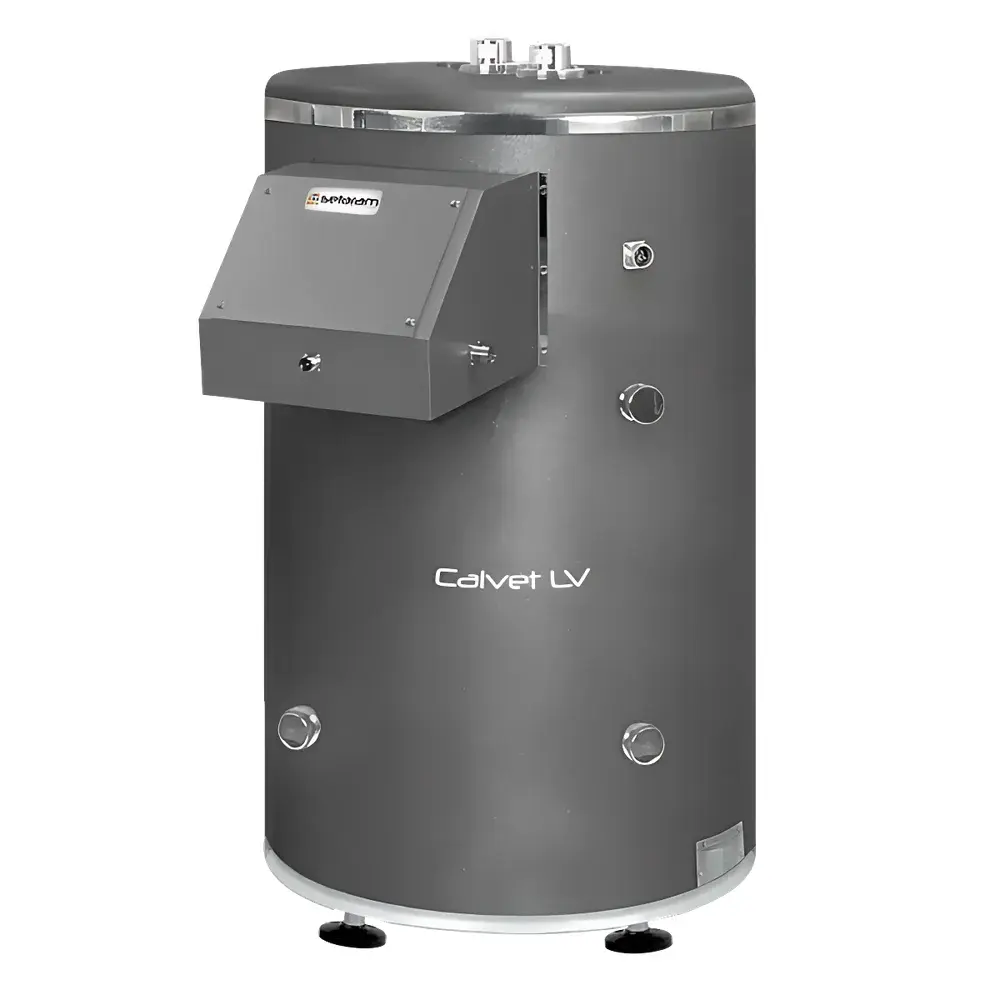
SETARAM Calvet LV Microcalorimeter
| Brand | SETARAM |
|---|---|
| Origin | France |
| Model | Calvet LV |
| Instrument Type | Reaction Calorimeter |
| Measurement Mode | Isothermal |
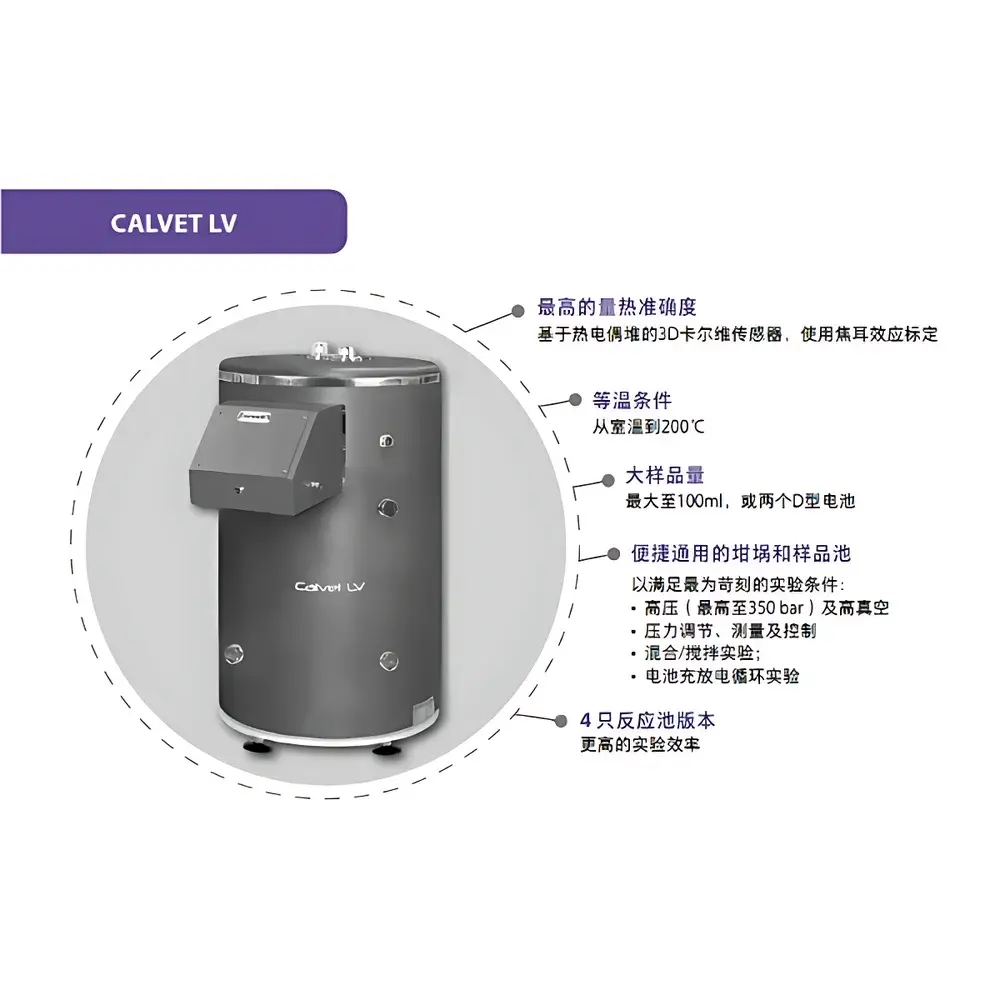
| Temperature Range | Ambient to 200 °C |
| Sample Capacity | Up to 100 mL (e.g., two D-cell batteries) |
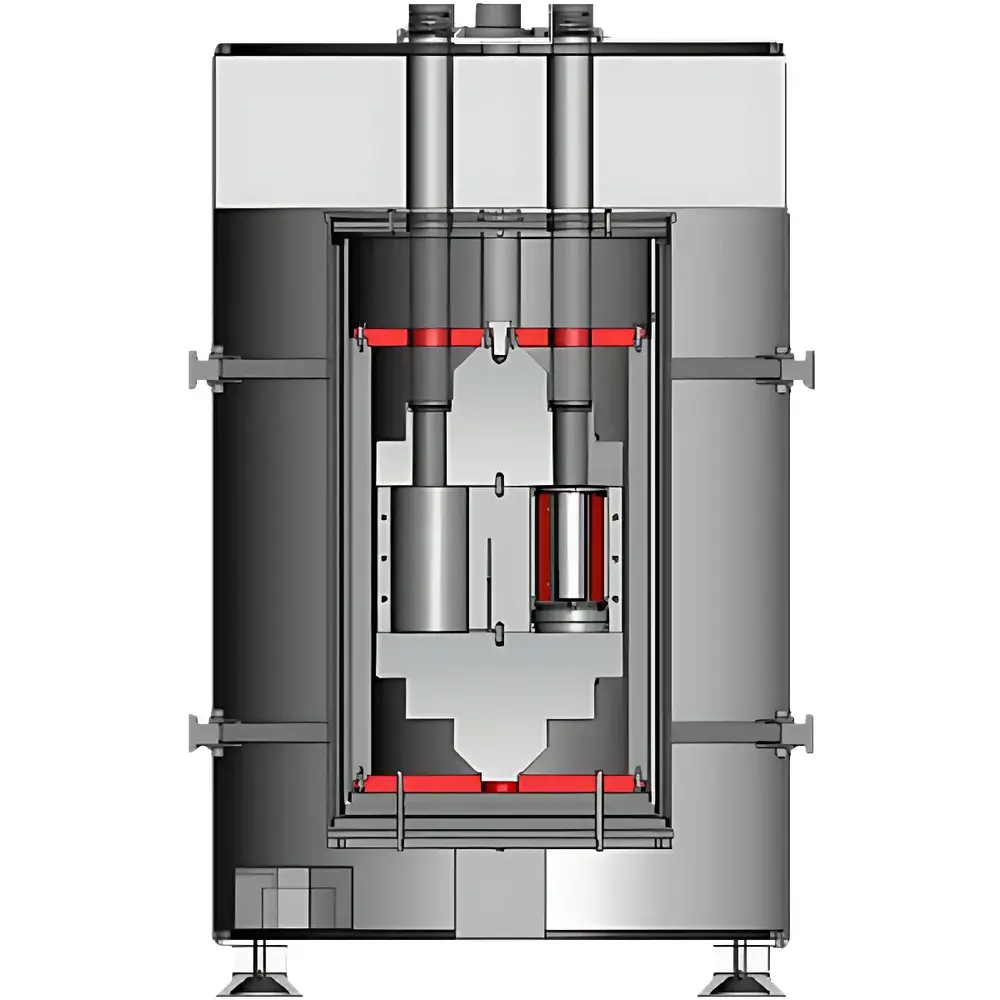
| Sensor Architecture | 2- or 4-channel 3D Calvet thermopile (up to 1,316 thermocouples per stack) |
| Pressure Capability | Up to 350 bar |
| Vacuum Compatibility | High vacuum |
| Optional Functions | In-situ stirring, gas flow control, electrochemical cycling (battery charge/discharge), pressure regulation & monitoring |
| Compliance | Designed for GLP/GMP-aligned workflows |
Overview
The SETARAM Calvet LV Microcalorimeter is a high-precision, isothermal reaction calorimeter engineered for quantitative heat flow measurement in macro-scale samples under rigorously controlled thermal and environmental conditions. Unlike differential scanning or heat-flux calorimeters, the Calvet LV employs a true 3D Calvet sensor architecture—comprising two or four concentric cylindrical thermopile stacks, each containing up to 1,316 thermocouples—to fully surround the sample and reference zones. This geometry ensures near-zero heat loss and exceptional thermal isolation, enabling direct, absolute measurement of heat flow (in mW) with high reproducibility and long-term baseline stability. The instrument operates exclusively in isothermal mode across a temperature range from ambient to 200 °C, making it suitable for extended kinetic studies, safety screening of exothermic reactions, and thermodynamic characterization where sample mass and environmental fidelity are critical—such as in battery electrode degradation analysis, cement hydration kinetics, or whole-organism metabolic heat profiling.
Key Features
- 3D Calvet thermopile sensor: Dual- or quad-channel configuration with full radial, axial, and circumferential heat flux detection—no directional bias or edge-loss artifacts.
- Large-volume sample compatibility: Accommodates up to 100 mL liquid, solid, or composite samples—including standard D-cell batteries, mortar specimens, or sealed biological vessels.
- Integrated environmental control: Supports high-pressure operation (up to 350 bar), high-vacuum environments (<10⁻³ mbar), precise pressure regulation with real-time monitoring, and programmable gas flow management.
- Modular sample cell design: Standard stainless-steel or Hastelloy® cylindrical cells; custom-engineered variants available for stirring, electrochemical coupling, vapor-phase equilibration, or multi-phase reaction monitoring.
- Thermal calibration via Joule effect: Traceable, in situ electrical calibration at every operating temperature (ambient to 200 °C), eliminating drift-related uncertainty and ensuring metrological integrity per ISO/IEC 17025 requirements.
- Dual- or quad-position measurement head: Configurable for single-sample + reference, parallel dual-sample comparison, or redundancy-enabled validation runs.
Sample Compatibility & Compliance
The Calvet LV accommodates heterogeneous, reactive, and physically constrained samples without compromising thermal fidelity. Its robust cell materials—including corrosion-resistant alloys (e.g., Inconel 718, MP35N) and chemically inert fluoropolymers—enable safe testing of aggressive electrolytes, alkaline cements, pyrophoric organometallics, and physiological media. The system is routinely deployed in laboratories adhering to Good Laboratory Practice (GLP) and Good Manufacturing Practice (GMP) frameworks. Data acquisition and audit trails comply with FDA 21 CFR Part 11 requirements when paired with SETARAM’s certified software suite. Thermal stability assessments align with ASTM E698 (kinetic analysis of decomposition), ISO 11358 (polymer thermal behavior), and USP (heat of solution and compatibility testing for pharmaceutical formulations).
Software & Data Management
Control and analysis are executed via SETARAM’s C80/Calvet-specific software platform, which provides real-time heat flow visualization, multi-parameter synchronization (temperature, pressure, voltage, current), and automated event tagging. Raw thermopile voltage data is acquired at ≥10 Hz and converted to calibrated heat flow using NIST-traceable coefficients. The software supports batch processing, kinetic modeling (e.g., Ozawa-Flynn-Wall, ASTM E698 isoconversional methods), and export to CSV, HDF5, or LIMS-compatible formats. All user actions, parameter changes, and calibration events are time-stamped and logged with operator ID—enabling full auditability for regulatory submissions.
Applications
- Battery R&D: Quantification of heat generation during charge/discharge cycles, SEI formation enthalpy, and thermal runaway onset thresholds in full-cell or pouch configurations.
- Construction materials science: Hydration enthalpy profiling of alkali-activated binders, pozzolanic reactivity assessment, and admixture compatibility screening under simulated curing conditions.
- Pharmaceutical development: Excipient–API interaction screening, polymorph stability mapping, and dissolution thermodynamics in non-aqueous media.
- Biological thermodynamics: Whole-animal or tissue-level metabolic heat output measurement under normoxic/hypoxic conditions—compatible with respirometry integration.
- Chemical process safety: Adiabatic temperature rise prediction (ΔTad) and time-to-maximum-rate (TMRad) estimation for nitration, oxidation, and polymerization reactions at pilot-scale representative masses.
FAQ
What distinguishes the Calvet LV from conventional DSC or TAM microcalorimeters?
The Calvet LV uses absolute, 3D-enclosed thermopile sensing rather than relative temperature differentials. It measures total heat flow—not just heat capacity changes—and supports gram-to-100-mL sample masses, unlike µW-range DSC or nW-resolution TAM systems.
Can the Calvet LV perform non-isothermal measurements?
No. The Calvet LV is strictly an isothermal calorimeter. Temperature ramping is not supported; however, isothermal setpoints can be changed between experiments with full thermal equilibration verification.
Is pressure control integrated or externally interfaced?
All pressure regulation, transduction, and feedback control are fully integrated into the instrument’s hardware and software stack—including proportional valves, piezoresistive transducers, and closed-loop PID algorithms.
How is calibration traceability maintained across the 200 °C range?
Joule-effect calibration is performed automatically at each target temperature using precision current sources and certified shunt resistors, with calibration coefficients stored and applied in real time during data acquisition.
Are custom sample cells validated for regulatory use?
Yes—custom cells undergo mechanical, thermal, and leak-integrity validation per ASME B31.3 and PED 2014/68/EU guidelines. Documentation packages (including FEA reports and material certifications) are provided upon request for audit readiness.



