
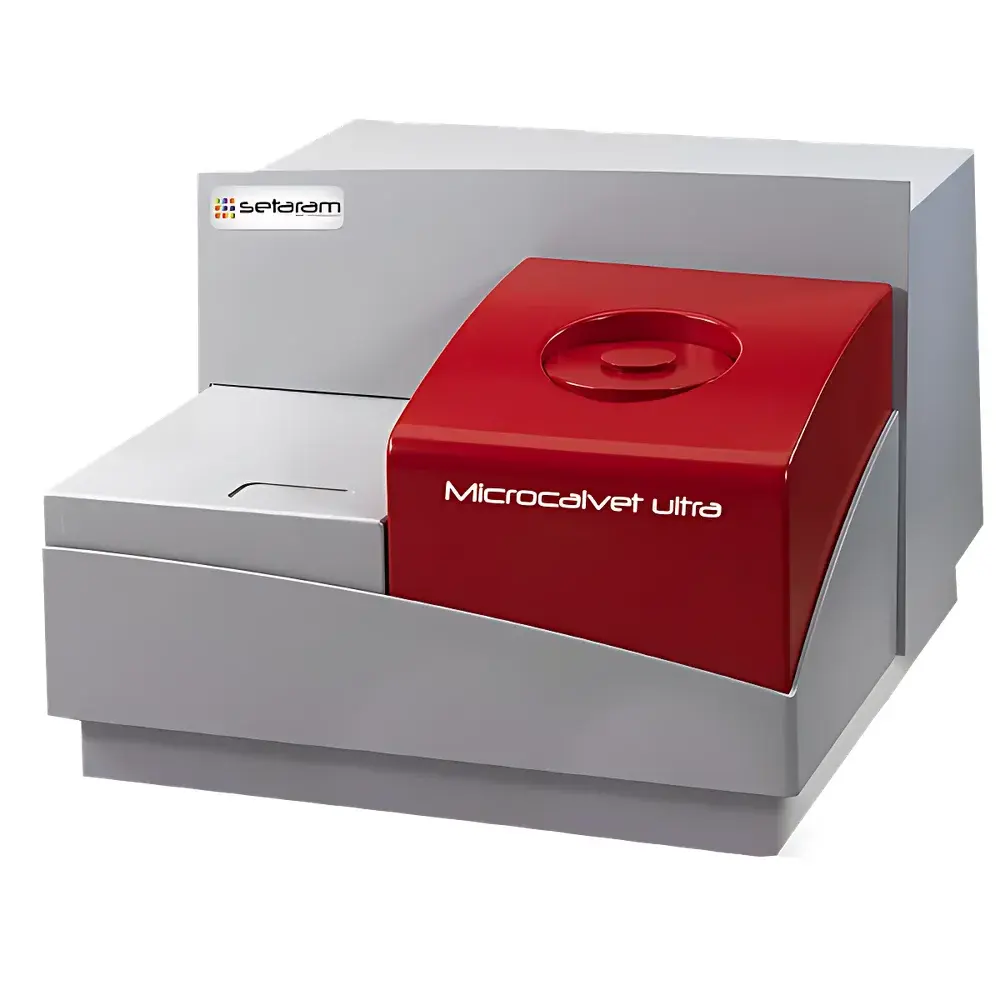
SETARAM Microcalvet Ultra Microcalorimeter
| Brand | SETARAM |
|---|---|
| Origin | France |
| Model | Microcalvet Ultra |
| Instrument Type | Reaction Calorimeter |
| Measurement Mode | Isothermal & Scanning Calorimetry |
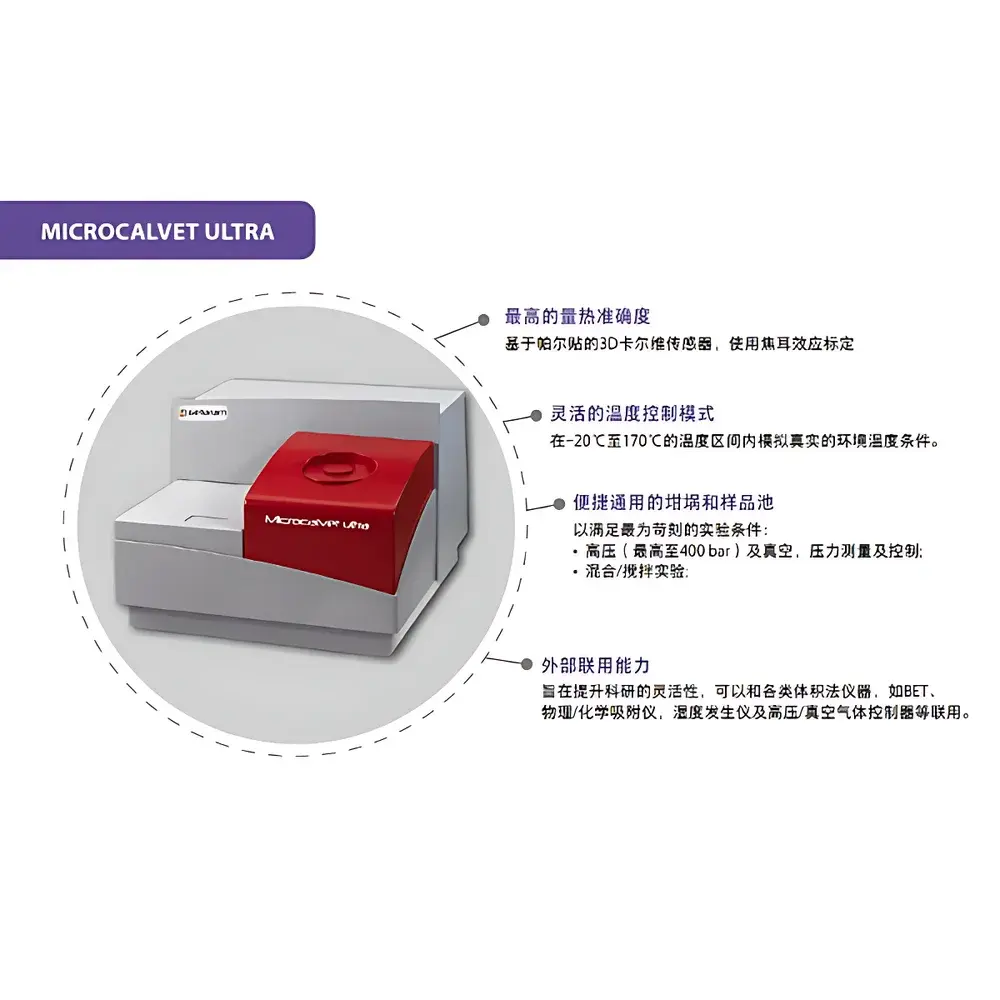
| Temperature Range | –20 °C to 170 °C |
| Sensitivity | Sub-microwatt (µW) thermal power resolution |
| Sample Environment | Compatible with high-pressure (up to 400 bar), vacuum, gas-controlled, and stirred/mixed configurations |
| Interfacing Capability | Integrated coupling with BET surface analyzers, physicochemical adsorption systems, humidity generators, and high-pressure/vacuum gas controllers |
| Calibration Method | Joule calibration with 3D Calvet sensor architecture |
| Sample Cell Options | Interchangeable, chemically resistant, easy-clean crucibles for solids, powders, gels, liquids, and slurries |
| Compliance | Designed for GLP/GMP environments |
Overview
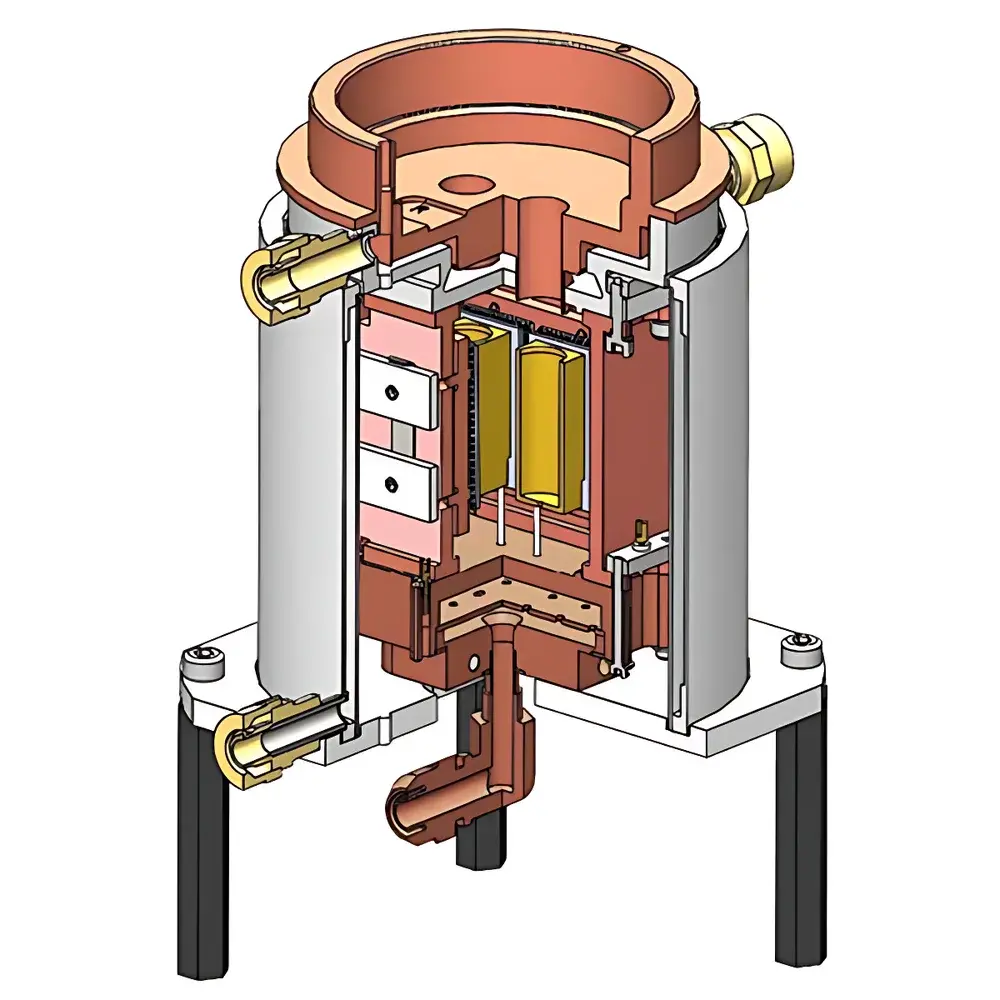
The SETARAM Microcalvet Ultra is a high-precision, three-dimensional Calvet-type microcalorimeter engineered for quantitative measurement of heat flow in chemical, biochemical, and physical processes. Unlike conventional differential scanning calorimeters (DSC) or heat conduction calorimeters, the Microcalvet Ultra employs a symmetric, spherical thermopile sensor array surrounding both sample and reference positions—enabling near-ideal heat flux detection with minimal thermal lag and exceptional signal-to-noise ratio. This architecture, combined with Joule-effect calibration traceable to SI units, delivers absolute thermal power accuracy down to the sub-microwatt level. The instrument operates across a broad isothermal and scanning temperature range (–20 °C to 170 °C), supporting kinetic studies, stability assessments, binding thermodynamics, and reaction enthalpy quantification under realistic process-relevant conditions—including controlled atmospheres, variable pressure, and dynamic mixing.
Key Features
- 3D Calvet Sensor Architecture: A fully symmetric, multi-junction thermopile encircling both sample and reference positions ensures near-zero thermal resistance and uniform sensitivity across all orientations—critical for reproducible microcalorimetric data.
- Joule Calibration Standard: On-board electrical calibration using precise current/voltage inputs eliminates reliance on reference materials, providing direct traceability to fundamental SI units and ensuring long-term measurement stability.
- Flexible Thermal Control System: Dual-zone Peltier-based heating/cooling enables rapid, stable isothermal holds and linear scanning rates from 0.01 to 5 °C/min—without external chillers or liquid nitrogen.
- Modular Sample Environment: Supports interchangeable, autoclavable sample cells rated for pressures up to 400 bar and full vacuum, with integrated pressure transducers, gas inlet/outlet ports, and optional magnetic stirring.
- Multi-Modal Coupling Interface: Native hardware and software protocols allow synchronized operation with BET surface area analyzers, physisorption/chemisorption instruments, humidity control modules, and high-pressure gas dosing systems.
Sample Compatibility & Compliance
The Microcalvet Ultra accommodates diverse sample formats—including powders, polymers, biological macromolecules (proteins, nucleic acids), catalysts, pharmaceutical formulations, and heterogeneous slurries—without requiring extensive sample preparation. Its corrosion-resistant cell materials (Hastelloy C-276, sapphire, quartz, and PEEK) ensure compatibility with aggressive solvents, acidic/basic media, and reactive gases. From a regulatory standpoint, the system is designed to support Good Laboratory Practice (GLP) and Good Manufacturing Practice (GMP) workflows. When paired with SETARAM’s CALISTO software configured for 21 CFR Part 11 compliance, it provides role-based user access, electronic signatures, full audit trails, and immutable raw data archiving—meeting requirements for regulated pharmaceutical development and quality control laboratories.
Software & Data Management
CALISTO software serves as the unified platform for instrument control, real-time data acquisition, and advanced thermodynamic modeling. It supports automated method sequencing, baseline subtraction algorithms optimized for low-signal experiments, and built-in models for binding stoichiometry (e.g., ITC-style analysis), reaction kinetics (n-th order, autocatalytic), and phase transition thermodynamics. Raw data files (.cal) are stored in vendor-neutral HDF5 format, enabling third-party integration via Python APIs or MATLAB toolboxes. All processing steps—including integration limits, baseline corrections, and unit conversions—are logged within the audit trail and can be re-executed to verify analytical reproducibility.
Applications
- Protein-ligand binding thermodynamics and stoichiometry in drug discovery
- Hydration/dehydration energetics of amorphous pharmaceuticals and excipients
- Catalyst activation energy and deactivation kinetics under simulated reactor conditions
- Polymer crystallization exotherms and glass transition enthalpies at ultra-low heat flows
- Gas adsorption/desorption enthalpies coupled with BET or TPD instrumentation
- Electrolyte decomposition pathways in battery material R&D
- Microbial metabolic heat output as a proxy for viability and growth inhibition
FAQ
What distinguishes the Microcalvet Ultra from conventional DSC instruments?
Unlike DSC, which measures temperature differentials between sample and reference, the Microcalvet Ultra directly quantifies absolute heat flow via a 3D thermopile—offering superior sensitivity, linearity, and baseline stability for low-energy events.
Can the Microcalvet Ultra perform experiments under inert or reactive gas atmospheres?
Yes—it features sealed, gastight sample cells with dual gas inlets and mass flow controllers, supporting continuous purge, static overpressure, or dynamic gas composition changes during measurement.
Is pressure control integrated into the base system, or does it require external hardware?
High-pressure capability (up to 400 bar) is native: the instrument includes integrated pressure transducers, safety interlocks, and PID-controlled gas dosing valves—no third-party controllers are needed for standard operation.
How is calibration verified over time?
Joule calibration is performed in situ prior to each experiment or at user-defined intervals; calibration logs—including voltage, current, and derived thermal resistance—are automatically archived with raw data.
Does the system support automated sample changers?
While the Microcalvet Ultra does not include a robotic autosampler, its modular cell design and standardized mounting interface enable integration with third-party liquid handlers or custom automation platforms via TTL and RS-232 triggers.



