
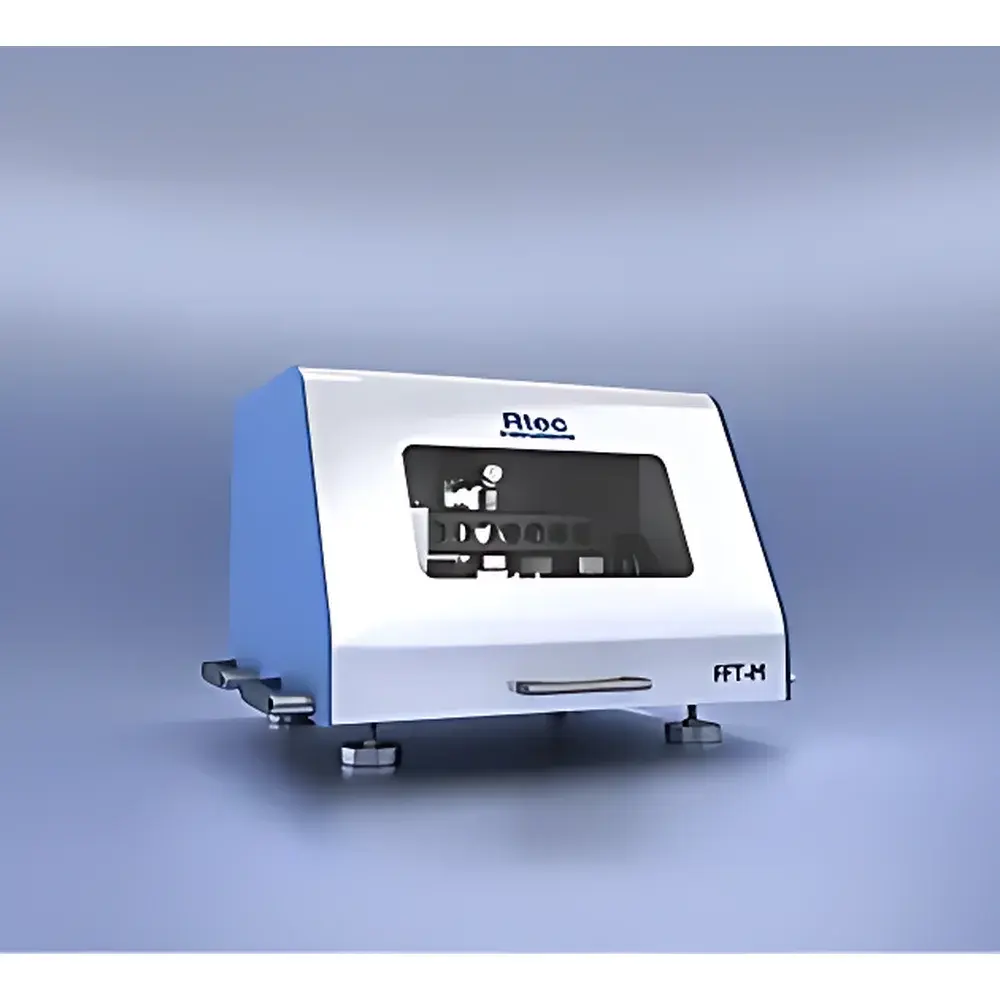
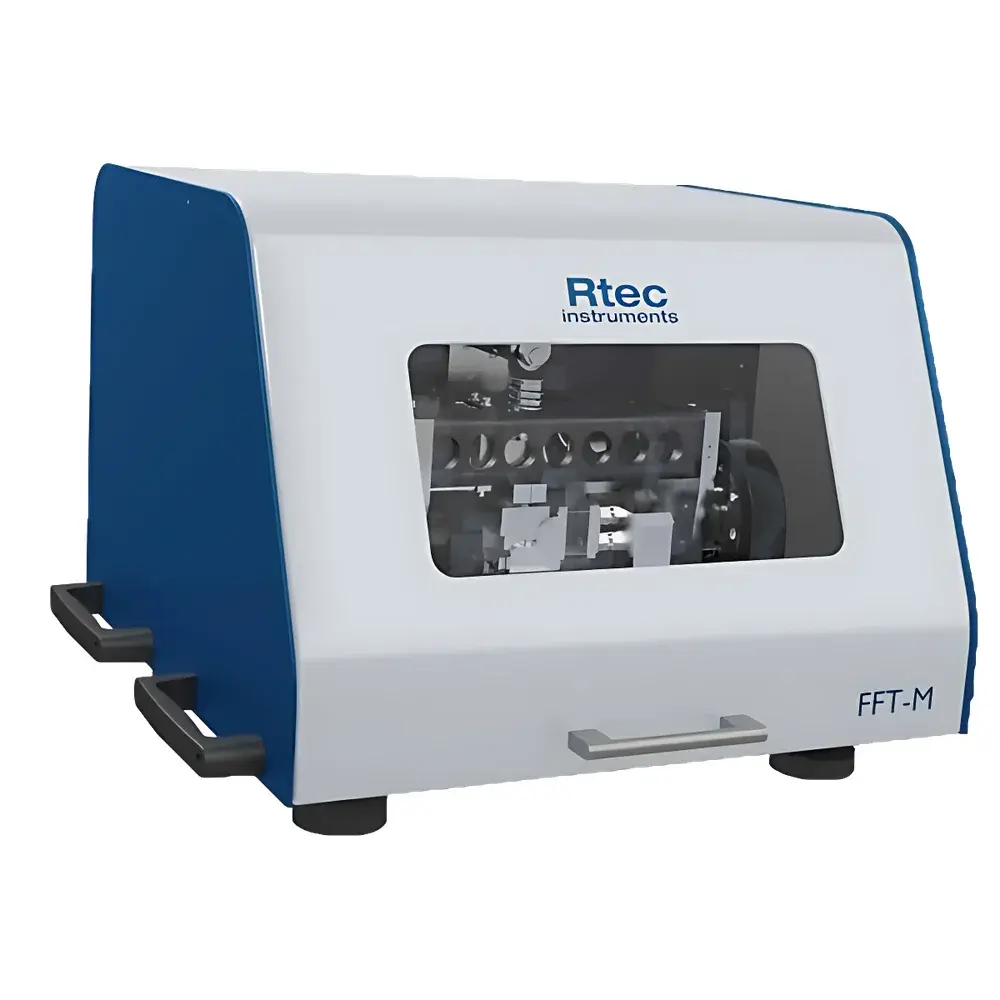
Rtec FFT-M High-Frequency Reciprocating Rig (HFRR) for Diesel Fuel Lubricity and Fretting Wear Testing
| Brand | Rtec |
|---|---|
| Origin | Switzerland |
| Model | FFT-M |
| Application | Lubricity & Wear Evaluation of Diesel/Gasoline Fuels |
| Standards Compliance | ASTM D6079, ISO 12156-1, SH/T 0765-2005 |
| Frequency Range | 0.1–300 Hz |
| Stroke | 10 µm–4.0 mm |
| Load Capacity | Up to 10 N or 300 N (configurable) |
| Temperature Range | −40 °C to +500 °C |
| Humidity Control | 5–95% RH (closed-loop) |
| Ball Diameter | Standard 6 mm (1.6–12.7 mm optional) |
| Disk Dimensions | 10 mm diameter × 3 mm thickness (custom sizes available) |
| Real-time Force Feedback | Piezoelectric load sensor |
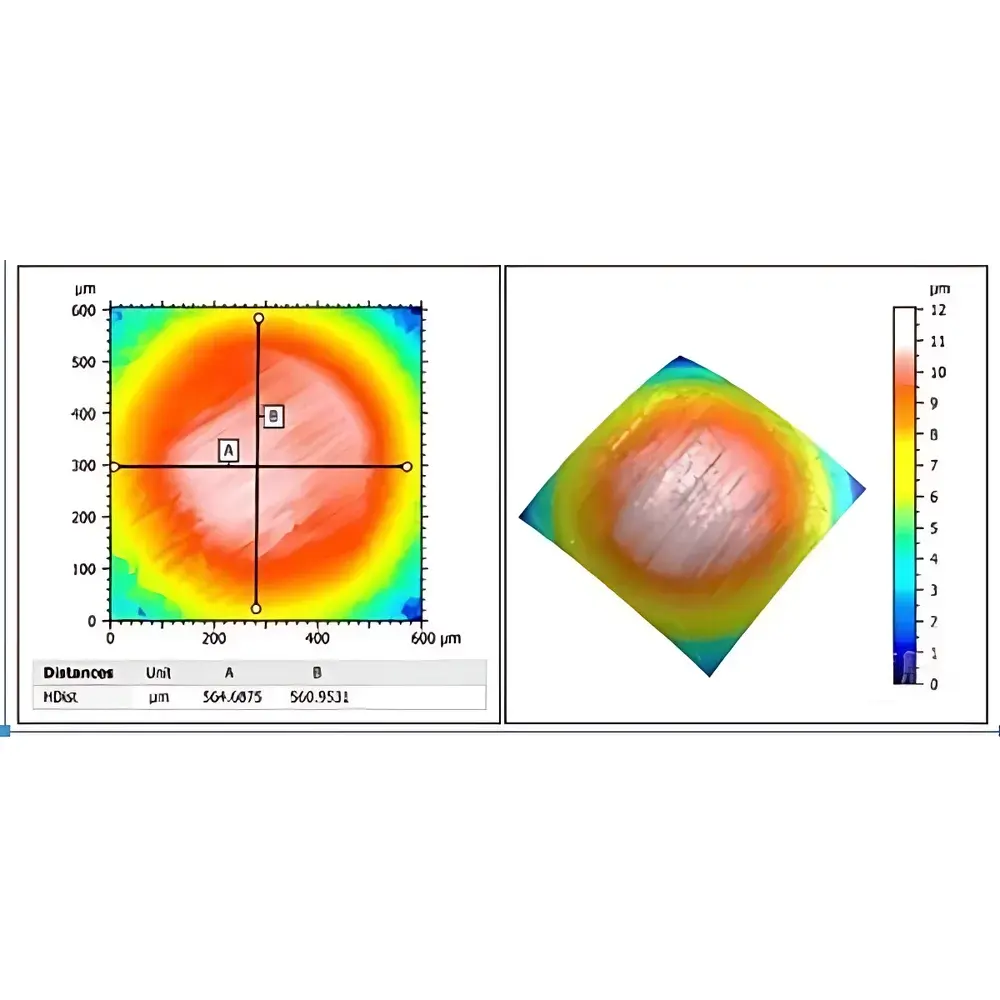
| Friction & Wear Output | Dynamic coefficient of friction, total wear scar depth, acoustic emission, in-situ film formation monitoring |
| Environmental Control | Inert gas purge capability (N₂, Ar), programmable atmosphere management |
Overview
The Rtec FFT-M High-Frequency Reciprocating Rig (HFRR) is a precision-engineered tribological testing platform designed specifically for standardized lubricity assessment of diesel and gasoline fuels under controlled mechanical, thermal, and environmental conditions. Based on the fundamental principles of reciprocating sliding contact between a spherical indenter and a flat disk—governed by Hertzian contact mechanics and dynamic shear response—the FFT-M implements high-frequency oscillatory motion to simulate boundary-lubricated conditions encountered in fuel injection systems. Unlike static or low-speed methods, the HFRR replicates the transient, high-shear-rate regime characteristic of diesel injector nozzle surfaces during operation. The instrument operates fully automatically under computer control, executing test protocols defined by ASTM D6079, ISO 12156-1, and SH/T 0765-2005 with traceable repeatability. Its modular architecture integrates piezoelectric force sensing, voice-coil actuation, and real-time closed-loop load regulation—enabling precise quantification of friction evolution, wear scar geometry, and lubricant film stability across variable temperature, humidity, and atmospheric environments.
Key Features
- Real-time, closed-loop normal force control with programmable load profiles (step, ramp, sinusoidal), supported by high-resolution piezoelectric load sensors (±0.01 N resolution)
- Voice-coil linear actuator delivering stable, low-inertia reciprocation from 0.1 Hz to 300 Hz, with stroke adjustable from 10 µm to 4.0 mm
- Integrated environmental chamber enabling simultaneous control of temperature (−40 °C to +500 °C), relative humidity (5–95% RH, closed-loop), and inert gas atmosphere (N₂ or Ar purging)
- Dual-channel data acquisition capturing friction force, normal load, displacement, acoustic emission, and real-time wear depth at up to 10 kHz sampling rate
- Standardized test geometry: 6 mm diameter tungsten carbide ball against 10 mm × 3 mm steel disk; optional ball diameters (1.6–12.7 mm) and disk configurations support method flexibility and material screening
- Pre-calibrated reference oils included for daily verification and inter-laboratory correlation per ASTM D6079 Annex A1
Sample Compatibility & Compliance
The FFT-M accommodates neat diesel fuels, biodiesel blends (B5–B100), gasoline formulations, and lubricity additive packages without modification. It supports direct analysis of field-collected samples and is routinely deployed in refinery QC labs, OEM fuel development centers, and independent testing facilities. The system complies with internationally recognized standards including ASTM D6079 (standard test method for evaluating diesel fuel lubricity by HFRR), ASTM D7688 (visual evaluation variant), ISO 12156-1, CECL-06-A-96, EN 590, JPI-5S-50-98, and IP 450/2000. All firmware and software modules are designed to support GLP-compliant workflows, including electronic signatures, audit trails, and data integrity features aligned with FDA 21 CFR Part 11 requirements where applicable.
Software & Data Management
Rtec Tribometer Software (v8.x) provides intuitive test setup, real-time visualization, and post-processing tools optimized for HFRR-specific outputs. Users define test sequences—including multi-cycle wear progression, temperature ramps, and humidity sweeps—via drag-and-drop workflow builder. Raw data streams (force, displacement, AE) are stored in vendor-neutral HDF5 format with embedded metadata (operator ID, calibration timestamp, environmental logs). Built-in algorithms automatically compute wear scar diameter (WSD), average coefficient of friction (COF), and film persistence index per ASTM D6079 reporting conventions. Export options include CSV, PDF reports with embedded images, and direct integration into LIMS via RESTful API. Calibration certificates, maintenance logs, and method validation records are managed within the software’s secure document repository.
Applications
- Quantitative assessment of diesel fuel lubricity for compliance with EN 590 and ASTM D975 specifications
- Evaluation of lubricity improver additives (e.g., fatty acid esters, amides) under accelerated aging and thermal stress
- Screening of alternative fuels (HVO, GTL, synthetic diesel) for injector wear compatibility
- Fundamental research on tribofilm formation mechanisms in hydrocarbon-based lubricants
- Correlation studies between HFRR-derived WSD and engine rig performance (e.g., CEC F-98-08)
- Micro-motion wear analysis (fretting) in fuel system components under oscillatory loading
FAQ
What is the primary purpose of the FFT-M HFRR system?
It is designed to measure the lubricity of diesel and gasoline fuels by quantifying wear scar diameter (WSD) and dynamic friction behavior under standardized high-frequency reciprocating conditions.
Does the FFT-M meet regulatory requirements for fuel certification?
Yes—it is validated for ASTM D6079, ISO 12156-1, and SH/T 0765-2005, and is widely accepted by national petroleum standards bodies and fuel specification authorities.
Can the FFT-M operate under non-ambient atmospheric conditions?
Yes—integrated inert gas purging and sealed chamber design allow testing under nitrogen or argon atmospheres to eliminate oxidation effects during high-temperature runs.
Is humidity control essential for diesel lubricity testing?
While not mandated by ASTM D6079, controlled humidity enables comparative studies of water-induced film breakdown and is critical for evaluating emulsified fuels or hygroscopic additives.
How is traceability ensured for routine calibration?
The system includes two certified reference oils (low- and high-wear standards), onboard calibration routines, and NIST-traceable load and displacement verification procedures documented in the software audit trail.






