
Kissei SleepSign Animal Sleep Analysis Software
| Brand | Kissei |
|---|---|
| Origin | Japan |
| Model | SleepSign |
| Import Status | Imported |
| Distribution Type | Authorized Distributor |
| Price Range | USD 7,000 – 14,000 (FOB Japan) |
Overview
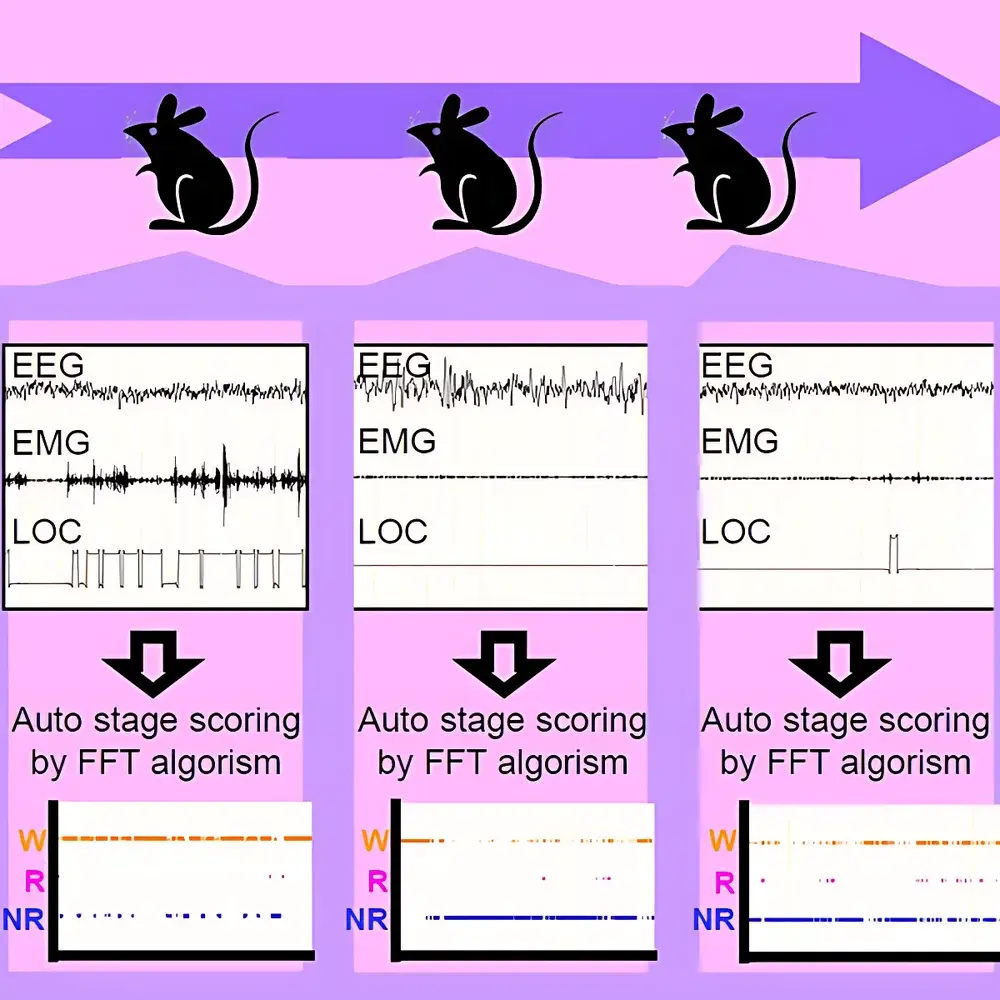
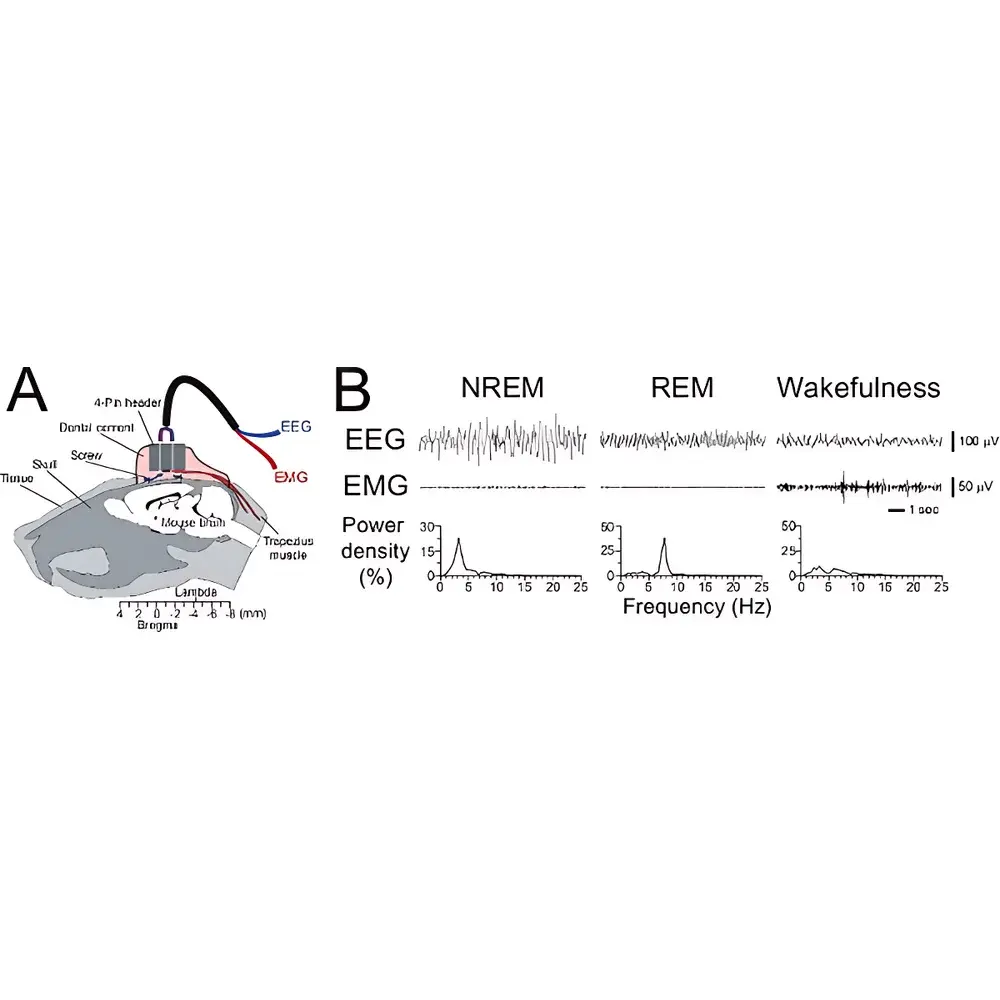
SleepSign is a rigorously validated, research-grade software platform developed by Kissei Pharmaceutical Co., Ltd. (Japan) for quantitative polysomnographic analysis in preclinical sleep research. Engineered for precision and reproducibility, SleepSign processes electrophysiological signals—primarily EEG (electroencephalogram) and EMG (electromyogram)—to enable objective, standardized staging of vigilance states in rodent and other small animal models. Its core analytical architecture implements time-domain amplitude-thresholding and frequency-domain spectral decomposition (via Fast Fourier Transform) to discriminate wakefulness, non-REM (NREM), and REM sleep stages in accordance with internationally accepted rodent sleep scoring criteria (e.g., modified Rechtschaffen & Kales rules adapted for murine neurophysiology). Designed for integration with standard analog/digital acquisition systems (e.g., Grass, TDT, Intan, or Spike2-compatible hardware), SleepSign supports both acute and chronic longitudinal studies under controlled photoperiods, sleep deprivation paradigms, pharmacological challenge, or genetic intervention protocols.
Key Features
- Multi-scale waveform visualization: View raw or filtered EEG/EMG traces across configurable time windows—from 4 seconds to 24 hours—with synchronized event annotation overlay (e.g., stimulus onset, behavioral triggers, artifact flags).
- FFT spectral preview: Real-time power spectral density estimation in a dedicated FFT panel, enabling immediate assessment of dominant frequency bands (delta: 0.5–4 Hz; theta: 6–9 Hz; sigma: 10–15 Hz; gamma: 30–80 Hz) during selected epochs.
- Adaptable automated staging: Rule-based algorithm that classifies vigilance states using user-adjustable thresholds for EEG amplitude, EMG variance, and spectral power ratios—fully customizable per strain, age, or experimental condition.
- Bulk multi-animal batch processing: Apply identical scoring parameters across multiple subjects simultaneously, preserving inter-subject consistency while reducing manual review burden by >70% compared to fully manual scoring workflows.
- Hybrid scoring workflow: Seamless transition between automated output and manual refinement via intuitive mouse-driven or numeric keypad navigation—supporting three- or five-line display modes for optimized visual ergonomics.
- Project-defined epoch exclusion: Designate specific time intervals (e.g., post-injection recovery, light-transition artifacts) as “non-analytical” zones—automatically excluded from FFT averaging and hypnogram computation to ensure physiological interpretability.
Sample Compatibility & Compliance
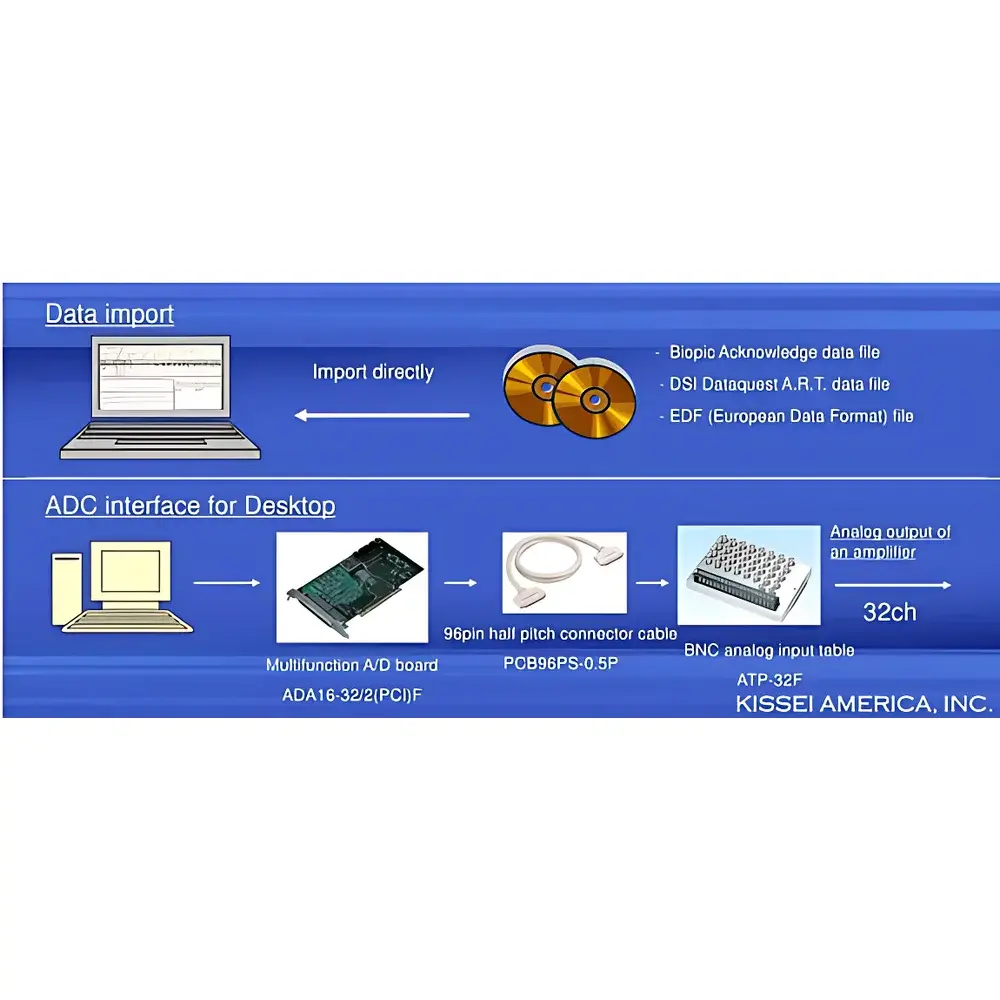
SleepSign is validated for use with common rodent species (C57BL/6, BALB/c, Sprague-Dawley, Wistar rats/mice) and compatible with standard stereotaxic EEG/EMG electrode configurations (bipolar frontal-parietal EEG, nuchal EMG). Data import supports ASCII, MATLAB (.mat), EDF+, and proprietary binary formats from major acquisition platforms. The software adheres to GLP-aligned documentation practices: all scoring decisions—whether auto-generated or manually edited—are timestamped and logged with operator ID (if configured via network authentication). Audit trails, version-controlled parameter sets, and exportable metadata meet requirements for regulatory submission support (e.g., FDA preclinical study reporting, ISO/IEC 17025-accredited labs).
Software & Data Management
- Exportable outputs include hypnograms (PNG/BMP), stage duration statistics (CSV/TXT), vigilance state transition matrices, grouped bout analysis (frequency, mean duration, SD), and averaged FFT spectra (ASCII tab-delimited).
- Batch export functionality enables automated generation of standardized reports per subject, group, or experimental cohort—facilitating meta-analysis in tools such as R, Python (SciPy/Pandas), or GraphPad Prism.
- No cloud dependency: All processing occurs locally; no telemetry, remote access, or third-party data routing—ensuring full data sovereignty and alignment with institutional IT security policies.
- Licensed per workstation; concurrent floating licenses available for core facility deployment. Includes annual technical support and minor version updates.
Applications
SleepSign supports hypothesis-driven investigation across translational neuroscience domains: circadian rhythm entrainment studies (light/dark phase comparisons), sleep homeostasis quantification (sleep rebound after deprivation), pharmacokinetic-pharmacodynamic modeling of sedative/hypnotic compounds, genetic model phenotyping (e.g., clock gene mutants, Alzheimer’s transgenic lines), and neurodevelopmental sleep maturation profiling. Its capacity to compute phase-specific spectral power (e.g., NREM delta power slope, REM theta coherence) provides biomarkers directly relevant to synaptic plasticity, metabolic clearance (glymphatic function), and disease progression metrics.
FAQ
Is SleepSign compatible with my existing data acquisition system?
Yes—SleepSign accepts standardized file formats including ASCII, EDF+, MATLAB v7.3, and vendor-specific binaries (Grass, Plexon, Tucker-Davis Technologies). Custom import modules can be commissioned for legacy or proprietary formats.
Can I modify the default staging algorithm for my specific model?
Absolutely. Thresholds for EEG power bands, EMG RMS amplitude, and cross-feature logic gates are fully editable via an intuitive GUI interface—no coding required.
Does SleepSign support FDA 21 CFR Part 11 compliance?
While SleepSign itself does not include electronic signature or role-based access control modules, its audit-log architecture (timestamped edits, parameter versioning, export traceability) satisfies foundational ALCOA+ principles and integrates with institutional LIMS or ELN systems for full Part 11 compliance.
What hardware specifications are recommended for optimal performance?
Minimum: Intel Core i5 / 16 GB RAM / 512 GB SSD. Recommended for large cohorts (>20 animals, 72-h recordings): Intel Core i7 / 32 GB RAM / 1 TB NVMe SSD.
Is technical support available outside Japan?
Yes—Kissei authorizes regional distributors to provide English-language installation assistance, protocol optimization consulting, and remote troubleshooting via secure screen-sharing sessions.
Related Products




