
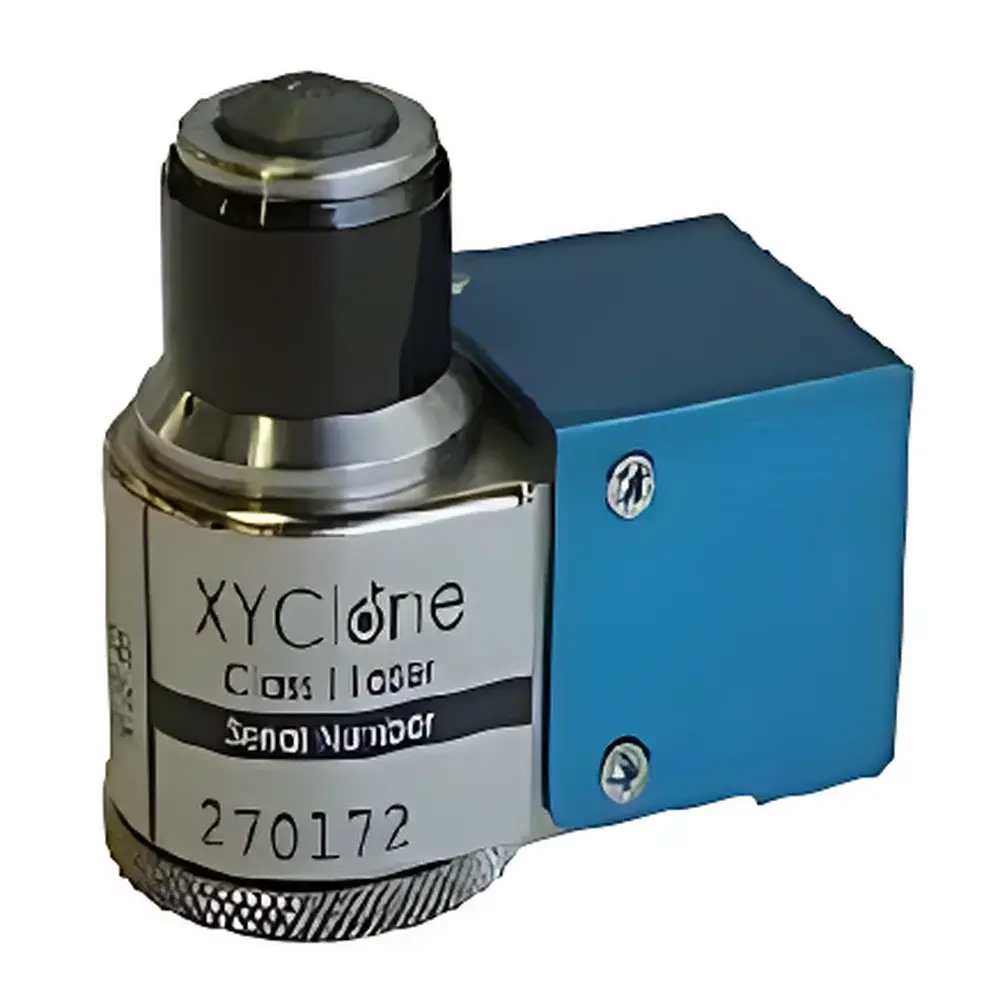
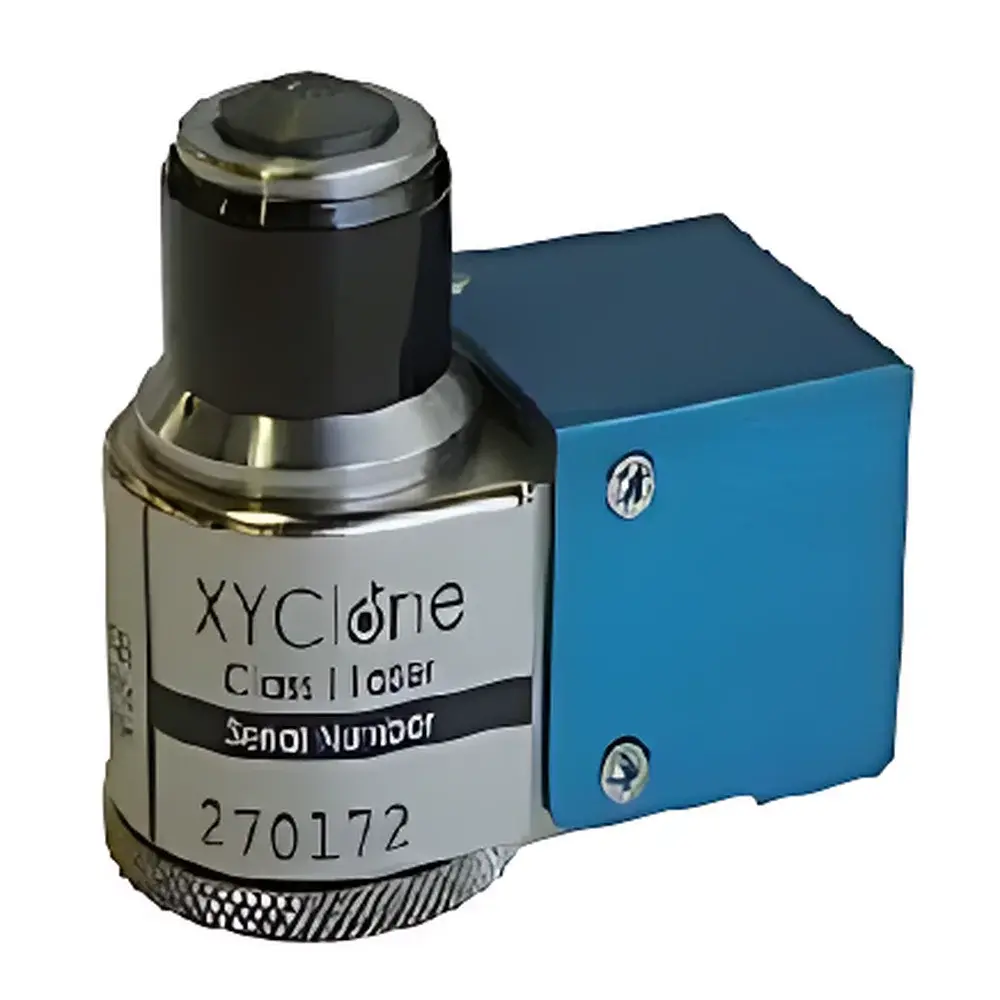
Hamilton Thorne XYClone Multi-Function Embryo Laser Zona Drilling System
| Brand | Hamilton Thorne |
|---|---|
| Origin | USA |
| Model | XYClone |
| Laser Wavelength | 1480 nm (Infrared) |
| Laser Power | 300 mW (Class I) |
| Pulse Duration | 1–3000 µs adjustable |
| Laser Intensity | 1–100% adjustable |
| Objective Magnification | 20× or 40× |
| Imaging System | High-resolution color digital or monochrome analog camera |
| Software Functions | Zona pellucida thickness measurement, embryo/nucleus/laser-hole diameter quantification, statistical reporting, temperature-ring visualization (50–100 °C), image/video capture & export |
| Compatibility | Universal mounting for inverted microscopes |
Overview
The Hamilton Thorne XYClone Multi-Function Embryo Laser Zona Drilling System is an engineered precision instrument designed for non-contact, photothermal ablation of the zona pellucida (ZP) and other cellular membranes in mammalian embryos, oocytes, and stem cell aggregates. Based on 1480 nm infrared diode laser technology, the system operates via controlled photothermal energy deposition—distinct from ultraviolet (UV) lasers that induce DNA damage and photochemical toxicity. The XYClone leverages a calibrated thermal diffusion model to generate sub-micron apertures without mechanical stress, eliminating cytoplasmic leakage, membrane rupture, or osmotic shock associated with mechanical piercing (e.g., glass microneedles) or piezoelectric drilling. Its microsecond-pulse architecture ensures precise spatiotemporal confinement of thermal energy, enabling reproducible zona thinning, assisted hatching, blastomere biopsy, and inner cell mass (ICM) isolation with high embryonic viability and developmental competence.
Key Features
- Infrared laser source at 1480 nm—eliminates UV-induced phototoxicity while maintaining strong water absorption for efficient, localized heating.
- Class I safety rating (300 mW output) with integrated interlocks and beam path shielding compliant with IEC 60825-1:2014.
- Pre-aligned optical train mounted directly onto the microscope’s nosepiece—replaces standard 20× or 40× objectives without occupying fluorescence filter slots.
- Real-time thermal visualization interface: concentric color-coded rings display isotherms (outer purple = 50 °C; inner orange = 100 °C), enabling empirical correlation between laser parameters and thermal footprint.
- Adjustable pulse duration (1–3000 µs) and intensity (1–100%) for species-specific optimization across mouse, bovine, porcine, and human embryos.
- Integrated high-resolution imaging subsystem: supports both color digital and monochrome analog cameras for documentation, morphokinetic analysis, and GLP-compliant record retention.
- Footswitch or mouse-triggered activation—designed for ergonomic, hands-free operation during micromanipulation workflows.
Sample Compatibility & Compliance
The XYClone system is validated for use with preimplantation-stage embryos (zygote to blastocyst), unfertilized oocytes, parthenotes, and pluripotent stem cell colonies. It supports zona drilling, thinning, and partial ablation protocols aligned with clinical embryology standards (e.g., ESHRE Guidelines on Assisted Reproduction). The system meets electromagnetic compatibility (EMC) requirements per FCC Part 15 and CE marking directives (2014/30/EU, 2014/35/EU). Its software architecture supports audit-trail generation, user access control, and data integrity features consistent with FDA 21 CFR Part 11 readiness when deployed in GCP/GLP environments. No hazardous consumables (e.g., mercury vapor lamps or sharpened glass capillaries) are required—reducing biosafety risks and disposal burden.
Software & Data Management
The XYClone Control Suite provides quantitative image analysis tools certified for research-grade morphometric assessment. Users can measure zona pellucida thickness (µm), embryo diameter (µm), pronuclear size (µm), and laser-induced pore diameter (µm), with automatic calculation of mean, standard deviation, and coefficient of variation. All measurements are timestamped and linked to raw image/video files stored in DICOM- or TIFF-compatible formats. Export options include CSV for statistical packages (R, Prism), PDF reports for peer-reviewed documentation, and annotated JPEG/PNG for teaching or presentation. The software supports multi-user profiles with role-based permissions and integrates seamlessly with existing LIMS platforms via standardized API endpoints.
Applications
- Assisted hatching in IVF clinics—standardized zona thinning to improve implantation rates in patients with thick or hardened zonae.
- Embryo biopsy for preimplantation genetic testing (PGT-A, PGT-M, PGT-SR) with minimal mechanical trauma.
- Isolation of inner cell mass (ICM) for embryonic stem cell derivation—enabling clean separation without enzymatic digestion or manual dissection artifacts.
- Transgenic embryo manipulation—including pronuclear injection support and blastocyst-stage gene editing delivery verification.
- Non-invasive vitrification optimization—laser-assisted zona hardening reduction prior to cryopreservation.
- Developmental biology studies requiring precise, repeatable membrane perturbation in murine, porcine, or non-human primate models.
FAQ
Is the XYClone compatible with upright microscopes?
No—the XYClone is engineered exclusively for inverted microscope configurations due to its nosepiece-mounted optical design and bottom-illumination beam path.
Does the system require routine laser alignment after relocation?
No—optical axis calibration is factory-performed and mechanically stabilized; no field recalibration is needed following transport or reinstallation.
Can XYClone be used for laser-induced cell fusion or optoporation?
Not natively—the 1480 nm wavelength and thermal mechanism are optimized for ablation, not membrane permeabilization; alternative systems with 532 nm or femtosecond lasers are recommended for those applications.
What regulatory documentation is provided for clinical validation?
Hamilton Thorne supplies ISO 13485-certified manufacturing records, technical files per MDR Annex II, and a Declaration of Conformity (DoC) for CE-marked units; clinical validation data must be generated by end users per local regulatory requirements (e.g., FDA IDE, MHRA CTA).
Is fluorescence imaging compromised when XYClone is installed?
No—because the laser module occupies the objective position rather than the epi-illumination port, all standard fluorescence filter cubes and light sources remain fully functional and accessible.



