
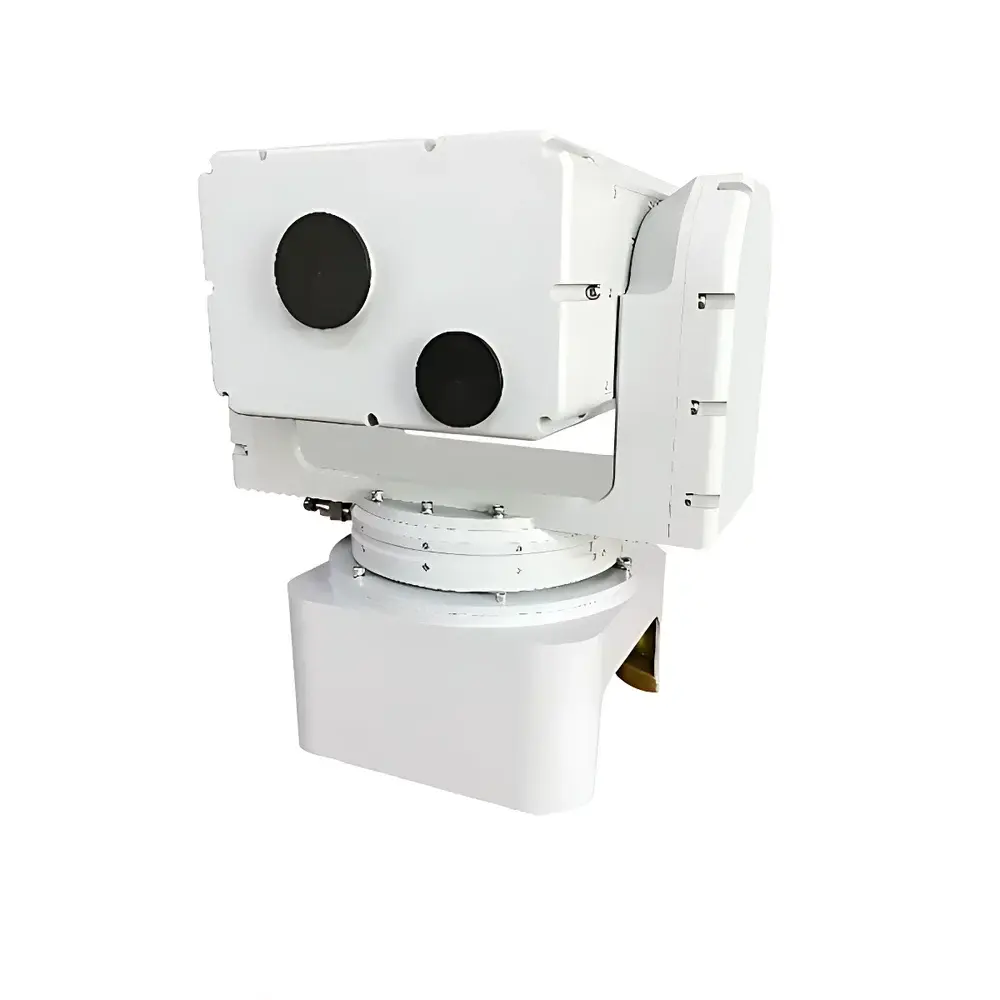
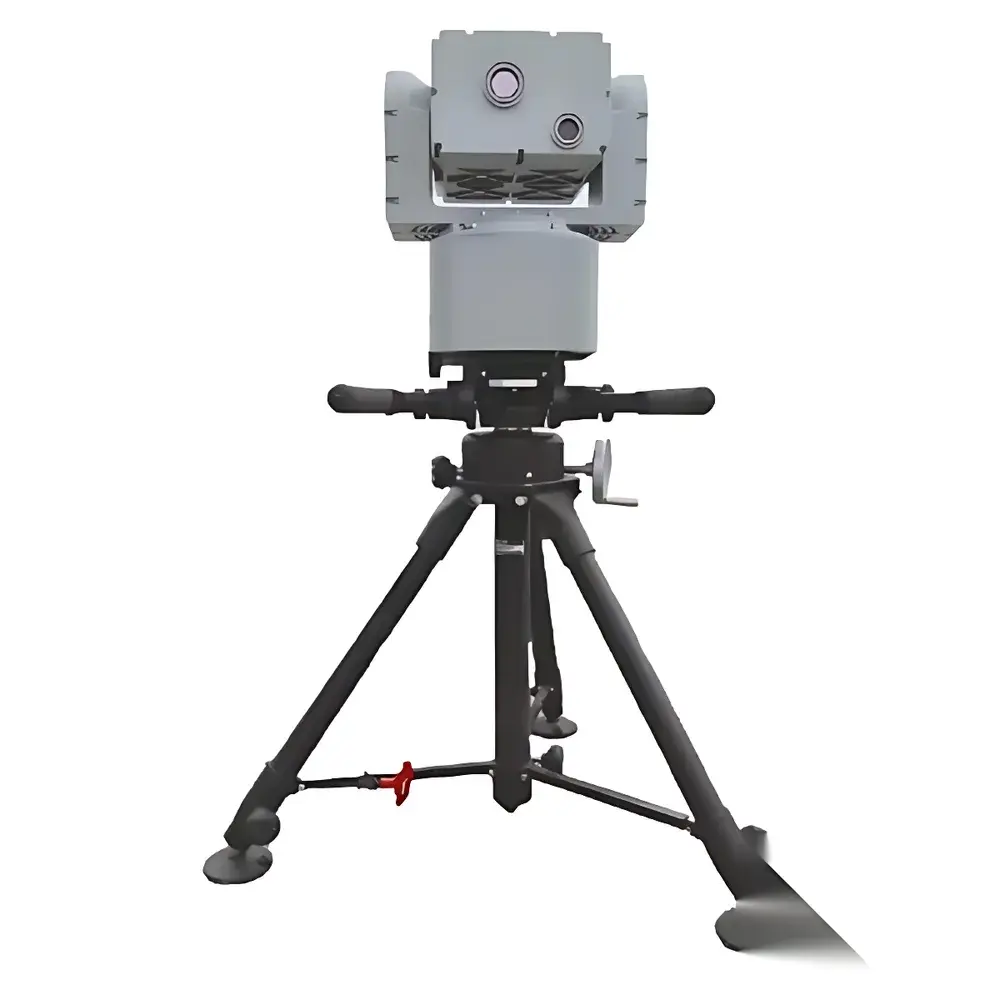
PERIC FTIR-Based Remote Toxic Gas Detection and Alarm System
| Brand | PERIC |
|---|---|
| Origin | Hebei, China |
| Manufacturer Type | Manufacturer |
| Origin Category | Domestic |
| Model | Customized FTIR-Based Remote Toxic Gas Detection and Alarm System |
| Pricing | Upon Request |
| Detector Type | Cooled HgCdTe (MCT) |
| Maximum Detection Range | 4.28 km |
| Spectral Resolution | 1.6 cm⁻¹ |
| Spectral Acquisition Rate | 20 Hz |
| Operating Temperature Range | −40°C to +65°C |
| Enclosure Rating | IP66 |
| Dimensions (L×W×H) | 370 × 320 × 500 mm |
| Weight | 28 kg |
| Explosion-Proof Certification | Certified |
| Detectable Gases | ≥10 toxic/hazardous gases (e.g., SF₆, NH₃, HCl, HF, CO, CH₄, VOCs) |
| Minimum Detectable Column Density | 32 mg/m² for SF₆ (at 5°C target-background thermal contrast) |
| Alarm Response Time | ≤1 s |
| Gas Identification Capability | Multi-component analysis under spectral overlap conditions |
| Imaging Mode | Pseudocolor IR gas cloud overlay with visible-light co-registration |
| Calibration | Automated blackbody reference calibration |
| Deployment Options | Fixed-mount or vehicle-mounted |
Overview
The PERIC FTIR-Based Remote Toxic Gas Detection and Alarm System is a passive, scanning Fourier Transform Infrared (FTIR) imaging spectrometer engineered for standoff detection and real-time alarm of hazardous gas plumes in open-air environments. Unlike point-sampling or active laser-based systems, this instrument operates on the principle of passive radiometry—capturing naturally emitted and background-transmitted infrared radiation in the 2–14 µm spectral region. Because most toxic industrial chemicals (TICs), chemical warfare agents (CWAs), and volatile organic compounds (VOCs) exhibit unique rotational-vibrational absorption/emission signatures in the long-wave infrared (LWIR), the system identifies and quantifies gas species by analyzing spectral deviations from Planckian background radiation. Detection relies critically on thermal contrast between the gas cloud and its background (≥5°C recommended), enabling reliable identification even at sub-ppm·m column densities. Designed for continuous unattended operation, the system delivers autonomous plume tracking, georeferenced alarm logging, and spectral data archiving—making it suitable for perimeter security, industrial fence-line monitoring, emergency response coordination, and wildfire smoke composition assessment.
Key Features
- Passive FTIR spectroscopy with cooled HgCdTe (MCT) focal plane array for high signal-to-noise ratio and low dark current performance
- Real-time spectral acquisition at 20 Hz, supporting dynamic plume tracking and drift velocity estimation
- 1.6 cm⁻¹ unapodized spectral resolution—sufficient to resolve narrow-band features of key toxicants including HF, HCl, NH₃, and SF₆
- Pseudocolor gas cloud visualization overlaid on co-registered visible imagery for intuitive situational awareness
- Automated blackbody-based radiometric calibration before each scan cycle, ensuring long-term spectral fidelity
- Ruggedized enclosure rated IP66 and validated for operation across −40°C to +65°C ambient conditions
- Integrated GPS/INS module for geotagged spectral data and GIS-compatible alarm export
- Explosion-proof certified design compliant with IEC 60079-0 and GB 3836 standards for Zone 1/21 hazardous locations
- Modular software architecture supporting custom spectral libraries and adaptive detection algorithms
Sample Compatibility & Compliance
The system detects gaseous analytes in ambient air without physical sampling—eliminating inlet clogging, pump failure, or cross-contamination risks inherent in extractive methods. It is validated for ≥10 target compounds—including sulfur hexafluoride (SF₆), ammonia (NH₃), hydrogen chloride (HCl), hydrogen fluoride (HF), carbon monoxide (CO), methane (CH₄), and common aromatic and chlorinated VOCs—with spectral library extensibility via user-defined reference spectra. All detection algorithms comply with ASTM E2887-22 (Standard Practice for Passive FTIR Remote Sensing of Gaseous Effluents) and align with ISO 14001 environmental monitoring framework requirements. The device meets electromagnetic compatibility (EMC) per EN 61326-1 and environmental stress testing per MIL-STD-810G for shock, vibration, and thermal cycling. Third-party verification includes full-range detection validation at 4.28 km under controlled release conditions, with documented multi-component discrimination capability under spectral interference scenarios.
Software & Data Management
The embedded control software provides a graphical user interface (GUI) optimized for field operators—featuring real-time spectral display, alarm threshold configuration, historical event review, and device health diagnostics. Raw interferograms and calibrated spectra are stored in HDF5 format with embedded metadata (GPS coordinates, UTC timestamp, detector temperature, optical path length). Data export supports CSV, NetCDF, and XML formats compatible with EPA’s AERMOD dispersion modeling inputs and GIS platforms such as ArcGIS Pro and QGIS. Audit trails record all operator actions, parameter changes, and calibration events in accordance with GLP principles. Optional software modules include automated plume centroid tracking, wind-assisted dispersion prediction, and integration with SCADA or central command-and-control systems via Modbus TCP or MQTT protocols. Firmware updates are performed securely over HTTPS with digital signature verification.
Applications
- Chemical industrial park boundary monitoring for fugitive emissions and leak detection
- Emergency response during hazardous material incidents—providing rapid plume mapping without entering exclusion zones
- Security screening for large-scale public events, identifying airborne threats at standoff distances
- Firefighting support: differentiating toxic combustion byproducts (e.g., HCN, phosgene) from benign smoke constituents
- Forest and grassland fire characterization—detecting methane, formaldehyde, and acrolein as early indicators of smoldering phases
- Regulatory compliance reporting for environmental agencies requiring continuous emission monitoring system (CEMS)-grade spectral records
- Research applications in atmospheric chemistry, including validation of dispersion models and remote sensing algorithm development
FAQ
What gases can this system detect out-of-the-box?
The base configuration includes spectral libraries for SF₆, NH₃, HCl, HF, CO, CH₄, and six additional TICs. Custom libraries for other compounds (e.g., Cl₂, SO₂, NO₂, benzene) can be added upon request and validated using NIST-traceable reference spectra.
Does the system require line-of-sight to the gas plume?
Yes—optical path must be unobstructed. However, the system tolerates light fog, dust, and moderate rain due to LWIR transmission advantages over visible/NIR bands.
Can it operate continuously outdoors for extended periods?
Yes. IP66-rated housing, wide thermal operating range, and automated blackbody calibration enable unattended 24/7 deployment in fixed or mobile configurations.
Is spectral data export compatible with regulatory reporting formats?
Yes—data exports include time-stamped, georeferenced spectra with uncertainty estimates, meeting EPA Method TO-15 and ISO 14001 documentation requirements.
How is alarm validity ensured in complex spectral environments?
The system employs constrained least-squares fitting with non-negativity constraints and residual analysis, rejecting false positives from overlapping features through statistical confidence thresholds (p < 0.01) and secondary validation metrics.







