
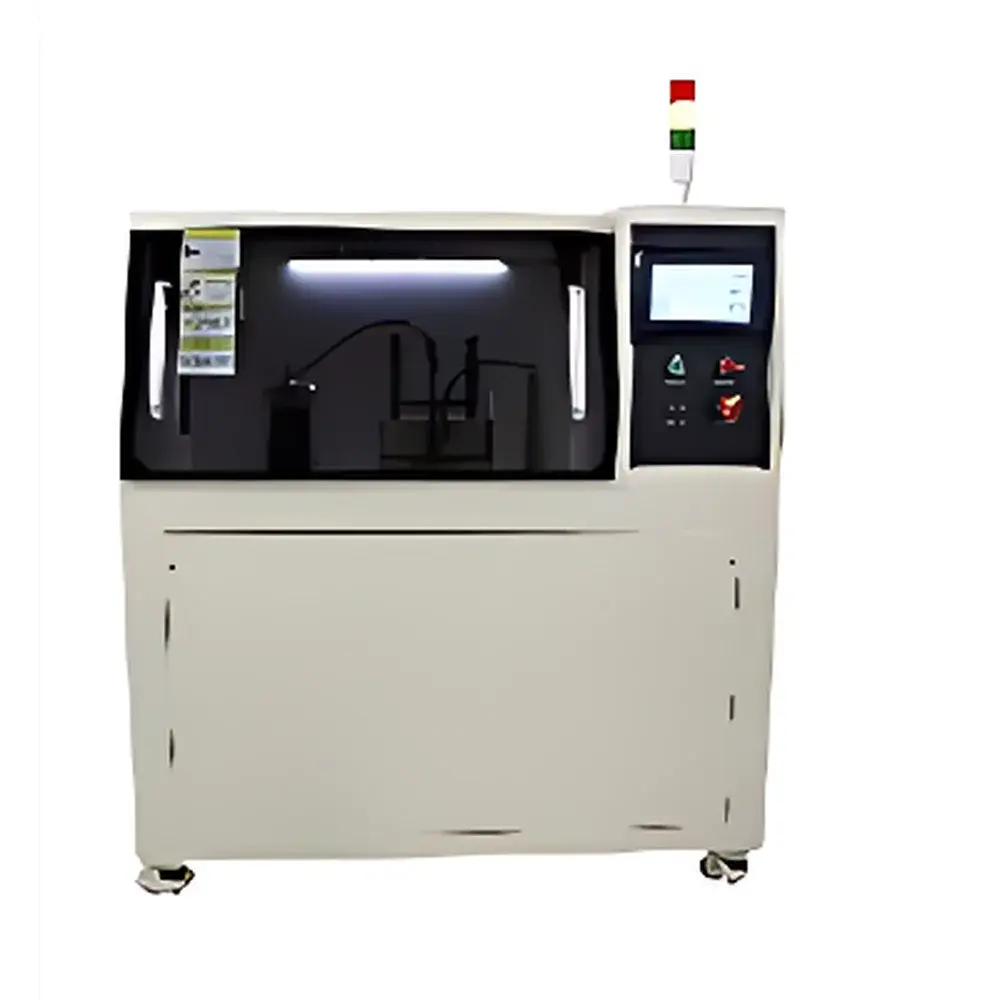
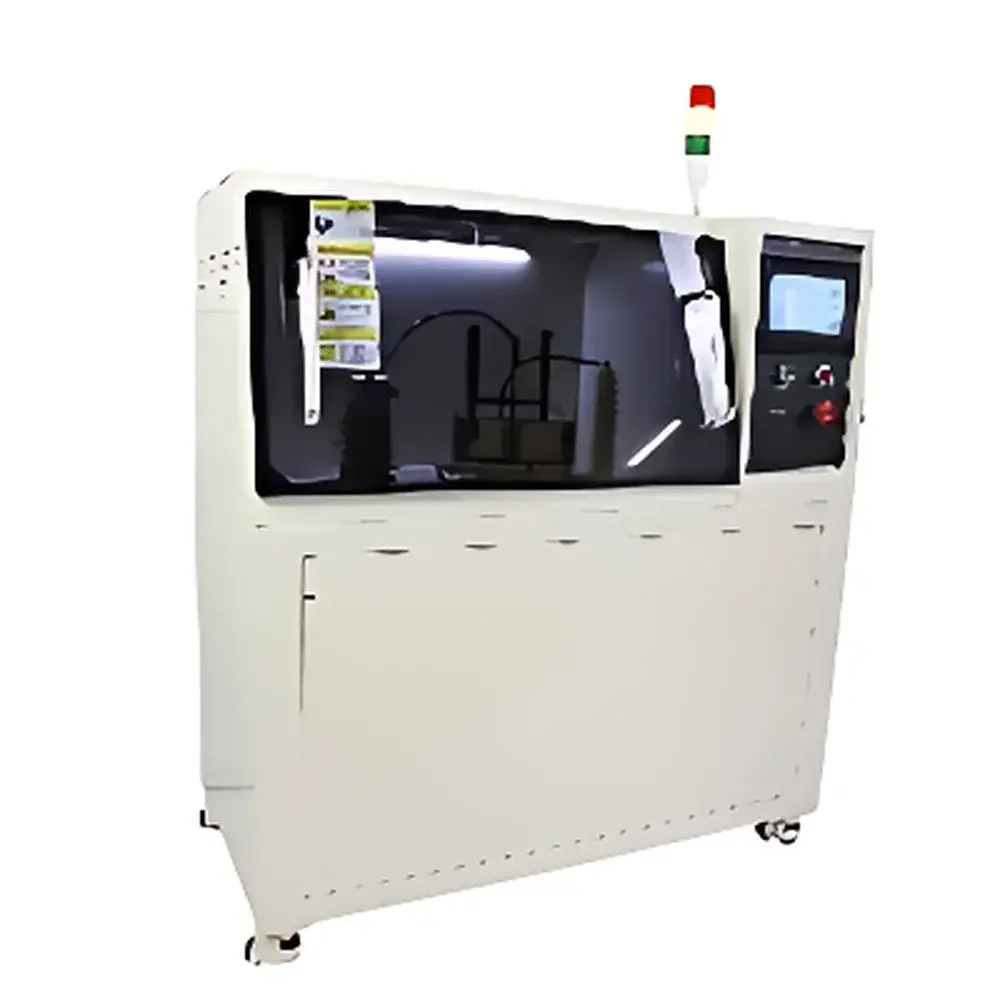
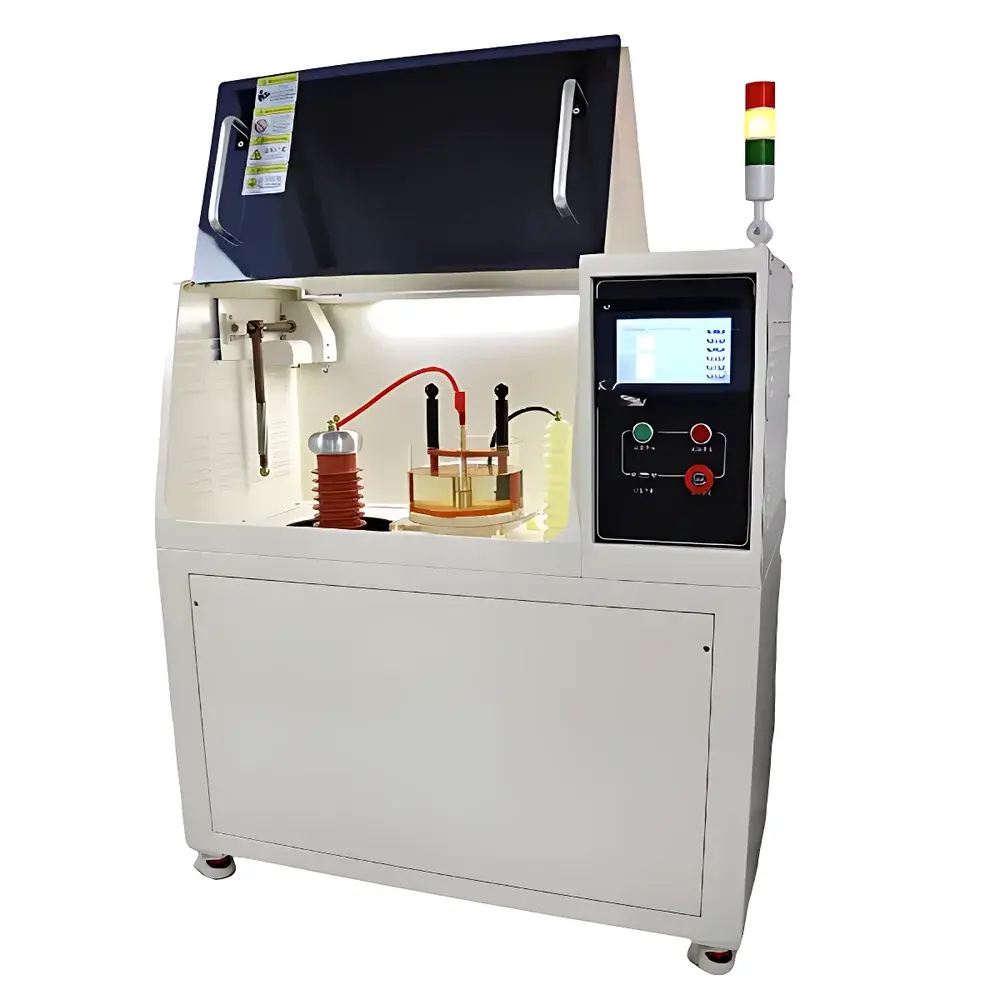
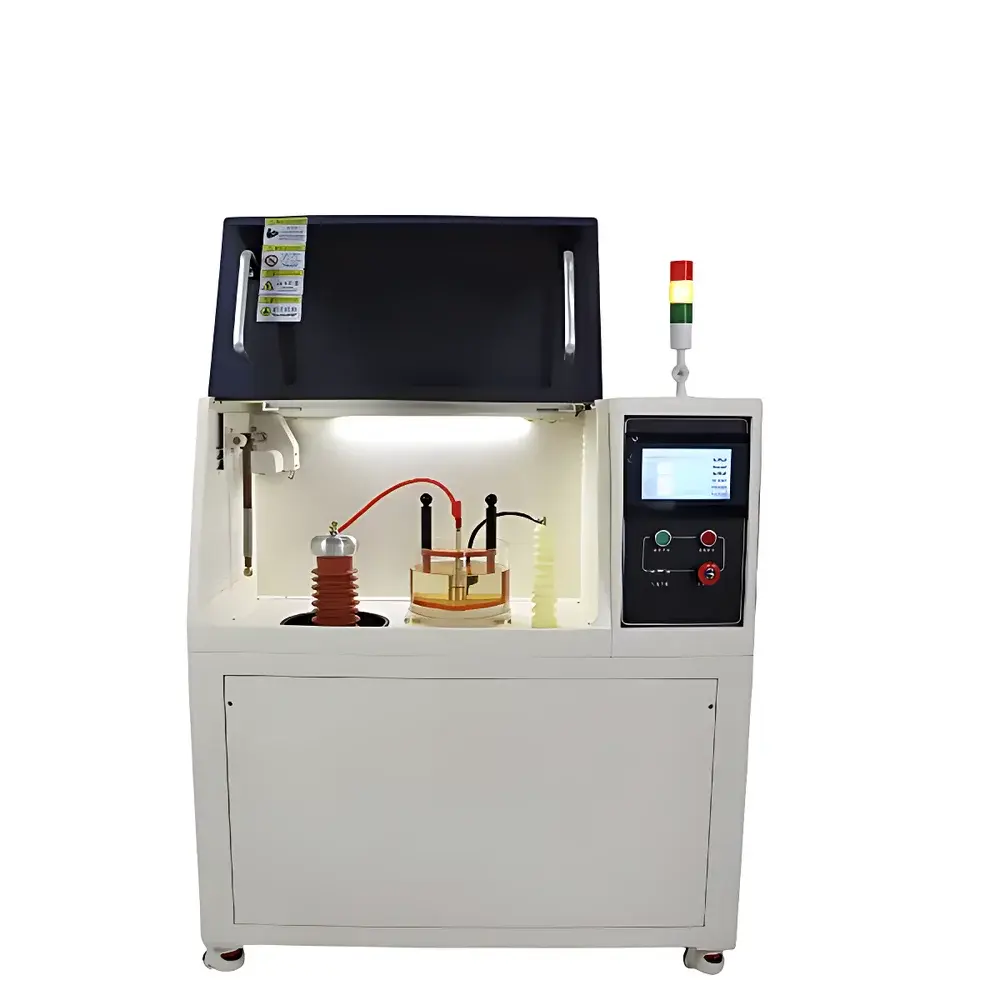
Changchun Intelligent GJW-50E Voltage Breakdown Tester
| Brand | Changchun Intelligent |
|---|---|
| Origin | Jilin, China |
| Model | GJW-50E |
| Breakdown Voltage Range | 0–50 kV AC/DC |
| Input Voltage | AC 220 V ±10%, 50 Hz ±1% |
| Output Power | 1.2 kVA |
| Voltage Measurement Accuracy | ≤3% |
| Ramp Rate | 0.4–10 kV/s |
| Hold Time Range | 0–4 h (no-current condition) |
| Output Current | 60 mA |
| Dimensions (L×W×H) | 630×520×760 mm |
| Weight | 100 kg |
| Environmental Requirements | 23±2°C, RH 50% |
| Grounding Resistance | ≤4 Ω |
| Safety Interlocks | Six-level high-voltage cutoff (main power, keyed HV disconnect, autoreturn transformer switch, chamber door switch, input current limiter) |
Overview
The Changchun Intelligent GJW-50E Voltage Breakdown Tester is an industrial-grade dielectric strength testing system engineered for precise determination of electrical breakdown voltage and withstand voltage characteristics of solid insulating materials under alternating or direct voltage stress. It operates on the principle of controlled voltage ramping until dielectric failure occurs—measured as the instantaneous voltage at which sustained current flow exceeds defined thresholds per IEC 60243-1 and ASTM D149 protocols. Designed for compliance-driven laboratories in cable manufacturing, capacitor paper production, polymer R&D, and ceramic component qualification, the GJW-50E delivers repeatable, traceable results across a full 0–50 kV AC/DC output range with programmable ramp rates and extended hold capability up to four hours. Its architecture integrates high-voltage isolation, real-time arc detection, and fail-safe interlock logic to meet stringent occupational safety requirements for Class II high-voltage test environments.
Key Features
- Full-range AC/DC output (0–50 kV) with independent calibration paths and dual-mode operation—enabling both short-duration breakdown tests and long-term dielectric withstand validation.
- Six-tier hardware-based safety interlock system: main power cutoff, keyed high-voltage isolation switch, auto-return transformer reset, interlocked test chamber door sensor, input-side current-limiting circuit breaker, and dedicated DC discharge monitoring circuitry.
- Dynamic real-time curve acquisition and overlay visualization: simultaneous plotting of voltage, current, and time parameters during test execution; supports multi-sample comparative analysis using color-coded traces.
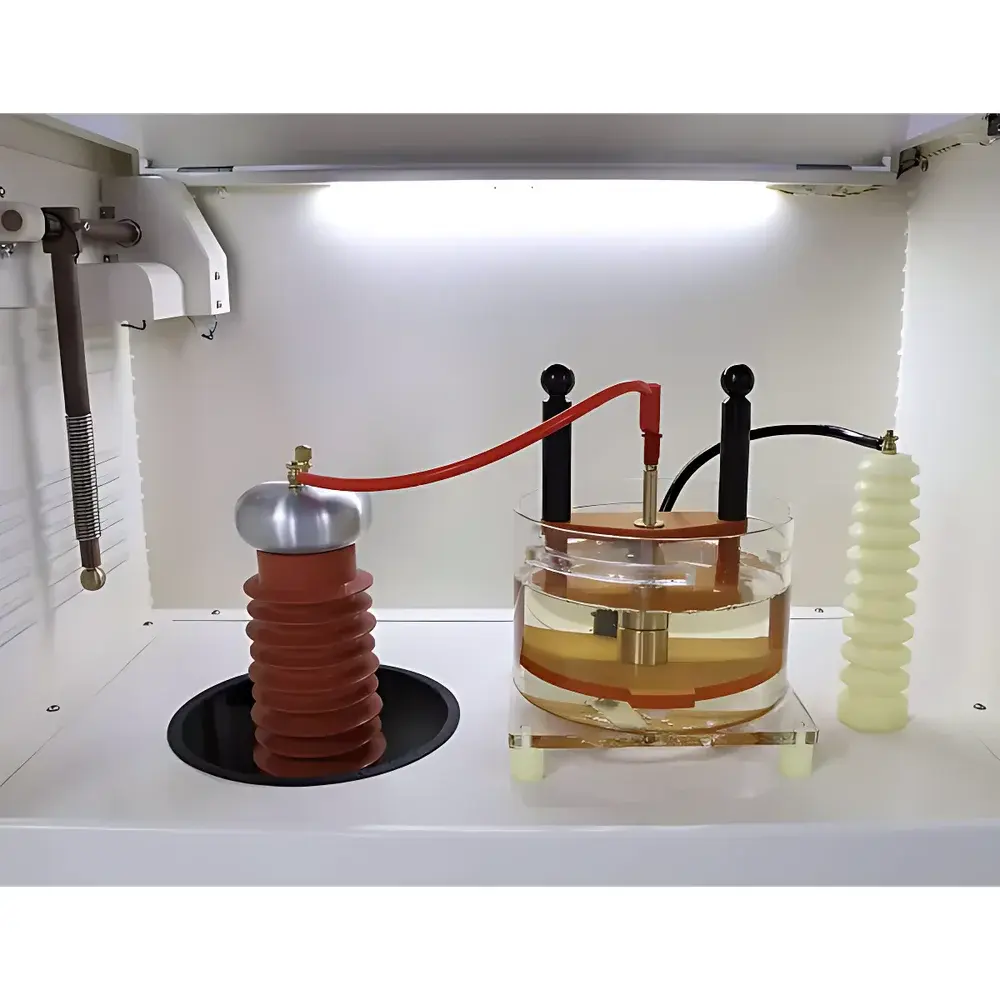
- Automated discharge management: integrated automatic discharge circuit triggered upon test completion or chamber opening during DC mode; supplemented by manually operated grounding rod for emergency power-loss scenarios.
- Robust data integrity architecture: all test conditions, raw waveform logs, operator annotations, and timestamped event markers are stored with immutable audit trails—fully compatible with GLP/GMP documentation workflows.
- Configurable test sequencing: programmable step-voltage hold profiles, pass/fail threshold logic, and adaptive ramp rate selection based on material class and standard-specific requirements (e.g., GB/T 1695, ASTM D149, IEC 60674-2).
Sample Compatibility & Compliance
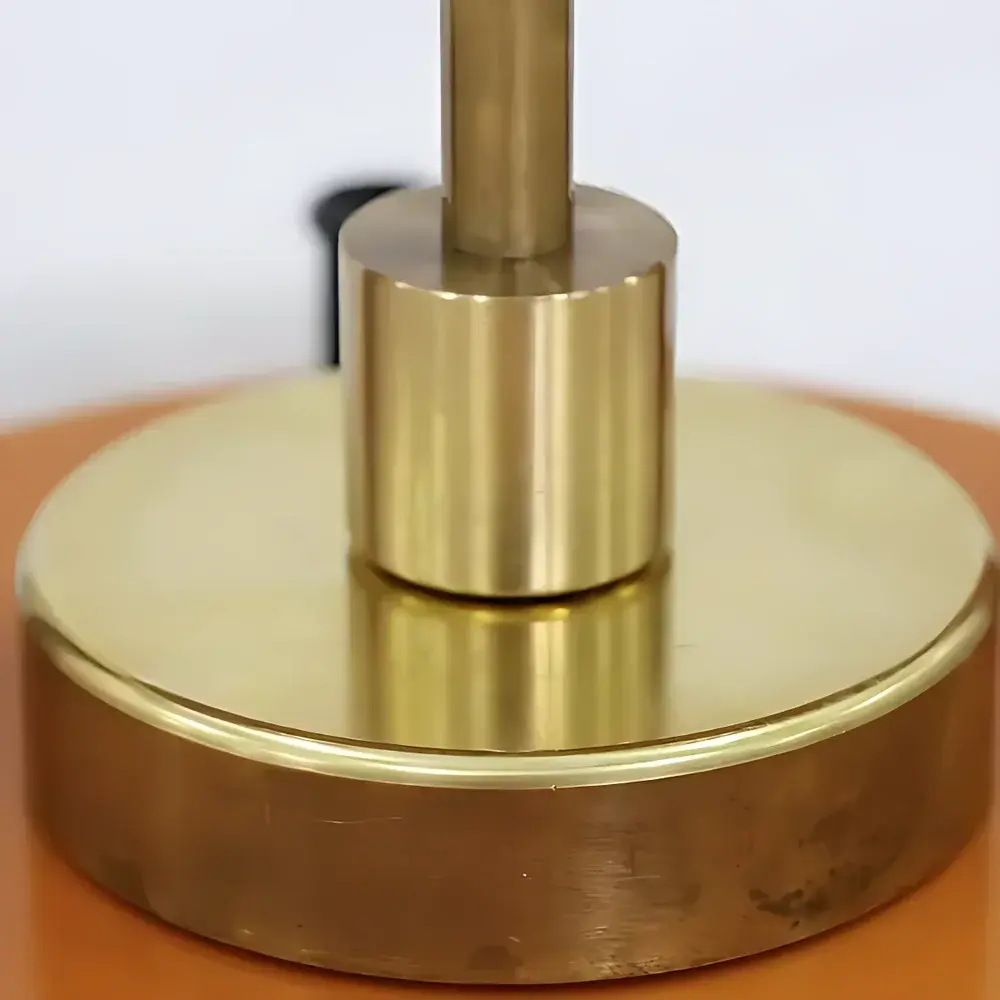
The GJW-50E accommodates standardized electrode configurations—including two 25 mm diameter × 25 mm height brass electrodes and one 75 mm diameter × 25 mm height electrode—for uniform field distribution across flat, rigid, or laminated specimens. Compatible sample types include thermosetting resins, impregnated fiber mats, mica composites, polymeric films, ceramic substrates, and glass insulators. The system conforms to national and international standards including GB 1408.1–2006 and GB 1408.2–2016 (equivalent to IEC 60243-1 and -2), ASTM D149, JJG 795–2016, GB/T 3333, and GB 12913–2008. All measurement functions adhere to metrological traceability requirements under CNAS-accredited calibration practices, with voltage transducers certified to Class 1.0 accuracy per GB/T 7597.
Software & Data Management
The proprietary test control software runs on an embedded industrial PC platform (supplied with Qinghua Tongfang workstation) and provides ISO/IEC 17025-aligned data handling capabilities. Functions include automated report generation in customizable templates (PDF, RTF), export of raw time-series datasets to CSV, Excel (.xlsx), and Word (.docx) formats, and selective validation of individual curve segments within grouped test series. Audit logging records user login sessions, parameter modifications, manual overrides, and safety event triggers—including interlock activations and discharge sequence timestamps. Software architecture supports FDA 21 CFR Part 11-compliant electronic signatures when deployed with validated identity authentication modules and encrypted database storage.
Applications
This tester serves core quality assurance and regulatory validation needs across multiple sectors: evaluation of varnish and encapsulant dielectric integrity in motor winding systems; verification of breakdown performance in high-voltage capacitor papers per GB 12913; characterization of thermal aging effects on epoxy-glass laminates; screening of nanocomposite polymer films for aerospace insulation; and routine certification of ceramic insulators used in power transmission equipment. It is routinely deployed in third-party testing labs accredited to ISO/IEC 17025, university high-voltage research facilities, and in-house R&D centers conducting accelerated life testing under controlled environmental conditions (23±2°C, 50% RH).
FAQ
What standards does the GJW-50E comply with for calibration and operation?
The instrument meets metrological requirements specified in JJG 795–2016 and is configured to execute test protocols aligned with GB 1408.1–2006, GB 1408.2–2016, ASTM D149, and IEC 60243-1.
Is external grounding infrastructure required?
Yes—users must provide a dedicated earth ground connection meeting ≤4 Ω resistance, achieved via copper-bonded rod driven ≥1.5 m into conductive soil, per GB 50169 and IEC 61000-5-2.
Can the system perform timed withstand tests without breakdown?
Yes—programmable hold duration from 0 to 4 hours at any selected voltage level (5–20 kV range) enables evaluation of leakage current stability and partial discharge onset under sustained stress.
How is operator safety ensured during DC testing?
A mandatory discharge verification sequence is enforced before chamber access; residual charge detection circuits prevent unlock until voltage decays below 50 V, and manual discharge rods are provided for redundant safety.
What maintenance intervals are recommended for long-term reliability?
No scheduled downtime is required—continuous operation is supported by forced-air cooling, sealed high-voltage transformers, and self-diagnostic firmware that monitors insulation resistance, thermal load, and interlock continuity in real time.



