
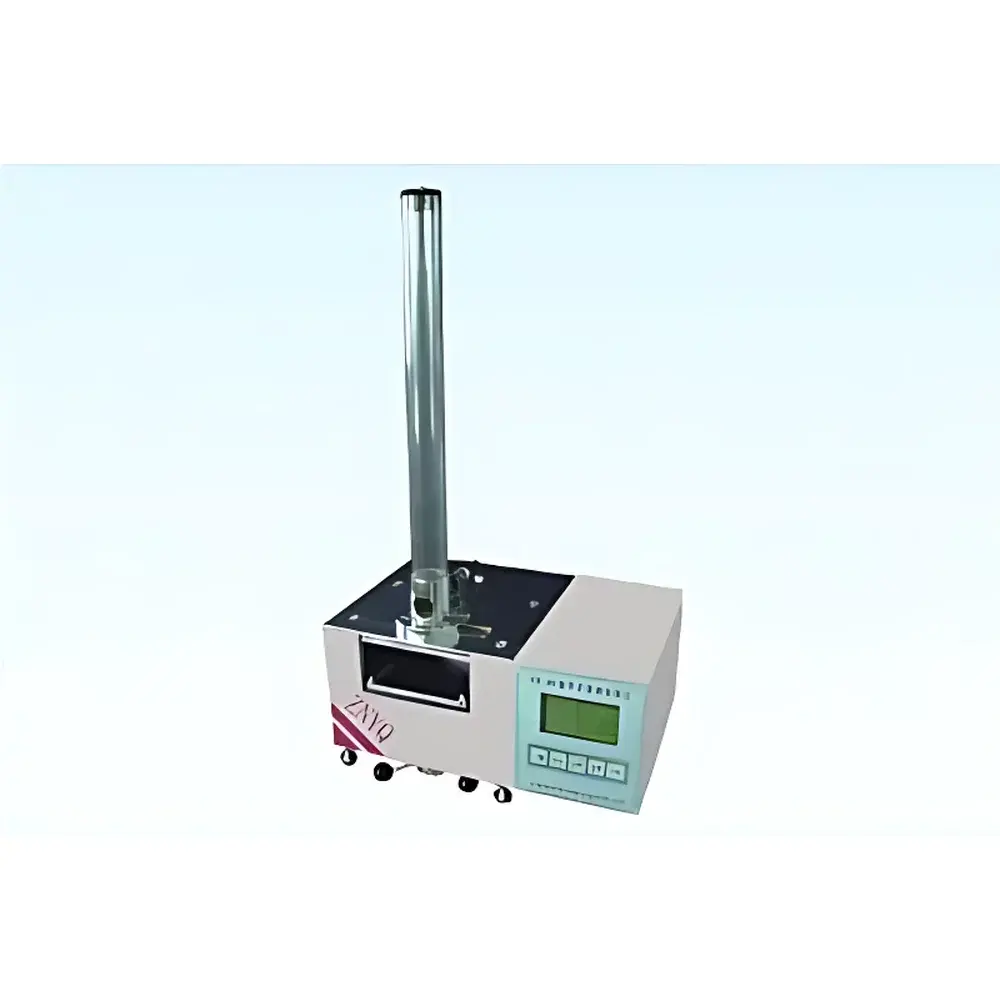
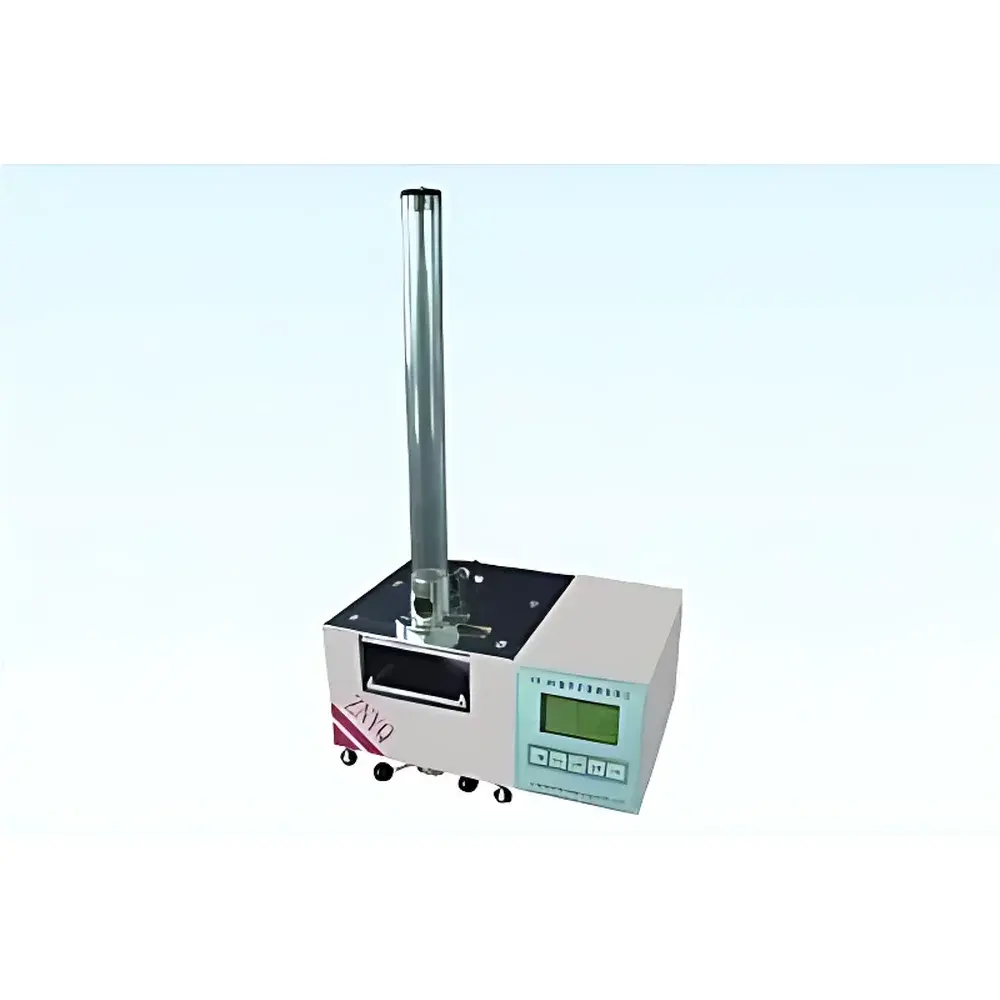
LT-16 Digital Ball Rebound Tester (Changchun Brand)
| Origin | Jilin, China |
|---|---|
| Manufacturer Type | Authorized Distributor |
| Origin Category | Domestic (PRC) |
| Model | LT-16 |
| Pricing | Upon Request |
| Rebound Accuracy (Relative) | <1.5% |
| Drop Height | 460 mm ±0.5% |
| Guide Tube ID | 40 mm ±4 mm |
| Steel Ball Diameter | Φ16 mm −0.15 mm |
| Steel Ball Mass | 16.7 g ±0.5 g |
| Rebound Range | 10–100% |
| Display | Digital LED |
| Specimen Dimensions | 100 mm × 100 mm × 50 mm |
| Includes | Main Unit, Control System, Two Calibration Steel Balls, Ball Retaining Ring, Four Leveling Feet, Integrated Thermal Microprinter |
Overview
The LT-16 Digital Ball Rebound Tester is a precision-engineered instrument designed for the quantitative evaluation of elastic recovery behavior in resilient polymeric materials—particularly flexible foams, elastomers, and viscoelastic composites. Operating on the principle of vertical free-fall impact, the device measures the ratio of rebound height to drop height of a standardized steel ball impacting a horizontally mounted specimen under controlled conditions. This methodology aligns with the fundamental mechanics of energy restitution and complies with the measurement framework specified in GB/T 6670–2008 (equivalent to ISO 8307:2019 for rubber and plastics—determination of rebound resilience), ensuring traceable, repeatable data acquisition in quality control and R&D environments. The LT-16 integrates digital signal processing via large-scale integrated circuits, eliminating analog drift and mechanical parallax errors common in legacy pendulum or optical rebound systems. Its compact footprint (W × D × H ≈ 320 × 280 × 650 mm), low mass (<12 kg), and modular construction enable seamless integration into constrained laboratory spaces or production-line QC stations without requiring structural anchoring or environmental isolation.
Key Features
- High-fidelity digital measurement system with LED display offering real-time rebound percentage readout (10–100%, resolution 0.1%) and automatic zero calibration.
- Fixed-height release mechanism ensures consistent drop height of 460 mm ±0.5% (±2.3 mm), verified per ISO/IEC 17025-accredited dimensional metrology protocols.
- Precision-machined stainless-steel guide tube (ID: 40 mm ±4 mm) minimizes lateral deviation and aerodynamic interference during ball descent.
- Calibrated steel impact sphere (Φ16.0 mm −0.15 mm, mass 16.7 g ±0.5 g) manufactured to ISO 3290 Grade 10 tolerances and certified for density homogeneity and surface sphericity (Ra ≤ 0.1 µm).
- Adjustable specimen support platform accommodates standard test specimens of 100 mm × 100 mm × 50 mm, with micrometer-level leveling capability via four independent threaded feet.
- Built-in thermal microprinter provides immediate hard-copy output of test results—including date/time stamp, specimen ID field, rebound value, and operator ID—supporting GLP-compliant documentation workflows.
Sample Compatibility & Compliance
The LT-16 is validated for use with homogeneous, non-porous, flat-surfaced specimens meeting ASTM D3574–21 Section 5.1 (flexible cellular polymeric materials) and GB/T 6670–2008 Clause 5 requirements. Compatible material classes include polyurethane (PU) foam, ethylene-propylene-diene monomer (EPDM) rubber, silicone elastomers, thermoplastic elastomers (TPE), and crosslinked polyolefin foams. Specimens must be conditioned at 23 °C ±2 °C and 50% ±5% RH for ≥16 h prior to testing per ISO 291. The instrument’s mechanical design conforms to IEC 61000-6-2 (immunity) and IEC 61000-6-3 (emission) electromagnetic compatibility standards. While not inherently 21 CFR Part 11 compliant, audit trails generated by the microprinter satisfy basic FDA-regulated record retention requirements when paired with lab-controlled SOPs and manual signature logs.
Software & Data Management
The LT-16 operates as a standalone embedded system with no external PC dependency. All measurement logic, timing capture (via high-speed photogate array), and arithmetic computation occur within its onboard microcontroller unit (MCU). Data export is limited to printed reports; however, the thermal printer supports customizable header fields (e.g., batch number, test sequence ID) programmable via front-panel keypad. For laboratories requiring electronic data archiving, third-party USB-based document scanners may be used to digitize printed outputs, enabling integration into LIMS or ELN platforms with metadata tagging. No proprietary software drivers, cloud connectivity, or firmware update pathways are provided—ensuring long-term operational stability and minimizing cybersecurity exposure vectors.
Applications
- Quality assurance of cushioning foams in automotive seating, mattress cores, and packaging inserts.
- Batch-to-batch consistency verification during PU foam polymerization process optimization.
- Evaluation of aging effects (thermal, UV, compression set) on rebound resilience over accelerated life cycles.
- Comparative analysis of filler dispersion efficiency in silica-reinforced silicone compounds.
- Validation of curing kinetics in electron-beam or peroxide-cured elastomer formulations.
- Supporting technical documentation for ISO 9001:2015 clause 8.5.1 (control of production and service provision) and IATF 16949:2016 section 8.5.1.1 (control plan execution).
FAQ
What standards does the LT-16 comply with?
The LT-16 implements test methodology aligned with GB/T 6670–2008 and ISO 8307:2019. It is not certified to ASTM D3574 but delivers equivalent physical measurement fidelity when operated per its defined procedural constraints.
Is calibration certification included with delivery?
A factory-issued calibration report (traceable to CNAS-accredited reference standards) is supplied with each unit. Annual recalibration using NIST-traceable height gauges and calibrated mass standards is recommended.
Can the LT-16 test curved or irregular surfaces?
No. Specimen surfaces must be flat, parallel, and rigidly supported across the full 100 mm × 100 mm footprint to ensure valid energy transfer and avoid edge effects.
What maintenance is required?
Monthly visual inspection of guide tube interior for scratches or debris; biannual cleaning of photogate lenses with lens-grade isopropyl alcohol; annual verification of steel ball sphericity and mass using calibrated analytical balance and optical comparator.
Is the microprinter replaceable if defective?
Yes—the thermal print module uses industry-standard 58 mm width paper rolls and is field-serviceable with common Torx T8 tools; replacement units are available through authorized service partners.



