
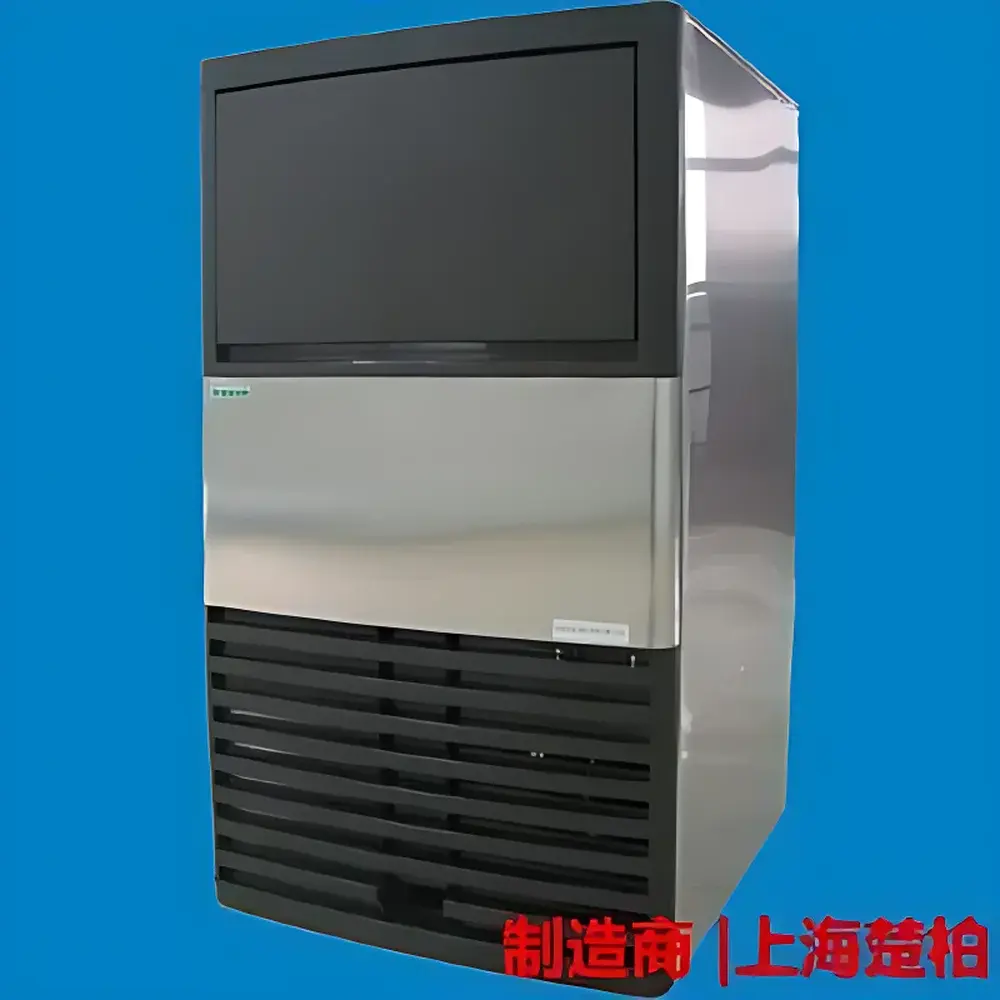
Truelab IM75 Laboratory Flake Ice Maker
| Brand | Truelab |
|---|---|
| Model | IM75 |
| Type | Flake Ice Machine |
| Ice Production Capacity | 75 kg/24 h |
| Storage Capacity | 30 kg |
| Water Consumption | 100 kg per cycle |
| Cooling Method | Air-Cooled |
| Power | 300 W |
| Voltage/Frequency | 220 V / 50 Hz |
| Protection Class | Class I |
| Dimensions (W×D×H) | 520 × 600 × 890 mm |
| Construction | Stainless Steel + ABS Engineering Plastic Cabinet |
| Insulation | Rigid Polyurethane Foam |
| Ice Formation Principle | Dual-Spiral Extrusion Compression |
| Control System | Microprocessor-Based Fully Automatic Cycle Control |
| Safety Features | Auto-Shutdown on Low Water, Full Ice Bin, High Condensing Temperature, or Refrigerant Leak Detection |
| Compliance | Designed for GLP-supporting laboratory environments |
Overview
The Truelab IM75 Laboratory Flake Ice Maker is an engineered solution for laboratories requiring consistent, high-purity flake ice at scale. Unlike cubed or nugget ice systems, this unit employs a dual-spiral extrusion compression mechanism to produce irregular, thin, snow-like ice flakes (typically 1–3 mm in thickness and sub-5 mm in lateral dimension) with high surface-area-to-volume ratio—enabling rapid thermal transfer during sample chilling, enzymatic reaction quenching, or cold-chain maintenance. The machine operates via a hermetically sealed, high-efficiency imported refrigeration compressor paired with optimized air-cooled condensation and rigid polyurethane insulation (≥35 mm thickness), ensuring stable ice output under continuous 24-hour operation in ambient temperatures up to 32 °C. Its design prioritizes functional reliability over aesthetic embellishment: every component—from the stainless steel evaporator drum to the corrosion-resistant ABS interior lining—is selected for long-term compatibility with deionized water, frequent cleaning cycles, and non-sterile but controlled lab-grade environments.
Key Features
- Dual-spiral extrusion system with hardened alloy ice-cutting blades ensures uniform flake morphology, minimal ice bridging, and automatic ice–water separation without manual intervention.
- Microprocessor-based control board manages full-cycle automation: water intake → freezing → flake extrusion → crushing → ejection → storage—with real-time status indicators for ice bin fill level, water supply status, motor operation, condenser temperature, and refrigerant pressure anomalies.
- 30 kg insulated storage bin features gravity-fed discharge with anti-jamming chute geometry and thermal buffer layer to minimize melt loss during standby (typical melt rate < 8% over 8 hours at 25 °C ambient).
- Energy-optimized air-cooled condenser with low-noise axial fans (≤58 dB(A) at 1 m) eliminates need for external water drainage infrastructure—ideal for labs lacking dedicated chilled-water loops or floor drains.
- Class I electrical protection with reinforced insulation, grounded chassis, and automatic circuit cutoff upon detection of phase imbalance, ground fault, or sustained overtemperature (>75 °C condenser surface).
- Front-access service panel enables tool-free compressor and control module inspection; all refrigerant lines comply with ISO 8573-1:2010 Class 4 purity standards for compressed air systems (applicable to service gas handling).
Sample Compatibility & Compliance
The IM75 generates non-sterile, potable-grade flake ice suitable for indirect cooling applications where direct contact with biological or chemical samples is acceptable per institutional biosafety protocols (e.g., cold baths for centrifuge rotor pre-chilling, gel electrophoresis buffer cooling, or cryopreservation vial equilibration). It is not intended for food-grade direct consumption or pharmaceutical final-product contact without additional validation per USP or ISO 22000:2018 Annex A.2. The unit conforms to IEC 61010-1:2010 (Edition 3) for safety of laboratory electrical equipment and carries CE marking under the Low Voltage Directive 2014/35/EU. Its control firmware supports audit-ready event logging (power-on count, total operational hours, fault code history), facilitating GLP documentation requirements when integrated into lab-wide asset management systems.
Software & Data Management
While the IM75 does not feature Ethernet or USB connectivity, its embedded microcontroller maintains non-volatile memory for up to 500 operational events—including start/stop timestamps, alarm triggers (e.g., “E03: Low Water”, “E07: High Condenser Temp”), and cumulative runtime. All logged entries retain power-loss resilience via EEPROM backup. Optional RS-485 Modbus RTU interface (available upon request) enables integration with building management systems (BMS) or centralized lab monitoring platforms for predictive maintenance scheduling. No proprietary software installation is required; event data can be extracted manually via front-panel navigation or remotely via industrial protocol gateways compliant with IEEE 1394 or OPC UA frameworks.
Applications
- Biomedical labs: Rapid cooling of tissue homogenates, PCR master mixes, and enzyme stocks prior to aliquoting.
- Chemistry QA/QC: Maintaining bath temperatures during titration endpoint verification or calorimetric standardization.
- Pharmaceutical stability studies: Supporting ICH Q1A(R2)-aligned short-term stress testing where transient sub-10 °C conditions are needed.
- Electronics R&D: Localized thermal management during solder paste reflow simulation or semiconductor wafer probing.
- Environmental testing: Conditioning air sampling filters and passive diffusion badges per ISO 16000-23 protocols.
FAQ
What type of water supply is recommended for optimal performance?
Deionized or softened water with total dissolved solids (TDS) < 100 ppm is strongly advised to prevent scaling in the evaporator drum and extend compressor service intervals.
Can the IM75 operate continuously in a 35 °C ambient environment?
Rated performance (75 kg/24 h) is guaranteed up to 32 °C ambient; above this, output declines approximately 12% per 5 °C rise due to reduced condenser efficiency.
Is routine descaling required, and how often?
With TDS 250 ppm) require quarterly citric acid flushes per manufacturer’s maintenance schedule.
Does the unit meet FDA 21 CFR Part 11 requirements for electronic records?
No—its local event log lacks electronic signature capability, audit trail encryption, or user role-based access control; however, timestamped logs may serve as supplementary evidence in FDA-inspected facilities when cross-referenced with LIMS-generated workflow records.
What is the expected service life under daily laboratory use?
With scheduled maintenance (condenser coil cleaning every 3 months, refrigerant pressure verification annually), mean time between failures exceeds 12,000 operating hours (≈5 years at 6 h/day usage).



