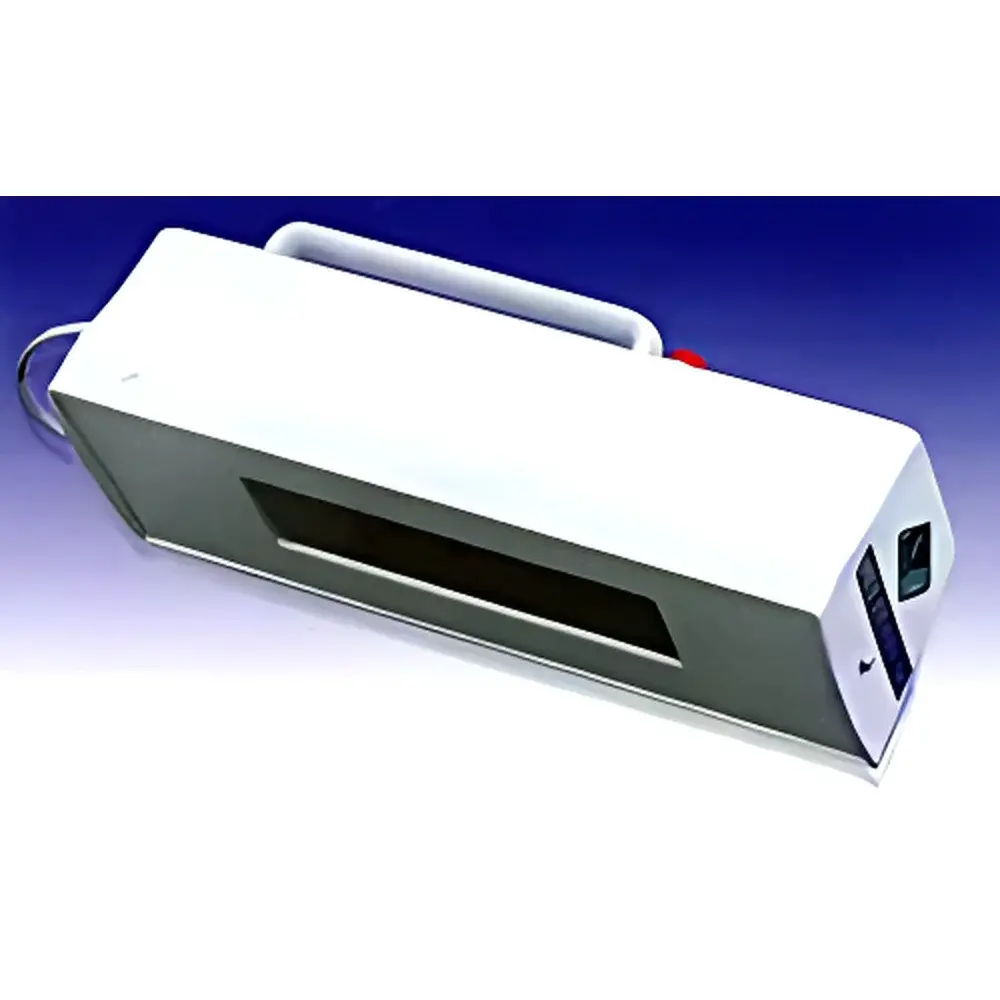
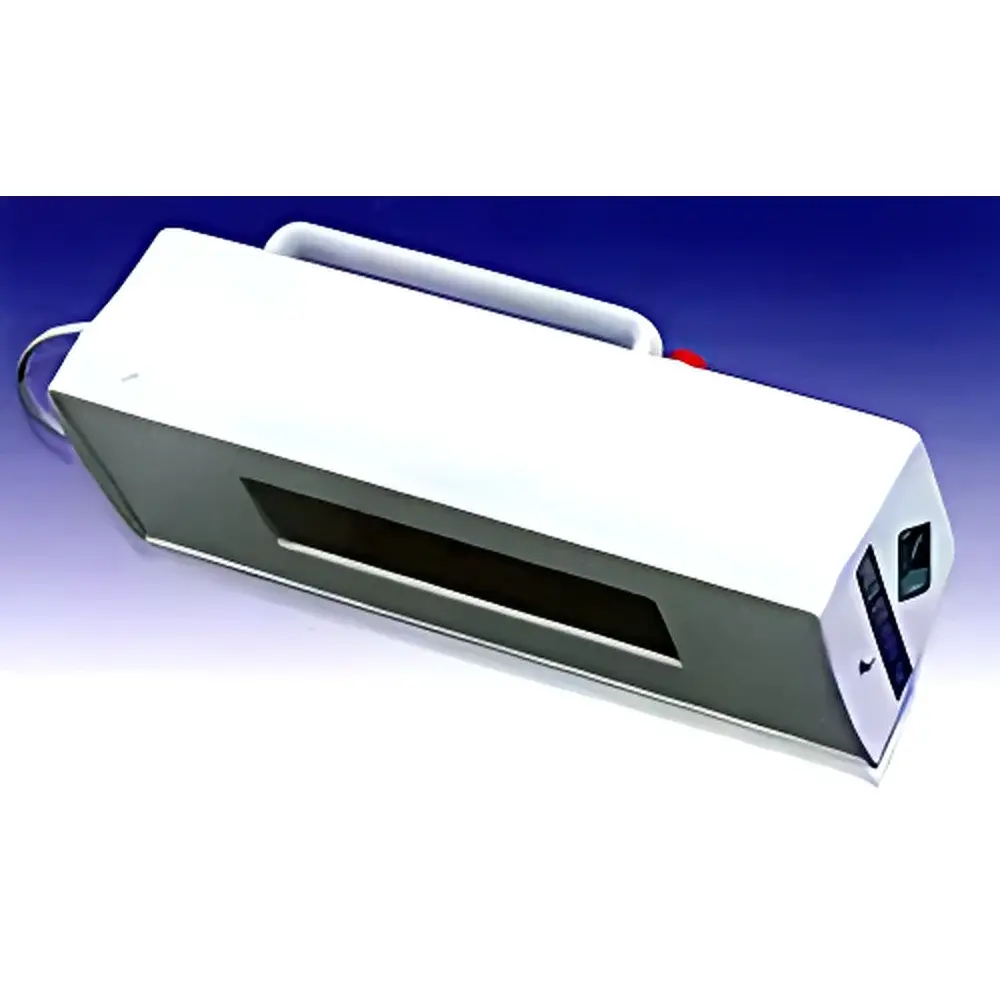
Truelab ZF-7A/B/C/D Portable UV Transilluminator and Fluorescence Analyzer
| Brand | Truelab |
|---|---|
| Origin | Shanghai, China |
| Manufacturer Type | Authorized Distributor |
| Product Category | Domestic |
| Model Variants | ZF-7A (254 nm + 365 nm), ZF-7B (365 nm only), ZF-7C (254 nm only), ZF-7D (310 nm only) |
| Input Voltage | 220 V AC, 50 Hz |
| Rated Power | 16 W |
| UV Filter Dimensions | 50 mm × 150 mm |
| UV Lamp Quantity | 16 lamps |
| UV Wavelength Options | 254 nm, 310 nm, 365 nm |
| Device Form Factor | Handheld / Portable |
| Compliance | CE-marked for laboratory use, conforms to IEC 61010-1 safety standards for electrical equipment for measurement, control, and laboratory use |
Overview
The Truelab ZF-7A/B/C/D series is a compact, handheld ultraviolet transilluminator engineered for rapid, on-demand fluorescence visualization of nucleic acids, proteins, and other UV-excitable compounds in field or benchtop settings. Unlike fixed-platform gel documentation systems, this instrument operates on the principle of direct UV excitation—emitting narrow-band ultraviolet radiation at precisely calibrated wavelengths (254 nm, 310 nm, or 365 nm) to induce native or dye-mediated fluorescence in biological samples. The 254 nm wavelength provides optimal sensitivity for ethidium bromide–stained DNA in agarose or polyacrylamide gels, while 365 nm minimizes photodamage during prolonged exposure and enables safer visualization of SYBR Safe, GelRed, or other long-wavelength fluorescent dyes. The 310 nm variant bridges spectral performance for applications requiring reduced background autofluorescence in tissue sections or crude extracts. All models integrate high-efficiency cold-cathode UV lamps with optical-grade filter glass (50 mm × 150 mm active area) to ensure uniform irradiance across the viewing surface and consistent signal-to-noise ratio.
Key Features
- Modular wavelength configuration: Four dedicated variants (ZF-7A dual-band, ZF-7B/C/D single-band) allow users to select optimal excitation based on fluorophore absorption profiles and safety requirements.
- Portable ergonomic design: Lightweight aluminum housing with integrated handle and non-slip grip facilitates transport between electrophoresis rigs, biosafety cabinets, and field laboratories.
- Instant-on operation: No warm-up time required; full-intensity UV output achieved within <1 second of power activation.
- Low-power, high-stability illumination: 16 cold-cathode UV lamps deliver stable irradiance over >5,000 hours of cumulative use, with minimal thermal drift or spectral shift.
- Compliance-ready construction: Meets IEC 61010-1 electrical safety requirements and incorporates UV-blocking acrylic shield (standard) to limit operator exposure below ICNIRP occupational limits.
- Interchangeable filter compatibility: Optional long-pass emission filters (e.g., 420 nm cutoff) can be mounted externally for enhanced contrast in low-fluorescence samples.
Sample Compatibility & Compliance
The ZF-7 series supports visualization of standard molecular biology applications including ethidium bromide–, SYBR Gold–, and GelGreen–stained nucleic acid gels; UV-absorbing protein bands in SDS-PAGE; and fluorescently labeled antibodies in dot-blot assays. It is routinely deployed in GLP-aligned workflows where traceability and repeatability are essential—though not designed for quantitative densitometry, its consistent output enables semi-quantitative band comparison across runs when paired with calibrated imaging devices. All units comply with EU Directive 2014/30/EU (EMC) and 2014/35/EU (LVD), and include CE marking. While not certified under FDA 21 CFR Part 11, the device may be incorporated into validated analytical procedures where user-defined SOPs define operational parameters, exposure duration, and documentation protocols.
Software & Data Management
As a standalone hardware tool, the ZF-7 series does not incorporate embedded firmware or proprietary software. Its analog circuit architecture ensures immunity to cybersecurity vulnerabilities and eliminates dependency on operating system updates or driver installations. Users integrate it seamlessly with third-party imaging platforms—including DSLR cameras, scientific CMOS sensors, or mobile phone-based gel documentation apps—using manual exposure control and external timer accessories. For audit-trail compliance in regulated environments, laboratories commonly pair the ZF-7 with timestamped image capture systems that log metadata (date/time, operator ID, exposure duration) per ICH-GCP and ISO/IEC 17025 documentation guidelines.
Applications
- Routine DNA/RNA gel inspection during electrophoresis troubleshooting and band excision (with optional blue-light-compatible cutting guides).
- Field-deployable verification of plasmid integrity, PCR product size, and restriction digest efficiency in resource-limited labs.
- Forensic sample screening for latent biological traces using UV-induced fluorescence in bodily fluids or fibers.
- Archaeological artifact analysis for detecting organic residues, pigment binders, or restoration materials via native fluorescence.
- Quality control of UV-curable resins, photoactive pharmaceutical intermediates, and fluorescent tracer compounds in chemical manufacturing.
- Educational demonstrations of fluorescence principles, UV absorption spectra, and nucleic acid detection chemistry in undergraduate biochemistry labs.
FAQ
Is eye protection required when operating the ZF-7 series?
Yes. ANSI Z87.1-rated UV-blocking safety goggles (optical density ≥4 at 254 nm) must be worn during all active illumination periods.
Can the ZF-7 be used for UV crosslinking of nucleic acids?
No. It lacks the irradiance intensity and exposure control necessary for effective nucleic acid crosslinking; dedicated UV crosslinkers (e.g., Stratalinker®) are recommended.
What is the expected lamp lifetime under continuous use?
Rated minimum service life is 5,000 hours at nominal voltage; output intensity declines gradually and predictably, allowing scheduled replacement without calibration recalibration.
Does the ZF-7 series support battery operation?
No. It requires stable 220 V AC, 50 Hz input and is not equipped with internal or external DC power options.
Are replacement UV filters available as spare parts?
Yes. Truelab supplies OEM-matched 50 mm × 150 mm interference filters for each wavelength variant (254 nm, 310 nm, 365 nm), with documented transmission curves and batch-specific certification reports.