
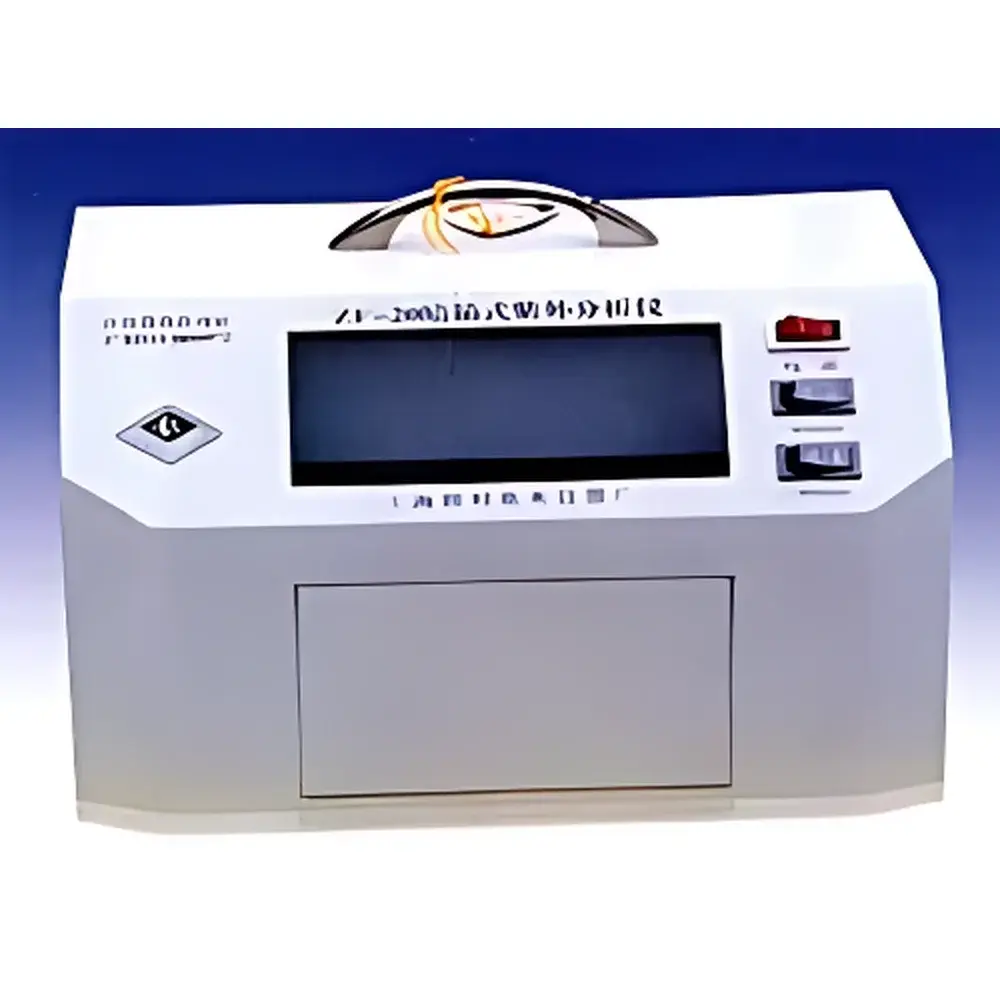
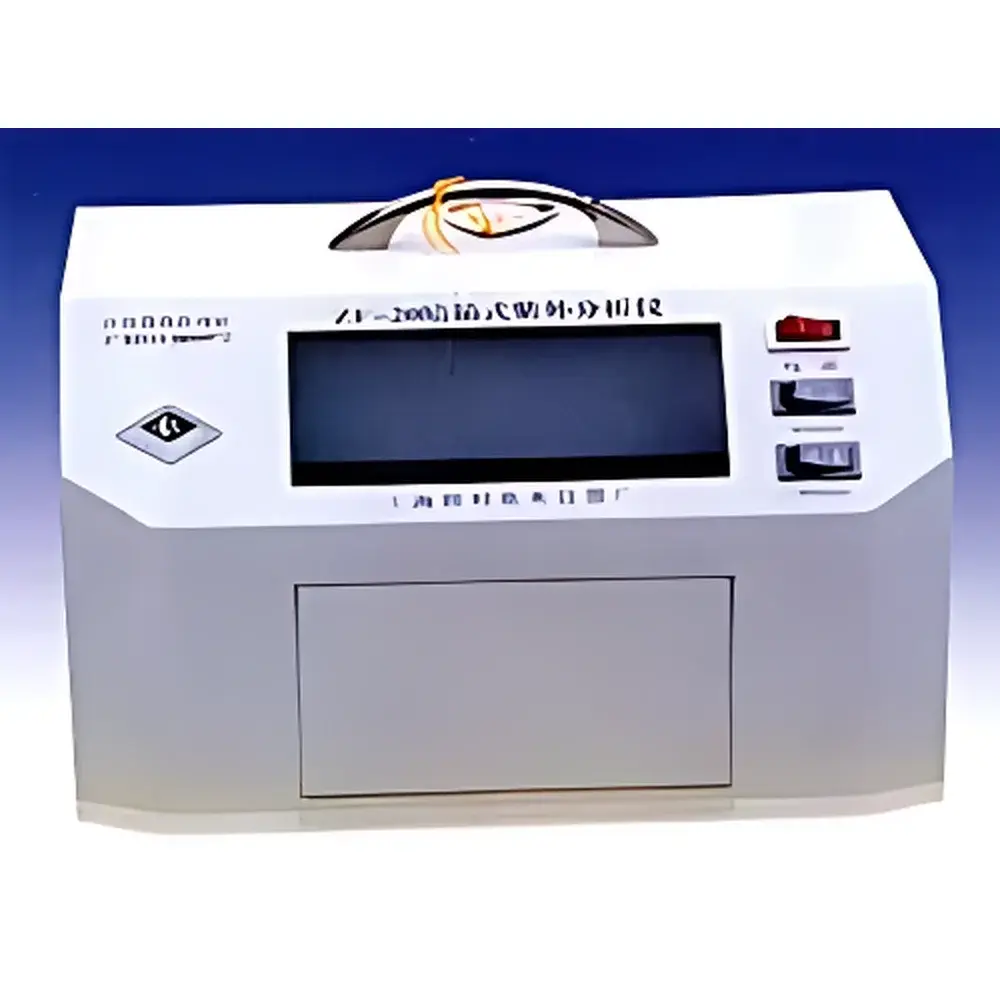
Truelab ZF-20C/ZF-20D Darkroom UV Transilluminator and Gel Visualization System
| Brand | Truelab |
|---|---|
| Origin | Shanghai, China |
| Model | ZF-20C / ZF-20D |
| UV Wavelengths | 254 nm & 365 nm (dual-band, independently switchable) |
| UV Lamp Configuration | 2 × 6 W @ 254 nm + 2 × 6 W @ 365 nm |
| Filter Dimensions | 150 mm × 70 mm |
| Filter UV Transmission | ≥20% at designated wavelengths |
| Input Voltage | AC 220 V, 50 Hz |
| Power Consumption | ≤22 W (total) |
| Lamp Lifetime | ≈500 h |
| Enclosure Type | Fully enclosed darkroom with integrated electronic ballast ignition |
| Portability | Benchtop portable design (hand-carried form factor) |
| Compliance | Designed for laboratory-grade qualitative fluorescence visualization in accordance with standard molecular biology workflows |
Overview
The Truelab ZF-20C and ZF-20D are compact, fully enclosed darkroom transilluminators engineered for safe, reliable, and efficient fluorescence-based visualization of nucleic acids, proteins, and other UV-excitable compounds during electrophoretic analysis. These instruments operate on the principle of ultraviolet-induced fluorescence: when biological macromolecules—such as ethidium bromide–stained DNA or SYBR Safe–labeled RNA—are exposed to specific UV wavelengths (254 nm and/or 365 nm), they absorb photons and re-emit visible light, enabling direct visual detection without external imaging hardware. The ZF-20C/ZF-20D system integrates dual-wavelength excitation capability within a light-tight enclosure, eliminating ambient interference and minimizing operator UV exposure—a critical safety feature aligned with IEC 61010-1 and ISO 15223-1 guidance for laboratory equipment. Its low-power electronic ballast circuitry ensures instant lamp ignition and stable output, supporting rapid, repeatable gel inspection under routine QC, teaching, or field-deployable conditions.
Key Features
- Fully shielded darkroom housing with front-access viewing window and interlock-compatible lid design for operator safety and ambient light exclusion
- Dual-band UV excitation: independent or simultaneous operation of two 6 W 254 nm lamps (optimal for nucleic acid detection and crosslinking verification) and two 6 W 365 nm lamps (suited for less phototoxic visualization of protein gels, TLC plates, and fluorescent dyes)
- High-transmission UV filter (150 mm × 70 mm active area) with ≥20% spectral throughput at both 254 nm and 365 nm—ensuring sufficient photon flux for sensitive fluorophore excitation while attenuating harmful stray radiation
- Integrated solid-state electronic ballast eliminates flicker, extends lamp life (~500 h rated), and enables cold-start operation without warm-up delay
- Benchtop-portable form factor (hand-carry compatible) with reinforced ABS chassis and non-slip rubber feet—designed for shared lab environments, mobile diagnostics units, or educational field labs
- Low total power draw (<22 W) supports extended use on standard laboratory circuits without thermal overload risk
Sample Compatibility & Compliance
The ZF-20C/ZF-20D accommodates standard agarose and polyacrylamide gels (up to 15 cm × 10 cm), TLC plates (silica, alumina, cellulose), and paper chromatography strips. It is routinely employed in protocols compliant with ASTM D7213 (fluorescence detection of contaminants), USP (analytical instrument qualification), and ISO/IEC 17025:2017 (general requirements for competence of testing and calibration laboratories). While not intended for quantitative densitometry, its consistent illumination profile supports semi-quantitative band comparison and documentation via external DSLR or smartphone capture (with appropriate UV-blocking lens filters). The unit meets CE marking requirements for electrical safety (EN 61010-1) and electromagnetic compatibility (EN 61326-1), and conforms to GLP-relevant operational traceability when used with logbook-based usage records.
Software & Data Management
As a standalone visualization tool, the ZF-20C/ZF-20D operates without embedded firmware or proprietary software. All controls are manual (on/off toggle switches per wavelength channel), ensuring long-term reliability, zero cybersecurity surface, and full compatibility with regulated environments where software validation is impractical. Users may integrate it into documented workflows by pairing with third-party image acquisition systems (e.g., ImageLab, Fiji/ImageJ) that support manual timestamped capture and metadata annotation. Audit trails—including lamp usage duration, maintenance logs, and calibration verification records—are maintained externally per institutional SOPs, satisfying FDA 21 CFR Part 11 expectations for non-computerized analytical instrumentation.
Applications
- Routine post-electrophoresis DNA/RNA gel inspection in academic teaching labs and contract research organizations
- TLC plate development monitoring for pharmaceutical intermediate purity assessment (e.g., API synthesis tracking)
- Fluorescent dye validation in textile fiber analysis (wool, silk, synthetic blends) per AATCC Test Method 190
- Food safety screening: detection of aflatoxin B1 in grain extracts using immunoaffinity column–enhanced fluorescence
- Forensic document examination and geological specimen authentication via native mineral fluorescence signatures
- Educational demonstrations of photochemistry principles, including Stokes shift and excitation/emission spectra relationships
FAQ
Can the ZF-20C/ZF-20D be used for UV crosslinking of nucleic acids?
No—it lacks the irradiance intensity and exposure time control required for covalent immobilization; it is optimized solely for visualization.
Is the UV filter replaceable?
Yes—the 150 mm × 70 mm filter is a field-serviceable component; replacement units are available from Truelab authorized distributors with spectral certification reports.
Does this instrument comply with OSHA or EU UV exposure limits?
When operated with the lid closed and viewed only through the shielded window, operator exposure remains below ICNIRP 2010 occupational thresholds for both 254 nm and 365 nm bands.
What is the recommended maintenance interval?
Lamp replacement every 500 hours of cumulative use; periodic cleaning of filter surface with lint-free cloth and isopropanol to maintain transmission efficiency.
Can it be powered via a 12 V DC source?
No—this model requires AC 220 V, 50 Hz input only; no DC conversion option is supported or validated.
Related Products




