
Truelab MBE-3C Benchtop Electrohydrodynamic Microencapsulation System for Core–Shell Microparticle and Nanoparticle Fabrication
| Brand | Truelab |
|---|---|
| Origin | Shanghai, China |
| Manufacturer Type | Authorized Distributor |
| Country of Origin | China |
| Model | MBE-3C |
| Price Range | USD 7,000 – 14,000 |
| High-Voltage Output | 0–+30 kV (continuously adjustable) |
| Max. Current | 1 mA |
| Max. Power | 30 W |
| Voltage Regulation | ≤0.01% (load & line) |
| Ripple Voltage | <1% RMS at rated voltage |
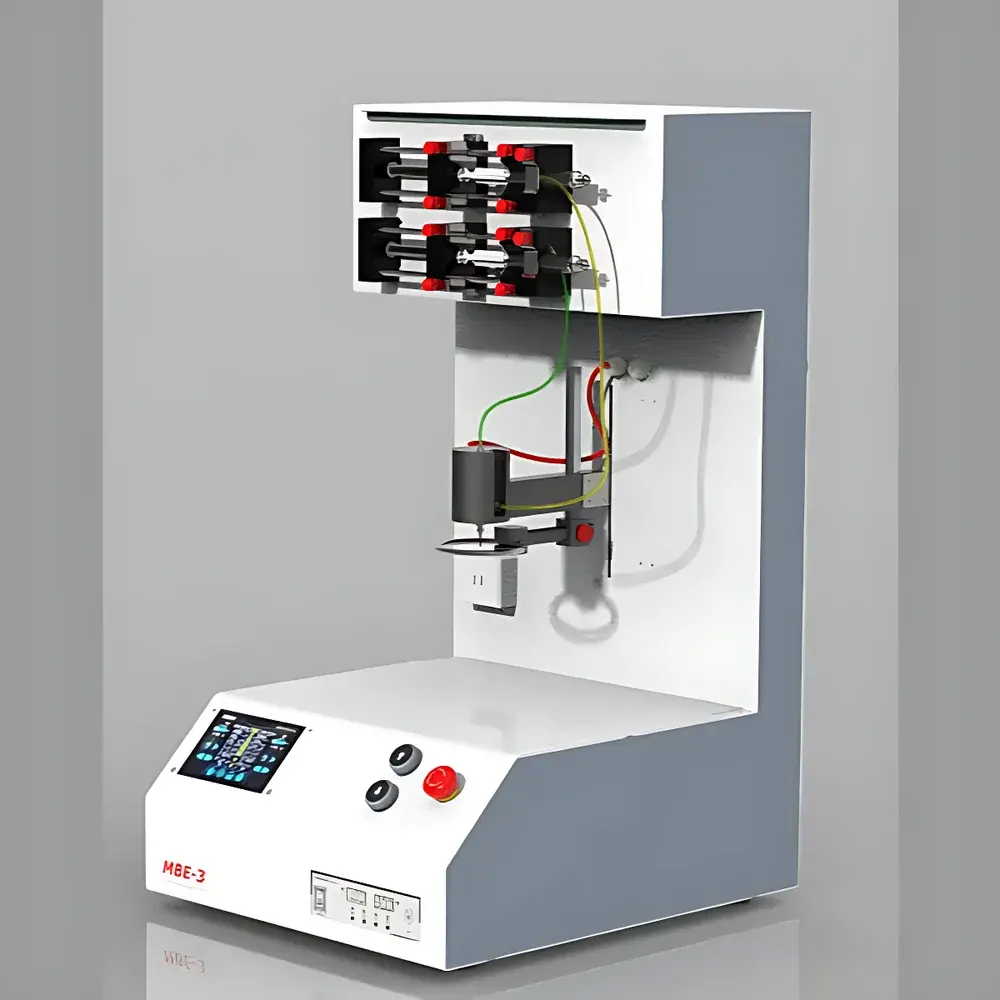
| Syringe Pump Channels | 2 independent |
| Flow Rate Range | 100 µL/h – 7.62 L/h |
| Syringe Capacity Support | 2–60 mL |
| Needle Elevation Range | 0–150 mm (motorized, scale-marked) |
| Ground Ring Diameters | 60, 80, 100 mm (each ×1) |
| Ground Ring–Nozzle Distance Adjustment | 0–100 mm (manual, scale-marked) |
| Stirring Plate Diameter | 125 mm |
| Stirring Speed | 200–1800 rpm |
| Max. Stirring Volume | 1000 mL |
| Dimensions (W×D×H) | 400 × 460 × 740 mm |
| Weight | 15 kg |
| Power Supply | 220 VAC, 50 Hz |
| Total Power Consumption | 120 W |
Overview
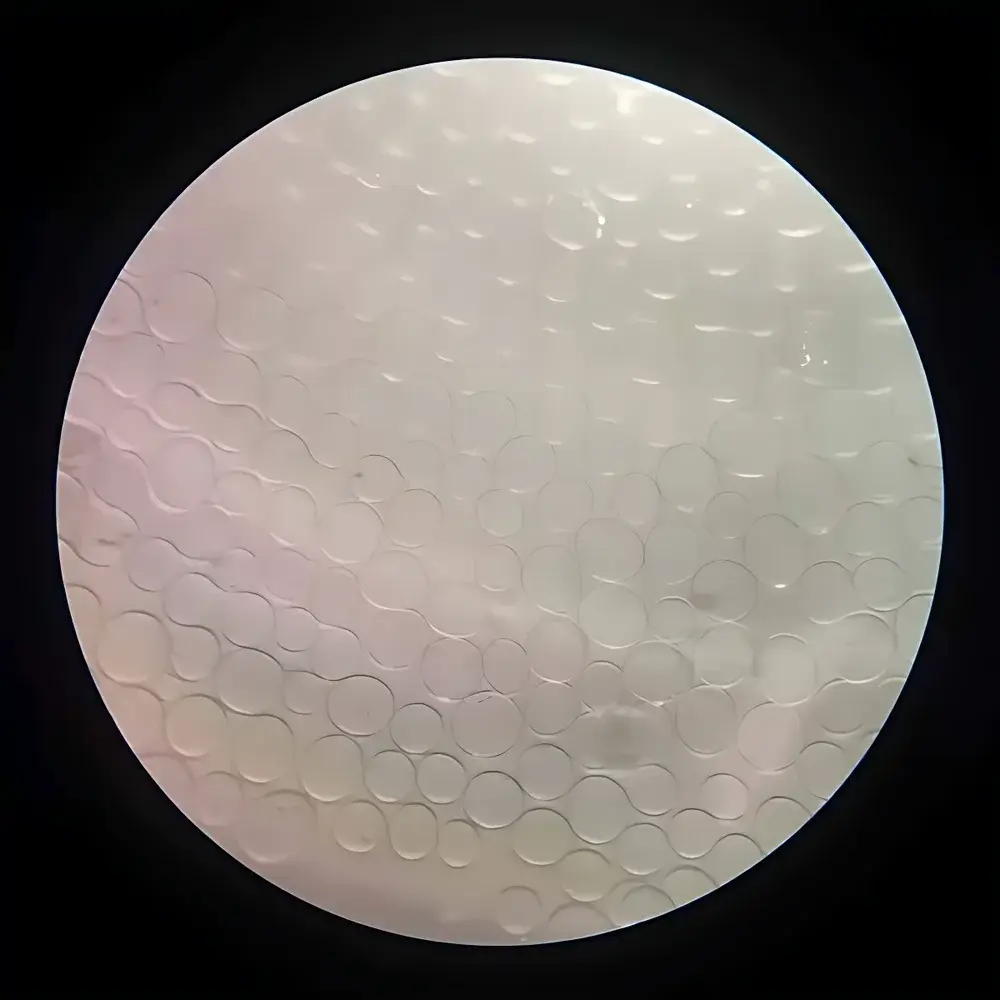
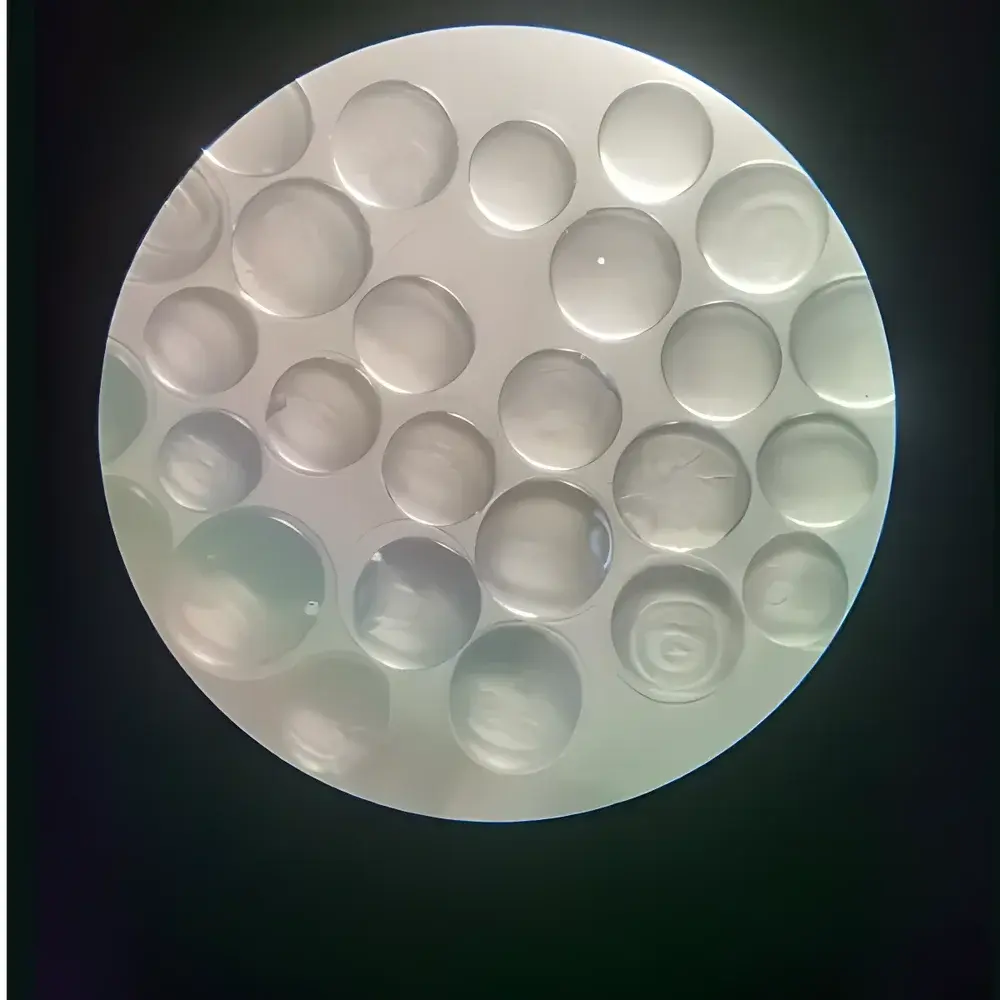
The Truelab MBE-3C is a benchtop electrohydrodynamic (EHD) microencapsulation system engineered for reproducible, scalable fabrication of monodisperse microparticles and core–shell nanostructures via electrospraying and coaxial electrospraying. Operating on the principle of electrohydrodynamics—where high-voltage DC fields induce controlled jet breakup of polymer or biomacromolecular solutions—the MBE-3C enables precise manipulation of droplet fission, solvent evaporation, and particle solidification in a grounded collector medium. Unlike conventional emulsion-based encapsulation methods, this system eliminates surfactant dependency, avoids thermal degradation, and delivers narrow particle size distributions (typically CV <15% under optimized conditions). Its integrated architecture supports both single-nozzle electrospraying for uniform microspheres and coaxial nozzle configurations for structurally defined core–shell architectures—critical for sequential release kinetics, protection of labile biologics (e.g., peptides, plasmid DNA, enzymes), and spatially resolved functionalization in regenerative medicine scaffolds.
Key Features
- Integrated dual-channel syringe pump with independent flow control—engineered with PFA fluidic pathways to electrically isolate pumps from high-voltage zones, ensuring long-term reliability and eliminating arcing-induced failure.
- Motorized, scale-marked needle elevation (0–150 mm travel) enabling precise standoff distance calibration—essential for optimizing electric field strength, jet stability, and particle morphology per ISO 13320-compliant aerosol deposition protocols.
- Modular coaxial stainless-steel (304) needle assembly: fully disassemblable into outer needle, inner needle, needle holder, and medical-grade polypropylene (PP) connectors—designed for rapid cleaning, cross-contamination mitigation, and validation-compliant reuse in GLP-aligned labs.
- Three interchangeable precision-ground metal ground rings (60/80/100 mm Ø) mounted on a tri-slot alignment rod—ensuring concentricity with the nozzle axis across variable collection geometries and minimizing lateral field distortion.
- Electrostatically shielded working chamber with dual-opening, self-sealing polycarbonate observation doors—providing Class II biosafety-level visibility while maintaining operator isolation during 30 kV operation.
- Dedicated magnetic stirrer (200–1800 rpm, 1000 mL capacity) integrated beneath the collector stage—facilitating homogeneous particle dispersion and preventing sedimentation-induced batch heterogeneity in aqueous or viscous receiving media.
Sample Compatibility & Compliance
The MBE-3C accommodates a broad range of formulation chemistries—including aqueous and organic-phase polymer solutions (e.g., PLGA, chitosan, gelatin methacryloyl), protein suspensions, lipid dispersions, and nanoparticle colloids—provided viscosity remains below 500 mPa·s and conductivity is maintained within 0.1–5 mS/cm for stable Taylor cone formation. All wetted components comply with USP Class VI and ISO 10993-5 biocompatibility standards. The system’s electrical architecture meets IEC 61010-1 safety requirements for laboratory equipment, and its sealed HV module conforms to EN 50178 insulation integrity specifications. While not FDA-cleared as a manufacturing device, the MBE-3C supports development-stage process qualification per ICH Q5A(R2) and Q5C guidelines for biopharmaceutical particulate delivery systems.
Software & Data Management
Operation is managed via an intuitive 7-inch capacitive touchscreen interface with non-volatile parameter storage (≥100 method profiles). All critical parameters—including voltage, flow rates per channel, elevation position, stir speed, and runtime—are timestamped and exportable in CSV format for audit trails. Though no proprietary software suite is bundled, the system provides RS-232 and USB host interfaces for integration with third-party data acquisition platforms compliant with 21 CFR Part 11 requirements (e.g., LabArchives, DeltaV). Event logging includes overvoltage lockout, door-open interlock activation, and emergency stop triggering—supporting GMP documentation workflows.
Applications
- Controlled-release drug delivery: Fabrication of PLGA microspheres encapsulating small-molecule therapeutics or monoclonal antibodies with tunable burst release and sustained elution profiles.
- Tissue engineering: Production of bioactive microparticles loaded with growth factors (e.g., BMP-2, VEGF) for incorporation into hydrogel scaffolds used in craniofacial or cartilage regeneration studies.
- Vaccine adjuvant development: Generation of antigen-loaded core–shell particles enabling co-delivery of immunomodulators and antigens to dendritic cells with enhanced MHC-I presentation.
- In vitro cell encapsulation: Electrosprayed alginate–gelatin microcapsules for 3D hepatocyte or pancreatic islet culture under perfusion conditions.
- Nanoparticle library screening: Rapid prototyping of combinatorial core–shell architectures (e.g., siRNA in PEG-PLA shell, CRISPR RNP in pH-responsive polymer core) for structure–function optimization.
FAQ
What voltage range does the MBE-3C support, and is it adjustable in fine increments?
The system delivers 0–+30 kV DC output with 10 V resolution and closed-loop feedback regulation—ensuring stable field strength across varying solution conductivities and ambient humidity conditions.
Can the coaxial needle be sterilized for aseptic processing?
Yes: All stainless-steel and medical-grade PP components are autoclavable (121°C, 20 min) or compatible with ethanol/IPA wipe-down and UV-C exposure—validated per ISO 14644-1 Class 5 cleanroom practices.
Is remote monitoring or automation possible?
The RS-232 port supports ASCII command protocol for external PLC or Python-controlled sequencing; optional TTL-triggered camera synchronization is available for real-time jet morphology analysis.
Does the system meet electromagnetic compatibility (EMC) requirements for shared lab environments?
Yes: Emission profiles comply with CISPR 11 Group 1, Class B limits; radiated and conducted emissions were verified per EN 61326-1 during factory acceptance testing.
What maintenance intervals are recommended for long-term operational fidelity?
HV electrode cleaning every 50 hours of cumulative operation; syringe pump calibration annually or after 10,000 actuation cycles; ground ring surface inspection prior to each experiment to prevent carbon tracking.




